
Put on a flannel shirt. Sit in the corner of a dimly lit room. Put your headphones on. If you want to understand the soul of the 1990s grunge movement, which was a cultural and musical phenomenon originating in Seattle that defined Generation X through themes of alienation and anti-consumerism, you have to look past the distorted guitars. The noise was loud, sure. But the words? They were quiet, desperate, and brutally honest. While the rest of the world was celebrating the end of the Cold War and the rise of tech optimism, a group of bands in the Pacific Northwest was singing about feeling stuck, broke, and alone.
We often remember grunge for its sound-the heavy riffs of Nirvana or the dynamic shifts of Pearl Jam. But the lyrics are where the real story lives. They captured a specific moment in history when economic promises fell apart, mental health became a public (if stigmatized) conversation, and "authenticity" became the only currency that mattered. This isn't just nostalgia. It's a blueprint for how art processes collective trauma.
The Economic Backdrop: Why Everyone Felt Stuck
To get why these songs hit so hard, you need to look at the calendar. The early 1990s weren't just a stylistic shift; they were an economic hangover. The United States was in the midst of a recession. For Generation X, who is the demographic cohort born between the mid-1960s and early 1980s, characterized by skepticism toward institutions and economic precariousness, the dream their parents sold them-a house, a car, a steady job after college-was evaporating.
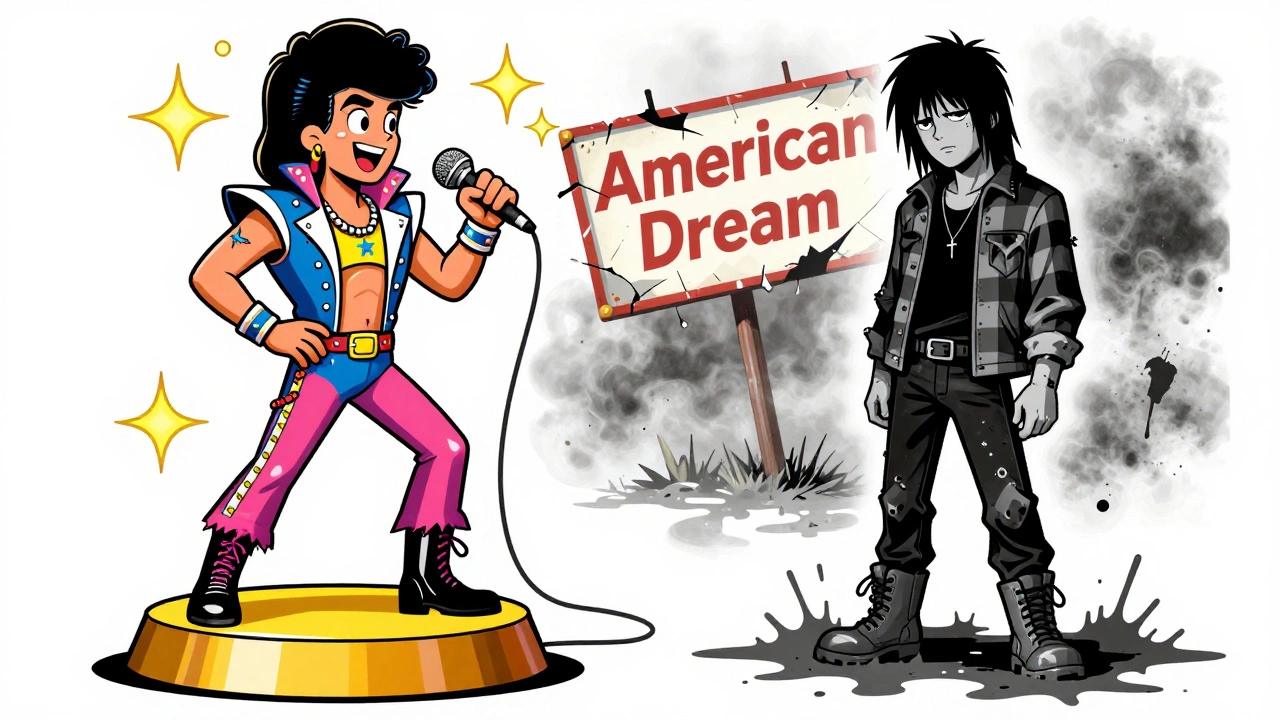
In the 1980s, the soundtrack was glam metal. Bands sang about fast cars, parties, and excess. It was the era of "greed is good." By 1991, that energy felt like a lie. Grunge lyrics flipped the script. Instead of celebrating wealth, they mocked it. Instead of dreaming of fame, they feared being sold out.
Think about Alice in Chains' song "Down in a Hole." The lyrics paint a picture of someone trapped in a cycle of poverty and addiction, unable to escape their circumstances. Or look at Soundgarden's "Jesus Christ Pose," which critiques the hypocrisy of those who claim moral superiority while ignoring systemic issues. These weren't just moody teenagers complaining. They were articulating a genuine fear that the ladder of success had been pulled up behind them. When Kurt Cobain sang about "a mullet for my birthday" in "In Bloom," he wasn't just making a joke about haircuts; he was mocking the superficial values of mainstream culture that ignored deeper societal rot.
| Aspect | Glam Metal (1980s) | Grunge (Early 1990s) |
|---|---|---|
| Economic Outlook | Celebration of wealth and excess | Anxiety over stagnation and recession |
| Success Definition | d>Fame, beauty, material goodsAuthenticity, survival, emotional truth | |
| Vocal Delivery | High-pitched, theatrical, confident | Mumbled, raw, vulnerable, aggressive |
| Primary Emotion | Hedonism, joy, bravado | Apathy, anger, despair |
This economic anxiety wasn't abstract. It was personal. It was the feeling of working a dead-end job with no hope of promotion. It was the realization that the "American Dream" required a level of stability that many young people simply didn't have. Grunge gave voice to that frustration. It said, "I see the game, and I'm not playing anymore."
Isolation and the Mental Health Crisis
If economic anxiety was the external pressure, isolation was the internal result. Grunge lyrics are deeply introspective. They rarely feature choruses designed for stadium sing-alongs in the traditional sense. Instead, they feel like confessions whispered into a microphone. This created a powerful sense of connection among listeners who also felt isolated.
Mental health was barely discussed openly in the early 90s. There were no hashtags, no therapy apps, no widespread awareness campaigns. Yet, grunge bands were singing about depression, suicidal ideation, and numbness every day. Soundgarden's "Fell on Black Days" is a prime example. The lyrics describe a sudden, overwhelming darkness that descends without warning. It’s not a metaphor for a bad breakup; it’s a description of clinical depression.
For adolescents, this was revolutionary. Academic studies from the period note that teens used grunge as a "cathartic outlet." Hearing a famous singer admit to feeling worthless or angry validated their own hidden struggles. It reduced the shame. You weren't crazy for feeling sad; you were part of a generation that was collectively hurting.
Consider Pearl Jam's "Black." On the surface, it’s a breakup song. But dig deeper, and it’s about the erasure of self. The imagery of fading colors and emptiness reflects a loss of identity. Eddie Vedder’s vocal performance sounds like he’s breaking down in real-time. That vulnerability made listeners feel seen. In a society that demanded happiness and productivity, grunge offered a safe space to be broken.
This focus on isolation also highlighted the breakdown of community. As suburban sprawl increased and digital communication began to replace face-to-face interaction, people felt more alone than ever. Grunge lyrics captured that loneliness. They didn’t offer solutions. They didn’t say, "Cheer up, it’ll get better." They said, "I’m here too, and it sucks." That honesty was radical.
Authenticity as a Rebellion
In the world of rock music, image has always been important. But grunge turned image on its head. Authenticity became the core value. This wasn’t just about wearing flannel and combat boots (though that helped). It was about rejecting the polished, manufactured persona of pop stars and glam metal gods.
Kurt Cobain famously hated the idea of being a role model. He resisted interviews, avoided photo ops, and wrote lyrics that exposed his own insecurities rather than projecting confidence. This refusal to perform "coolness" resonated deeply. Fans trusted grunge musicians because they seemed flawed, confused, and real.
The lyrics reflected this commitment to truth. They avoided clichés. They didn’t try to rhyme perfectly if it meant sacrificing meaning. Lines were often fragmented, repetitive, or ambiguous. This mirrored the chaotic nature of real life. In "Smells Like Teen Spirit," Cobain uses nonsensical phrases like "here we are now, entertain us" to critique consumer culture’s demand for constant distraction. The ambiguity forces the listener to engage, to find their own meaning.
This pursuit of authenticity extended to the music industry itself. Many grunge bands resisted major label deals initially. When they signed, they fought for creative control. Pearl Jam’s battle with Ticketmaster is a famous example of this ethos. They refused to compromise their principles for profit. Their lyrics often expressed anger at corporate exploitation, framing the record industry as another system designed to crush individuality.
Authenticity in grunge wasn’t about being perfect. It was about being present. It was about admitting when you were scared, angry, or lost. In a world increasingly driven by marketing and branding, that raw honesty felt like a rebellion. It reminded people that beneath the surface, everyone was struggling.
Why These Lyrics Still Matter Today
You might think that since it’s 2026, these songs belong in a museum. But listen to them now. Do they sound dated? Not really. The economic anxiety of the 1990s mirrors the precarity of today’s gig economy and student debt crisis. The isolation of the 90s parallels the loneliness epidemic exacerbated by social media. And the demand for authenticity? That’s stronger than ever in an age of AI-generated content and curated online personas.
Young listeners today discover grunge not just for the nostalgia factor, but because the emotions ring true. A 2021 essay in Binghamton University’s student newspaper argued that grunge’s lyrical themes remain relevant because they foreground mental health struggles without offering easy fixes. That’s exactly what modern audiences crave. We’re tired of toxic positivity. We want art that acknowledges pain.
Grunge taught us that it’s okay to not be okay. It showed us that our anxieties about money, status, and connection are shared experiences, not personal failures. By giving voice to these feelings, grunge lyrics provided a template for processing collective trauma. They proved that music could be both a mirror and a balm.
So, next time you hear a grunge track, don’t just nod along to the riff. Listen to the words. You might just find that the ghosts of the 90s are still speaking directly to you.
What were the main themes in 1990s grunge lyrics?
The primary themes included economic anxiety due to recession and job insecurity, psychological isolation and mental health struggles like depression, and a strong emphasis on authenticity against corporate and social fakery. Lyrics often explored boredom, alienation, and disillusionment with mainstream values.
How did grunge lyrics differ from 1980s rock lyrics?
1980s glam metal lyrics typically celebrated wealth, hedonism, and physical appearance. In contrast, grunge lyrics rejected these values, focusing instead on inner turmoil, socio-economic constraints, and emotional vulnerability. Grunge favored raw, unpolished expression over theatrical bravado.
Why is authenticity considered central to grunge?
Authenticity was central because grunge musicians rejected the manufactured images of pop and glam rock. They presented themselves as flawed and confused, using lyrics to confess personal struggles rather than project confidence. This honesty built trust with listeners who valued genuine emotion over performance.
Which grunge songs best illustrate economic anxiety?
Songs like Alice in Chains' "Down in a Hole" and Soundgarden's "Jesus Christ Pose" highlight economic struggle and anti-corporate sentiment. Nirvana's "In Bloom" also mocks superficial consumer values. These tracks reflect the fear of stagnation and the rejection of the "greed is good" mentality of the previous decade.
Did grunge lyrics impact mental health conversations?
Yes, significantly. By openly discussing depression, suicide, and loneliness, grunge normalized these topics for a generation that lacked other outlets. Listeners found catharsis in hearing their hidden struggles articulated, reducing stigma and fostering a sense of shared experience during a time when mental health was rarely discussed publicly.