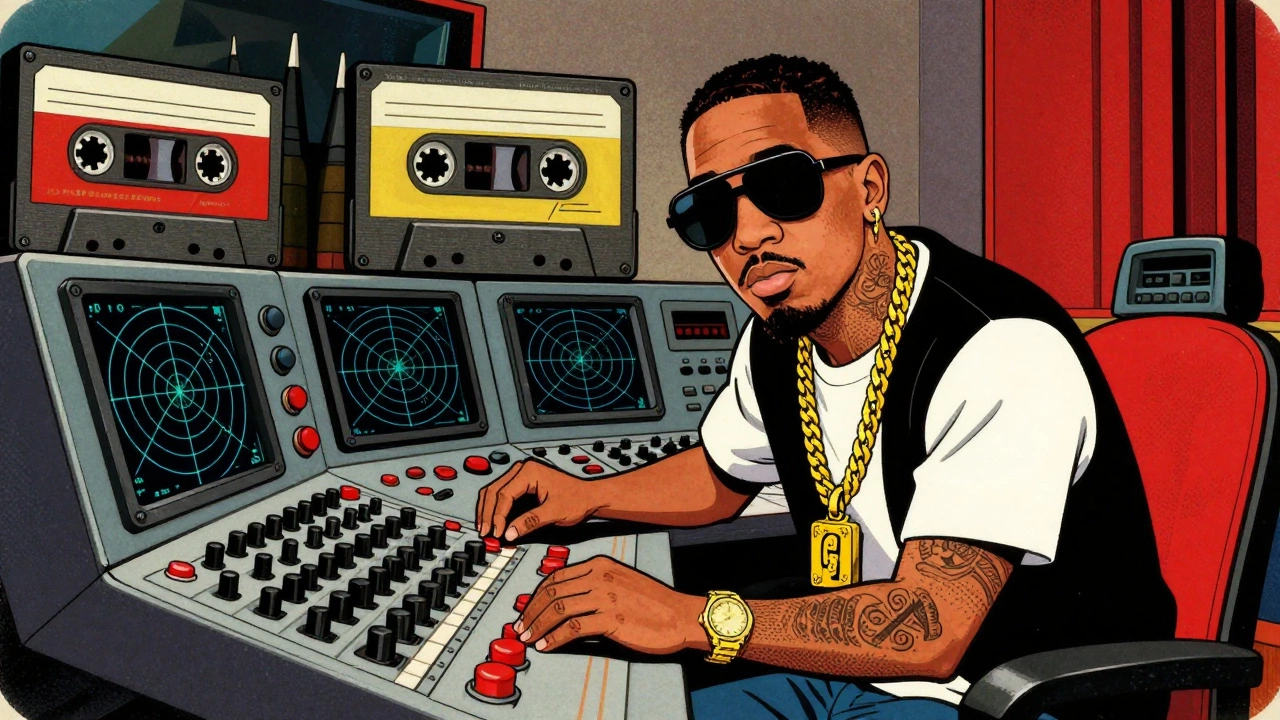

Imagine a decade where a song wasn't just a hit, but a tactical strike. In the 90s, the rap game shifted from friendly competitions to high-stakes warfare. We aren't talking about simple disagreements; we're talking about recording studios being turned into war rooms where artists spent hours crafting the perfect verbal assassination. The 1990s diss tracks didn't just change the charts-they fundamentally altered how we view celebrity conflict and artistic competition.
The Core of the Conflict: What Makes a Diss Work?
Before we get into the bloodbath of the 90s, we have to understand the mechanics. A diss track isn't just a song with mean lyrics. It's a psychological operation. The word itself, derived from disrespect, defines the goal: to strip an opponent of their dignity and status in the eyes of the public.
To actually land a blow, artists use a specific set of tools. First, you need a foundation. You can't just shout over a generic loop; you need a beat that feels ominous or triumphant. If the song is a slog to listen to, the message is lost. Second, there's the "shock factor." The most lethal tracks don't just call someone "bad"; they dig up personal secrets, family drama, or financial failures. When an artist reveals something the world didn't know, the listener isn't just hearing a song-they're witnessing a public execution of a reputation.
Finally, you need the "earworm" effect. The best disses, from the 90s to modern hits like Kendrick Lamar's "Not Like Us," use catchy hooks. Why? Because if the crowd is singing along to the insult, the target is being mocked by thousands of people in unison. It turns a private grudge into a public anthem.
The Early 90s: Setting the Stage for War
The decade kicked off with a heavy dose of aggression. On June 17, 1990, LL Cool J dropped "To da Break of Dawn." This wasn't a polite disagreement; he took aim at Kool Moe Dee, Ice-T, and MC Hammer all at once. It was a masterclass in multi-target aggression. What makes this era interesting is the strange code of honor. For instance, LL Cool J actually defended Ice-T's right to free speech after Ice-T was arrested for a profane track in 1989, only to turn around and rip into him musically. In the 90s, you could fight in the booth but still respect the First Amendment.
Then came 1991, and with it, one of the most vicious attacks in history. Ice Cube released "No Vaseline" on October 29. This wasn't just a song; it was a scorched-earth policy. Cube didn't just target one person; he dismantled his entire former group, N.W.A. He went after Eazy-E, Dr. Dre, MC Ren, DJ Yella, and their manager Jerry Heller. By attacking the entire infrastructure of his former team, Cube showed that a diss track could be used to completely sever ties and redefine an artist's independent identity.
Tactical Breakdown: Lyric Strategies of the Era
If you look at the DNA of these tracks, you'll see a few recurring patterns. The 90s moved away from simple "I'm better than you" rhymes and toward character assassination. Instead of bragging about their own flow, artists started highlighting the target's weaknesses. They focused on authenticity-calling an opponent a "fake" or a "sellout" was the ultimate sin in hip-hop.
| Strategy | 1990s Approach | Modern (2020s) Approach |
|---|---|---|
| Targeting | Group/Crew focus (e.g., N.W.A) | Hyper-personal/Individual (e.g., family/health) |
| Delivery | Aggressive, raw, direct | Subtle, coded, psychological |
| Distribution | Cassettes, Radio, Music Videos | Social Media, Streaming, Leak culture |
| Goal | Establishing street dominance | Viral dominance and chart success |
Consider the "wow factor." In the 90s, this often meant mentioning specific street conflicts or claiming the other person was working with the police. Today, as seen with artists like Drake or Kendrick Lamar, the shock factor has evolved into complex wordplay and deep-dive investigations into an opponent's private life. The core objective remains the same: make the target look small in the eyes of the audience.
Cultural Shockwaves and the Industry Shift
These tracks did more than just sell records; they created a cultural phenomenon. The rivalry between the East Coast and West Coast was amplified by these songs. When 2Pac released "Hit Em Up," it wasn't just a song-it was a declaration of war that spilled over into real-world violence. This era proved that music could be a weapon, and the industry realized that conflict sells.
Record labels started leaning into these rivalries because the drama drove sales. People didn't just buy the album; they bought the "answer" to the previous diss. This created a cycle of escalation where artists felt pressured to be more shocking and more aggressive to stay relevant. It turned the music industry into a soap opera with higher stakes, where the climax often happened on a street corner rather than a stage.
But there was a silver lining. This competitive environment forced rappers to sharpen their pens. To survive a diss war, you had to be technically proficient. You couldn't just have a good voice; you needed a vocabulary, a sense of timing, and the ability to manipulate a narrative. The 90s diss era is largely responsible for the high level of lyrical complexity we see in hip-hop today.
The Lasting Legacy of the Verbal Battle
Looking back, the 90s established the blueprint. Every modern rap beef is essentially a remix of the strategies used by Ice Cube and LL Cool J. Whether it's a carefully timed social media post or a surprise album drop, the goal is still to control the narrative and isolate the opponent. The shift from physical tapes to digital streams hasn't changed the human desire to see a public takedown.
The cultural impact also extended to how we perceive "truth" in music. Diss tracks introduced the concept of the "expose." They taught audiences to listen for clues and read between the lines. It turned the listener into a detective, searching for the hidden meaning behind a specific bar or a vague reference to a past event. This interactive element is what keeps the genre alive and engaging.
What is a diss track exactly?
A diss track is a song specifically recorded to verbally attack and belittle another person, usually another music artist. The goal is to damage the target's reputation by highlighting their failures or exposing personal secrets through lyrics.
Why was "No Vaseline" so influential?
"No Vaseline" by Ice Cube was landmark because it wasn't just targeting one person, but an entire group (N.W.A) and their management. It set a standard for thorough, aggressive, and unrelenting lyrical attacks that didn't hold back for the sake of future relationships.
Do modern diss tracks use the same strategies as the 90s?
Yes and no. The core strategies-using a great beat, attacking character, and creating a catchy hook-remain the same. However, modern artists rely more on psychological warfare and social media amplification, whereas 90s artists focused more on street credibility and direct aggression.
How did diss tracks affect the hip-hop industry?
They turned conflict into a commercial product. Rivalries drove album sales and increased public interest in the genre. Lyrically, they pushed artists to become more skilled and creative to avoid being embarrassed in a public battle.
What are some of the most famous 90s diss artists?
Key figures include 2Pac, Ice Cube, LL Cool J, and the various members of N.W.A. Their tracks, such as "Hit Em Up" and "To da Break of Dawn," defined the era's aggressive style.


