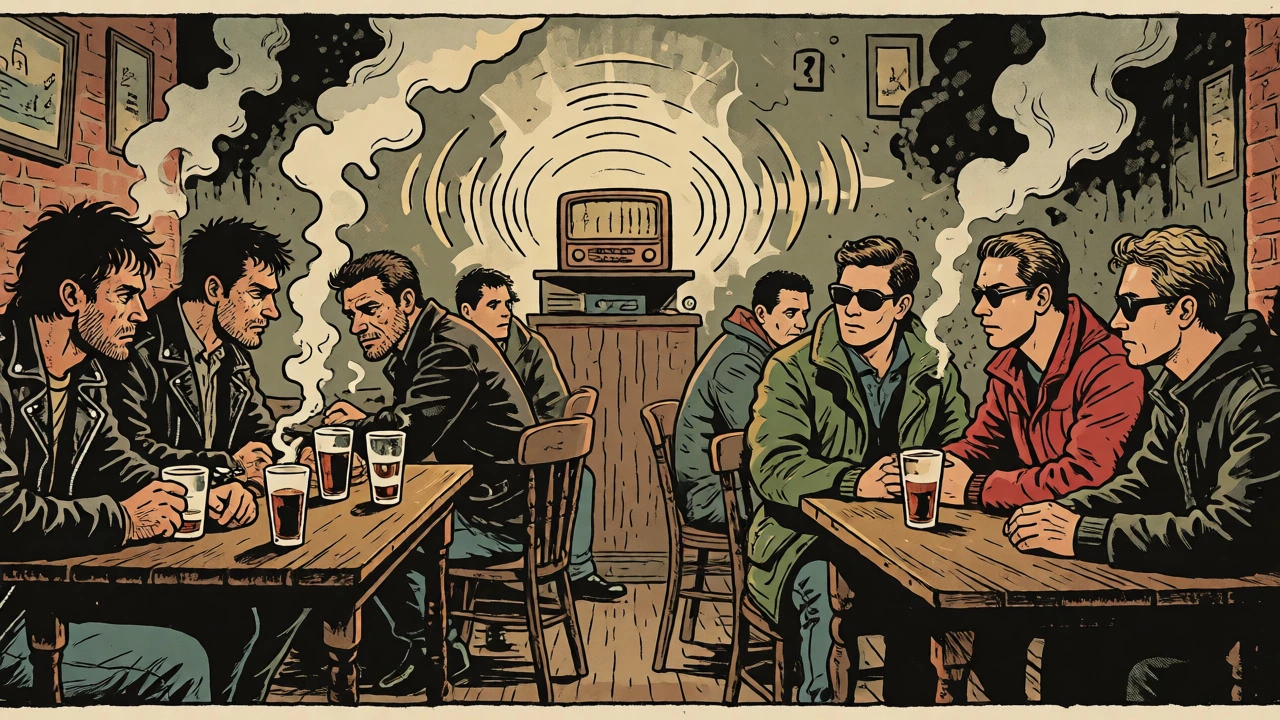

Imagine standing in a pub in Sheffield or Manchester in 1995. The air smells of stale beer and cheap cigarettes. On the radio, a snarling voice screams about being an outcast, while another band sings mockingly about joggers and pigeons. This wasn't just background noise; it was a cultural battlefield. Britpop was more than a genre-it was a loud, messy argument about who Britain belonged to. At the center of this debate was one question: Who really owns "working-class" identity? Was it the lads from the council estates who lived it, or the art-school students who observed it? If you’ve ever wondered why these songs still hit so hard decades later, the answer lies in how musicians used their accents, their neighborhoods, and their interviews to claim authenticity.
The Myth of the Binary: Blur vs. Oasis
We all know the story. It’s the classic rock-and-roll rivalry that dominated headlines in the mid-90s. On one side, you had Oasis, presented as the authentic, working-class heroes from Manchester. On the other, Blur, often painted as the middle-class, suburban art-school crowd from London. But here’s the thing: this clean split is mostly a media invention. Real life was messier. A 2017 study by Peter Millward, Paul Widdop, and Michael Halpin analyzed the social networks of the era and found that Britpop wasn’t strictly divided by class. Sure, there were pockets of homophily-people hanging out with those like them-but the broader scene was surprisingly mixed. Yet, the narrative stuck because it sold magazines. It gave fans a team to pick.
Oasis leaned into the label. Noel Gallagher famously described their debut album, Definitely Maybe, as the sound of "five second-generation Irish Catholics coming out of a council estate." They didn’t just sing about working-class life; they performed it through attitude, accent, and sheer volume. Their lyrics weren’t subtle sociological essays. Songs like "Supersonic" dramatized the fantasy of escaping poverty through fame. It was aspiration wrapped in distortion. When Noel talked in interviews, he framed politics not as abstract theory, but as basic survival: rent, food, and trying to make a living. This resonated because it felt real. Or at least, it felt real enough for millions of listeners who wanted to believe that talent could beat circumstance.
| Band | Public Class Persona | Key Lyric Theme | Interview Stance on Authenticity |
|---|---|---|---|
| Oasis | Authentic Working-Class Lads | Aspiration, defiance, collective joy | Noel resisted pressure to "prove" his class; resented biography as product. |
| Pulp | Observational Critic / Outsider | Class tourism, voyeurism, inequality | Jarvis Cocker viewed class as a structural trap, not a lifestyle choice. |
| Blur | Satirical Observer / Suburban Middle-Class | Nostalgia, caricature, Englishness | Graham Coxon argued their work was sarcastic, not celebratory of class. |
Pulp’s "Common People": The Anthem That Bit Back
If Oasis represented the dream of escape, Pulp exposed the nightmare of being trapped. Jarvis Cocker’s "Common People," released in 1995 on the album Different Class, remains the sharpest critique of class dynamics in pop history. The song wasn’t born from vague anger. It came from a specific encounter at Central Saint Martins, where Cocker studied film. He met a wealthy Greek student who claimed she wanted to "live like the common people" in Hackney. To her, poverty was an exotic adventure she could opt out of when things got tough. To him, it was home.
Cocker turned this anecdote into a biting anthem. The lyric contrasts the privileged experimentation of the rich with the structural limits of the poor. The wealthy can leave; the narrator cannot. In interviews, Cocker admitted he embellished the story for dramatic effect, acknowledging he barely knew the woman. But that doesn’t weaken the point. "Common People" attacks what sociologists call "class tourism." It mocks the idea that deprivation can be consumed as a lifestyle brand. By calling it a "class anthem," Cocker highlighted how working-class identity was becoming a marketable commodity. The accent, the bedsit, the cheap entertainment-these became legible signs that record labels could sell. Pulp showed that you could critique capitalism while making a massive pop hit, proving that class analysis didn’t have to be boring to be effective.
Blur’s Satire and the Problem of Voice
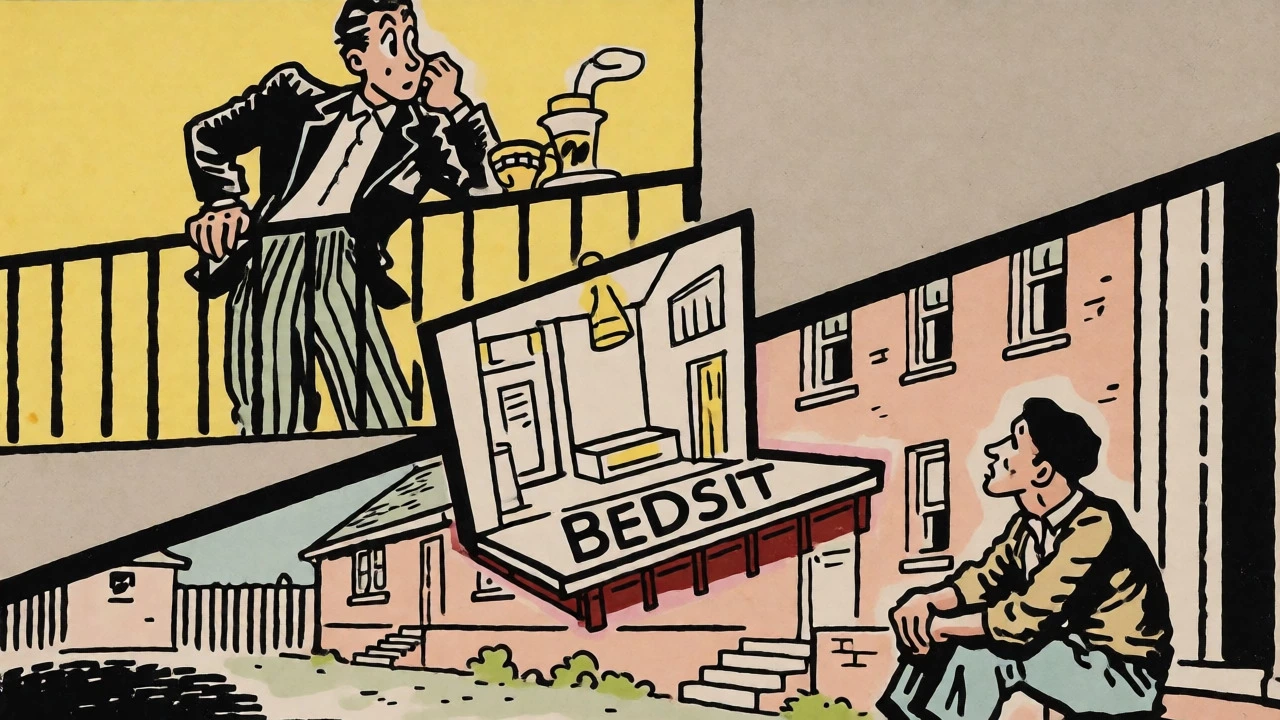
Now, let’s look at the other side of the coin. Blur’s "Parklife," released in 1994, is often remembered as a celebration of everyday English life. But was it? Damon Albarn, coming from a more middle-class background, hired actor Phil Daniels to deliver the spoken-word verses in an exaggerated "Mockney" accent. Critics, including Jarvis Cocker, saw this as patronizing. Here was a middle-class performer putting on a fake working-class voice to observe dustbin men and joggers. It felt like looking down from a balcony.
However, Blur guitarist Graham Coxon later pushed back against this interpretation. He argued that the band intended the song to be sarcastic, not sincere. He described it as focusing on "park class"-a mix of mundane figures rather than a coherent political identity. This contradiction matters. Depending on your perspective, "Parklife" is either affectionate nostalgia or condescending caricature. The ambiguity reveals how fragile class markers are. Accent alone isn’t proof of identity. It’s a performance. And when the performer’s background doesn’t match the persona, audiences get suspicious. This tension fueled the media war between Blur and Oasis, turning musical differences into proxy battles for cultural legitimacy.
Accents, Authenticity, and the Media Machine
Why did accents matter so much? Because in 1990s Britain, speech was a primary indicator of class. Research has shown that Liam Gallagher’s singing voice retained more British-English features close to his spoken Mancunian dialect, reinforcing his image as a local hero. Noel Gallagher, however, incorporated more American influences, reflecting his love for rock traditions beyond the UK. This suggests that even within Oasis, vocal identity wasn’t a single, stable marker. It was a blend of local pride and global ambition.
The media, however, demanded consistency. In a 1999 interview, Noel Gallagher complained that journalists pressured him to act like an "authentic working-class person." He resented having his private biography converted into a media product. This exposes the core contradiction of Britpop: commercial value depended on perceived authenticity, yet musicians chafed under the expectation to perform their own lives for public consumption. You had to prove you were "real," but doing so made you seem calculated. It’s a catch-22 that persists in celebrity culture today.
Beyond the Big Three: Diversity and New Labour
Focusing only on Oasis, Blur, and Pulp misses the bigger picture. Bands like Suede, Elastica, Sleeper, and Echobelly added complexity to the narrative. Female-fronted acts and ethnically diverse groups challenged the dominant image of Britpop as white, male, and heterosexual. Academic research indicates that class was just one signifier among many-including gender, ethnicity, and region-that young people used to construct their identities. Ignoring these voices flattens the historical record.
Moreover, Britpop didn’t exist in a vacuum. It coincided with the rise of Tony Blair’s New Labour and the "Cool Britannia" brand. Politicians embraced Britpop as evidence of national renewal. Suddenly, working-class imagery wasn’t just rebellious; it was patriotic. This created a strange paradox. Music that once signaled anti-establishment anger became part of the establishment’s marketing strategy. Nostalgia for the 1960s blended with modern consumerism. Working-class culture was packaged, sold, and celebrated by the very political forces that had previously marginalized it. This co-optation didn’t erase the music’s power, but it complicated its meaning. Was it resistance, or was it branding?
What We Learn Today
So, what does this mean for us now? Britpop teaches us that class identity is never static. It’s constructed, contested, and commodified. There was no single "working-class identity" in the 1990s. Instead, there were competing versions: Oasis’s lived aspiration, Pulp’s critical observation, and Blur’s satirical performance. These forms overlapped and clashed, creating a rich, unstable cultural landscape.
The legacy of Britpop isn’t just about guitar riffs or chart positions. It’s about the visibility of class in popular culture. Before Britpop, mainstream pop often smoothed over social divisions. Britpop ripped them open, sometimes clumsily, sometimes brilliantly. It forced conversations about who gets to speak for whom, and whether privilege can ever truly understand poverty. As we navigate our own era of economic anxiety and cultural fragmentation, the lessons from 1990s Britpop remain relevant. Authenticity is a negotiation, not a fact. And sometimes, the most honest thing you can do is admit that the lines between observer and participant are blurrier than we’d like to think.
Was Blur actually middle-class?
While Damon Albarn and Alex James had backgrounds associated with suburban and art-school culture, labeling the entire band as strictly middle-class is an oversimplification. Guitarist Graham Coxon, for instance, had roots that differed from the typical "art-school" stereotype. However, the media narrative positioned them as the intellectual counterpoint to Oasis's raw working-class energy, which influenced public perception regardless of individual biographies.
Did Oasis write explicitly political songs?
Oasis rarely wrote programmatic socialist anthems. Instead, their politics were expressed through themes of aspiration, survival, and collective defiance. Noel Gallagher stated in interviews that politics meant practical concerns like accommodation and food. Their appeal lay in the emotional resonance of rising above circumstances, rather than detailed policy critiques.
How did "Common People" challenge class stereotypes?
Jarvis Cocker’s "Common People" attacked the concept of "class tourism," where wealthy individuals treat working-class life as a temporary, exotic experience. The song highlighted the structural inability of the poor to simply "opt out" of their conditions, contrasting privileged experimentation with permanent socioeconomic constraints.
Was Britpop exclusively a white, male phenomenon?
No, though the dominant media narrative focused heavily on white, male bands like Oasis and Blur. Acts such as Elastica, Sleeper, and Echobelly featured women prominently, challenging the gender norms of the time. Additionally, the presence of non-white musicians and diverse regional identities added layers to the scene that are often overlooked in retrospective accounts.
How did New Labour use Britpop?
Tony Blair’s government embraced Britpop as part of the "Cool Britannia" initiative, using it to project an image of a modern, youthful, and culturally vibrant Britain. This political endorsement helped legitimize the movement commercially but also risked diluting its anti-establishment edge by aligning it with mainstream political branding.