

You probably remember the hairspray, the spandex, and the guitar solos that echoed through every stadium in the late 1980s. But if you were looking for a woman shredding a lead guitar or holding down the bass in a major glam metal subgenre of heavy metal characterized by catchy hooks, theatrical fashion, and polished production band, you had to look hard. The scene was overwhelmingly male, often openly hostile to female instrumentalists, and yet two names broke through the noise: Lita Ford and Vixen. Their stories aren't just about hit singles; they are case studies in persistence against a backdrop of industry bias.
Did they change the game? Or did they just survive it? That's the question we need to answer by looking at the facts, not just the nostalgia. We're talking about chart positions, specific acts of discrimination, and the distinct paths these artists took to get their music heard. If you think women in 80s rock were just backup singers or groupies, you haven't looked closely enough at the credits.
The Solo Shredder: Lita Ford’s Path to Platinum
Lita Rossana Ford, born September 19, 1958, didn't start in the glam era. She started in the Runaways, the all-female punk-rock pioneer band of the 1970s. By the time the 80s rolled around, Ford had already proven she could play. But proving it again in the polished, image-obsessed world of glam metal was a different beast. Her breakthrough came with her self-titled album Lita, released in February 1988 on RCA Records. This wasn't underground noise; this was radio-ready pop-metal.
The numbers don't lie. Lita hit No. 29 on the Billboard 200 and went platinum, meaning over a million copies sold in the US alone. Two singles drove this success: "Kiss Me Deadly" peaked at No. 12 on the Hot 100, and the power ballad "Close My Eyes Forever," a duet with Ozzy Osbourne, climbed to No. 8. These weren't minor hits. They were mainstream events. Yet, even with platinum records on the wall, Ford faced constant scrutiny. In a 2016 interview with Decibel magazine, she noted that while people accepted male guitarists as virtuosos by default, they questioned whether she actually played her instrument. It wasn't enough to sound good; she had to prove her hands weren't faking it.
Ford’s strategy involved leaning into the duality of the genre. She combined technical guitar proficiency with the melodic sensibility required for MTV rotation. Songs like "Falling in and Out of Love," co-written with Nikki Sixx of Mötley Crüe, showed she could navigate the songwriting circles of the male elite. But the media often focused more on her appearance than her fretboard work. As CBC analysis later pointed out, videos like "Kiss Me Deadly" presented her in stylized, sexualized settings, sometimes overshadowing the musicianship that got her there in the first place.
Vixen: Four Women, One Band, Zero Male Backups
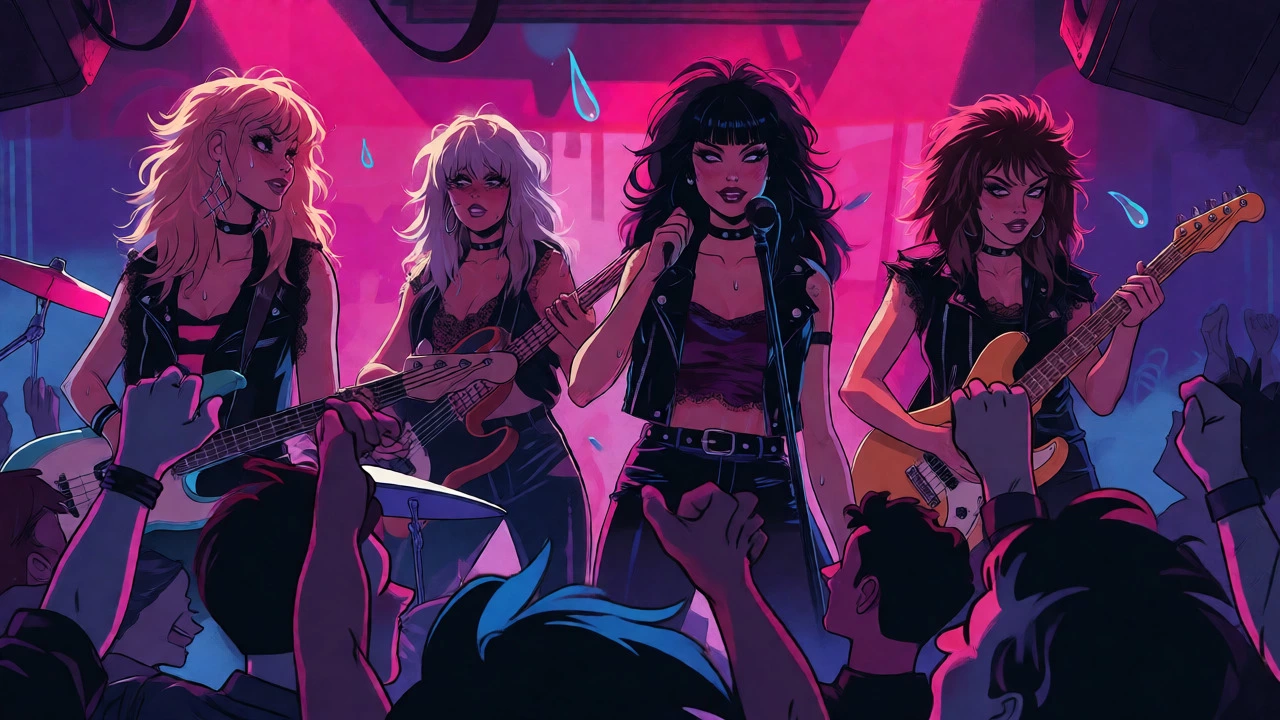
If Lita Ford was the exception who proved the rule could be broken individually, Vixen was the collective counter-argument. Formed in St. Paul, Minnesota, by guitarist Jan Kuehnemund, Vixen was an all-woman band from top to bottom. Janet Gardner handled vocals, Roxy Petrucci played drums, and Share Pedersen (now Share Ross) held down the bass. They moved to Los Angeles, paid their dues in the sweaty clubs of Hollywood, and signed with EMI’s Manhattan Records.
Their debut album, simply titled Vixen, dropped in 1988-the same year as Ford’s breakthrough. It reached No. 41 on the Billboard 200 and earned gold certification in early 1989. Hits like "Edge of a Broken Heart" (No. 26) and "Cryin'" (No. 22) proved that audiences would listen to women playing instruments together, not just singing over tracks laid down by men. Critics labeled them the "female Bon Jovi," a comparison that highlights how rare such a configuration was. You couldn't compare them to another all-female hard rock band because there essentially wasn't one with comparable commercial reach.
But getting signed wasn't easy. Kuehnemund recalled in interviews that club owners and label execs frequently suggested they hire male backing musicians and let the women just sing. Think about that implication: the industry assumed women couldn't handle the instrumental load. Vixen rejected this notion flatly. They insisted on being a real band, which meant fighting for credibility before they even played a note. Janet Gardner later spoke about the double standards in the press, noting how objectifying coverage influenced her choices in style and presentation. They weren't just making music; they were managing public perception in a space designed for men.
Industry Bias and the Glass Ceiling of Spandex
Why does this matter? Because the narrative that "anyone could make it in the 80s" ignores the structural barriers women faced. The glam metal scene was built on excess, but it was also built on exclusion. A 2017 LA Weekly retrospective described Ford and Vixen as rare exceptions allowed through the gate, while countless other talented women remained invisible. There is no solid data showing the percentage of women in the 80s metal workforce, but the anecdotal evidence from the artists themselves is consistent and damning.
Ford stated that respected peers like Ritchie Blackmore judged her on skill, not gender, but that was the minority view. Most encounters involved surprise or skepticism. For Vixen, the challenge was systemic. Being four women in a van touring the circuit meant dealing with harassment and dismissal. They didn't have the safety net of being "novelty" acts; they wanted to be taken seriously as musicians. When Kuehnemund died in 2013 after a battle with cancer, it marked the end of an era, but the surviving members continued to tour, keeping the legacy alive. Their reunion appearances, including on VH1’s Bands Reunited in 2004, showed that the audience demand for their music persisted long after the hair spray faded.
The tension between visibility and agency was palpable. To succeed, these artists often had to conform to visual norms-long hair, tight clothes, makeup-even if those norms felt restrictive. Ford’s Runaways background gave her some punk credibility, allowing her to push back slightly more than newer acts. Vixen, entering the scene during its peak commercial phase, had to balance authenticity with marketability. They chose to play loud, dress up, and refuse to step aside.
Comparing the Paths: Solo Star vs. Collective Force
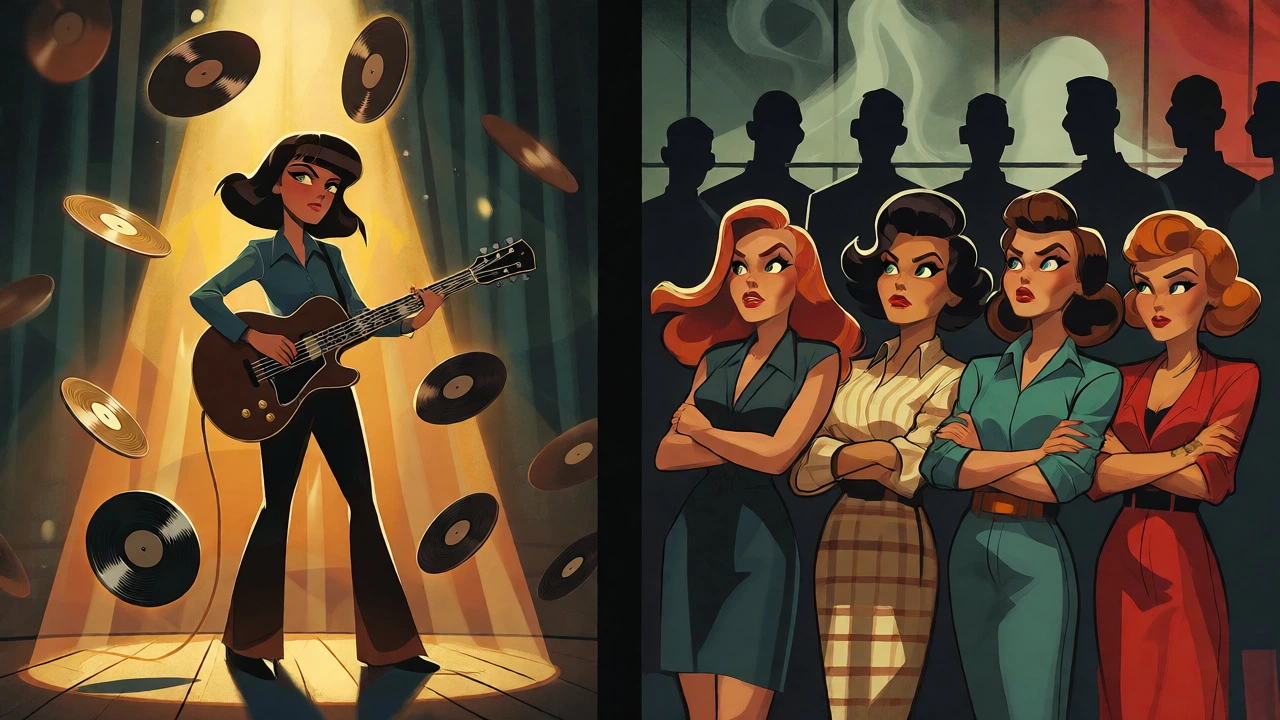
It is useful to distinguish between Ford’s solo career and Vixen’s group dynamic. Ford leveraged high-profile collaborations, like her duet with Ozzy Osbourne, to cross-pollinate audiences. Her identity was tied to her guitar skills and her past with the Runaways. Vixen’s identity was inseparable from their unity. You couldn't isolate one member without losing the point. Both used the musical vocabulary of the time-power chords, big choruses, ballads-but their routes to the top differed.
| Metric | Lita Ford (Lita) | Vixen (Vixen) |
|---|---|---|
| Album Peak (Billboard 200) | No. 29 | No. 41 |
| Certification (US RIAA) | Platinum | Gold |
| Top Single Peak (Hot 100) | No. 8 ("Close My Eyes Forever") | No. 22 ("Cryin'") |
| Band Structure | Solo Artist with Session Musicians | All-Female Instrumental Group |
| Primary Industry Challenge | Proving instrumental competence | Rejecting male-only backing bands |
This table highlights that while Ford achieved higher commercial peaks, Vixen’s achievement was structurally more radical. Ford was one woman among many session players; Vixen was four women doing everything themselves. The industry tolerated the former more easily than the latter. It’s easier to accept a female frontman or a soloist than a full ensemble that challenges the assumption that rock bands are inherently male spaces.
Legacy Beyond the Hair Spray
Today, the glam metal era is often mocked for its aesthetics, but dismissing it erases the significant contributions of women like Ford and Vixen. They paved the way for later generations of female rockers, from Hole to Paramore, by demonstrating that women could sell records, fill venues, and command respect on stage. The Rock & Roll Hall of Fame’s inclusion of a Lita Ford guitar in its 2026 exhibition The Risktakers signals institutional recognition of this impact.
Vixen’s story continues too. Despite internal changes and the loss of their founder, the brand remains active, with lineups featuring members like Gina Stile continuing to perform. This longevity proves that their appeal wasn't just a fluke of the 80s trend cycle. It was rooted in solid musicianship and strong songs. If you’re digging through crates or streaming playlists, give these albums a serious listen. Ignore the visuals for a moment and focus on the mix. You’ll hear skilled playing, tight arrangements, and melodies that hold up decades later.
So, next time someone tells you the 80s were just guys in tights, correct them. Point them to the charts. Point them to the interviews where Lita Ford describes having to prove she wasn't lip-syncing her solos. Point them to Vixen refusing to hire male backups. The scene was flawed, biased, and often ridiculous, but it was also a battlefield where women fought for-and won-a place in the spotlight.
Was Lita Ford part of the Runaways?
Yes, Lita Ford began her career as the lead guitarist for the Runaways, an all-female rock band formed in the 1970s. This experience provided her with foundational credibility before she launched her successful solo career in the 1980s.
How many women were in the band Vixen?
Vixen consisted of four women: Jan Kuehnemund on guitar, Janet Gardner on vocals, Roxy Petrucci on drums, and Share Pedersen (later Share Ross) on bass. They were notable for being a complete all-female instrumental and vocal group.
What was Lita Ford’s biggest hit?
Her biggest hit on the Billboard Hot 100 was "Close My Eyes Forever," a duet with Ozzy Osbourne, which reached No. 8 in 1989. Her single "Kiss Me Deadly" also performed well, peaking at No. 12.
Did Vixen face discrimination in the music industry?
Yes, Vixen members reported frequent bias. Founder Jan Kuehnemund recalled that industry figures often suggested the band should use male backing musicians and have the women only sing. The band rejected this idea, insisting on performing all instrumental parts themselves.
Is glam metal considered a serious genre today?
While often parodied for its fashion, glam metal is recognized for its musical craftsmanship and commercial dominance in the late 80s. Artists like Lita Ford and bands like Vixen are now celebrated for breaking gender barriers within the genre, with institutions like the Rock & Roll Hall of Fame acknowledging their contributions.