
For decades, if you asked someone to name a funk artist, the answer was almost always James Brown, George Clinton, or Bootsy Collins. The story of funk innovation was written in male hands, focusing on bandleaders who controlled the studio and the stage. But this narrative misses half the picture. From the late 1960s to today, women have been the ones bending the groove, demanding respect, and redefining what it means to be powerful in music. They didn't just sing along; they led bands, wrote hits, and used their voices to challenge gender politics while keeping the rhythm tight.
This isn't just a list of names. It's a look at how female artists transformed funk from a male-dominated genre into a space for radical expression. Whether it's the gritty soul-funk of the 1970s or the explicit feminist anthems of modern Brazil, these women built a legacy that deserves more than a footnote. Let's trace the path from backing vocalists to the front of the stage, exploring the artists who made the groove their own.
From Backing Vocalists to Bandleaders
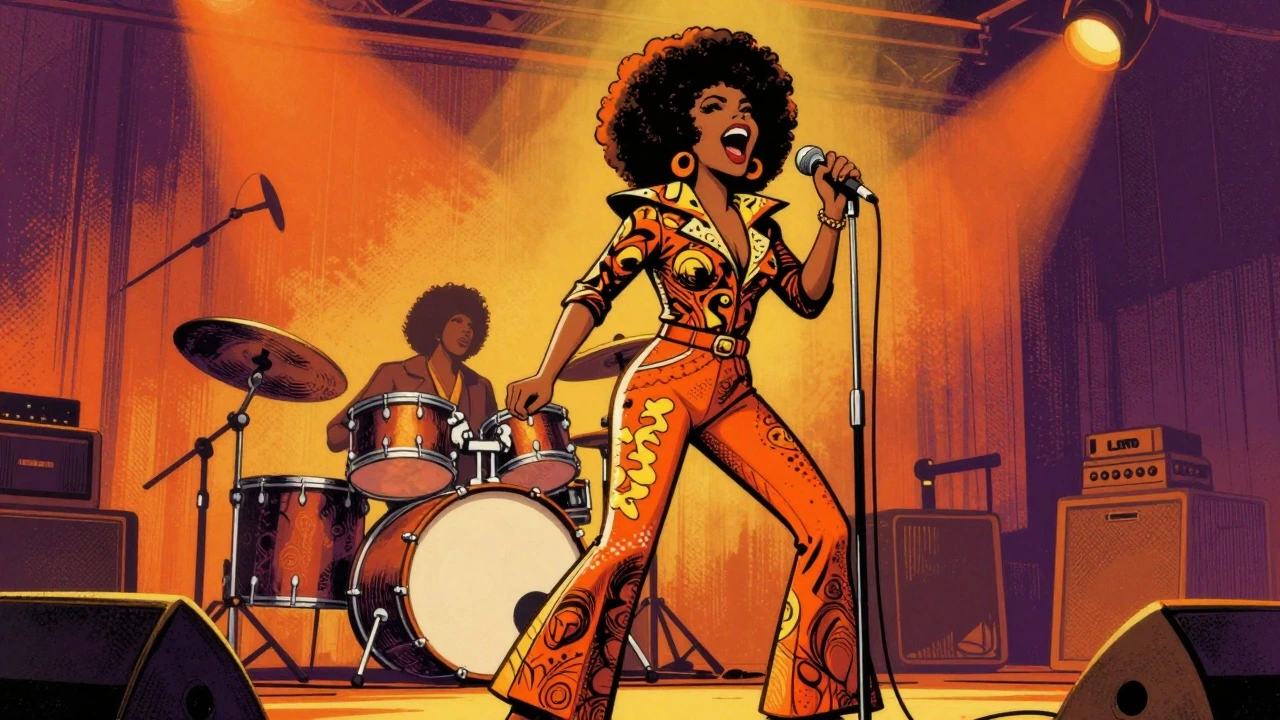
In the late 1960s, the role of women in funk was often limited to supporting acts. However, this period laid the groundwork for a massive shift. Lyn Collins is a prime example of this transition. Born Gloria Lavern Collins in Texas in 1948, she joined James Brown's touring revue around 1970. Her vocal style fused sanctified shouts with gritty groove, earning her nicknames like "Mama Feelgood" and "The Female Preacher." She became the principal female voice of Brown’s band during his hardest funk phase, proving that women could drive the energy of a live show as effectively as any man.
Collins' debut solo album, Think (About It), released in 1972 on Brown’s People Records imprint, included the title track produced by Brown. This song features five drum breaks and ad-libs that later became some of the most sampled sounds in hip-hop. By the 1990s, critics labeled Collins "the most sampled woman in hip-hop," a testament to her rhythmic precision. Her work cemented a template where women voiced demands for respect and sexual autonomy over ultra-tight funk grooves.
Beyond Brown's camp, other groups emerged. In the Parliament-Funkadelic universe, women were not just anonymous backups but founding members of spin-off bands. Groups like Parlet and Brides of Funkenstein toured internationally between 1978 and 1980. Members such as Mallia Franklin, Lynn Mabry, and Dawn Silva helped design P-Funk’s vocal textures from the inside. Meanwhile, mixed-gender funk-rock bands like Mother’s Finest, fronted by Joyce Kennedy in Atlanta, brought hard-rock timbres and political lyrics into the funk context from the early 1970s onward.
Chaka Khan and the Queen of Funk
If there is one name that defines mainstream female funk, it is Chaka Khan. Born Yvette Marie Stevens in Chicago in 1953, she joined the band Rufus in 1972 and quickly became its star attraction. By the mid-1970s, the billing changed to "Rufus featuring Chaka Khan," acknowledging her central role. Her voice combined jazz-inflected melismas, raw gospel power, and precise rhythmic phrasing, defining hits like "Tell Me Something Good" (written by Stevie Wonder) and "Sweet Thing."
Khan's influence extended beyond hit songs. She helped define popular understandings of funk’s sensuality for mainstream radio audiences in the United States, Europe, and Japan. The Rock & Roll Hall of Fame describes her as a "Queen of Funk" whose performance style projected frank eroticism and emotional volatility over syncopated bass lines and elaborate horn arrangements. Later vocalists, including Erykah Badu and Fantasia, have publicly credited Khan as an influence, illustrating a multi-generational lineage where her 1970s style directly shapes 1990s neo-soul and modern jazz-soul hybrids.
Betty Davis and Radical Erotic Funk-Rock
While Khan dominated the radio, Betty Davis pushed boundaries in the underground. Born Betty Mabry in North Carolina in 1945, Davis recorded a trilogy of albums between 1973 and 1975: Betty Davis, They Say I’m Different, and Nasty Gal. These records are described by scholars as among the most uncompromising explorations of black female sexuality in 1970s popular music. She fused heavy funk grooves with hard rock guitars and blues shout-singing, creating a sound that was both aggressive and intimate.
Davis’s visual imagery and lyrics forced listeners to rethink black women’s agency. An article in the American Studies Journal characterizes her work as exemplifying "feminist funk power," arguing that she undermined the male gaze through self-styled erotic display. Interestingly, Davis herself rejected the label "feminist" in interviews, stating that she did not see her songs as vehicles for organized political liberation. Instead, she focused on personal freedom. Scholars reconcile this tension by noting that her assertion of sexual autonomy parallels the concerns of black feminist writers like Toni Morrison, even if she didn't align with formal movements.
Labelle and the Politics of Flight and Fight
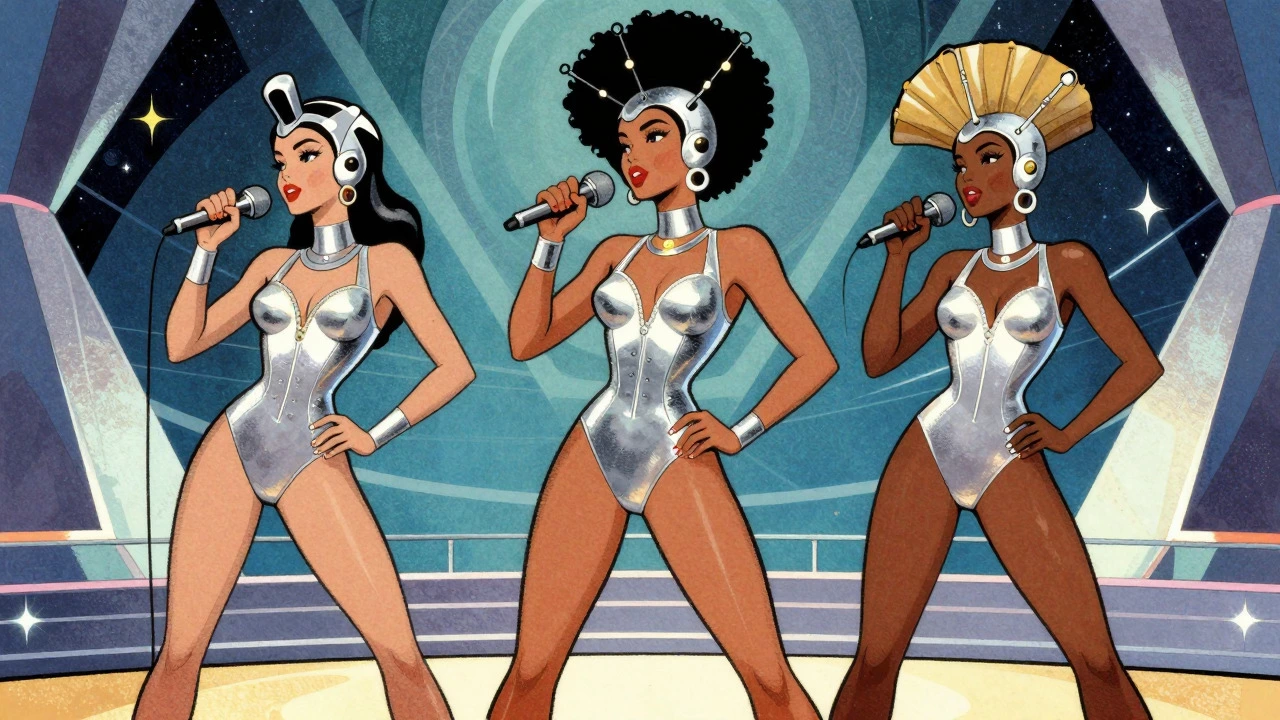
The trio Labelle, consisting of Patti LaBelle, Nona Hendryx, and Sarah Dash, shifted from early-1960s girl-group R&B toward space-age funk-rock by the early 1970s. Their 1974 hit "Lady Marmalade" remains iconic, but their broader catalog mixed Afro-futurist costumes with songs about black pride and gender roles. Academic analysis suggests that Labelle used sonic aggression-distorted guitars and driving rhythms-to symbolize both escape from and confrontation with racial and gender constraints.
Unlike blended harmonies typical of girl groups, Labelle highlighted individual voices, allowing each member to assert their presence. Their stage costuming, including silver bodysuits and headdresses, added a visual layer to their musical message. Together with Mother’s Finest, they established a model where black women occupied center stage in loud, guitar-driven funk rather than appearing solely in soul-oriented settings.
Brazilian Funkeiras and Feminist Funk Carioca
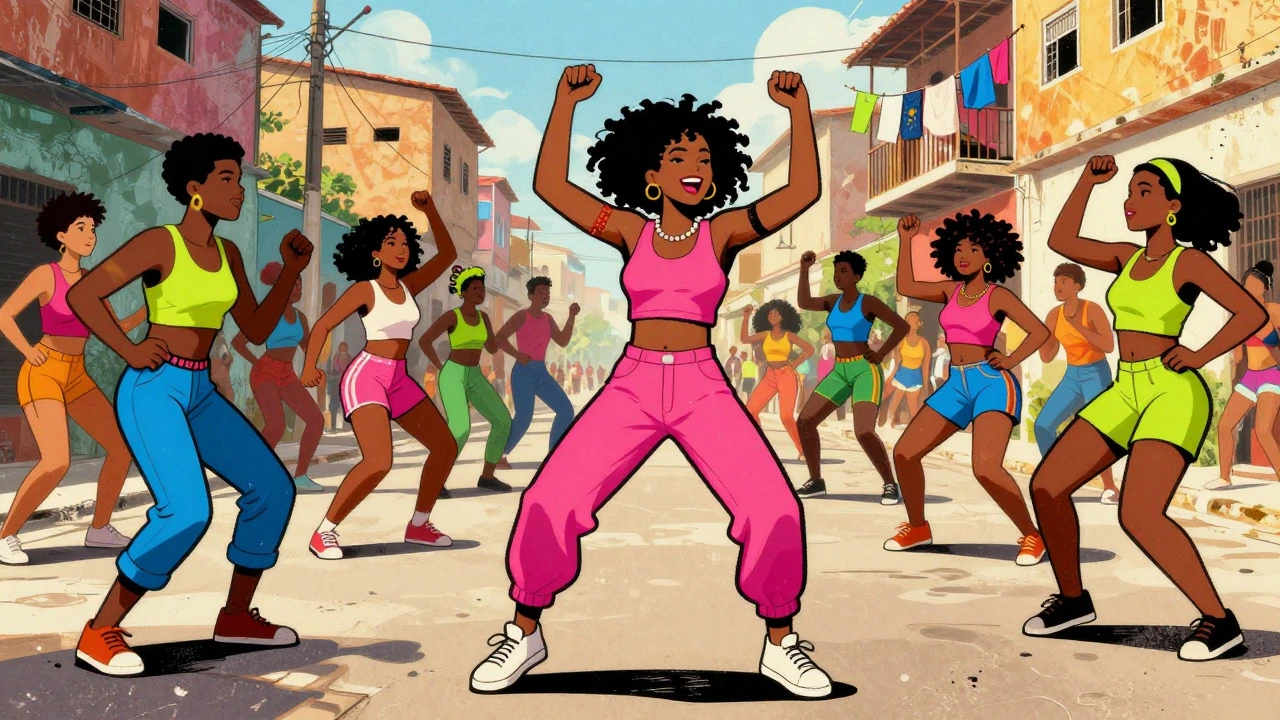
The story of women in funk extends far beyond the United States. In Brazil, a distinct movement emerged around funk carioca, a style that grew out of Rio de Janeiro’s favelas in the late 1980s and 1990s. This genre adopted Miami bass, electro, and hip-hop production techniques. Female performers known as funkeiras began gaining prominence in the late 1990s and early 2000s.
Artists like Tati Quebra-Barraco, Valesca Popozuda, and Deize Tigrona recorded highly explicit songs about sex, money, and everyday life in the favelas. Anthropologist Adriana Facina argues that these artists inaugurated a feminist strand within funk carioca by singing in the first person about women’s sexual pleasure and agency. Their lyrics inverted traditional male bragging, asserting that women control their own bodies and desires. A 2013 BBC feature noted that this explicitness represented "Brazil’s new feminist movement," challenging stereotypical images of Brazilian femininity.
Subsequent reporting highlights leaders like MC Carol and Anitta, who address gendered violence, racism, and class oppression alongside sexual self-assertion. While men still dominate roles as DJs and producers in Brazil, the funkeiras have reshaped lyrical content and public discourse, translating the slogan "my body, my choice" into local vernacular and dance-floor practice.
Key Contributions of Women in Funk
To understand the scope of their impact, it helps to compare specific contributions across different eras and regions. The table below outlines key attributes of several prominent women funk artists, highlighting their unique approaches to the genre.
| Artist | Primary Era | Signature Style | Notable Contribution |
|---|---|---|---|
| Lyn Collins | Early 1970s | Gritty Soul-Funk | Pioneered the 'Mama Feelgood' persona; heavily sampled in hip-hop. |
| Chaka Khan | Mid-Late 1970s | Jazz-Inflected Funk | Mainstreamed female funk vocals; defined the 'Queen of Funk' image. |
| Betty Davis | Mid 1970s | Radical Funk-Rock | Explored taboo sexual themes; challenged respectability politics. |
| Labelle | Early-Mid 1970s | Space-Age Funk-Rock | Combined Afro-futurist visuals with strong female vocal leads. |
| Valesca Popozuda | 2000s-2010s | Funk Carioca | Championed working-class feminism and sexual autonomy in Brazil. |
Scholarship and the Reclaiming of History
For a long time, academic histories of funk focused on male bandleaders and "nation-building" narratives aligned with black nationalism. This approach often sidelined women’s contributions. However, recent scholarship has corrected this imbalance. Reiland Rabaka’s 2026 monograph, Black Feminist Funk: Funk Women and Black Musical Feminism, argues that these women collectively constitute a distinct black musical feminism. The book devotes sustained chapters to Labelle, Chaka Khan, and Betty Davis, contending that their work challenged patriarchy and conservative ideas about black women’s sexuality.
Musicians and fans have also contributed to this re-centering. Curated playlists like "Women of Funk" on streaming services assemble tracks from multiple decades, acting as accessible entry points for new listeners. Anthologies like James Brown’s Original Funky Divas, released in 1998, keep early-1970s work in circulation for new generations of samplers and scholars. These efforts ensure that the next generation hears the full story of funk’s development.
Current Status and Future Trajectories
By 2026, women funk artists occupy a more visible place in academic writing and retrospective journalism than they did in previous decades. Contemporary artists like Janelle Monáe continue to use funk’s grooves and call-and-response structures to explore queerness, non-binary gender, and speculative black futures. This intersection of funk and feminist politics remains a fertile site of experimentation.
The industry structures still face challenges. In both the U.S. and Brazil, women remain under-represented as producers and label executives. However, the artistic advantages carved out by pioneers like Davis and Khan allow current artists to explore lyrical terrains that male counterparts often left untouched. As archives expand and more women regain control over their back catalogues, the expectation is that they will be recognized not as footnotes, but as central architects of funk’s rhythmic and political power.
Who is considered the first major female funk artist?
While many women contributed in the late 1960s, Lyn Collins is often cited as one of the first to achieve significant commercial success as a lead vocalist in the early 1970s, particularly through her work with James Brown and her solo hit "Think (About It)."
How does Brazilian funk differ from American funk regarding women artists?
Brazilian funk carioca, led by funkeiras like Valesca Popozuda, often focuses on working-class feminist expression and explicit sexual autonomy in a more direct, vernacular way compared to the soul-jazz fusion or rock-influenced styles seen in American funk from the 1970s.
Why were women historically marginalized in funk history books?
Traditional funk historiography prioritized male bandleaders and black nationalist narratives of collective uplift, which often overlooked the intersecting pressures of race, gender, and class faced by women artists, leading to their contributions being minimized or attributed to male figures.
What is 'Afro-sonic feminist funk'?
It is a concept describing how contemporary artists use the sonic structures and performance conventions of funk to complicate gender politics, often by queering narratives of desire and embedding science-fiction themes that question fixed identities, as seen in the work of artists like Janelle Monáe.
Where can I listen to early recordings by women funk artists?
You can find early recordings in compilations like "James Brown’s Original Funky Divas" (1998) or curated playlists such as "Women of Funk" on major streaming platforms, which feature tracks from artists like Marva Whitney, Vicki Anderson, and Lyn Collins.