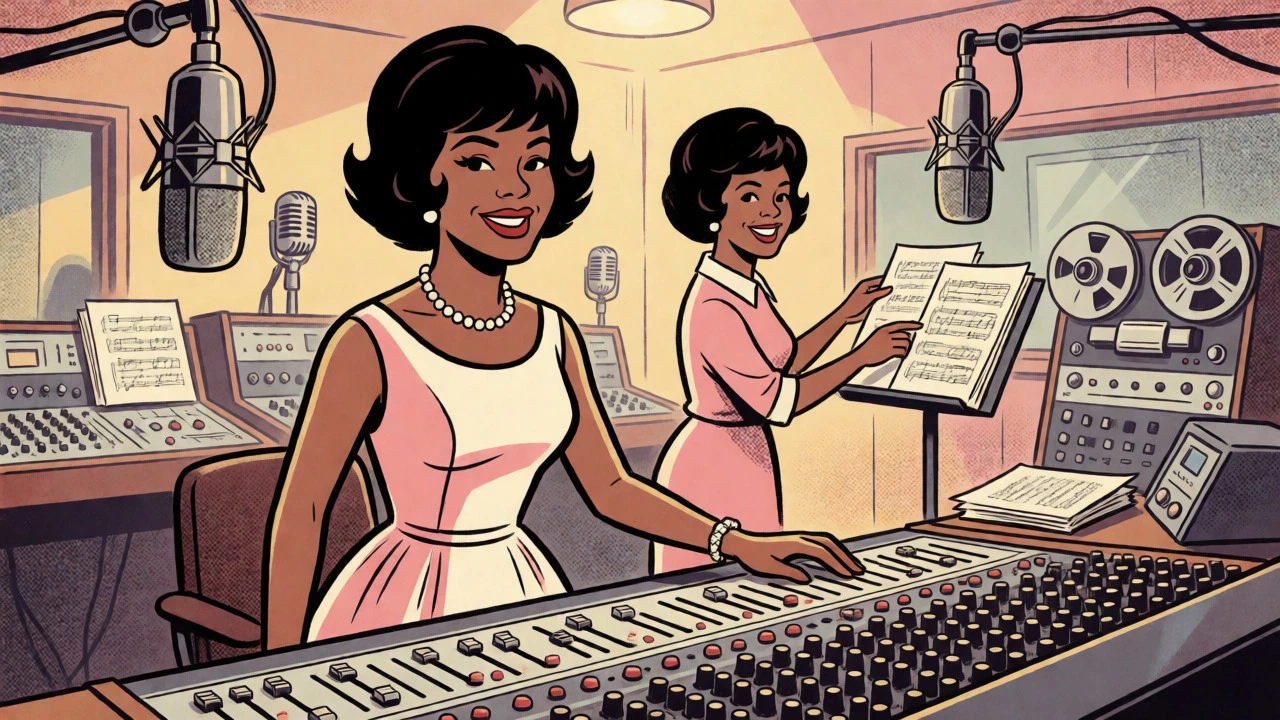

Think about the most iconic soul records from the 1960s. You likely picture Stevie Wonder’s voice or Marvin Gaye’s smooth delivery. But who actually shaped those sounds? Who decided which instruments played when, and who picked the songs that defined a generation? For decades, history books credited men with these roles. Yet, behind the mixing consoles at labels like Motown, Atlantic, and later independent houses, women were doing the heavy lifting as arrangers, producers, and A&R executives. They weren’t just singing; they were engineering the hits.
This isn’t just a feel-good story about inclusion. It’s a factual correction of the musical record. From Sylvia Moy breaking barriers in Detroit to Faith Newman acquiring entire catalogs in New York, women have dictated the sonic landscape of soul and R&B. If you’ve ever wondered why certain records sound the way they do, or how classic soul tracks ended up sampled in modern hip-hop, the answer often lies with a woman behind the boards.
The Motown Breakthrough: Sylvia Moy and Raynoma Gordy Singleton
In 1959, Berry Gordy founded Motown Records in Detroit. For the first few years, the creative leadership was overwhelmingly male. Enter Sylvia Rose Moy, born in 1938. She wasn’t hired to sing; she was hired to write and produce. By 1965, she had co-written and co-produced Stevie Wonder’s "Uptight (Everything's Alright)," a track that revived his career and became a massive hit. This made her one of the first women to receive an official production credit on a major Motown single.
Moy didn’t work alone in the shadows. Raynoma Gordy Singleton, Berry Gordy’s wife, functioned as a co-producer and studio organizer in the early 1960s. While her name rarely appeared on record labels due to industry norms of the time, her influence on arrangements and production infrastructure was critical. She helped build the operational backbone that allowed Motown’s assembly-line style of hit-making to function smoothly. Together, Moy and Singleton laid the groundwork for female authority in the studio, even if their contributions were often filtered through male-dominated credit systems.
| Name | Role | Key Work | Year |
|---|---|---|---|
| Sylvia Moy | Producer/Songwriter | "Uptight (Everything's Alright)" | 1965 |
| Valerie Simpson | Co-Producer | "Ain't Nothing Like The Real Thing" | 1968 |
| Raynoma Gordy Singleton | Studio Organizer/Co-Producer | General Infrastructure & Arrangements | 1960s |
Valerie Simpson: The Multi-Hyphenate Powerhouse
If Sylvia Moy opened the door, Valerie Simpson kicked it wide open. Born in 1946, Simpson started at Motown as a songwriter alongside her husband, Nickolas Ashford. By 1968, she had achieved what many thought impossible: she earned an official producer credit on "Ain't Nothing Like The Real Thing," a duet by Tammi Terrell and Marvin Gaye. This wasn’t just a token gesture. Simpson wrote, arranged, produced, and sang background vocals on the track. She controlled every layer of the recording.
Berry Gordy famously described her as a "pintsized ball of dynamite." Her role went beyond technical execution; she infused the recordings with gospel-influenced sophistication that defined the romantic soul era. In 1969, she repeated this integrated approach on "You're All I Need to Get By." Unlike some of her contemporaries who were limited to lyric writing, Simpson demonstrated that a woman could handle the complex logistics of producing a hit single. Her success paved the way for future female artists to demand creative control over their own productions.
The Songwriters Who Shaped the Sound
While Moy and Simpson held formal producer titles, other women influenced the soul sound through songwriting that inevitably bled into arrangement decisions. At Motown, names like Pam Sawyer, Gloria Jones, Marilyn McLeod, and Janie Bradford were prolific. In the tight-knit Motown system, songwriters often participated in session choices. For instance, Janie Bradford co-wrote "Money (That's What I Want)" in 1959, a proto-soul anthem. Marilyn McLeod co-wrote Diana Ross’s "Love Hangover" in 1976. Even if male producers like Hal Davis took the final bow, the structural DNA of these songs came from these women.
Gloria Jones is another fascinating case. She wrote and recorded "Tainted Love" in 1964, a track that would later become a synth-pop staple via Soft Cell. Her involvement in the original soul version shows how female creators were crafting material that transcended their immediate genre context. These women worked within a system that often obscured their full contribution, but their fingerprints are all over the golden age of soul.
A&R Executives: Controlling the Catalog and the Talent
As the music industry evolved from the 1960s into the 1980s and beyond, the power shifted slightly from pure production to Artists & Repertoire (A&R). A&R executives scout talent, match them with producers, and manage catalogs. Historically, this was a boys' club. A 2006 Los Angeles Times report noted that no woman ran a mainstream A&R department at any major label at that time. However, women were gaining ground in specialized and independent sectors.
Faith Newman exemplifies this shift. Starting at Def Jam Recordings in the early 1980s, she helped build the label’s administrative foundation. Later, as Executive Vice President at Verse Music Group, she led the acquisition of the master catalogs for Salsoul Records and West End Records. These labels housed crucial 1970s soul, disco, and funk recordings. By controlling these masters, Newman influenced how classic soul was licensed and sampled in contemporary hip-hop and R&B. Her role proves that A&R isn’t just about finding new stars; it’s about curating historical memory.
Monica Lynch offers another perspective. Hired as the first employee at Tommy Boy Records in 1981, she rose to president by 1985. While Tommy Boy is known for hip-hop, its roster cross-pollinated heavily with R&B and dance music. Lynch’s dual role as executive and A&R director allowed her to shape the trajectory of urban music during a transformative decade. She operated in a space where corporate decision-making and creative curation overlapped, demonstrating that women could lead label-wide strategies.
Modern Landscape and Persistent Gaps
Fast forward to the 2020s. The landscape has changed, but parity remains elusive. Platforms like Xposure’s R&B/Soul/Funk A&R directory list professionals such as Pamela Charbit, an A&R Director at Warner Music Group. Annie Elise works as an A&R manager at Nettwerk Music Group. These roles show women holding mid-tier to senior positions in artist development. Yet, the top echelons of mainstream A&R departments still skew heavily male.
A 2018 compilation titled "150+ Female Producers You Need To Know" highlighted the sheer number of women working in production across genres, including soul and R&B. This contrasts sharply with the handful of credited women producers in the 1960s. The growth is real, but so is the disparity. Women are increasingly visible as directors and managers, but the structural power to greenlight budgets and sign flagship artists still often rests with men.
The journey from Sylvia Moy’s uncredited assistance to Faith Newman’s catalog acquisitions reveals a steady, albeit slow, accumulation of authority. Women behind the boards didn’t just participate in soul music; they architected it. Recognizing their specific contributions-from arranging horn lines to licensing master tapes-corrects the narrative. It shifts the focus from who sang the words to who built the world around them.
Who was the first female producer at Motown?
Sylvia Moy is widely recognized as Motown’s first official female record producer and songwriter. She broke this barrier in 1965 by co-writing and co-producing Stevie Wonder’s hit "Uptight (Everything's Alright)." Before her, women were primarily credited as singers or songwriters without production titles.
What does A&R stand for in the music industry?
A&R stands for Artists and Repertoire. A&R executives are responsible for scouting new talent, overseeing artistic development, and managing the relationship between artists and the record label. In the context of soul and R&B, they also play a key role in selecting songs and matching artists with appropriate producers and arrangers.
Did Valerie Simpson produce her own songs?
Yes, Valerie Simpson received official producer credits starting in 1968. She co-produced major hits like "Ain't Nothing Like The Real Thing" and "You're All I Need to Get By" for Motown. Her role involved writing, arranging, producing, and performing, making her one of the most comprehensive female talents in soul music history.
Why were women often uncredited in early soul production?
Industry norms in the 1960s favored male authority figures. Women like Raynoma Gordy Singleton contributed significantly to production and organization but were often not listed on record labels. Additionally, songwriters frequently influenced arrangements without receiving separate arrangement or production credits, leading to a historical underrepresentation of their technical contributions.
How did women influence soul catalogs in the 2000s?
Executive A&R specialists like Faith Newman acquired entire catalogs of classic soul labels such as Salsoul and West End Records. By controlling these master recordings, they influenced how classic soul was licensed for use in modern films, commercials, and hip-hop samples, effectively shaping the cultural legacy and commercial viability of historic soul music.


