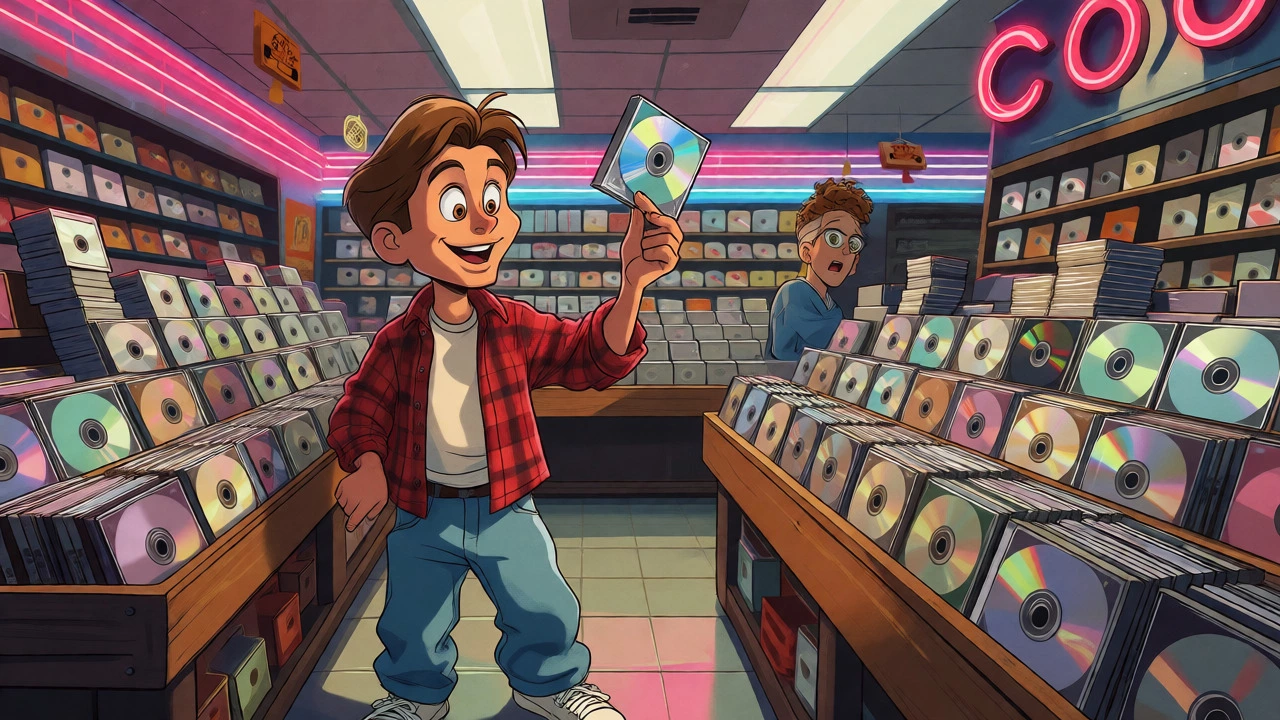

You might think the 1960s gets all the credit for changing music forever. After all, that was when rock and roll exploded and the album became an art form. But if you look at how we actually buy, hear, and share songs today, the real revolution happened ten years later. The 1990s weren't just a cool era of flannel shirts and boy bands; they were the hinge point where music stopped being a physical object and started becoming data.
Think about your last Spotify session. You didn't walk into a store, pick up a plastic case, and hope the artist inside matched the cover. You clicked a button, and the song appeared. That convenience, that instant access, and even the way charts work now? It all traces back to three specific shifts that collided in the 1990s: the rise of digital formats, the invention of accurate sales tracking, and the birth of the internet as a music player. No other decade packed this many structural changes into ten short years. Let's look at why the 90s still dictate how the music business runs.
The Great CD Bubble and Its Collapse
Here is a fact that surprises most people: the 1990s produced the highest volume of recorded music sales in human history. According to economic analysis from the Federal Reserve Bank of Richmond, the global market saw a "significant one-time boost" as consumers rushed to replace their vinyl records and cassette tapes with Compact Discs (CDs). By the year 2000, Americans alone bought 943 million CDs. That number has never been reached again, before or since.
But here is the twist. The same technology that made CDs so popular-digital audio-also killed them. In the early 90s, CDs felt like magic. They offered perfect sound quality without the hiss of cassettes or the scratches of vinyl. Labels loved them because they could charge more for less production cost. But by the mid-90s, writable CDs arrived. Suddenly, you could copy a CD onto another blank disc with zero loss of quality. This destroyed the scarcity that kept prices high. If you could make a perfect copy for pennies, why pay $18 for the original?
| Format Era | Dominant Technology | Consumer Behavior | Industry Impact |
|---|---|---|---|
| Pre-1990s | Vinyl & Cassette | Scarcity-driven ownership | High barriers to copying |
| 1990-1995 | Read-only CD | Mass replacement of old formats | Record revenue peaks |
| 1995-1999 | Writable CD & MP3 | Unlimited free duplication | Erosion of unit price value |
| Post-2000 | Digital Files/Streaming | Access over ownership | Retail collapse; subscription models |
This wasn't just a dip in sales; it was a structural crisis. Between 2000 and 2008, CD sales dropped by over 50%. The industry had built its entire business model on selling plastic discs, but the 90s taught consumers that music could be infinite and free. The bubble burst, leaving behind a landscape where owning a record no longer meant much if you could just download the file.
SoundScan Changed Who Got Heard
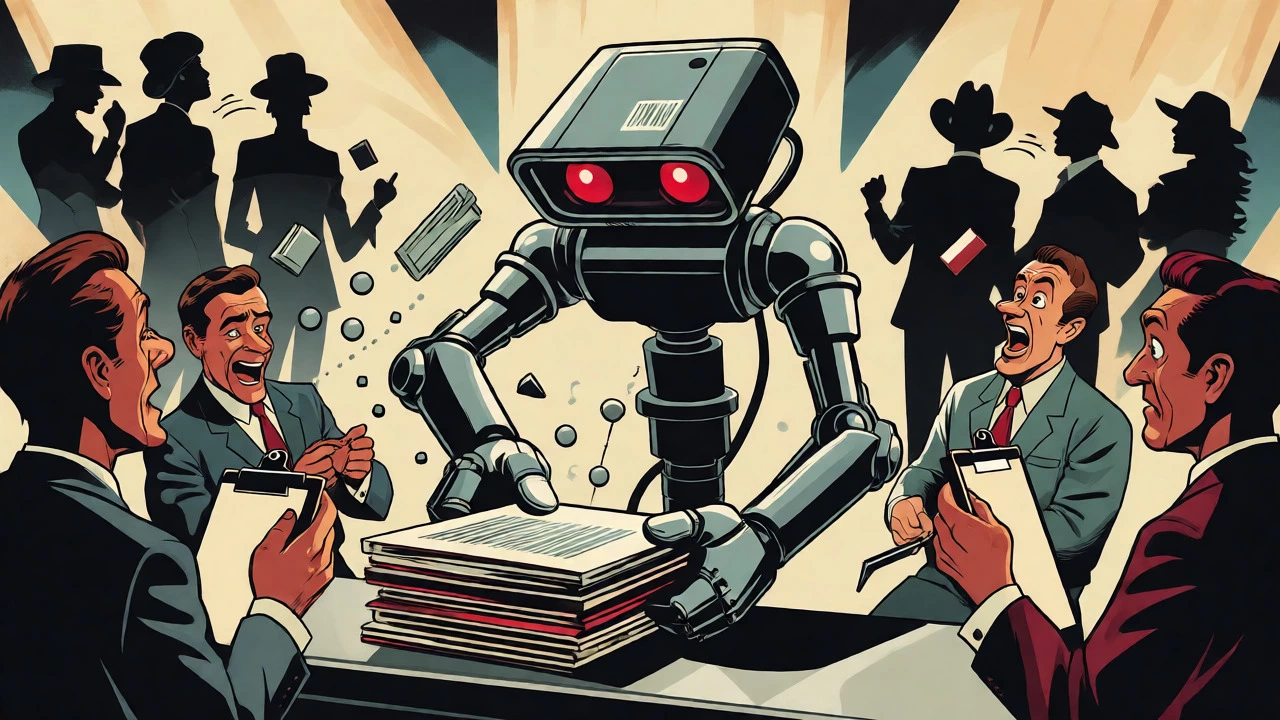
If you've ever wondered why hip-hop and country suddenly took over the radio in the 90s, blame a barcode scanner. Before May 25, 1991, Billboard magazine determined its famous charts by asking record store owners which albums were selling. It was messy. Store owners often lied to favor their favorite artists or those who paid for promotion. It was based on vibes, not facts.
Then came Nielsen SoundScan. This system switched chart compilation to computerized point-of-sale data. Every time a barcode was scanned at checkout, the sale was counted instantly and accurately. The result? A shockwave through the industry. Data revealed that genres previously ignored by mainstream radio-like rap, R&B, and alternative rock-were actually selling massive numbers. Radio programmers couldn't ignore the hard evidence anymore. If the scanner said it sold, it got played.
This shift democratized success. It allowed niche genres to break into the mainstream because their commercial viability was finally visible. It also gave labels real-time feedback on marketing campaigns. For the first time, the music business ran on algorithms before streaming services existed. The 90s proved that data drives culture, a lesson that every modern platform uses today.
Napster and the Death of Ownership
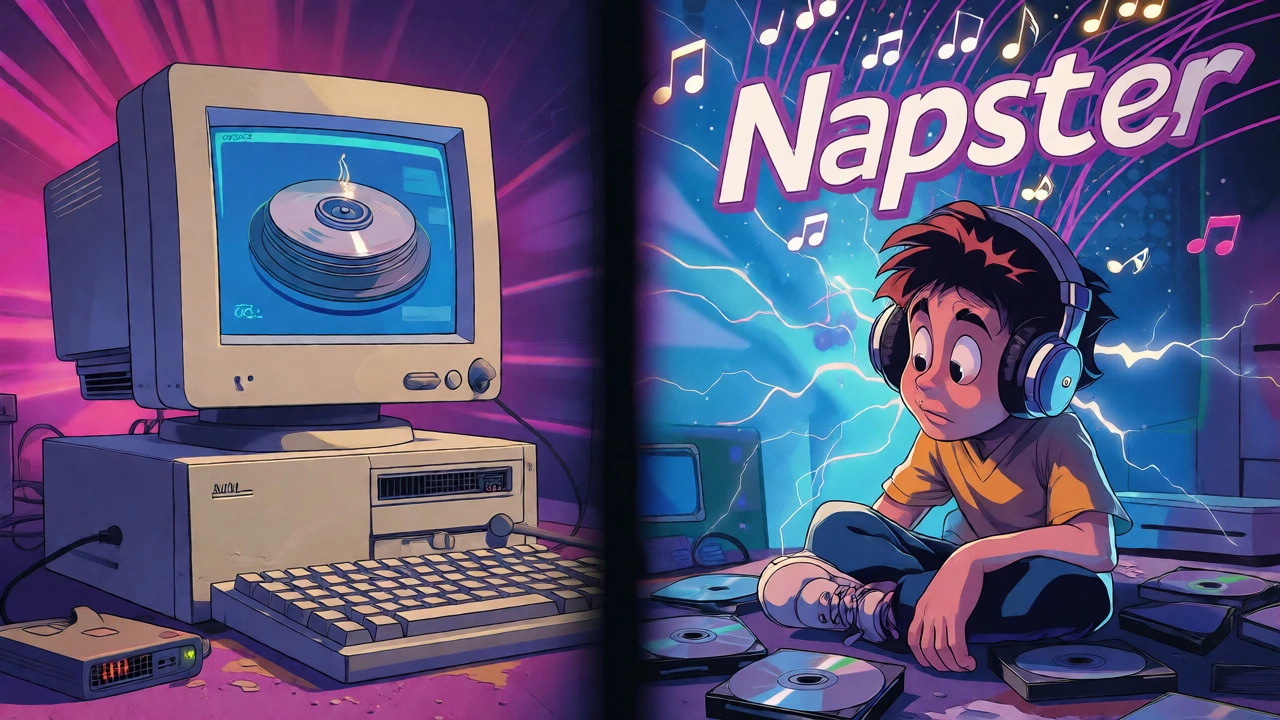
By the late 90s, two technologies merged to change everything: the MP3 format, which compressed audio files to one-tenth of their original size without noticeable quality loss, and the widespread adoption of home internet connections. Enter Napster, launched in June 1999. Napster wasn't just a website; it was a peer-to-peer network that let users swap these small MP3 files directly from one computer to another.
For the first time, you didn't need to own the album to hear a single track. You could search for a song, download it in minutes, and listen immediately. This trained a generation to expect instant access. It fragmented the album into individual tracks. Why buy ten songs when you only liked two? Napster normalized the idea that music was a utility, like water or electricity, rather than a luxury good.
Sociologist Ulrich Dolata notes that this period eroded the "scarcity" that underpinned the traditional business model. When you can reproduce something infinitely at near-zero cost, its monetary value plummets. The Recording Industry Association of America (RIAA) fought back with lawsuits, arguing that file-sharing was theft. And legally, they won. But culturally? They lost. Consumers had tasted freedom. The genie was out of the bottle. Even after Napster shut down in 2001, the expectation of easy, cheap digital access remained, paving the way for iTunes and eventually Spotify.
Globalization and the Diversification of Pop
The 1990s didn't just change how we listened; it changed who was listening and what they heard. While the 80s were dominated by white synth-pop and hair metal, the 90s forced the mainstream to reckon with Black and Latinx cultures. Thanks to SoundScan proving the sales power of these genres, labels began investing heavily in hip-hop, R&B, and Latin pop. Artists like Tupac, Whitney Houston, and Ricky Martin weren't just crossover acts; they defined the sonic vocabulary of global pop.
This trend extended beyond the US. In South Korea, entertainment agencies founded in the early 90s began creating systematic training programs for "idol" groups, blending Western dance music with local aesthetics. This infrastructure laid the groundwork for the K-Pop explosion of the 2010s. Similarly, Britpop in the UK used guitar-based rock to negotiate national identity during a time of rapid globalization. Bands like Oasis and Blur weren't just making hits; they were using music to define what it meant to be British in a changing world.
A 2025 paper titled "The music business case for diversity" argues that the 90s marked the moment when inclusion became a financial imperative. Labels realized that diverse rosters delivered loyal audiences and significant sales. This wasn't just social progress; it was smart business. The aesthetic dominance of Black and Latinx rhythms in today's top 40 hits is a direct legacy of the 90s market correction.
Why It Still Matters Today
You might ask, "So what? We have better tech now." True, but we are living in the house the 90s built. Streaming services are essentially monetized versions of the behavior Napster introduced. Algorithmic recommendations are the evolved children of SoundScan's data-driven approach. The expectation that any song should be available instantly is a 90s mindset.
Furthermore, our nostalgia cycles prove the decade's impact. Flashback parties dedicated to 90s dance music and Britpop remain huge commercial draws decades later. Scholars note that audiences born in the 90s maintain a strong affective attachment to this era, viewing it as a baseline of authenticity. The 90s compressed format shifts, measurement revolutions, and cultural diversification into a single ten-year span. No subsequent decade has managed such a complete overhaul of the ecosystem. We are still navigating the consequences of the choices made between 1990 and 1999.
Did the 1990s really sell more music than any other decade?
Yes, in terms of pure unit volume for physical media. The transition from vinyl/cassettes to CDs created a temporary sales bubble. By 2000, US CD sales peaked at 943 million units, a figure never replicated before or since. However, total revenue per listener may differ due to inflation and the current low-cost nature of streaming subscriptions.
How did SoundScan change the music charts?
Before 1991, Billboard charts relied on subjective reports from record store employees. SoundScan introduced objective, barcode-scanned point-of-sale data. This revealed that genres like hip-hop and country were selling far more than previously acknowledged, forcing radio stations and marketers to adapt to actual consumer buying habits rather than industry bias.
Was Napster illegal?
Napster itself was a legal service that facilitated file sharing, but the majority of transactions involved copyrighted material shared without permission. Courts ruled that Napster was liable for contributory copyright infringement because it knew about the infringing activity and failed to stop it. It shut down in 2001 following a settlement with the RIAA.
Why is the MP3 format considered a turning point?
MP3 compression reduced file sizes by roughly 90% compared to uncompressed CD audio. This made it feasible to store large music libraries on personal computers and transfer them over slow dial-up internet connections. Without MP3, mass digital distribution and services like Napster would not have been technically possible in the late 1990s.
Did the 1990s influence modern streaming services?
Absolutely. The 90s established the user expectation for instant, à la carte access to individual songs rather than full albums. It also demonstrated the power of data-driven discovery. Modern platforms like Spotify and Apple Music rely on the behavioral patterns and technological foundations (digital files, internet distribution, algorithmic sorting) that were pioneered during the 1990s.