
Remember the sheer audacity of a Michael Jackson sequined glove or the unapologetic excess of a Madonna cone bra? It wasn’t just costume; it was a visual language that defined a decade. Fast forward to October 2026, and you’ll see those same silhouettes strutting down the runways for Spring/Summer collections at houses like Saint Laurent and Versace. But this isn’t lazy nostalgia. Major fashion brands are actively mining the visual DNA of 1980s music culture-MTV pop, New Romantic clubs, and early hip-hop-to craft a new identity for the post-streetwear era.
You might wonder why we’re seeing big shoulders and neon colors again now, decades later. The answer lies in a cultural shift. After years dominated by minimalist streetwear and quiet luxury, consumers are craving spectacle. They want clothes that feel like armor, much like the power suits worn by corporate climbers and pop stars alike between 1982 and 1989. Designers aren’t just copying old looks; they’re translating the theatricality of 1980s music videos into modern luxury fabrics. If you’ve noticed your favorite label suddenly looking louder, sharper, and more dramatic, here is exactly how they are pulling from the past to define our present.
The Power Suit: From Corporate Armor to Runway Statement
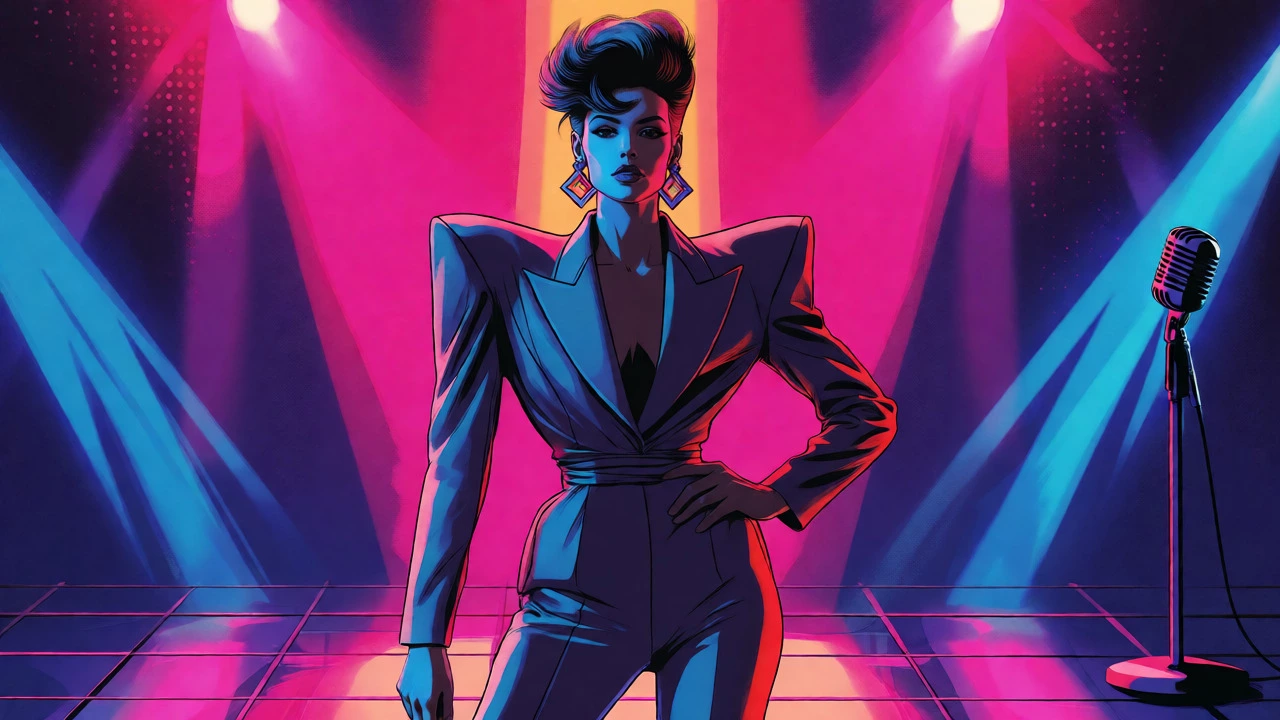
The most obvious carryover from the 1980s music scene is the power suit. Back then, designers like Claude Montana and Thierry Mugler used exaggerated shoulder pads to broaden the torso, projecting authority in an economy obsessed with visual dominance. These weren’t just office uniforms; they were stage costumes for figures like David Bowie and Boy George, who blended androgyny with theatrical flair. Today, Anthony Vaccarello at Saint Laurent has been quietly championing this look for seasons, but now the rest of the industry is catching up.
In the Spring/Summer 2026 collections, you’ll see these silhouettes reinterpreted for a modern context. We’re talking about oversized pussy-bow blouses paired with tight waists, directly recalling the Rive Gauche archives from the late 1970s and early 1980s. This isn’t just about fitting into a boardroom; it’s about asserting presence in a digital world where image is currency. The logic is simple: if you want to stand out in a feed full of neutral tones, you need structure. You need volume. You need the kind of confidence that Prince displayed when he wore ruffled shirts and slim-cut trousers, normalizing flamboyance for mainstream audiences long before gender-fluid fashion became a marketing term.
Hip-Hop’s Logo Obsession Goes Luxury
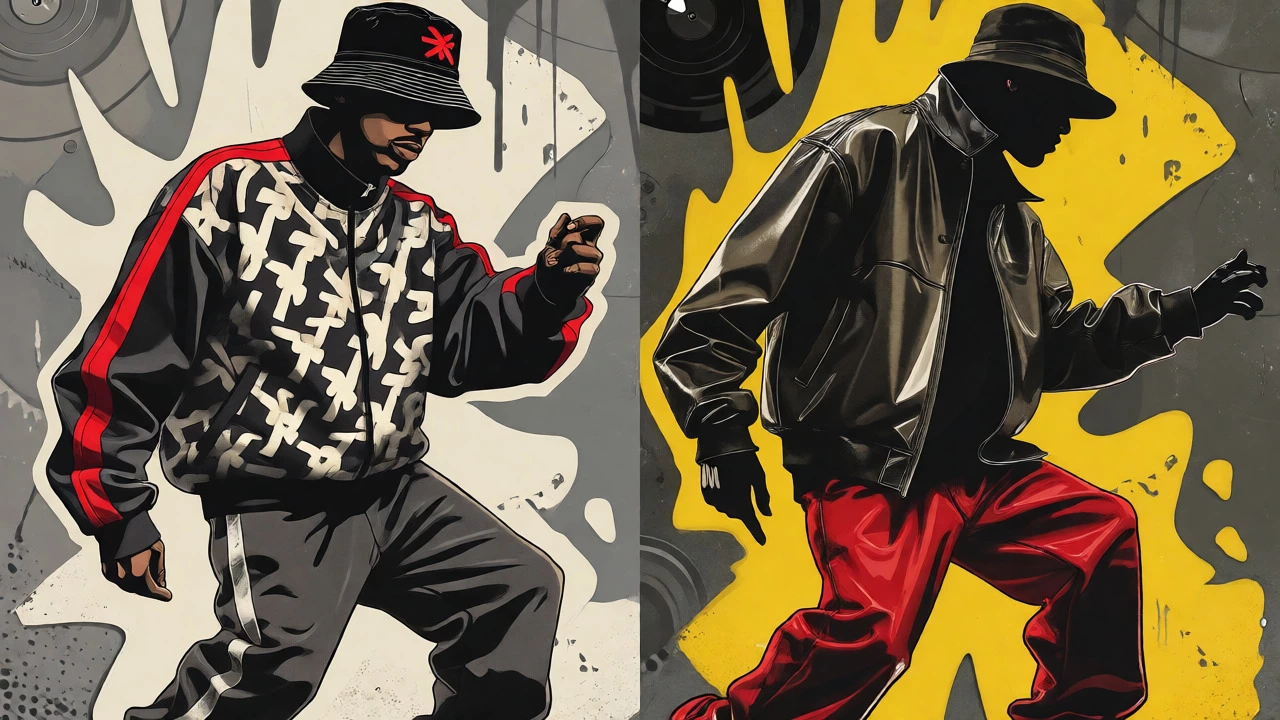
If power dressing represents the high-end club scene, early hip-hop provides the street-level blueprint for today’s logo-heavy luxury. In the mid-1980s, groups like Run-DMC turned Adidas sneakers and Kangol caps into global status symbols. Their hit single "My Adidas" in 1986 wasn’t just a song; it was a commercial breakthrough that proved musicians could drive brand loyalty. Harlem tailor Dapper Dan took this further by customizing pieces with oversized Gucci and Fendi logos, foreshadowing the monogram-mania that would dominate luxury fashion decades later.
Today, brands are mining this specific era of hip-hop history to legitimize their own collaborations. When you see a boxy track jacket or conspicuous branding on a runway in 2026, it’s a direct nod to that moment when subculture aesthetics moved into the mainstream. BBC Culture notes that hip-hop has reached the "top" of fashion, meaning its original visual codes-oversized garments, bold colors, athletic details-are no longer niche. They are the standard. Contemporary labels use these references to bridge the gap between high fashion and street credibility, appealing to a generation that grew up watching MTV but now buys designer goods.
Dancewear Meets High Fashion
It’s not all suits and logos. Another huge chunk of the 1980s music aesthetic comes from the aerobic boom. Jane Fonda’s exercise videos didn’t just change workout routines; they changed everyday style. Off-the-shoulder sweatshirts, leggings, and leotards moved from the gym to the streets, influencing everyone from teenagers to pop stars like Cyndi Lauper. Today, designers are reviving these dancewear-inspired cuts but elevating them with high-tech fabrics.
Consider the current trend of mixing tailored jackets with stretch bodysuits. This mirrors Donna Karan’s mid-1980s modular system, which allowed women to transition seamlessly from day to night. Modern brands are using advanced Lycra blends to achieve the slouchy, comfortable silhouette of 1983 without the bulk of older synthetic materials. It’s practical, sure, but it also carries the energetic vibe of a music video shoot. When Chloé shifted under Chemena Kamali from its signature 1970s bohemian roots to an "80s L.A. glam" mood, they tapped into this exact West Coast rock and pop imagery. Think voluminous hair, strong-shouldered jackets, and tight jeans-a look that screams leisure and luxury simultaneously.
Color and Denim: The Visual Language of MTV
You can’t talk about 1980s music style without talking about color. MTV launched in 1981, turning artists into mass-market style icons almost overnight. Suddenly, violet mom jeans, neon accents, and stone-wash denim were everywhere. Versace’s recent collections have embraced this maximalism, presenting looks reminiscent of a modern Fran Drescher in *The Nanny*-a character whose wardrobe was rooted in late-1980s high-gloss power dressing.
| 1980s Music Subculture | Key Visual Elements | Modern Brand Interpretation (2026) |
|---|---|---|
| New Romantic / Synth-Pop | Androgynous tailoring, ruffles, dramatic collars | Saint Laurent’s pussy-bow blouses and sharp waists |
| Early Hip-Hop | Oversized logos, tracksuits, bucket hats | Luxury monogrammed outerwear and boxy cuts |
| Aerobic Pop | Leggings, off-shoulder tops, bright neons | Tech-fabric bodysuits and colored nylon trenches |
| Glam Rock / Funk | Sequins, metallics, military jackets | Embellished accessories and structured leather |
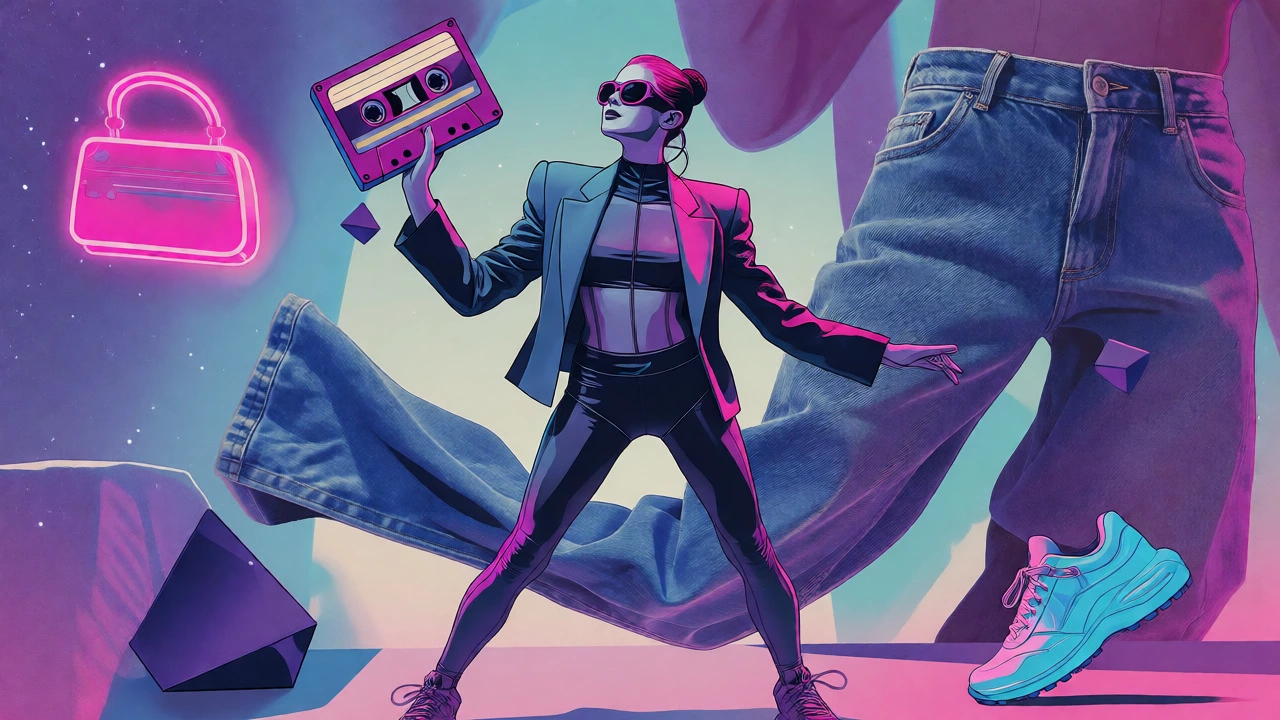
Denim plays a crucial role here too. Sourcing Journal reports that the 1980s are back in denim, with brands like Valentino embracing vivid colors and striking silhouettes. The return of the high-waisted "mom jean" isn’t random; it’s a direct callback to the sitcom wardrobes and music videos of 1983-1989. By using stone-washes and relaxed cuts, brands connect present-day runway looks to those original media images, creating a sense of familiarity while updating the fit for modern bodies.
Why Now? The Pendulum Swing to Maximalism
Fashion moves in cycles, often swinging wildly from one extreme to another. For years, the industry favored minimalism-clean lines, muted palettes, and understated luxury. That era is fading. The current resurgence of 1980s music style reflects a broader appetite for maximalism after a period of restraint. Editorial reviews describe the Spring/Summer 2026 runways as an "80s bonanza," noting how the fashion community enthusiastically embraced larger-than-life elements.
This shift isn’t just about aesthetics; it’s about psychology. In uncertain times, people often gravitate toward styles that project strength and visibility. The 1980s were a decade of economic boom and corporate culture, where dressing well was a form of social signaling. Today, as we navigate a complex digital landscape, wearing a garment that feels like "armor" offers a similar psychological benefit. It allows you to assert your identity clearly and boldly. Brands know this. They know that a consumer willing to buy a neon trench or a heavily padded blazer is making a statement about their desire to be seen.
How to Wear the 1980s Revival Without Looking Costumed
So, how do you integrate this trend into your actual life without looking like you’re going to a Halloween party? The key is subtlety and balance. You don’t need to wear a full power suit every day. Start with one element that nods to the era.
- Pick One Silhouette: Choose either the broad shoulder or the narrow waist, not both at once unless you’re confident. A blazer with slight padding over a fitted top works better than a full double-breasted suit for daily wear.
- Mix Textures: Pair a sleek, modern fabric with a retro cut. For example, wear high-waisted denim with a crisp, contemporary white shirt rather than a frilly blouse.
- Use Color Wisely: Neon doesn’t have to mean head-to-toe glow. A single accessory in a pop color-like a bag or shoes-can reference the MTV era without overwhelming your outfit.
- Keep Accessories Minimal: Since the clothing is loud, keep jewelry simple. Let the silhouette do the talking.
This approach respects the historical influence while adapting it to 2026 sensibilities. It acknowledges the source material-the music videos, the concerts, the clubs-without getting lost in cosplay. Fashion brands are mining this decade because it offers rich visual storytelling, but as consumers, we get to decide how much of that story we want to tell.
Why are 1980s fashion trends returning in 2026?
The return is driven by a cultural swing away from minimalist streetwear toward maximalism. Consumers are seeking bold, expressive styles that project confidence and visibility, mirroring the power-dressing ethos of the 1980s music and corporate scenes.
Which music genres influenced 1980s fashion the most?
Three main genres shaped the look: MTV-driven pop (Madonna, Michael Jackson), New Romantic club culture (Boy George, Duran Duran), and early hip-hop (Run-DMC). Each contributed distinct elements like power suits, androgynous tailoring, and logo-centric sportswear.
How did MTV change fashion in the 1980s?
Launched in 1981, MTV turned musicians into global style icons. Artists’ outfits became instantly copyable by fans worldwide, accelerating trend cycles and making visual spectacle a key component of celebrity culture and consumer fashion.
What is the connection between hip-hop and luxury fashion today?
Early hip-hop culture in the 1980s popularized luxury logos through artists like Run-DMC and Dapper Dan’s customizations. Today, luxury brands acknowledge this history by incorporating oversized logos and athletic cuts, validating hip-hop’s role in shaping modern high fashion.
Is the 1980s trend just nostalgia?
Not entirely. While nostalgia plays a role, brands are also responding to a demand for stronger silhouettes and vibrant colors. The 1980s offer a toolkit for self-expression that contrasts sharply with the understated styles of the previous decade.