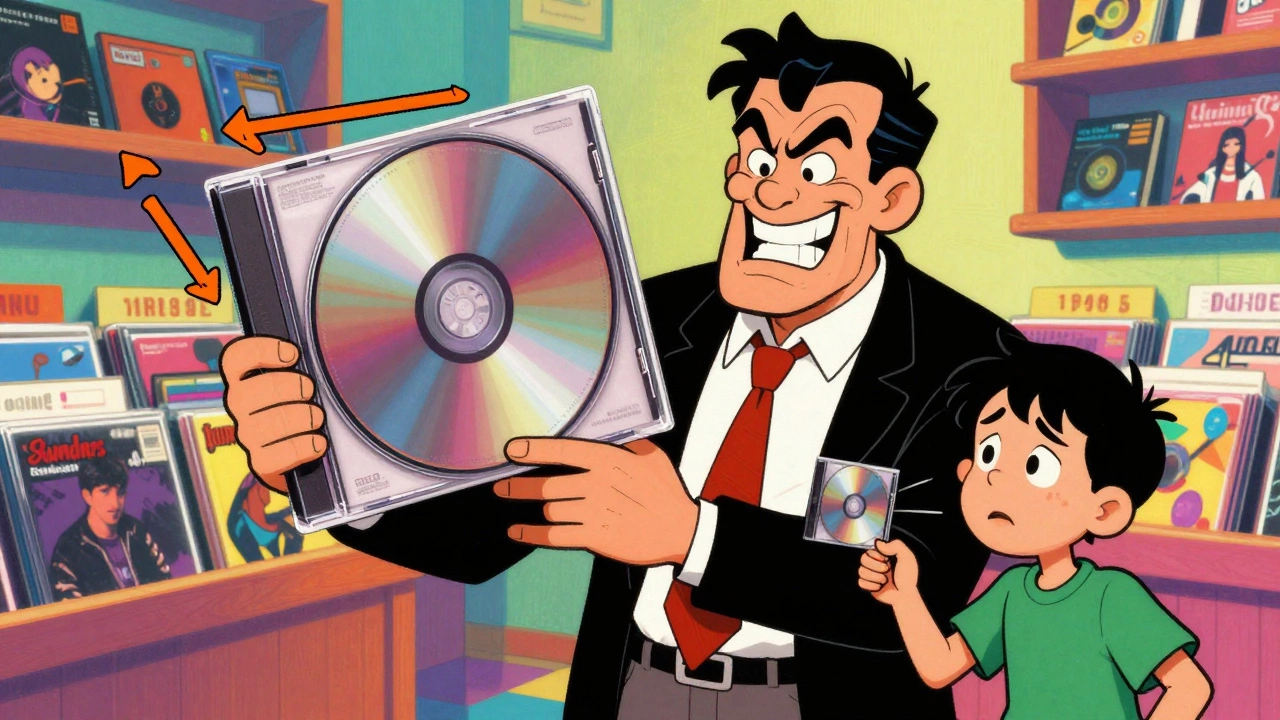

Imagine paying $20 for a plastic disc just because you liked one three-minute song. For a lot of us in the 90s, that was the deal. Record labels decided that the affordable "single" was a waste of potential profit, forcing everyone into full-album purchases. They thought they were geniuses for boosting their margins, but they were actually building a powder keg. When the technology to steal those songs finally arrived, the explosion didn't just hurt profits-it wiped out the physical single entirely. Digital piracy is the unauthorized copying and distribution of copyrighted audio files, and while the industry blamed it for everything, the real killer was a toxic mix of corporate greed and a lack of copy protection.
The Corporate Trap: Forcing the Album Purchase
In the early 1990s, major labels pulled a risky move: they started phasing out the single CD format. Why? Because if they could convince you to buy a full album for nearly $20 instead of a single for $4, their revenue skyrocketed. It worked for a while, but it created a massive gap in the market. Casual listeners who just wanted to sample a new artist were suddenly priced out. If you didn't want to commit two dozen dollars to a gamble, you were out of luck.
The cost of playing the game was also astronomical. Labels were spending seven figures just to get a song on the radio in the U.S. This high overhead meant that if a single didn't propel the parent album to platinum status, it was seen as a failure. By killing the affordable entry point, labels inadvertently taught consumers that the only way to get a single song without overpaying was to find a way to get it for free.
A Format Built to be Stolen
The CD (Compact Disc) was marketed as a miracle of durability and sound quality. But it had one fatal flaw: it had zero copy protection. When Philips and Sony launched the format, they didn't worry about encryption because the hardware needed to copy a disc was too expensive for the average person. They were essentially handing out digital master tapes to the public.
Then came the mid-90s shift. The invention of the MP3 changed the math. Suddenly, a massive audio file could be compressed into a tiny piece of data that still sounded decent. Combine that with the rise of CD burners-devices that could rip a disc and burn a copy faster than you could listen to the album-and the infrastructure for a revolution was ready. The CDs were already in people's homes; they were just waiting to be "ripped" and shared.
| Feature | Early 90s Model | Post-Piracy/iTunes Model |
|---|---|---|
| Price Point | High (~$18-20 per album) | Low ($0.99 per song) |
| Consumer Choice | Forced Album Purchase | A la carte Selection |
| Distribution | Physical Retail Stores | Digital Downloads/Streaming |
| Copy Protection | Non-existent on CDs | DRM (Digital Rights Management) |
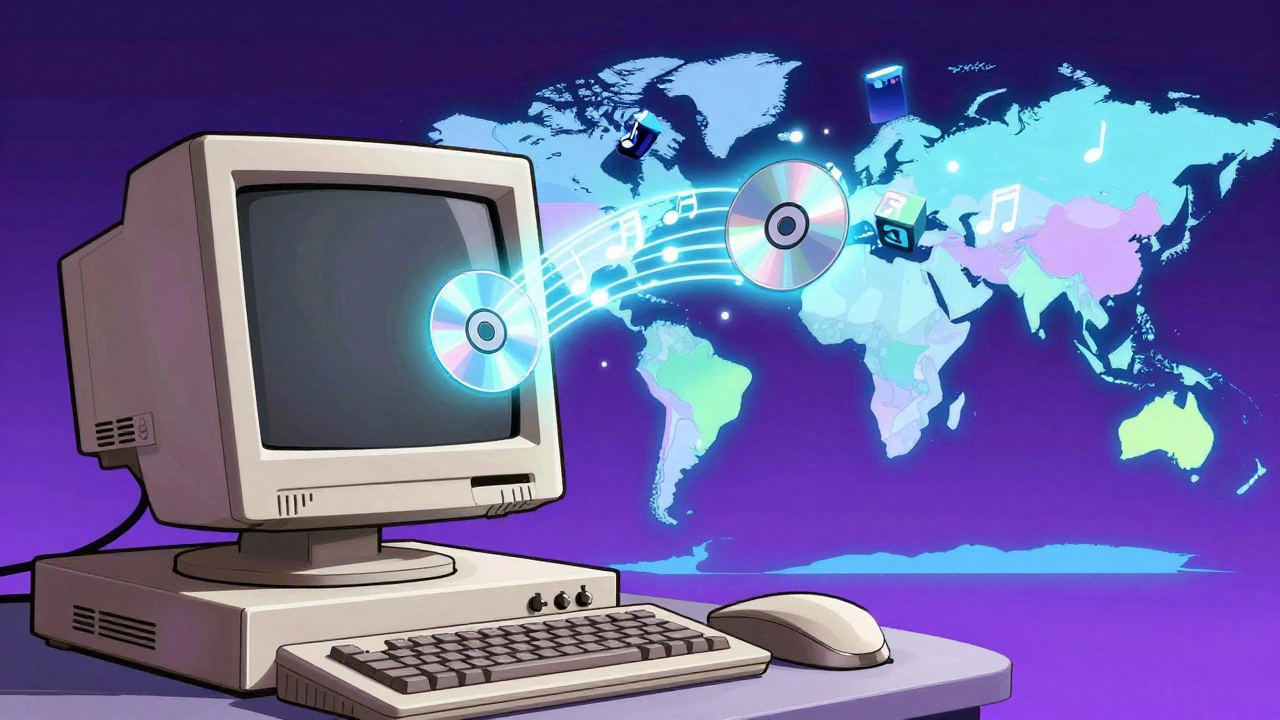
Napster and the Point of No Return
If the MP3 was the bullet, Napster was the trigger. It wasn't just about the technology; it was about the community. For the first time, a teenager in Oregon could trade tracks with someone in London instantly. This shifted the value of music from a physical object you owned to a digital service you accessed. There was a huge psychological difference between stealing a physical CD from a store and downloading a file from a peer-to-peer network.
The industry reacted with lawsuits and rage, but they missed the point. The users weren't just stealing; they were voting with their clicks against a pricing model that felt like a shakedown. Between 1999 and 2009, global music revenue plummeted by over 50%. In the U.S. alone, physical music revenue crashed from $12.8 billion in 1999 to just $5.5 billion by 2008. The RIAA pointed fingers at the pirates, but the data shows a more complex story: people stopped buying CDs because the CDs didn't offer the flexibility the modern world demanded.
The Myth of the 1:1 Sales Loss
The record labels loved to claim that every single download was a lost sale. They estimated that 2.1 billion CDs were downloaded for free while only 803 million were sold. On paper, that sounds like a catastrophe. But if you look at the actual revenue drop in those specific years, it was only around 6.7%. That's a massive gap. Why?
Because most people downloading for free weren't the same people who would have paid $20 for a CD. Research by experts like Rob and Waldfogel suggested the sales displacement rate was closer to 0.2 than 1.0. In plain English: for every five songs downloaded for free, maybe one person would have actually bought the physical disc. Piracy wasn't just stealing sales; it was acting as a discovery tool. People found music they loved via piracy and then spent money on concert tickets and merchandise.
The Aftermath: From iTunes to Spotify
The industry finally woke up when Apple launched the iTunes Store in 2003. Steve Jobs did what the labels refused to do: he unbundled the album. By selling songs for 99 cents, Apple gave consumers the legal alternative they had been craving since the early 90s. It proved that people were willing to pay for music-they just weren't willing to pay for the "filler" tracks on an album they didn't want.
Today, we live in the era of Streaming. Services like Spotify and Apple Music have essentially perfected the piracy model: infinite access, low monthly cost, and zero physical waste. The music industry is actually making more money now than it did during the CD peak, but it happened because they stopped fighting the tide and finally gave the consumer control over how they listen.
Did piracy actually cause the death of the CD?
Not exactly. Piracy accelerated the process, but the root cause was the music industry's decision to stop selling affordable single CDs and force consumers to buy expensive full albums. This created a demand for alternatives that piracy happened to fill.
Why didn't CDs have copy protection?
When CDs were introduced, the hardware required to copy a disc was prohibitively expensive and rare. The industry didn't see a need for encryption because they didn't think the average consumer could actually duplicate the media.
What is an MP3 and why was it important?
An MP3 is a compressed audio file format that reduces the size of a song significantly without losing too much quality. This made it possible to share music over the relatively slow internet connections of the 1990s.
How much did music revenue drop due to piracy?
Between 1999 and 2009, global music revenues fell by more than 50%. In the U.S., physical music revenue dropped from $12.8 billion in 1999 to $5.5 billion by 2008.
Did Napster help artists in any way?
While it hurt album sales, Napster and similar services acted as a discovery engine. Many artists found new global audiences through file sharing, which often led to increased ticket sales for live shows and more merchandise purchases.


