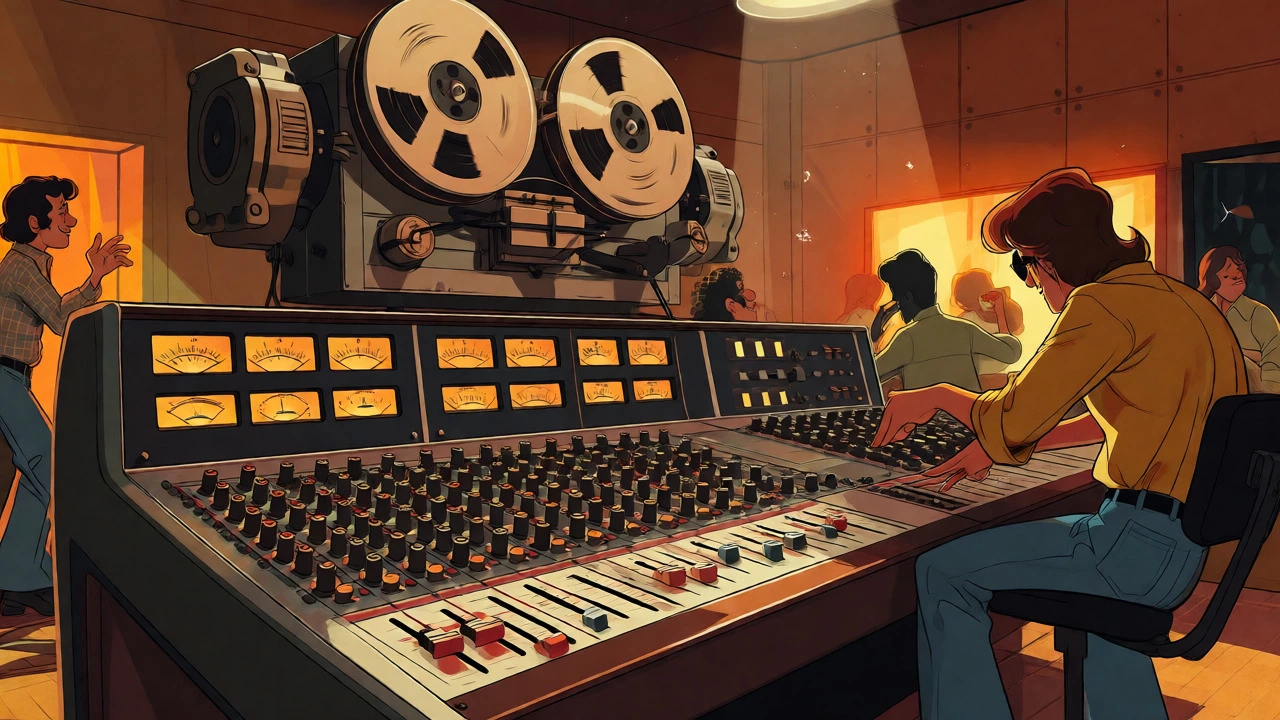

You put on a Led Zeppelin or Fleetwood Mac record, and something hits you differently than modern digital tracks. It’s not just nostalgia; it’s physics. The 1970s analog recording era represents the peak of magnetic tape technology, where engineers mastered the art of controlled distortion to create a sonic signature that remains unmatched in its musicality. This decade wasn't about capturing perfect, sterile audio; it was about sculpting sound through the limitations and non-linearities of hardware. If you've ever wondered why those albums feel "warm," "glued," and incredibly present, the answer lies in the specific interplay between two-inch tape, transformer-based consoles, and the physical constraints of vinyl.
The Physics of Tape Saturation and Frequency Response
At the heart of the 1970s sound is magnetic tape, specifically the 2-inch formats running at 15 inches per second (ips) that became industry standard after MCI introduced their 24-track machines in 1968. Unlike digital recording, which captures discrete samples with mathematical precision, tape records continuous electrical signals onto magnetic oxide. When engineers pushed levels into the red on VU meters, they weren't making mistakes; they were exploiting tape saturation. This phenomenon occurs when the magnetic particles align fully, creating soft clipping that generates even-order harmonics. These harmonics are musically pleasing, adding density and thickness to drums and bass without the harshness associated with digital clipping.
Crucially, tape behaves differently across the frequency spectrum. High frequencies saturate before low frequencies because shorter wavelengths align oxide particles more quickly. This results in natural high-frequency roll-off above roughly 15 kHz, smoothing out brittle transients from cymbals or electric guitars. However, this roll-off wasn't a bug-it was managed through sophisticated equalization. Tape record EQ stages often boosted high frequencies by approximately 20 dB around 10-15 kHz to compensate for inherent losses during playback. The result? A presence region that feels airy yet never piercing, a hallmark of the era's production quality.
Console Coloration: The Neve Effect
If tape provided the foundation, the mixing console added the color. During the 1970s, studios like Abbey Road, Olympic, and Trident relied heavily on Neve consoles, particularly models equipped with the 1073 preamplifiers. These units used input transformers that imparted a distinct character: a gentle emphasis in the 300 Hz to 2 kHz midrange region and a smooth roll-off above 6-8 kHz. This isn't just technical jargon; it explains why vocals and snare drums from this period sit so comfortably in the mix. The transformer coupling acts as a subtle compressor and harmonic generator, "gluing" individual tracks together before they even hit the tape.
Other manufacturers contributed unique flavors. Helios consoles, favored by some UK rock producers, offered a grittier, more aggressive midrange, while API desks provided punchier transient response. But the consensus among engineers today is that the cumulative effect of these analog circuits-transformers, op-amps, and passive EQs-created a cohesive sonic image. Modern plugins attempt to replicate this, but the original hardware introduced complex, non-linear interactions that remain difficult to model perfectly. The console wasn't just a routing tool; it was an instrument in itself.
Vinyl Mastering Constraints and EQ Curves
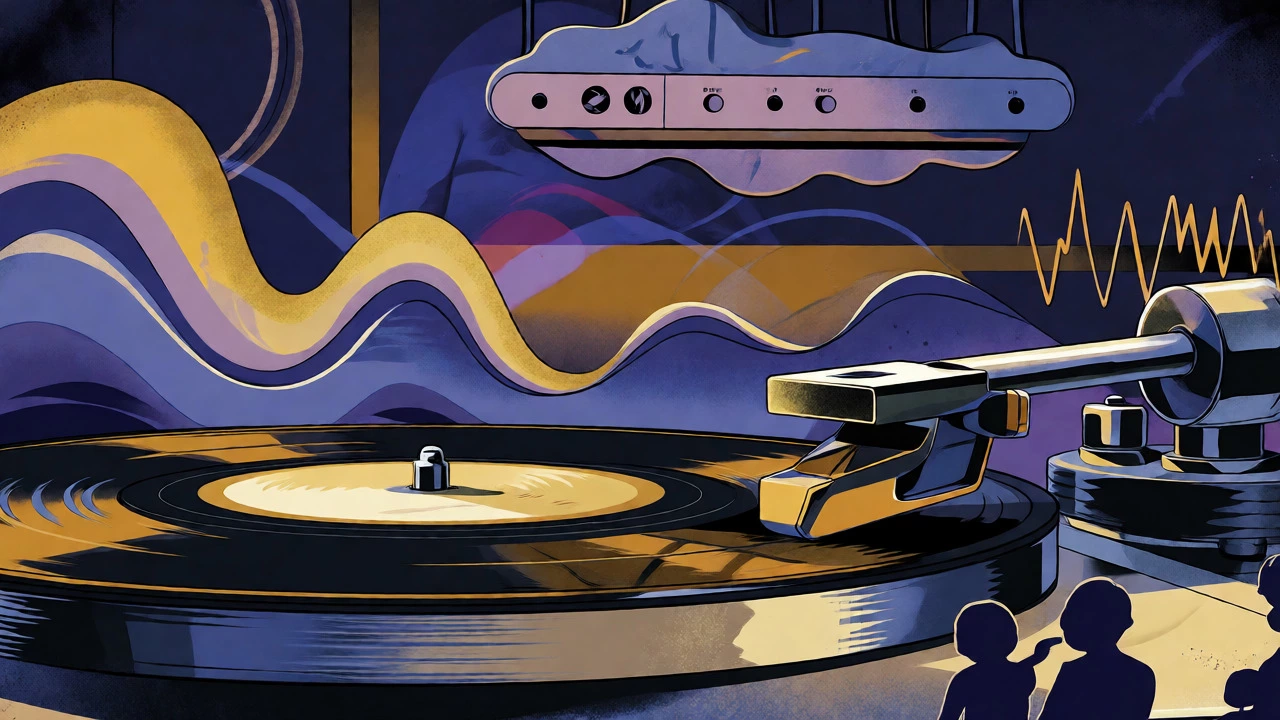
We often forget that most listeners consumed this music on vinyl. The physical medium dictated final tonal balance. Mastering engineers applied specific cutting curves to lacquers to ensure playability. According to mastering expert Bobby Owsinski, typical cuts involved boosting high frequencies by +17 dB at 15 kHz and cutting low frequencies by -17 dB at 50 Hz. Why? Low-frequency energy causes wide groove excursions, risking needle skip, while high-frequency detail needs amplification to overcome surface noise.
| Component | Standard Specification | Sonic Impact |
|---|---|---|
| Tape Format | 2-inch, 16/24 track @ 15 ips | Natural compression, even harmonics, HF roll-off >15kHz |
| Console Type | Neve 80-series / Helios | Midrange warmth (300Hz-2kHz), transformer glue |
| Reverb Unit | EMT 140 Plate Reverb | Dense, metallic shimmer, decay <2 seconds |
| Mastering Curve | +17dB @ 15kHz / -17dB @ 50Hz | Airy highs, tight lows, reduced rumble |
This mastering process significantly shaped the perceived "air" in 1970s recordings. The combination of tape pre-emphasis and vinyl de-emphasis created a spectral tilt that emphasized upper mids and presence while controlling sub-bass bloat. When you hear a classic rock album, that tight, punchy low end isn't just performance-it's engineering necessity translated into aesthetic choice.
Workflow: Live Tracking and Ping-Pong Bouncing
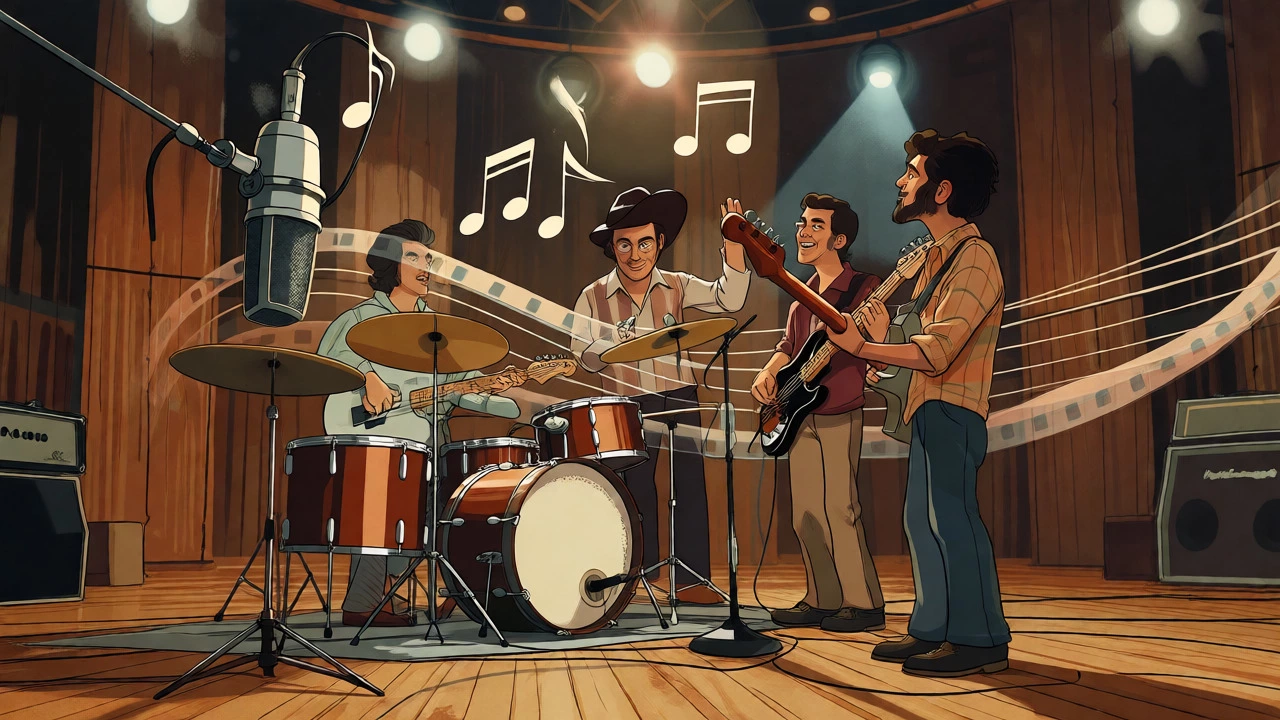
The sound of the 1970s is also a product of workflow. Without unlimited digital tracks, bands often recorded live off the floor. Drums, bass, rhythm guitar, and keyboards played together in one room, bleeding into each other's microphones. This acoustic interaction created a natural depth and phase coherence that isolated digital tracking struggles to emulate. Overdubs were reserved for solos, vocals, and specific layers, preserving the energy of the initial take.
For complex arrangements, especially in progressive rock, engineers employed "ping-pong bouncing." They would mix multiple tracks down to a stereo pair on another tape machine, freeing up channels for further overdubs. Each bounce added another layer of tape saturation and noise, incrementally compressing the dynamic range and thickening the texture. While technically limiting, this process contributed to the dense, layered feel of albums by Yes or Queen. There was no undo button, no grid alignment, and minimal automation. Decisions had to be made in real-time, fostering a discipline that prioritized performance over perfection.
Vocal Chains: Compression and Plate Reverb
Vocals in the 1970s sounded intimate yet spacious due to specific processing chains. Engineers typically used light compression with slow attack times, allowing the initial transient of the voice to pass through for clarity while controlling overall level. Optical compressors like the Teletronix LA-2A or FET units like the Universal Audio 1176 were staples. Following compression, vocals were sent to plate reverb, such as the EMT 140. Unlike the long, wet halls of the 1980s, 1970s reverb decays were kept under two seconds and blended subtly at 15-25%.
This restraint prevented the vocal from getting lost in the mix. Combined with double-tracking-a technique perfected by ABBA and Queen-the result was a lush, chorused effect that felt organic rather than artificial. The slight pitch and time variances inherent in manual double-tracking, combined with tape flutter, created a natural chorus effect that digital tuning and quantization often erase.
Why We Still Chase This Sound Today
Modern digital systems offer pristine fidelity, extended frequency response, and infinite editing flexibility. Yet, many producers still seek the 1970s aesthetic. Why? Because digital can sound clinical. It lacks the harmonic richness and dynamic glue of analog gear. The "loudness war" of later decades stripped dynamics, whereas 1970s mixes relied on contrast and saturation for impact.
Today, we see a resurgence in analog revival studios using Studer A800 tape machines and Neve BCM 10 consoles. Plugin developers meticulously model tape hysteresis and transformer saturation to bring this vibe into DAWs. AI tools now offer presets labeled "1970s Analog Lush," encapsulating tempo ranges, track counts, and tonal descriptors. This enduring appeal proves that the 1970s sound wasn't just a limitation of technology; it was a deliberate artistic achievement born from mastering those limitations.
What makes 1970s recordings sound warmer than digital?
The warmth comes primarily from tape saturation and transformer-based consoles. Magnetic tape adds even-order harmonics and softens high-frequency transients, while consoles like Neve emphasize the midrange (300 Hz-2 kHz). Digital recording captures exact waveforms without these non-linear distortions, often resulting in a cleaner but less "musical" or cohesive sound.
Did all 1970s studios use the same equipment?
No. While 2-inch tape was standard, consoles varied significantly. Neve consoles were known for warm midranges, Helios for gritty aggression, and API for punchy transients. Microphone choices also differed, with ribbons like RCA 44s and condensers like Neumann U47s offering distinct tonal colors. The specific gear combination defined a studio's signature sound.
How did vinyl mastering affect the final sound?
Vinyl mastering imposed strict physical constraints. Engineers applied EQ curves that cut low frequencies (-17 dB at 50 Hz) to prevent groove skipping and boosted high frequencies (+17 dB at 15 kHz) to overcome surface noise. This resulted in a balanced spectrum with tight bass and airy highs, directly influencing how we perceive the tonal balance of 1970s albums.
Can I recreate the 1970s sound digitally?
Yes, by emulating key elements: use tape saturation plugins (e.g., J37 Tape), apply gentle midrange boosts and high-frequency roll-offs, use plate reverb with short decays (<2s), and avoid excessive quantization. Recording live takes with bleed instead of isolated tracks also helps capture the natural spatial cohesion of the era.
Why do 1970s drums sound so big?
Drum sounds benefited from large rooms, ambient microphone placement, and driving tape hard. Engineers like Eddie Kramer pushed drum levels into tape saturation, which compressed transients naturally and added body. Additionally, the lack of close-miking dominance compared to modern standards allowed room acoustics to contribute significantly to the drum tone.