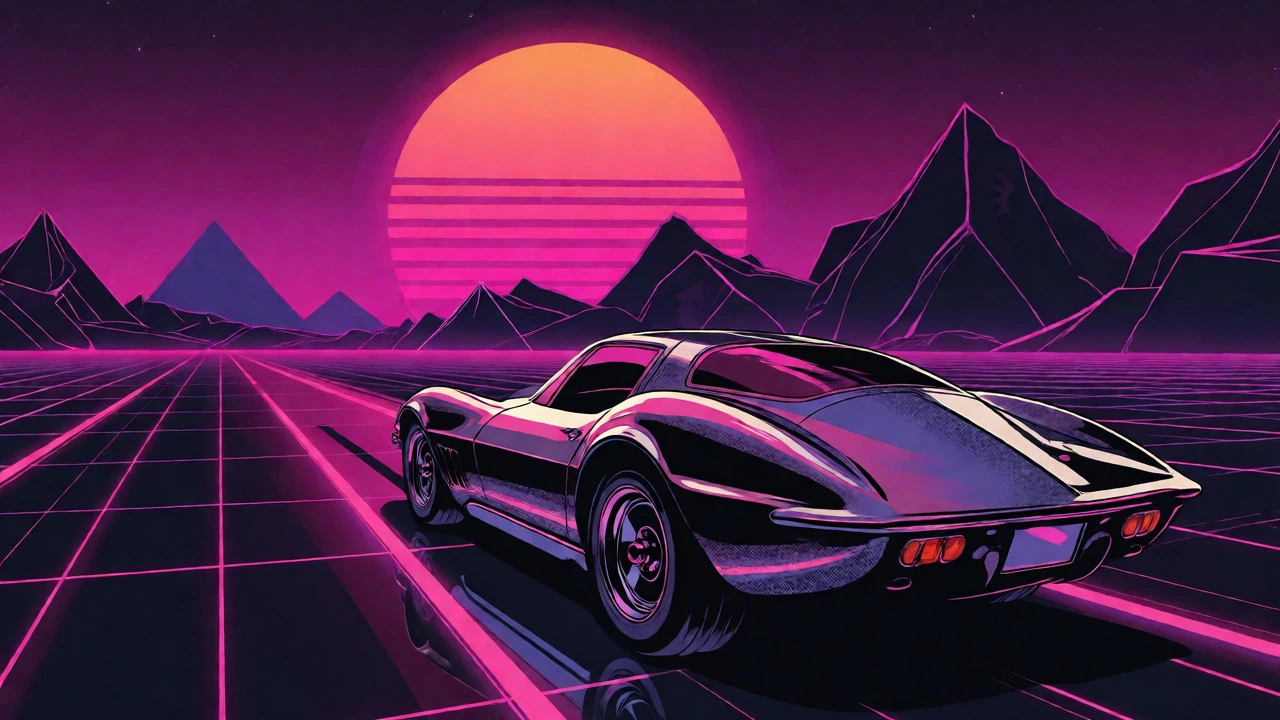

You’re driving down a neon-lit highway in your mind. The sunset is magenta, the grid lines stretch into infinity, and a pulsing bassline keeps you moving forward. Then, suddenly, the scene shifts. You’re standing in an empty shopping mall at 2 AM. A slowed-down saxophone track echoes off marble floors, interrupted by static from a VHS tape. Both scenarios feel familiar, even if you weren’t alive for the events they depict. This is the power of synthwave and vaporwave. These aren't just music genres; they are two distinct ways the internet processed its obsession with the 1980s.
While both styles rely on the sonic palette of analog synthesizers and retro aesthetics, their origins, methods, and emotional cores are fundamentally different. One builds a heroic future that never happened; the other dissects the consumer present that already did. Understanding the gap between them helps explain why these digital-native movements continue to dominate playlists, video game soundtracks, and meme culture today.
The Core Difference: Creation vs. Appropriation
The easiest way to tell these genres apart is to look at how the music gets made. It’s not just about the instruments; it’s about the source material.
Synthwave is primarily original composition. Producers sit down with software emulations of Roland Juno-60s or Yamaha DX7s and write new melodies inspired by John Carpenter films, arcade games, and Miami Vice themes. They are trying to recreate the feeling of an 1980s soundtrack, but they are writing new notes. Think of it as historical fiction set in a cyberpunk world.
Vaporwave, on the other hand, is built on appropriation. It takes existing recordings-smooth jazz, elevator music, corporate training videos, and R&B hits-and manipulates them. Artists slow tracks down to half-speed, lower the pitch, loop small fragments, and add heavy reverb or vinyl crackle. The goal isn't to write a new song, but to change the context of an old one until it feels eerie, nostalgic, or ironic.
| Feature | Synthwave | Vaporwave |
|---|---|---|
| Primary Method | Original Composition | Sample Manipulation / Plunderphonics |
| Emotional Tone | Nostalgic, Heroic, Futuristic | Ironic, Uncanny, Melancholic |
| Visual Aesthetic | Neon grids, sports cars, sunsets, chrome | Empty malls, Greek statues, Windows 95 UI, Japanese text |
| Key Influences | Action movies, sci-fi scores, arcade games | Advertising, Muzak, early internet, consumer capitalism |
| Copyright Status | Easier to clear (original work) | Complex (relies on sampling) |
Synthwave: The Soundtrack to a Future That Never Happened
If vaporwave looks backward at what we bought, synthwave looks forward at what we imagined. The genre crystallized in the mid-to-late 2000s, largely driven by French electronic producers like Kavinsky and College. But its cultural catalyst was arguably the 2002 release of Grand Theft Auto: Vice City. The game didn’t just feature 1980s hits; it created a cohesive, stylized version of the decade where neon meant freedom and danger.
Artists like The Midnight, Gunship, and Carpenter Brut took this vibe and ran with it. They used arpeggiators, gated drum reverbs, and soaring lead synths to mimic the energy of action movie montages. The music is often instrumental and beat-driven, designed to make you feel like the protagonist of a low-budget sci-fi thriller. It’s sincere homage. There’s rarely irony in a synthwave track; the artists genuinely love the aesthetic they are reviving.
The subgenres reflect this intensity. Outrun focuses on high-tempo, driving rhythms perfect for racing games. Darksynth adds distortion and industrial grit, leaning into horror themes rather than romance. Regardless of the subgenre, the core promise remains: the 1980s were cool, and technology was going to save us.
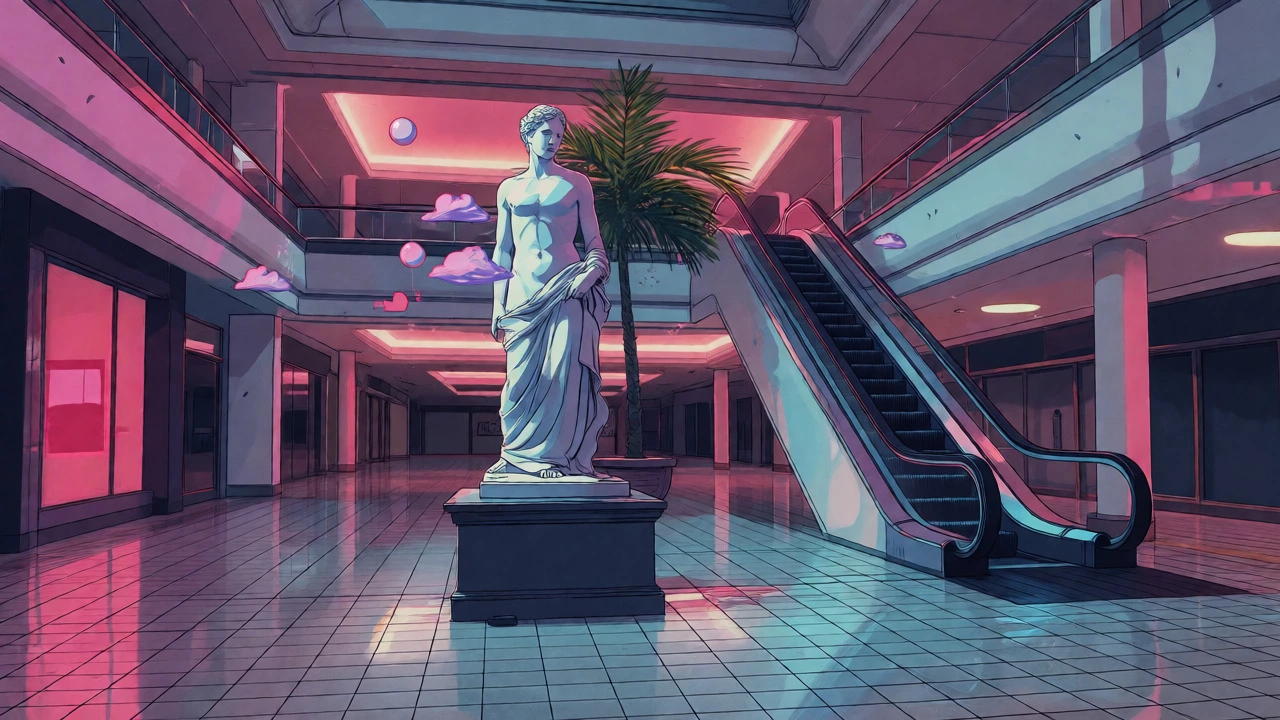
Vaporwave: The Ghost in the Shopping Mall
Vaporwave emerged slightly later, around 2010-2011, born directly from internet forums and micro-labels. Key releases like Daniel Lopatin’s Chuck Person’s Eccojams Vol. 1 and Ramona Xavier’s (as Macintosh Plus) Floral Shoppe defined the template. These albums didn’t try to be "cool" in the traditional sense. They were weird, detached, and deeply atmospheric.
The visual language is just as important as the audio. Imagine walking through a Sears department store after closing time. The lights are dim, the escalator is stopped, and a classical bust sits next to a palm tree. This is the vaporwave aesthetic. It mixes high culture (Greek statues) with low culture (corporate logos) and digital artifacts (Windows 95 error messages).
Why does this resonate? Scholars suggest vaporwave captures a specific type of "hauntology"-a longing for futures that failed to arrive. We live in a world promised flying cars and moon colonies, but we got endless scrolling and subscription services instead. Vaporwave slows down the upbeat commercial jingles of the past, turning them into something sad and reflective. It asks: Where did all this optimism go?
Why the Internet Was the Only Place These Could Exist
Neither genre could have thrived without the specific infrastructure of the web. In the 1990s, if you wanted to distribute experimental electronic music, you needed a label deal or a physical distribution network. By the 2010s, platforms like Bandcamp, SoundCloud, and YouTube allowed anonymous producers to upload tracks instantly.
This decentralization shaped the genres’ identities. Synthwave communities formed on Reddit and Last.fm, sharing playlists and fan art. Vaporwave exploded through imageboards like 4chan and Tumblr, where memes and visual collages spread faster than the music itself. The anonymity allowed artists to use pseudonyms (like "Macintosh Plus" or "College") and treat their projects as artistic experiments rather than career launches.
Moreover, the copyright landscape favored this digital-native approach. While synthwave artists compose original works, vaporwave producers operate in a legal gray area. Many early vaporwave tracks were released for free or under Creative Commons licenses because clearing samples from major labels would have been prohibitively expensive. The internet tolerated this ambiguity, allowing the genre to flourish as a form of audio collage.
The Overlap: Where Nostalgia Gets Complicated
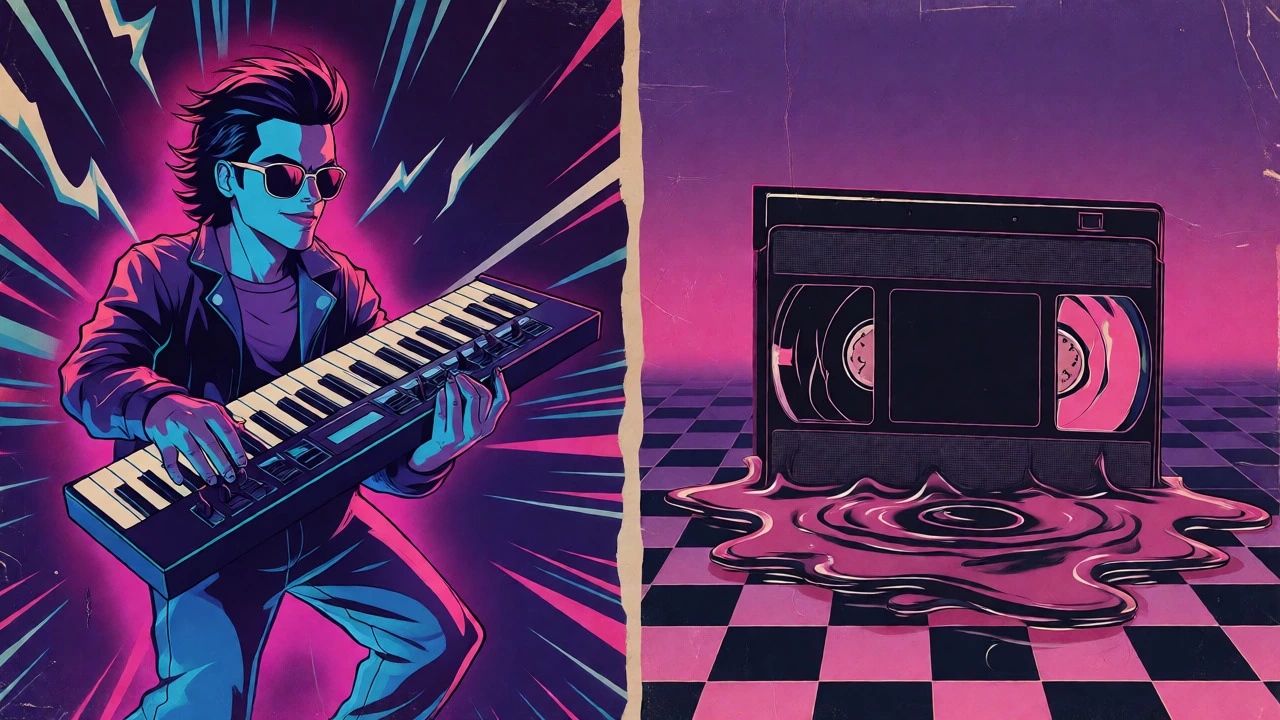
It’s tempting to view these genres as opposites, but they share DNA. Both reject the polished, hyper-produced sound of modern pop in favor of lo-fi textures and analog warmth. Both appeal to people who feel out of step with current trends. And increasingly, the boundaries blur.
Some artists, like Saint Pepsi or Blank Banshee, mix vaporwave’s sample-based chaos with synthwave’s rhythmic drive. This hybrid style, sometimes called "future funk," proves that the line between sincere homage and ironic deconstruction is thinner than we think. Listeners often consume both genres interchangeably, using synthwave for workout motivation and vaporwave for late-night study sessions.
Academic debates continue over whether vaporwave is truly anti-capitalist. Critics argue that by turning consumer culture into a niche aesthetic, vaporwave actually reinforces the market logic it claims to critique. If everything can be commodified, then even dissatisfaction becomes a product. Yet, fans often reject this cynical reading, finding genuine comfort in the familiar soundscape. Maybe that’s the point: the internet allows us to hold contradictory feelings at once-to laugh at the absurdity of consumerism while still missing the simplicity of a mall food court.
How to Distinguish Them in the Wild
If you’re browsing Spotify or Apple Music and see a playlist titled "80s Vibes," how do you know what you’re getting? Here’s a quick heuristic:
- Listen to the Drums: If the drums are punchy, gated, and driving, it’s likely synthwave. If the rhythm is sluggish, chopped, or non-existent, it’s probably vaporwave.
- Check the Vocals: Synthwave vocals (if present) are usually original lyrics sung with a retro flair. Vaporwave vocals are often sampled snippets from old songs, repeated obsessively or pitched down until they sound robotic.
- Look at the Album Art: Neon grids and cars? Synthwave. Greek statues, pastel gradients, and kanji characters? Vaporwave.
Knowing the difference helps you curate your mood. Want to feel powerful and cinematic? Queue up Perturbator or Timecop1983. Want to zone out and contemplate the void? Put on Macintosh Plus or 2814.
Is vaporwave just slowed-down music?
Not exactly. While slowing down tracks is a common technique, vaporwave also involves chopping loops, adding heavy reverb, altering pitch independently of speed, and layering ambient noise. It is more akin to audio collage than simple tempo adjustment.
Did synthwave exist in the 1980s?
No. Synthwave is a revivalist genre that emerged in the mid-to-late 2000s. It imitates the production techniques and musical styles of 1980s film scores and electronic music but uses modern digital production tools and sensibilities.
What is the difference between outrun and synthwave?
Outrun is a subgenre of synthwave. It specifically emphasizes fast tempos, aggressive basslines, and imagery related to high-speed driving and racing games. All outrun is synthwave, but not all synthwave is outrun; some is slower and more atmospheric (dreamwave).
Why does vaporwave use Japanese text?
The use of Japanese characters references the era when Japan was seen as the pinnacle of consumer technology and futuristic design. For Western audiences in the 80s and 90s, Japanese electronics represented a sleek, idealized future. Vaporwave uses this text to evoke that specific brand of techno-optimism and exoticism.
Can I legally use vaporwave tracks in my video?
It depends. Because vaporwave relies heavily on sampling copyrighted recordings, many tracks may not be cleared for commercial use. Always check the license on platforms like Bandcamp or SoundCloud. Some artists explicitly allow usage, while others do not.