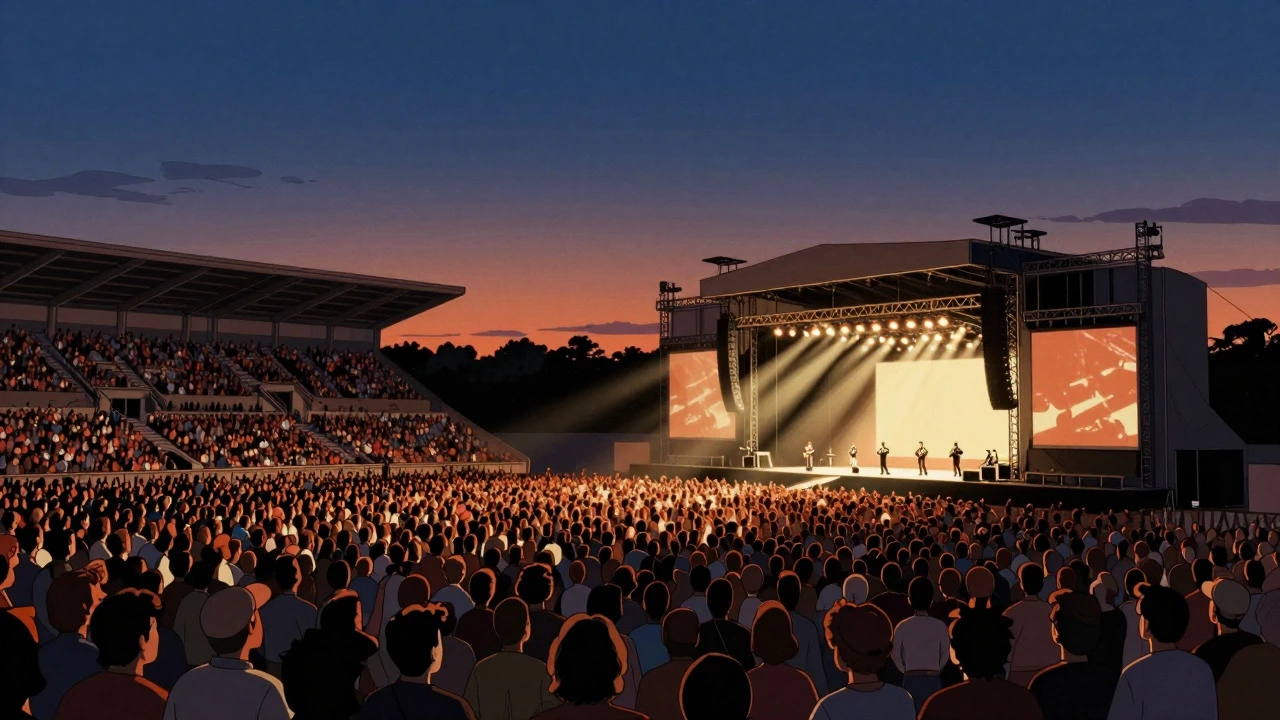

Imagine standing in a crowd of 60,000 people as the sky darkens over Wembley Stadium. There are no giant video screens to distract you. No pyrotechnics shaking the ground. Just four musicians on a relatively simple stage, searchlights cutting through the air, and a song that makes everyone sing along until their voices give out. This wasn't a futuristic spectacle; it was June 1987, and The Joshua Tree Tour was turning U2 from respected rockers into global stadium superstars. This tour didn't just promote an album; it changed how bands approached live performance. It proved you didn't need complex technology to sell out stadiums-you just needed powerful songs and raw energy. Today, we look back at why this specific run of shows remains the gold standard for 1980s arena rock.
From Arenas to Stadiums: A Rapid Ascent
Before 1987, U2 was already famous, but they were primarily an arena act. They played large indoor venues, sure, but the leap to outdoor stadiums is different. It requires a different kind of authority. The Joshua Tree Tour marked the moment they made that jump permanently. The tour launched on April 2, 1987, at the Arizona State University Activity Center in Tempe, Arizona. It ended exactly eight months later, on December 20, 1987, at Sun Devil Stadium in the same city. In those nine months, the band performed 109 shows across three continents. That is an average of one show every two and a half days. For context, modern tours often have longer gaps between dates for rest and travel. Back then, it was a grind. The financial impact was immediate. According to industry data compiled by Pollstar and other promoters, the North American leg alone grossed approximately US$35.1 million from 2.04 million tickets sold. Worldwide, the figure jumped to about US$56 million with 3.17 million tickets. This made it the highest-grossing tour in North America for the calendar year 1987. You don't get those numbers by accident. You get them when a cultural moment aligns perfectly with a band's creative peak.
The Three Legs of the Tour
The tour was structured into three distinct phases, each testing the band's ability to adapt to new environments and scales.
Leg
Dates
Key Venues & Markets
Significance
Leg 1
April 2 - May 16, 1987
US Arenas (Tempe, LA, Worcester)
Proved demand in major urban centers; five sold-out nights in LA.
Leg 2
May 27 - August 8, 1987
European Stadiums (Wembley, Croke Park, Rotterdam)
Transition to massive outdoor crowds; iconic football stadium gigs.
Leg 3
September 10 - December 20, 1987
North American Stadiums (Giants Stadium, Toronto, Oakland)
Solidified status as stadium headliners; finished in Tempe.
Minimalist Production, Maximum Impact
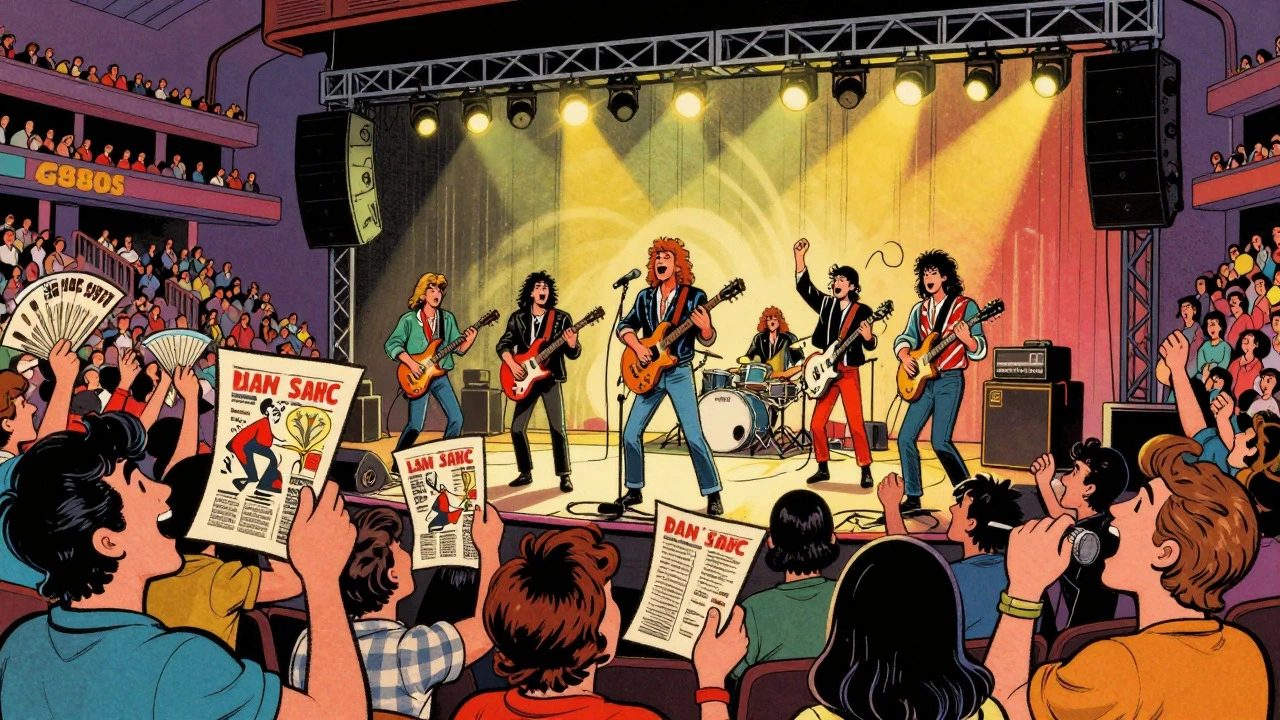
If you watch footage from today's stadium tours, you see walls of LED screens, drones, and elaborate mechanical sets. The Joshua Tree Tour was different. The stage design, created by Steve Iredale, Peter "Willie" Williams, and Tim Buckley, was minimalist yet highly functional. Fabricated by Tait Towers Inc., the set was designed for rapid load-in and load-out, essential for a schedule this tight. There were no giant video screens. Fans attending the Wembley show recalled Bono looking "really small" from the stands because there was nothing to magnify his presence visually. Instead, the production relied on dramatic lighting, searchlights, and atmospheric effects. During "Bullet the Blue Sky," the use of light created a cinematic feel without relying on digital projection. This approach had risks. Sightlines could be poor, and intimacy was hard to maintain in a 60,000-seat venue. However, it also forced the audience to engage with the music and the collective energy rather than watching a TV show. Crew members like A.J. Rankin had to manage practical details meticulously, such as preventing microphone cables from snagging during Bono's energetic movements. The result was a show that felt raw and urgent, not polished and distant. This minimalist aesthetic foreshadowed the band's future direction. While Zoo TV (1992) would embrace chaos and multimedia, the Joshua Tree Tour established that U2 could command attention through musical power alone. It was a testament to the strength of the material and the band's stagecraft.
The Setlist: Crafting an Emotional Arc
A successful stadium tour needs a setlist that works on multiple levels. It must satisfy casual fans who know the hits, reward hardcore listeners with deep cuts, and create a shared emotional journey. The Joshua Tree Tour achieved this by blending new material from the 1987 album with classics from earlier records like War, The Unforgettable Fire, and Boy. A typical night featured 19 to 23 songs. The structure was deliberate:
- Opening: Often started with "Stand By Me" or "Where the Streets Have No Name." The latter, with its slow build and explosive chorus, was designed to grab attention immediately.
- Middle Section: Included politically charged tracks like "Sunday Bloody Sunday" and "Bullet the Blue Sky," mixed with anthems like "Pride (In the Name of Love)" and "MLK." Covers and snippets, such as Van Morrison's "Gloria" or The Doors' "Light My Fire," were woven in to add variety.
- Closing: Almost always ended with "40." This spiritual closer became a ritual. Thousands of fans singing together as they left the stadium created a sense of community that defined the tour experience.
Fan Experience: The Pilgrimage
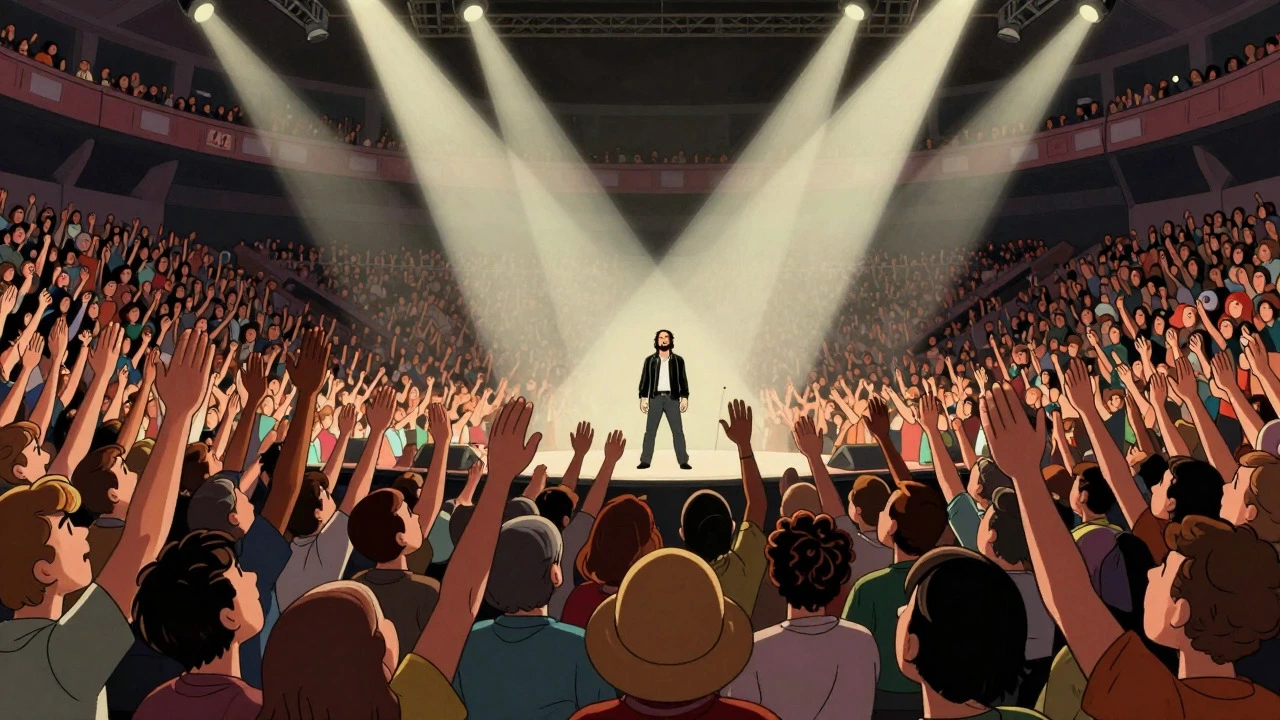
Attending a Joshua Tree Tour show wasn't just buying a ticket; it was an event that required planning and dedication. Fan accounts from the time describe arriving early, queuing for hours, and singing outside venues all day. For many, it was a "pilgrimage." One fan recounted traveling across multiple cities, connecting with others through snail-mail fanzines, and feeling a sense of belonging that lasted decades. At Croke Park in Dublin, super-fan James Coughlan remembered being 17 years old, battling the heat, and fighting for a spot near the front. Hoses sprayed water to cool the crowd, adding to the chaotic, communal atmosphere. These rituals-early arrival, pre-show singing, post-show chanting-created a shared identity among attendees. The absence of high-tech distractions meant fans focused on each other and the band. When "40" played, the stadium became a choir. This emotional connection is why the tour remains so legendary. It wasn't just a concert; it was a cultural gathering.
Legacy and Long-Term Impact
Critics recognized the significance of the tour even as it happened. Rolling Stone's Steve Pond called The Joshua Tree "the big one" for U2, predicting their rise to larger venues. Spin magazine praised the album as their "first wholly successful record," noting every song was suitable for stadium performance. Decades later, BBC's Chris Jones labeled it the band's "finest moment." The tour's success convinced U2 that they could operate at this scale, but it also sparked internal reflection. Bono later expressed dissatisfaction, feeling the band was "musically unprepared" for their sudden success. This unease drove them to experiment further, leading to the deconstructed, media-saturated Zoo TV tour. If Joshua Tree was earnest and unified, Zoo TV was ironic and fragmented. Both were necessary steps in U2's evolution. The legacy continues today. U2 mounted commemorative tours in 2017 and 2019, revisiting the album in full. These modern iterations used massive stages and 7.6K resolution video screens, updating the visual language while keeping the core songs intact. Shows at the Rose Bowl and Sydney Cricket Ground proved that the emotional resonance of 1987 still holds power. The Joshua Tree Tour remains the benchmark for what a rock band can achieve when music, message, and momentum align perfectly.
When did The Joshua Tree Tour take place?
The tour ran from April 2, 1987, to December 20, 1987. It consisted of 109 shows across three legs in North America and Europe.
How much money did the tour gross?
Worldwide, the tour grossed approximately US$56 million from 3.17 million tickets sold. In North America alone, it earned about US$35.1 million, making it the highest-grossing tour of 1987 in the region.
What was unique about the stage production?
Unlike later tours, it lacked giant video screens. The design was minimalist, relying on dramatic lighting, searchlights, and the band's performance to create atmosphere. This emphasized the music and crowd energy over visual spectacle.
Did U2 play stadiums on this tour?
Yes. While it started in arenas, the tour quickly expanded to include major stadiums like Wembley Stadium in London, Croke Park in Dublin, and Giants Stadium in New Jersey, marking U2's transition to stadium headliners.
Why is the tour considered significant in rock history?
It demonstrated that a rock band could fill stadiums based on songwriting and emotional connection rather than technological gimmicks. It solidified U2's status as global superstars and influenced how subsequent tours balanced artistic integrity with commercial scale.