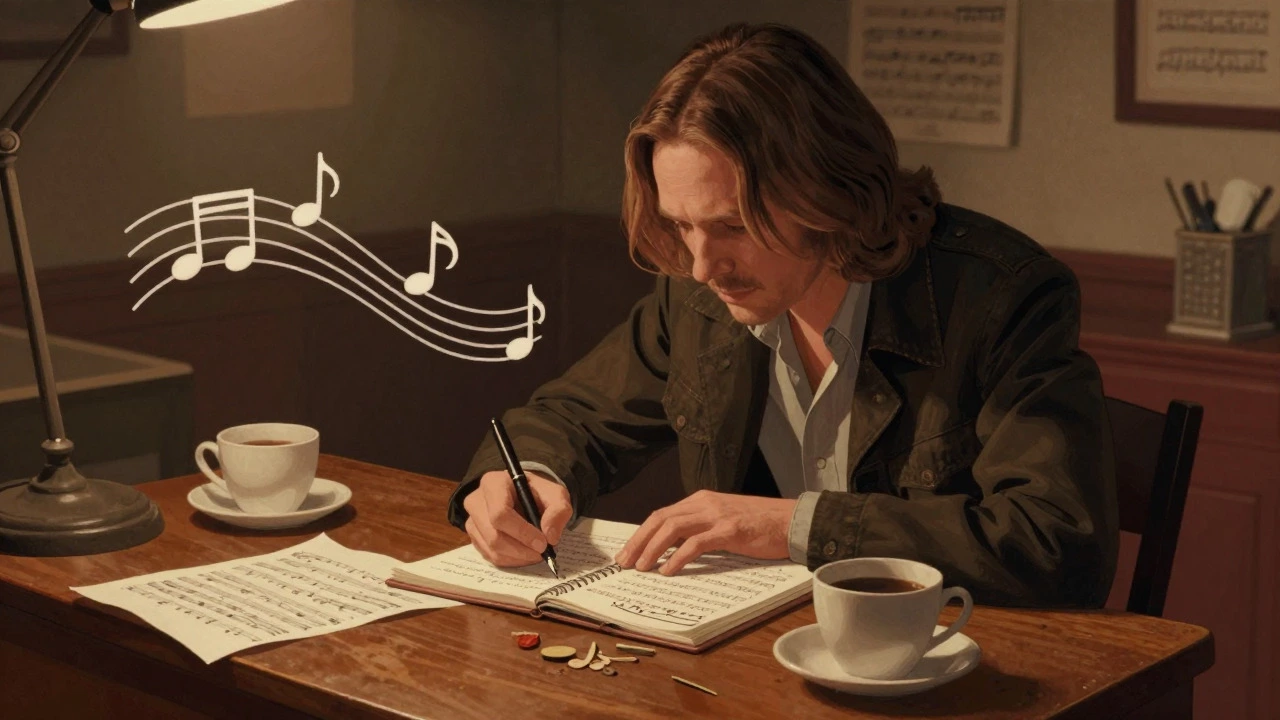

Most people think Tom Petty just stumbled into hits. You hear "Free Fallin'" or "The Waiting," and it sounds effortless. Pure magic. But that’s exactly the myth he wanted you to believe. Behind those iconic 1980s anthems was a songwriter who treated composition like a nine-to-five job, obsessing over every chord change and lyrical detail until it clicked.
The 1980s were not just a lucky streak for Petty; they were his golden era of craft. He navigated three distinct musical lanes simultaneously: the gritty guitar sound of Tom Petty and the Heartbreakers, his primary band known for rootsy rock arrangements, the polished pop-rock of his solo debut Full Moon Fever, Petty's 1989 solo album produced with Jeff Lynne, and the collaborative supergroup experiments of the Traveling Wilburys, a supergroup featuring Petty, George Harrison, Bob Dylan, Roy Orbison, and Jeff Lynne. Through all these projects, one thing remained constant: a commitment to lean, direct storytelling anchored by unforgettable hooks.
The Anatomy of a Hook
If you want to understand why Petty’s songs still dominate classic rock radio, you have to look at how he built them. He didn’t start with lyrics. He started with a riff. A simple, repetitive musical idea that stuck in your head immediately.
Take "The Waiting," released in 1981. Petty has said he played the opening guitar lick for weeks before he even found the chorus. He was waiting for the melody to reveal itself. This wasn't random jamming; it was iterative refinement. He held onto that "acorn" of an idea until he could envision how the whole band would fit around it. The result is a song where the guitar hook drives the narrative tension, mirroring the feeling of being stuck in limbo.
This approach defined his work with the Heartbreakers throughout the decade. Songs like "You Got Lucky" (1982) and "Jammin’ Me" (1987) rely on concise guitar motifs paired with singable vocal lines. Petty understood that a hook isn't just a catchy tune; it's the emotional anchor of the song. If the hook doesn't work, the story falls flat. He worked with guitarist Mike Campbell, Heartbreakers lead guitarist and frequent co-writer with Petty to ensure these riffs were sharp, memorable, and served the song’s structure rather than showing off technical skill.
Storytelling from the Inside Out
Petty’s lyrics stand out because he never wrote from a distance. He stepped into his characters’ shoes. This character-driven approach gave his heartland rock authenticity. He wasn't preaching; he was reporting.
Consider "Yer So Bad" from *Full Moon Fever*. On the surface, it’s a humorous track about a woman who marries a rich guy, takes his money, and leaves him ruined. It’s based on Petty’s sister’s real-life divorce. But Petty used this personal anecdote to satirize the consumer excess of the 1980s. He told interviewers that he wanted the humor to "illuminate some important things." The song works because the details are specific and grounded in reality, making the social commentary hit harder.
Then there’s "I Won’t Back Down" (1989). Written after Petty was the victim of a burglary, the song channels genuine resilience. It’s not abstract philosophy; it’s a reaction to a concrete life event. This biographical grounding is what makes his storytelling resonate. He studied lyric structures since he was a teenager, transcribing songs from the radio to understand how verses connected to choruses. By the 1980s, he had mastered the art of balancing conversational language with tight structural organization.
| Song Title | Year | Project | Key Creative Element |
|---|---|---|---|
| The Waiting | 1981 | Heartbreakers | Iterative guitar hook development |
| Stop Draggin’ My Heart Around | 1981 | Heartbreakers / Stevie Nicks | Collaborative duet structure |
| Don’t Come Around Here No More | 1985 | Heartbreakers | Tape manipulation and psychedelic production |
| Handle with Care | 1988 | Traveling Wilburys | Supergroup harmony blending |
| Free Fallin' | 1989 | Solo (*Full Moon Fever*) | Narrative character study with polished production |
| I Won’t Back Down | 1989 | Solo (*Full Moon Fever*) | Biographical resilience anthem |
The Jeff Lynne Effect
You can’t talk about Petty’s 1980s without mentioning Jeff Lynne, Producer and musician best known for Electric Light Orchestra and collaborations with Tom Petty. Their partnership changed Petty’s sonic palette dramatically. When they worked together on *Full Moon Fever*, the production became cleaner, richer in harmonies, and more polished. But the core songwriting remained rooted in heartland traditions.
Lynne helped Petty flesh out ideas quickly. For "Free Fallin'," they built the song around a repetitive chord sequence, similar to ELO’s "Evil Woman." Lynne noted that everyone who heard the demo knew it was a hit. This pop-aware logic maximized memorability without sacrificing depth. The collaboration allowed Petty to experiment with a "sense of humor" in his writing while keeping the emotional stakes high. It proved that heartland rock could be slick and successful without losing its soul.
Collaboration as a Craft Tool
Petty was also a generous collaborator. In the early 80s, he co-wrote "Stop Draggin’ My Heart Around" with Mike Campbell and gave it to Stevie Nicks, Fleetwood Mac vocalist and solo artist who collaborated with Petty on several tracks. It became a massive hit for her. Later, he helped finish "Don’t Come Around Here No More" with Dave Stewart, Member of Eurythmics who co-wrote the psychedelic Heartbreakers hit of Eurythmics. That song involved unusual studio techniques, like physically pulling tape across recorder heads to create swelling piano notes. Petty spent a month experimenting with the arrangement, showing he wasn’t afraid to push boundaries if it served the song.
These collaborations weren’t distractions; they were exercises in songcraft. They forced Petty to adapt his style to different voices and contexts, sharpening his ability to write universal melodies. Even in the Traveling Wilburys, where he shared billing with legends like George Harrison, Beatles guitarist and Wilbury collaborator and Bob Dylan, Legendary singer-songwriter and Wilbury member, Petty’s contribution was distinctively grounded. He brought the heartland sensibility to their British Invasion influences, creating a unique blend that felt both nostalgic and fresh.
Why It Still Matters
In an era dominated by synthesizers and new wave trends, Petty stayed true to guitars, drums, and honest vocals. Critics like Eric Alper note that Petty kept his songwriting "lean and direct," echoing Neil Young rather than chasing radio fads. This integrity made his music timeless. Songs like "Refugee" and "The Waiting" don’t sound dated because they aren’t tied to a specific production trend; they’re tied to human experience.
Petty’s daughter has said he viewed songwriting as a job. He studied it, revised it, and persisted when ideas didn’t work. This work ethic is evident in every track from the 1980s. Whether he was crafting a quirky narrative in "Yer So Bad" or a soaring anthem in "I Won’t Back Down," Petty approached each song with discipline and respect for the craft. That’s why his catalog remains a benchmark for songwriters today. He showed us that great rock music isn’t about being a genius; it’s about being diligent, observant, and unafraid to tell the truth.
What defines Tom Petty's heartland rock style?
Petty's heartland rock is defined by lean, direct songwriting, strong guitar hooks, and character-driven narratives about ordinary American lives. He avoided trendy production in favor of traditional rock instrumentation and unadorned vocals, focusing on melodic clarity and emotional authenticity.
How did Jeff Lynne influence Tom Petty's 1980s music?
Jeff Lynne introduced a polished, harmony-rich production style to Petty's work, particularly on *Full Moon Fever*. While the sound became sleeker, the core songwriting remained rooted in heartland traditions. Lynne helped Petty refine hooks and explore pop-aware structures without losing the emotional depth of his earlier work.
Was "Free Fallin'" written as a solo project or with the Heartbreakers?
"Free Fallin'" was written for Petty's solo album *Full Moon Fever* and co-written with Jeff Lynne. Although Mike Campbell contributed guitar work, the song is credited to Petty's solo output, marking a stylistic shift toward more polished arrangements compared to typical Heartbreakers records.
What role did collaboration play in Petty's songwriting process?
Collaboration was central to Petty's craft. He frequently co-wrote with Mike Campbell, Jeff Lynne, and Dave Stewart, and participated in the Traveling Wilburys. These partnerships allowed him to test ideas in different contexts, refine his melodies, and expand his sonic palette while maintaining his distinctive storytelling voice.
Did Tom Petty consider himself a natural genius at songwriting?
No, Petty viewed songwriting as a disciplined job. Despite publicly describing the process as "mystical," archival evidence shows he diligently revised lyrics and melodies, often spending weeks refining a single hook. His success came from persistence, study, and a strong work ethic rather than spontaneous inspiration.


