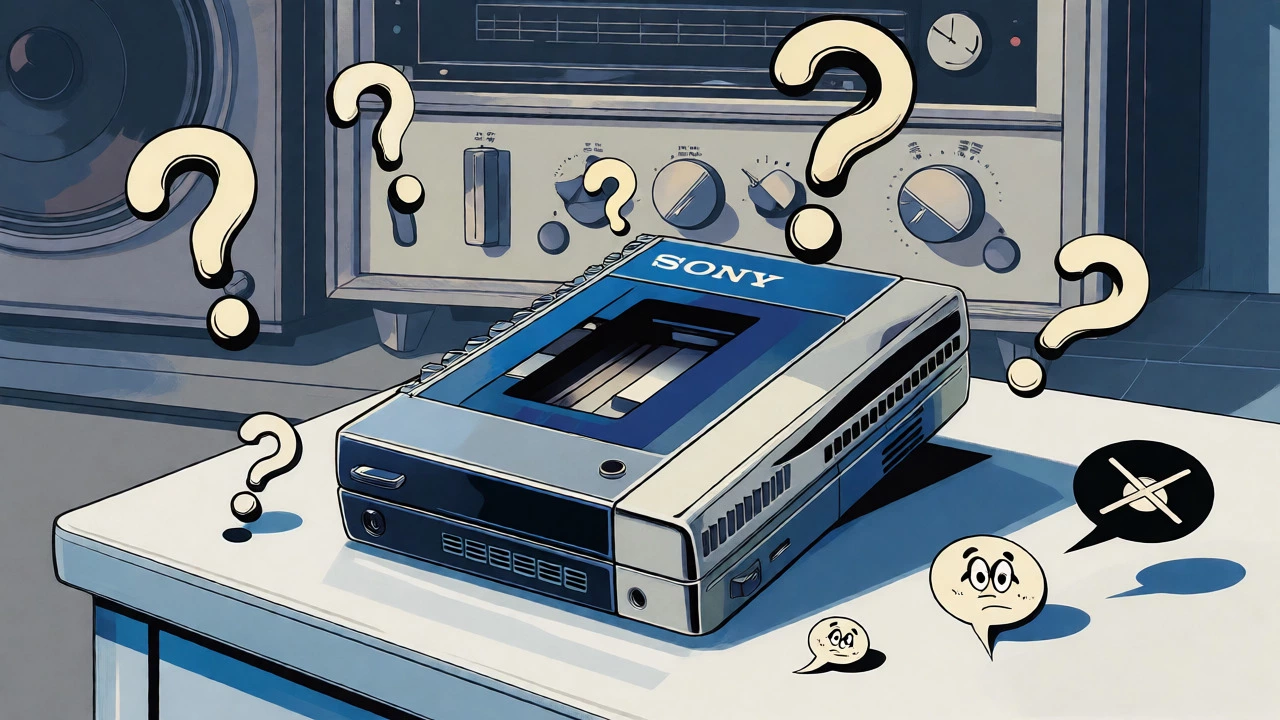

Imagine a world where listening to your favorite album meant sitting still. You were tethered to a hi-fi system in the living room or trapped in the passenger seat of a car with no radio signal. Then, in July 1979, Sony released the TPS-L2, and everything changed. This wasn't just a gadget; it was the spark that ignited the 1980s portable music economy. The device, known globally as the Walkman, didn't just play tapes-it rewired how we consume media, creating a billion-dollar ecosystem of hardware, blank media, and accessories almost overnight.
The story of the Walkman is often told as a simple tale of invention, but the economic reality is far more complex. Sony didn't invent the compact cassette, headphones, or even portable radios. What they did was integrate these existing technologies into a product that solved a specific human desire: the need for a private soundtrack in public spaces. This shift from communal listening to individualized mobile consumption created new markets and destroyed old assumptions about who bought music and why. If you've ever put on earbuds to block out the noise of a subway commute, you're living in the world the Walkman built.
The Birth of a Category
Nobutoshi Kihara, a Sony engineer, is credited with developing the first Walkman, drawing on the company's existing Pressman recorder technology. But it was Sony co-founders Masaru Ibuka and Akio Morita who bet big on the concept. They launched the TPS-L2 in Japan on July 1, 1979, for ¥33,000 (roughly $150 at the time). The initial reaction? Skepticism. Critics argued that a player without a recording function would fail because people wanted to record their own mixes. Sony ignored them, producing 30,000 units-an ambitious number when monthly sales of 15,000 were considered strong for portable recorders.
The early numbers were shaky. Only 3,000 units sold in the first month. But then word-of-mouth kicked in. By November 1981, Sony had hit one million units shipped. In the US, the device launched in June 1980 under names like "Soundabout" before settling on the iconic "Walkman." The demand was insatiable. By the end of 1982, Sony had shipped 5.5 million units, with over 60% exported. This wasn't just a product launch; it was the creation of an entirely new consumer category.
The Hardware Ecosystem
Owning a Walkman was never just about the player itself. It triggered a chain reaction of purchases that defined the decade's electronics market. To use the device, you needed specific components, each becoming its own sub-industry:
- Headphones: The original TPS-L2 came with basic foam-padded headphones, but the market quickly shifted toward higher-fidelity options. Brands competed fiercely to offer better sound isolation and comfort for long-term wear.
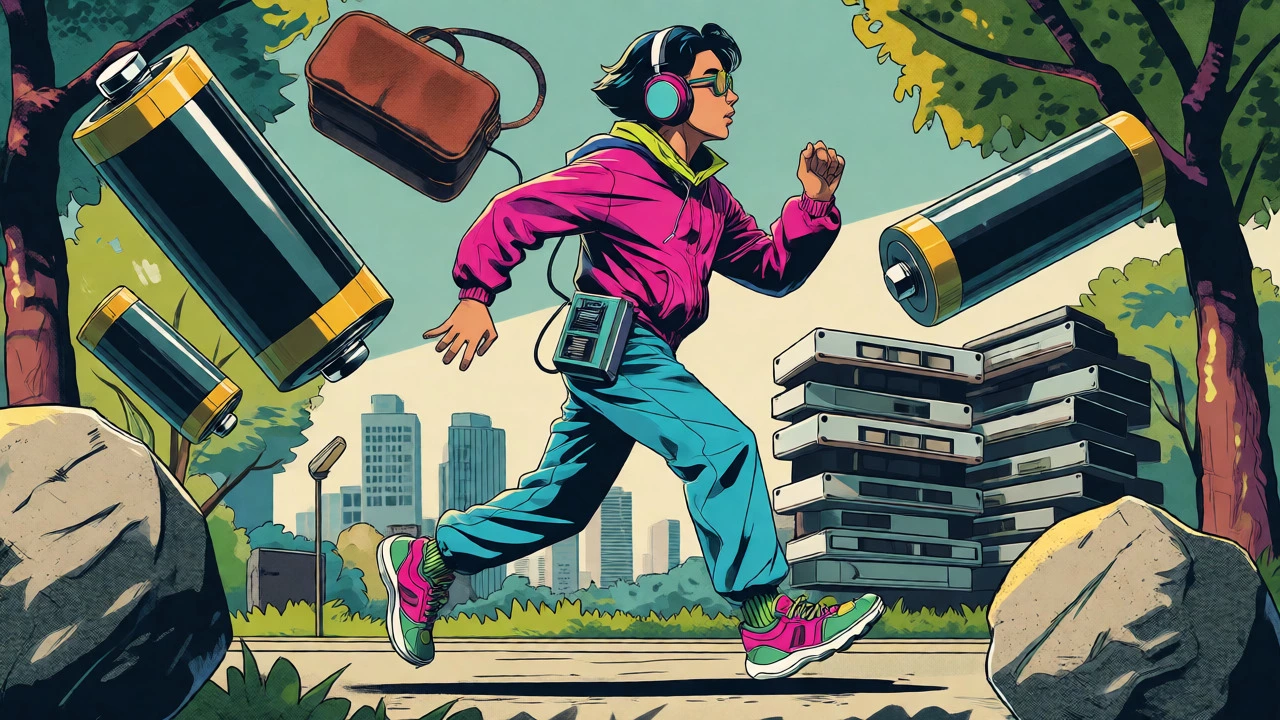
- Batteries: AA batteries became a recurring expense. The reliance on disposable power sources drove steady revenue for battery manufacturers like Duracell and Energizer.
- Cases and Accessories: Leather carrying cases, belt clips, and sports armbands became essential add-ons. These weren't afterthoughts; they were high-margin items sold alongside the players.
- Blank Tapes: While the TPS-L2 couldn't record, later models could. This fueled the boom in blank cassette sales, as consumers copied albums for portability or created mixtapes.
This ecosystem effect is what made the Walkman economically potent. A single $150 player purchase led to ongoing spending on media and accessories. Sony capitalized on this by releasing smaller, lighter, and more feature-rich models throughout the 1980s. The WM-109 introduced remote controls in 1986, and the WM-505 added wireless headphones in 1988. Each upgrade cycle refreshed demand, keeping the brand relevant as competitors like Panasonic, Aiwa, and Toshiba flooded the market with cheaper alternatives.
Cassettes Take Over
The most significant economic impact of the Walkman was its role in shifting the recorded music industry from vinyl to cassettes. Before 1979, vinyl LPs dominated sales, while cassettes were seen as inferior, primarily used for home recordings or car stereos. The Walkman changed that perception. Suddenly, the cassette was the preferred format for personal listening because it was durable, portable, and compatible with the hottest new gadget.
| Year | Vinyl (LP) | Cassette | 8-Track/Other |
|---|---|---|---|
| 1979 | ~50% | ~25% | ~25% |
| 1983 | ~40% | ~45% | ~15% |
| 1990 | Declining | Peak (~$3.5B) | Negligible |
By 1983 or 1984, depending on the dataset, cassettes overtook vinyl as the top-selling format in the United States. This wasn't a gradual drift; it was a rapid pivot driven by hardware adoption. Record labels responded by prioritizing cassette releases, ensuring that new albums were available in the format consumers were actually using. The peak came around 1990, when cassette revenues hit approximately $3.5 billion, rivaling CD sales. The Walkman didn't just sell players; it dictated the physical medium through which music reached millions of homes.
The Mixtape Culture and Copyright Anxiety
The portability of the Walkman gave rise to the mixtape as a cultural and economic phenomenon. Unlike vinyl, which was difficult to duplicate, cassettes were easy to copy. Consumers bought one album and duplicated tracks onto blank tapes for friends, lovers, or their own curated playlists. This behavior boosted sales of both prerecorded albums and blank media, but it also terrified the music industry.
Labels claimed that "home taping" was killing profits. They ran campaigns like "Home Taping Is Killing Music," arguing that every copied tape represented a lost sale. However, the economics were murkier than the slogans suggested. Many users copied music to discover new artists or to preserve fragile originals. The Walkman expanded the overall pie by making music a constant companion, increasing the likelihood that a user would eventually buy concert tickets, merchandise, or other formats. Still, the tension between accessible copying and artist compensation set the stage for future debates about digital piracy.
Social Shifts and Public Space
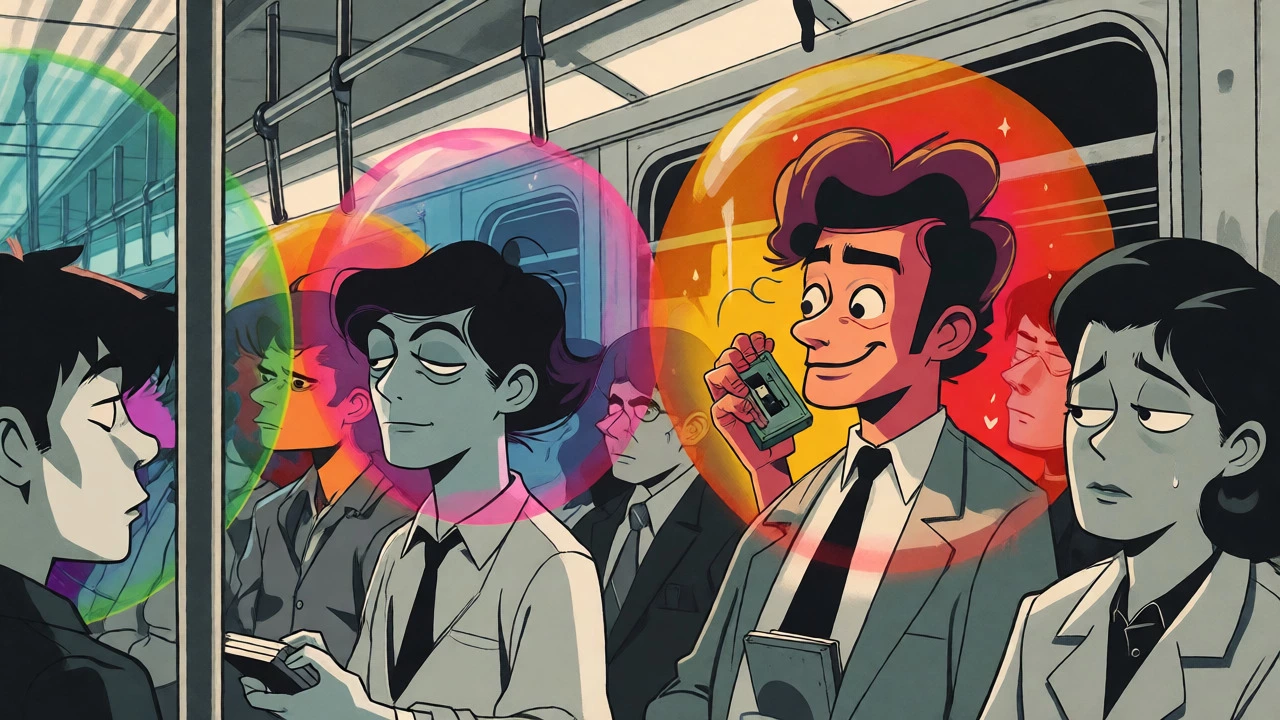
Beyond dollars and cents, the Walkman altered social norms. For the first time, individuals could create a "personal sound bubble" in public spaces. Scholars note that this shifted urban culture, allowing people to manage their environments-blocking out traffic, enhancing workouts, or curating a mood during a commute. It turned walking, jogging, and commuting into personalized experiences.
This autonomy came with backlash. Critics worried about social withdrawal, hearing damage, and safety risks, such as pedestrians failing to hear cars. These concerns mirror today's debates about smartphone usage and earbud etiquette. The Walkman normalized the idea that public space could be privately experienced, a concept that defines modern city life. It also fueled the fitness boom, as portable audio made exercise more enjoyable and sustainable for millions of people.
Legacy and Decline
Sony maintained a dominant market share throughout the 1980s, holding over 60% of the portable cassette player market despite intense competition. The brand became generic, much like Xerox for photocopying. When CDs arrived, Sony adapted with the Discman, extending the brand's lifespan. However, the core economic model-hardware plus physical media-eventually faced disruption from MP3 players and streaming services.
Cassette Walkman production ended in 2010, marking the close of an era. Yet, the cumulative sales figures remain staggering, with estimates ranging from 200 million cassette units to over 400 million across all Walkman generations. The true legacy isn't just the volume of units sold, but the behavioral change it instigated. We now expect music to move with us, to be instantly accessible, and to be personally curated. Every playlist on Spotify and every pair of AirPods owes a debt to that blue-and-silver box from 1979.
Frequently Asked Questions
Why was the original Sony Walkman controversial?
The original TPS-L2 lacked a recording function, which critics believed would limit its appeal since many consumers valued the ability to make their own tapes. Additionally, some viewed headphone use in public as socially isolating or unsafe due to reduced awareness of surroundings.
How did the Walkman affect the music industry's format preferences?
It accelerated the shift from vinyl LPs to compact cassettes. By 1983-1984, cassettes surpassed vinyl as the best-selling format in the US, largely because they were compatible with the popular portable players. This forced record labels to prioritize cassette production.
Did the Walkman cause a decline in music sales due to copying?
While the music industry feared that home taping would reduce sales, data suggests the opposite occurred in the short term. The availability of affordable players increased overall music consumption, boosting sales of both prerecorded albums and blank tapes, though copyright issues remained contentious.
What accessories were essential for Walkman owners?
Key accessories included AA batteries for power, leather or synthetic carrying cases for protection, higher-quality headphones for better sound, and blank cassette tapes for recording personal mixes or copying albums.
How long did the Walkman brand remain relevant?
The Walkman brand evolved beyond cassettes to include CD players (Discman), MiniDisc players, and digital flash-memory devices. Cassette production ended in 2010, but the brand name continued in various forms for decades, adapting to new technologies.