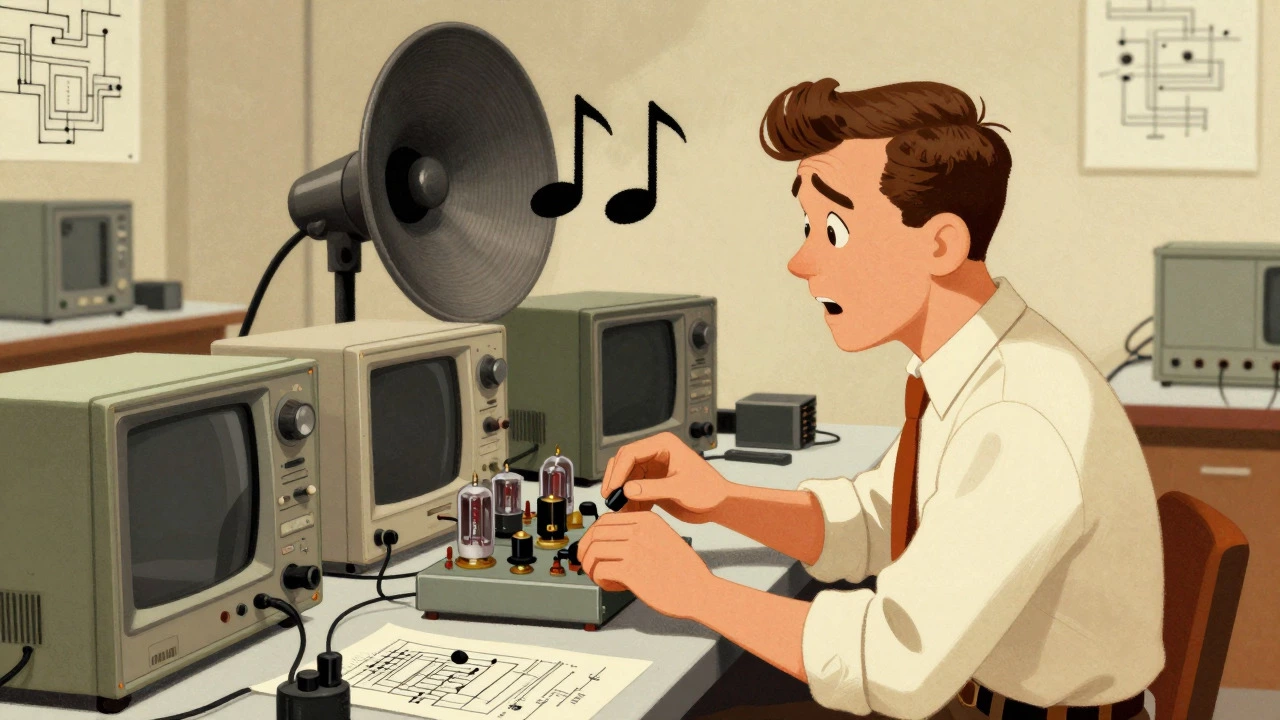

Picture this: it’s 1966. An engineer named Brad Plunkett is a junior engineer at Thomas Organ Company tasked with creating a cheaper mid-range boost circuit for Vox amplifiers is sitting in a lab in Sepulveda, California. He isn’t trying to reinvent music. He just wants to save his company four dollars per unit by replacing a complex transistor switch with a simple potentiometer. But when he sweeps that knob, the speaker doesn’t just get louder or quieter. It talks. It cries. It says “wah.”
That accidental discovery didn’t just create a new effect; it built the rhythmic backbone of an entire genre. Without that specific circuit design, the tight, percussive grooves of 1970s funk simply wouldn’t exist. The wah-wah pedal is a foot-controlled guitar effects device that applies a shifting band-pass filter to produce a vocal-like tone transformed the electric guitar from a melodic instrument into a rhythmic voice. Let’s look at how a budget-cutting engineering trick became the defining sound of funk.
The Accidental Birth of a Vocal Filter
To understand why the wah-wah changed everything, you have to look at what it actually does. Before the pedal existed, jazz trumpet players like Clyde McCoy was a jazz trumpeter known for using mutes to create a vocal-like crying sound in the early 20th century used physical mutes to shape their tone. They would open and close the mute while playing, forcing the air through a narrow gap. This created a resonant peak-a specific frequency that got much louder than the rest-while suppressing others. As they moved the mute, that peak shifted up and down the scale, mimicking the human vowels “oo” to “ee.”
Plunkett’s circuit did exactly that, but electronically. Instead of a mechanical mute, he used a band-pass filter is an electronic circuit that allows frequencies within a certain range to pass while attenuating frequencies below and above that range. When you rock the pedal forward, the center frequency of that filter rises. When you pull it back, it drops. Because the filter is highly resonant (it has a high Q factor), it emphasizes a very thin slice of the guitar’s spectrum.
Why put it on your foot? Because hands are busy. If a guitarist had to turn a knob with their hand every time they wanted to emphasize a beat, the rhythm would fall apart. By mounting the potentiometer in a rocking treadle, Plunkett freed the player’s hands to focus on fretting and picking, while the foot controlled the timbre. It turned tone control into a performance tool.
From Vox to Cry Baby: A Branding War
Once the circuit worked, marketing took over. Thomas Organ Company was the manufacturer that commercialized the first wah-wah pedals under the Vox brand in the late 1960s, which was owned by Warwick Electronics, needed a name. They latched onto Clyde McCoy because his name was already associated with that muted trumpet sound. The first commercial unit, released in 1967, was the “Clyde McCoy Wah-Wah Pedal.”
But names change fast in the gear world. By 1968, Thomas Organ decided to split its branding by region. In the UK, it stayed as the Vox Wah. In the US, they rebranded it as the Cry Baby wah is the American-market name for the Thomas Organ/Vox wah-wah pedal, later acquired by Dunlop Manufacturing. Why Cry Baby? It captured the weeping, emotive quality of the sound perfectly.
Here is where history gets messy. Thomas Organ went out of business in 1979. They failed to trademark the name “Cry Baby.” Enter Jim Dunlop. He saw the potential, bought the rights and the original tooling, and relaunched the GCB-95 Original Cry Baby in 1982. Today, when people say “Cry Baby,” they usually mean the Dunlop version, but the DNA is still that 1966 Plunkett circuit. This corporate shuffle didn’t kill the pedal; it standardized it. The analog topology remained robust enough that modern iterations mostly just add features like true-bypass switching or adjustable Q, rather than changing the core design.
Jimi Hendrix and the Rock Foundation
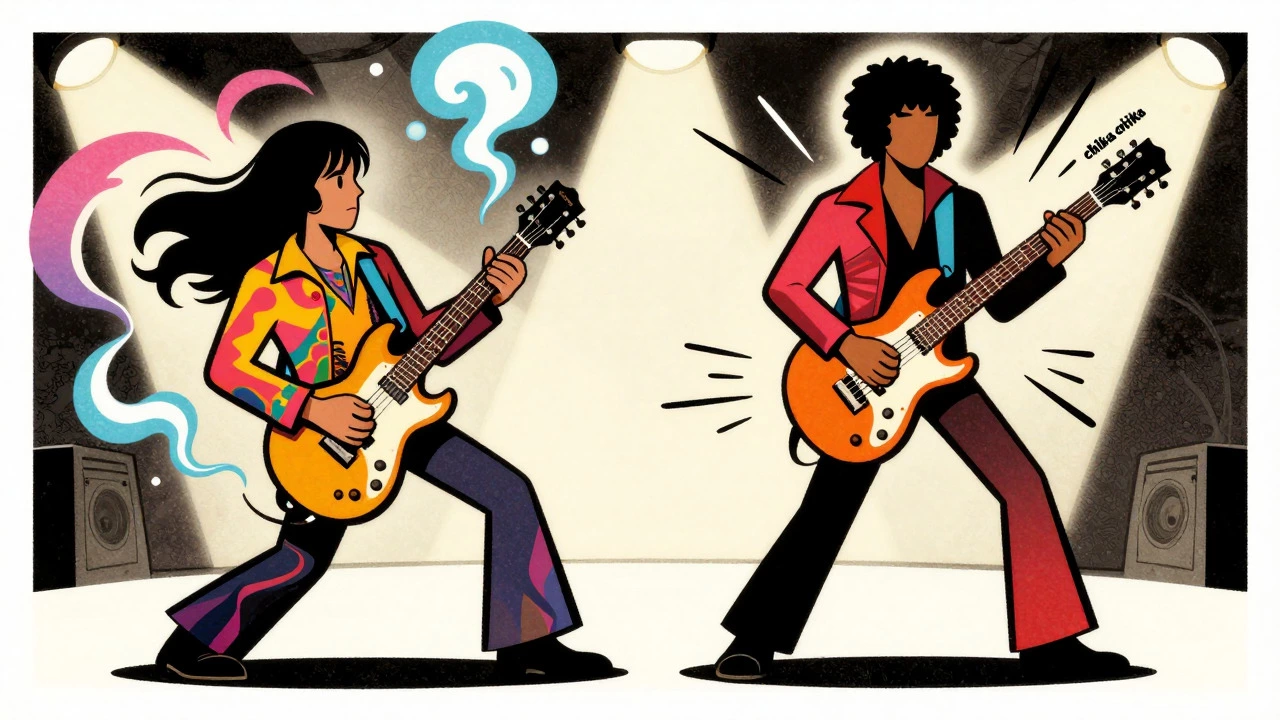
You can’t talk about the wah without mentioning Jimi Hendrix was a pioneering guitarist who popularized the wah-wah pedal in psychedelic rock during the late 1960s. While the pedal was invented for horns and initially marketed broadly, Hendrix made it a guitar staple. His 1968 track “Voodoo Child (Slight Return)” is the turning point. He didn’t just use the wah for solos; he used it to thicken the rhythm, adding a psychedelic swell that bridged rock and the emerging funk aesthetic.
Hendrix showed the world that the guitar could sing. But he was playing leads. The real revolution happened when funk guitarists realized they could use the wah not for melody, but for rhythm. They stopped trying to make the guitar sound like a trumpet and started making it sound like a drum.
Skip Pitts and the “Chika-Chika” Rhythm
If Hendrix gave the wah its soul, Charles “Skip” Pitts was a studio guitarist whose work on Isaac Hayes's 'Theme from Shaft' defined the funk wah-wah rhythm style gave it its spine. In 1971, Pitts played on Isaac Hayes’s “Theme from Shaft.” Listen to that track. You hear steady, muted sixteenth-note chords. *Chika-chika-chika.* That is the wah-wah locked into the groove.
Pitts wasn’t sweeping the pedal randomly. He was synchronizing the movement of the treadle with the beat. Every time he hit a chord, he rocked the pedal to emphasize the attack, then pulled back to let the note decay. This created a percussive texture that cut through the mix without needing high volume. It was bright, articulate, and incredibly funky.
This technique became the template for funk guitar. The “wacka-wacka” sound isn’t just a tone; it’s a rhythmic device. The wah acts as a dynamic accent. When the pedal is down, the tone is darker and thinner. When it’s up, the resonant peak hits the upper-mid frequencies, making the note pop. By moving the foot in time with the strumming hand, the guitarist creates a pulsing effect that drives the song forward.
| Feature | Psychedelic Rock (e.g., Hendrix) | Funk (e.g., Skip Pitts) |
|---|---|---|
| Primary Goal | Melodic expression and sustain | Rhythmic articulation and percussive texture |
| Pedal Movement | Slow, smooth sweeps following notes | Fast, synchronized with sixteenth-note strums |
| Guitar Technique | Bending, vibrato, long phrases | Heavy palm muting, staccato chords |
| Tonal Focus | Vocal-like singing tones | Sharp, cutting accents (“chika-chika”) |
Why the Wah Defines Funk Specifically
Funk is all about the pocket-the space between the beats. Traditional distortion or fuzz pedals compress the signal and smear the transients, which can muddy up a tight rhythm section. The wah-wah is different. It’s a filter, not a distortion. It preserves the transient attack of the pick hitting the string while coloring the body of the note.
This clarity is crucial. In a dense funk arrangement with bass, drums, horns, and keys, the guitar needs to occupy a specific frequency slot. The wah allows the guitarist to dynamically shift that slot. On the upbeat, the pedal might be in a position that emphasizes higher frequencies, letting the guitar cut through the horn section. On the downbeat, it might dip lower, locking in with the bass.
Furthermore, the physical act of playing funk with a wah requires coordination. Your left hand mutes the strings. Your right hand picks precise sixteenth notes. Your foot rocks the treadle in sync. It’s a three-way conversation. This physical engagement makes the performance feel alive and urgent, which is exactly what funk demands.
Modern Relevance and Legacy
In 2026, the wah-wah pedal is more than a vintage curiosity. It remains a standard component on pedalboards across genres. While digital modelers can simulate the effect, many players still prefer the tactile feedback of the analog potentiometer and the mechanical resistance of the treadle. The Dunlop Cry Baby series continues to dominate the market, but competitors offer variations with adjustable resonance and sweep ranges to suit different guitars and amps.
The technology hasn’t changed much because it doesn’t need to. The core principle-a variable band-pass filter controlled by a foot-is timeless. Whether you’re playing neo-soul, indie rock, or straight-ahead funk, the ability to add a human, vocal quality to your instrument is irreplaceable. The wah-wah reminds us that sometimes, the most revolutionary tools come from the simplest accidents.
Who invented the wah-wah pedal?
The wah-wah pedal was invented by engineer Brad Plunkett in 1966 while working for the Thomas Organ Company. He was originally trying to create a cheaper mid-range boost circuit for Vox amplifiers but accidentally discovered the vocal-like filtering effect.
What is the difference between a Vox Wah and a Cry Baby?
Originally, they were the same circuit sold under different names for different regions: Vox in the UK and Cry Baby in the US. After Thomas Organ went bankrupt, Jim Dunlop acquired the Cry Baby name and tooling. Today, Cry Baby refers to Dunlop’s line of wah pedals, which are based on the original Vox design but may include modern updates like true bypass.
How do you play funk guitar with a wah pedal?
To achieve the classic funk sound, use heavy palm muting with your picking hand and play steady sixteenth-note rhythms. Synchronize your foot movement with your strumming: rock the pedal forward on the attack of the note to emphasize the transient, then pull it back slightly to let the note decay. This creates the percussive "chika-chika" texture.
Why is the wah-wah pedal important for funk music?
The wah-wah pedal allows funk guitarists to add dynamic, vocal-like accents to their rhythm playing without muddying the mix. Unlike distortion, it preserves the clarity of the transient attack, enabling the guitar to cut through dense arrangements while providing a percussive, rhythmic drive that locks in with the bass and drums.
Did Jimi Hendrix invent the wah-wah sound?
No, Brad Plunkett invented the pedal. However, Jimi Hendrix popularized it in rock music in the late 1960s. His innovative use of the pedal on tracks like "Voodoo Child (Slight Return)" demonstrated its expressive potential, paving the way for its adoption in funk and other genres.


