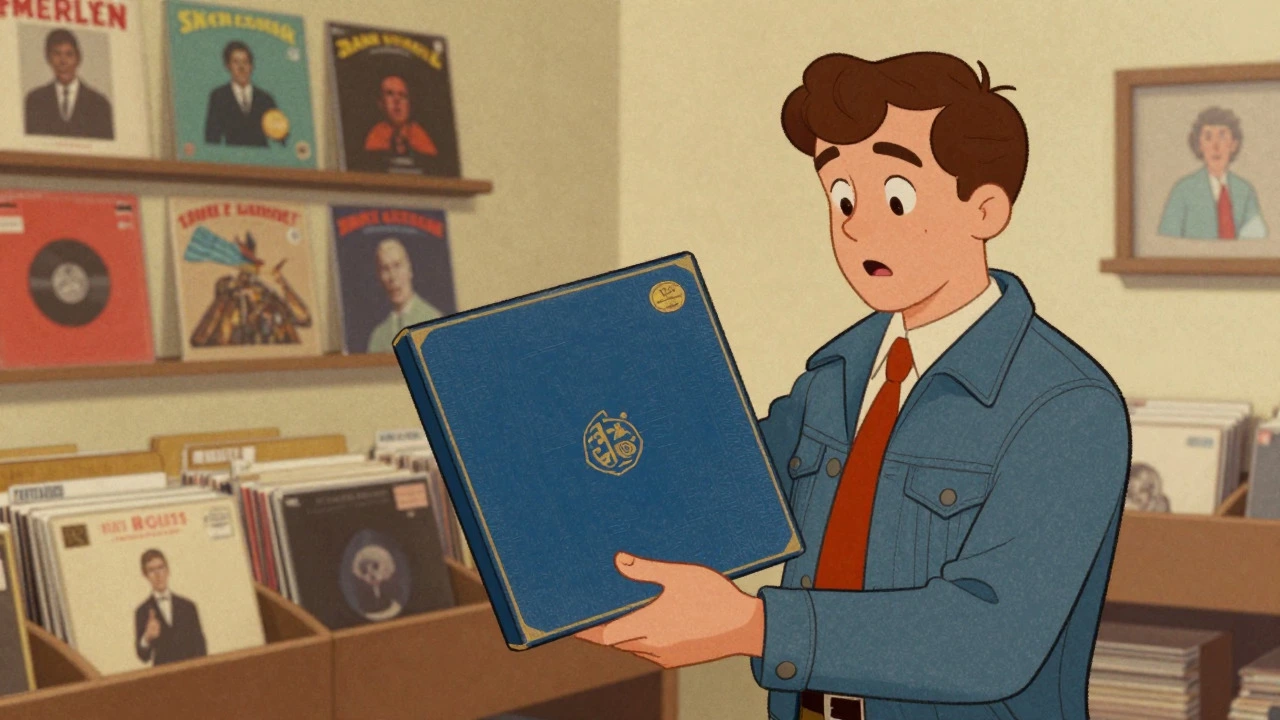

Have you ever picked up a heavy, textured box and felt the weight of it before even opening the lid? That tactile experience wasn't an accident. In the 1970s, record labels stopped treating albums as mere containers for music. They started building them as premium artifacts. This shift gave us the modern vinyl box set, which is a multi-disc collection packaged in rigid, often luxurious materials to elevate the listener's experience beyond audio alone. It was a time when gatefold sleeves became too small for the ambition of artists and designers alike.
The evolution of packaging during this decade transformed how we value physical media. We moved from simple cardboard sleeves to complex structures involving imitation leather, gold embossing, and extensive printed inserts. If you are looking at old records today, you might wonder why some boxes cost hundreds of dollars while others sit on clearance racks. The answer lies in the specific innovations of the 1970s, where marketing, art, and engineering collided to create collectible objects that defined a generation of music fans.
From Gatefolds to Rigid Boxes: The Early Shift
In the late 1960s, the double album was becoming popular, but standard paper sleeves struggled to hold two LPs without bending or tearing. Labels experimented with gatefold designs-sleeves that opened like books-but these still lacked durability for larger collections. The breakthrough came when manufacturers began using rigid board construction. This allowed for heavier, more durable outer shells that could protect multiple records.
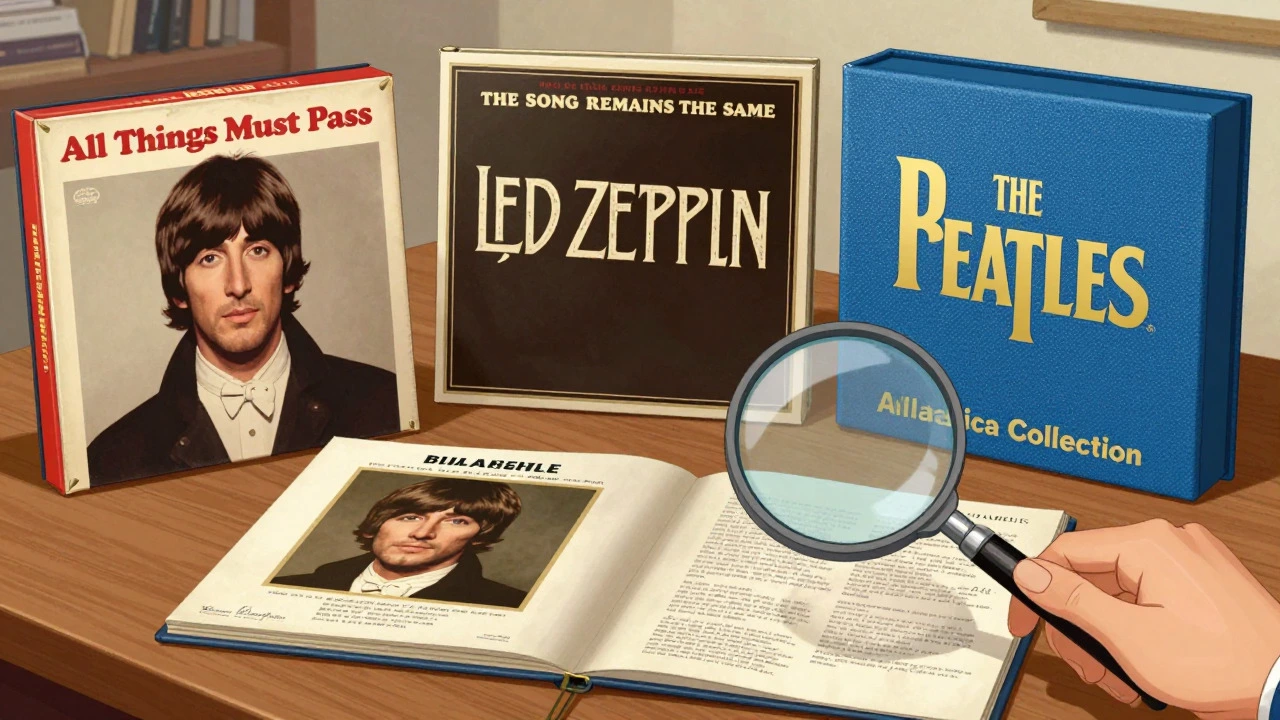
A pivotal moment occurred in 1970 with George Harrison’s All Things Must Pass. This release contained three LPs housed in a single, sturdy box, marking one of the first major solo artist projects marketed as a deluxe object rather than a standard single disc. Before this, box sets were rare novelties. Harrison’s project proved that post-Beatles solo acts could command attention through substantial packaging. It wasn’t just about the songs; it was about presenting the artist as a serious, archival figure. The box itself became part of the statement.
Following this success, other artists looked for ways to replicate the impact. Led Zeppelin took the concept further in 1976 with The Song Remains the Same. This soundtrack featured four LPs documenting their Madison Square Garden concerts, packaged in an oversized box format that emphasized the scale and spectacle of their live performances. By packaging a live event into a massive physical object, they turned a concert recording into a museum piece. These early examples established a clear industry strategy: use packaging complexity to differentiate deluxe issues from standard ones.
The Beatles Collection: Setting the Standard
If there is one release that defines the late 1970s box set trend, it is The Beatles Collection. Released in November 1978 in the US and December 1978 in the UK, this set included all officially released Beatles studio albums plus a new 'Rarities' compilation, housed in a unified blue textured box with gold lettering. EMI and Apple Records didn’t just bundle albums; they created a definitive archive. The box contained twelve original stereo albums and the bonus rarities disc, totaling thirteen or fourteen LPs depending on how you count the double White Album.
The design was deliberate. The exterior used a textured material resembling dark blue leather, giving it a sense of permanence and luxury. Gold etched letters spelled out the title, and facsimile signatures of John, Paul, George, and Ringo adorned the lid. Inside, every original insert was reproduced-the Sgt. Pepper cut-out sheet, the White Album poster, and the photographs. This attention to detail signaled to collectors that this wasn’t just a reissue; it was a preservation effort.
| Release | Year | Disc Count | Key Packaging Feature |
|---|---|---|---|
| All Things Must Pass | 1970 | 3 LPs | First major solo triple-LP box |
| The Song Remains the Same | 1976 | 4 LPs | Oversized box for live soundtrack |
| The Beatles Collection (BC13) | 1978 | 13-14 LPs | Textured blue box, gold embossing, full catalog |
Regional Variations and Manufacturing Details
Box sets weren’t identical everywhere. Regional markets adapted the concept based on local manufacturing capabilities and consumer preferences. In Australia, for example, EMI initially imported UK flip-top boxes identified by catalog number PSLP 261. Later, they shifted to domestically manufactured versions with lift-off lids. These Australian boxes evolved over time, moving from textured exteriors to non-textured constructions with centrally printed gold titles.
Japanese releases offered another distinct variation. Multi-disc sets from Japan often featured red or black vinyl pressings, which were not common in Western markets. Each LP came with a four-page illustrated lyric book, and the entire set included two large posters. These Japanese boxes used the same textured blue cardboard style as the Beatles sets but added unique extras that appealed to dedicated fans willing to pay a premium for export-quality items.
Understanding these variations is crucial for collectors. A German BC13 box might have a matte finish and specific catalog prefixes like 1C 198, while an Australian version might lack a catalog number on the box entirely. Label colors also differed, with orange Parlophone labels appearing on earlier albums and Apple labels on later ones. These subtle differences determine the market value and historical significance of each edition.
Creative Experiments and Novelty Inserts
While the Beatles set focused on archival completeness, other artists pushed the boundaries of creativity. The 1970s saw a surge in novelty packaging that treated the sleeve as an interactive toy. The Who’s Live at Leeds included booklets and posters, turning the LP into a container for multiple printed artifacts. Some packages even featured working zippers, novelty "billion-dollar bills," or paper panties.
One particularly inventive design involved hiding each record’s cover beneath a brown paper bag, depicting a bar scene from slightly different camera angles. Listeners had to peel back the layers to reveal the artwork, creating a playful unboxing experience long before the term existed. These experiments showed that packaging could be narrative-driven, engaging the fan physically before they even heard the music.
This era also saw the rise of poly-lined inner sleeves. Unlike standard paper sleeves that could scratch vinyl over time, poly-lined sleeves provided a smooth surface that protected the grooves. For audiophiles, this was a game-changer. High-quality pressings combined with protective packaging meant that box sets offered superior sound quality compared to standard retail copies. Dealers often highlight "unplayed, untouched" vinyl in these sets because the packaging preserved the condition so well.
Why Packaging Matters for Collectors Today
Today, the legacy of 1970s box sets lives on in the collector market. Condition grades like VG (Very Good), EX (Excellent), and NM (Near Mint) depend heavily on the state of the box itself. Corners wear down, edges split, and textures fade. A box set with pristine corners and intact gold lettering commands a significantly higher price than one with damage.
Collectors look for specific identifiers: the presence of signatures, the type of lid (hinged vs. lift-off), and the completeness of inserts. Missing a poster or a lyric booklet can drop the value by half. The detailed documentation available online-from blogs tracking Australian variants to dealer listings highlighting Japanese exclusives-shows how deeply fans engage with these physical details.
The influence extends to modern releases. Recent box sets, such as the 5-LP NOW Presents… The 1970s issued in 2021, consciously echo the classic design principles: rigid slipcases, annotated track listings, and high-quality print materials. Labels continue to revisit 1970s titles with new special-edition packaging, proving that the template established decades ago remains effective.
How to Identify Authentic 1970s Editions
If you are hunting for vintage box sets, start by learning the catalog numbers. For The Beatles Collection, look for BC13 in many territories. Check the label colors: orange Parlophone for early albums, Apple for later ones. Inspect the box texture closely; genuine 1970s boxes often have a distinct grain that feels like imitation leather.
Examine the inner sleeves. Original poly-lined sleeves should be free of dust and tears. Look for matrix runout etchings on the vinyl itself, which can help verify the pressing plant and date. Cross-reference your findings with specialized resources like BeatlesAustralia or RareBeatles, which document minute variations across regions. Patience and careful inspection are key to building a valuable collection.
What is the most famous vinyl box set from the 1970s?
The Beatles Collection (BC13), released in 1978, is widely considered the most iconic box set of the decade. It included all studio albums plus a rarities disc in a distinctive blue textured box.
Why were box sets more expensive than regular albums?
Box sets used higher-quality materials like rigid board, imitation leather, and poly-lined sleeves. They also included multiple discs and extensive printed inserts, increasing production costs and positioning them as premium collectibles.
How do I know if a 1970s box set is authentic?
Check for correct catalog numbers, label colors (e.g., Parlophone vs. Apple), and specific packaging details like textured finishes and gold embossing. Compare matrix numbers on the vinyl with known reference guides for that region.
Did all box sets include bonus tracks?
Not always, but many did. The Beatles Collection included a 'Rarities' LP, while other sets might feature exclusive live recordings or unreleased demos to justify the higher price point.
Are Japanese 1970s box sets worth more?
Often yes. Japanese editions frequently included unique features like colored vinyl, extra lyric booklets, and high-quality posters, making them highly sought after by collectors worldwide.