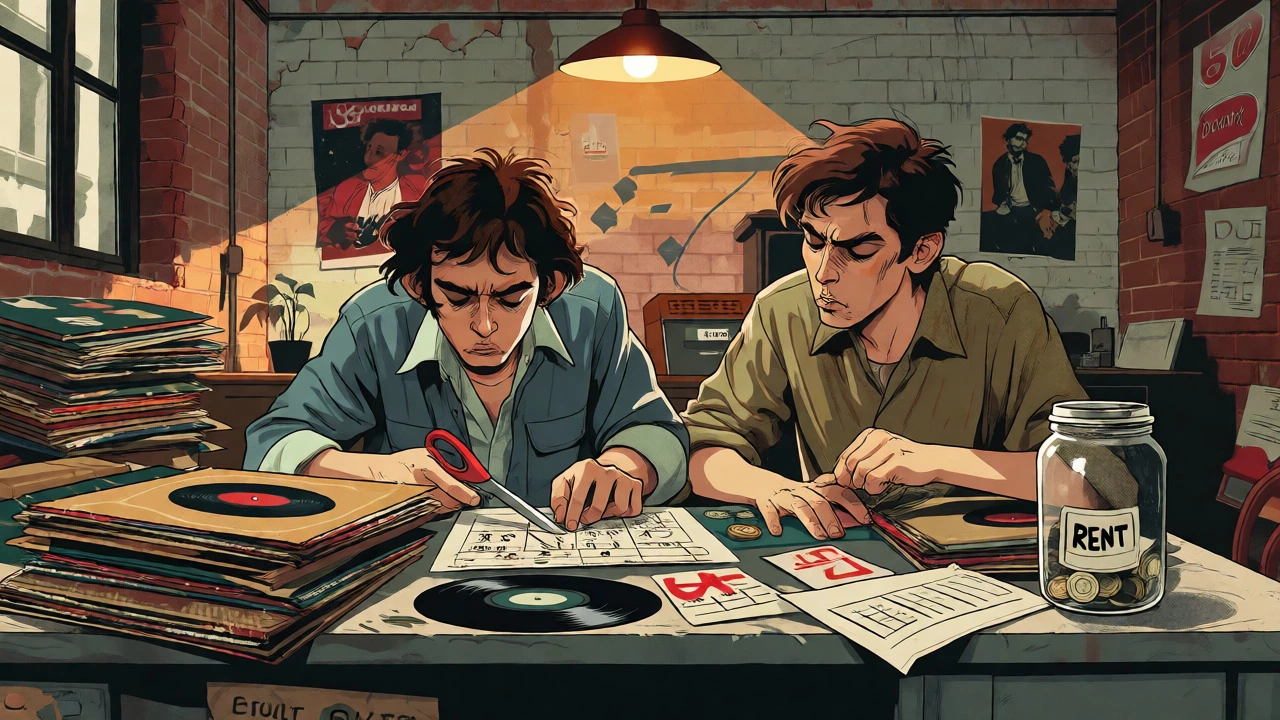

Imagine running a business where you have no idea if you’ll make rent next month, but you’re too busy designing a die-cut cardboard sleeve to worry about it. That was the reality for independent record labels in the 1980s. These weren’t just small companies; they were cultural experiments fueled by punk’s anti-establishment spirit and sustained by sheer stubbornness. While major corporations chased radio hits, a network of mavericks built an entire parallel economy from scratch.
If you think the modern "indie" label is just a marketing term, you’re missing the point. In the early ’80s, being independent meant owning your masters, controlling your aesthetic, and relying on a fragile web of fanzines, local shops, and collective shipping deals. It was messy, often broke, and wildly creative. Here’s how a handful of people with £2,000 loans changed the music industry forever.
The Economics of Hand-to-Mouth Glory
Let’s be real: most 1980s indie labels didn’t operate like businesses; they operated like hobbies that accidentally generated revenue. The core economic model was what critics called "upside-down economics." You might spend more on the artwork than the recording itself because the visual object mattered as much as the sound. Factory Records, founded in Manchester in 1978, is the prime example. They treated catalog numbers as art pieces, assigning them to posters and buildings, not just records. This commitment to iconicity often outstripped their ability to recoup costs, leading to financial instability even as their cultural cachet soared.
Cash flow was tight. Many labels relied on one release paying for the next. If a single sold out, great-you pressed another run. If it didn’t, the unsold stock could sink the whole ship. There were no safety nets. Contracts were famously favorable to artists, often allowing bands to retain publishing rights or master ownership. This wasn’t charity; it was strategy. By offering better terms than majors, indies attracted talent that valued artistic control over upfront cash. It created a trust-based ecosystem where loyalty was currency.
| Feature | Independent Labels | Major Labels |
|---|---|---|
| Budget Source | Self-financed, pre-orders, small loans | Corporate capital, bank credit |
| Artist Contract | Favorable, artist retains rights | Rigid, label owns masters |
| Distribution | Co-ops (e.g., The Cartel), direct sales | Owned national networks |
| Aesthetic Priority | Authenticity, lo-fi, unique packaging | Polish, radio-friendliness, consistency |
Distribution Was the Real Revolution
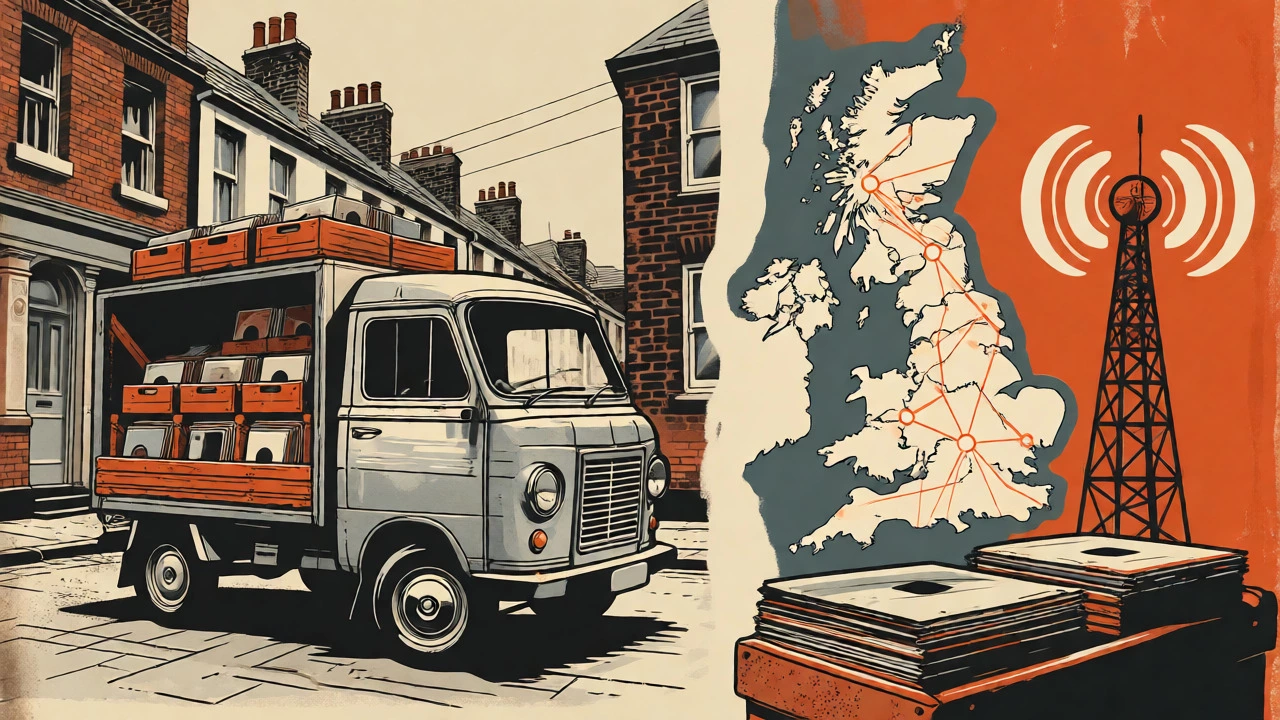
You can press ten thousand records in your garage, but if you can’t get them into stores, you don’t have a label. You have a storage problem. The rise of indies wasn’t just about music; it was about logistics. Enter The Cartel, a cooperative formed by Rough Trade, Backs Records, and Red Rhino. Before this, small labels struggled to reach national retailers. The Cartel pooled resources to handle warehousing and invoicing, allowing tiny imprints to compete on shelf space.
This infrastructure lowered per-unit costs significantly. A band could press 1,000 copies of a single and actually see it in shops across Britain. Without this network, the UK indie scene would have remained a collection of isolated local phenomena. In the US, similar networks existed, though less formalized. SST Records in California embodied this DIY ethos, constantly touring and self-releasing hardcore punk records that bypassed traditional radio entirely.
It wasn’t just physical distribution, either. Media channels were equally alternative. BBC DJ John Peel became the gatekeeper who mattered. His show championed obscure releases, creating demand where none existed. Fanzines reviewed records that mainstream press ignored, creating feedback loops that drove sales. If Peel played it, it sold out. If a zine loved it, it gained cult status. This decentralized media power shifted influence away from corporate PR departments and into the hands of tastemakers.
Key Players Who Built the Blueprint
While hundreds of labels emerged-Norman Schreiber’s 1986 index listed over 200-a few defined the era. Rough Trade, started by Geoff Travis in a London shop, evolved into the quintessential British indie institution. Releasing The Smiths’ debut in 1984 proved that a small company could support international stars without compromising their edge.
Then there was 4AD. Founded around 1980 with a £2,000 loan, it pioneered a distinct dream-pop and gothic aesthetic. Under Ivo Watts-Russell, 4AD didn’t just sell records; it sold a vibe. Their collaboration with designer Vaughan Oliver created instantly recognizable visuals that signaled membership in a specific cultural club.
In the US, SST Records and Epitaph showed that hardcore ethics could coexist with commercial viability. SST’s relentless output kept Southern California’s punk scene alive, while Epitaph stressed community and freedom, proving principled labels could survive long-term. Meanwhile, Mute Records led the synth-pop boom, blending electronic experimentation with pop structures, showing that indie didn’t mean acoustic guitars only.
Lo-Fi as a Feature, Not a Bug
Today, we fix bad recordings with plugins. In the 1980s, hiss and rough edges were badges of honor. Academic analysis suggests that lo-fi production became a marker of authenticity. Fans interpreted cheap four-track demos and unconventional mixes as signs of sincerity. It wasn’t that they couldn’t afford better studios; it was that polish felt fake.
This aesthetic extended to packaging. Indie sleeves used experimental printing techniques-die-cuts, overlays, high-end color processes-that cost more than standard jackets. Why? Because the physical artifact needed to stand out in a bin full of major-label plastic. Collector culture thrived on these limited runs. Owning a Factory poster or a 4AD vinyl wasn’t just about listening; it was about curating an identity. The object itself was part of the art.
The Blur Between Indie and Mainstream
We often draw a hard line between "indie" and "major," but the 1980s boundary was porous. Labels like Virgin, Island, and Chrysalis started independent but grew into "major-minor" hybrids. They used major distribution networks but retained non-corporate identities until eventually being absorbed. Polygram bought Island Records in 1989, signaling that successful indies had become valuable assets worth acquiring.
Even pure indies made pragmatic deals. Factory Records used Warner-related entities for overseas distribution while keeping creative control at home. This hybrid approach allowed them to scale internationally without selling their soul. It’s a lesson that still applies today: independence doesn’t mean isolation. It means retaining agency while leveraging necessary partnerships.
Why It Still Matters
The 1980s indie boom wasn’t just a nostalgic footnote. It established the template for modern independent music. The emphasis on artist ownership, community-driven marketing, and niche aesthetics directly informs today’s Bandcamp micro-labels and artist-run imprints. When you see a band funding their album through Patreon or releasing a limited-edition cassette, you’re seeing the descendants of those hand-to-mouth London shops and Manchester warehouses.
They proved that you don’t need millions to build a movement. You need a clear vision, a supportive community, and enough stubbornness to ignore the accountants. The majors eventually caught up, buying up catalogs and mimicking indie aesthetics. But the original energy-the chaotic, intimate, risky thrill of building something from nothing-belongs to the ’80s indies. And frankly, the industry is still trying to replicate that magic.
What defined an "independent" label in the 1980s?
An independent label was defined by ownership and distribution. It was not owned by a major corporate group and relied on separate distribution networks, such as The Cartel in the UK, rather than the majors' internal channels. This allowed them to maintain artistic autonomy and favorable contracts with artists.
How did indie labels survive financially?
Many operated on "hand-to-mouth" budgets, using cash flow from one release to finance the next. They minimized staff, often having just one or two people handle all operations. Pre-orders via fanzines helped fund pressings, and low overhead costs kept risks manageable despite frequent financial instability.
What role did John Peel play in the indie scene?
BBC DJ John Peel acted as a crucial tastemaker. His radio shows championed obscure independent releases that mainstream media ignored. His endorsement could rapidly boost demand for a small pressing, effectively serving as a powerful, decentralized marketing channel for the indie sector.
Were 1980s indie recordings intentionally lo-fi?
Often, yes. While budget constraints forced lower fidelity, fans and critics interpreted rough edges, hiss, and unconventional mixes as signs of authenticity and sincerity. Lo-fi production became an aesthetic marker distinguishing indie music from the polished, corporate sound of major labels.
Did any 1980s indie labels remain independent?
Yes, several survived and adapted. Beggars Banquet evolved into the Beggars Group, which remains independent. XL Recordings, founded in 1989, also stayed independent. Others, like Island Records, were acquired by majors, illustrating the fluid boundary between indie success and corporate consolidation.

