
You hear that opening bassline. You know it instantly. But if you listen closely to The O'Jays and their hits like "Love Train" or "For the Love of Money," you realize something rare happened in the 1970s. It wasn't just about one star singer standing in front of a band. It was about three men-Eddie Levert, Walter Williams, and William Powell-blending their voices so tightly that they sounded like a single, powerful instrument. This isn't just nostalgia; it's a masterclass in ensemble discipline.
Most people think of soul music as gospel shouting over funk grooves. The O'Jays proved you could do both while maintaining perfect pitch and rhythmic precision. They didn't just sing songs; they engineered a sound. If you've ever wondered why their records still feel alive decades later, it comes down to how they handled harmony. Let's break down exactly how this trio from Canton, Ohio, became the gold standard for group vocals in R&B.
From Five Teenagers to a Power Trio
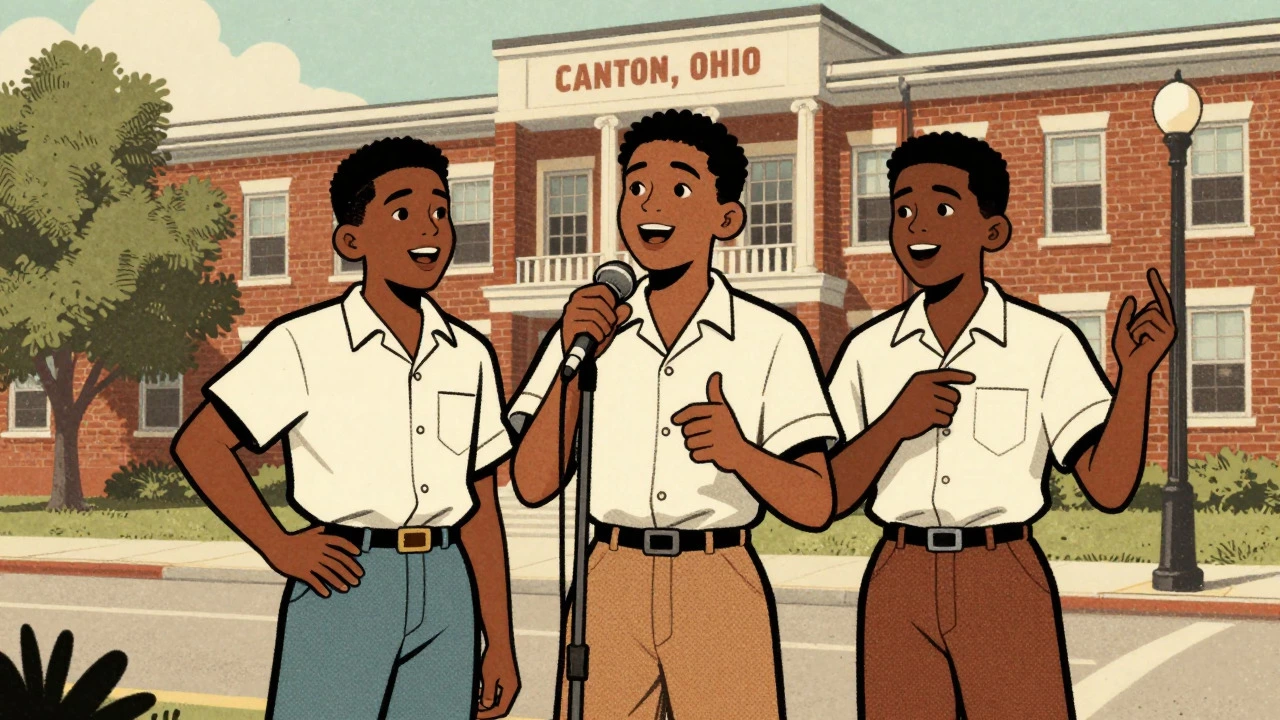
The story starts in 1958 at McKinley High School in Canton, Ohio. Eddie Levert and Walter Williams were kids when they started singing together, inspired by groups like Frankie Lymon & the Teenagers. They weren't alone initially. The original lineup included William Powell, Bobby Massey, and Bill Isles. For years, they operated as a quintet, recording under names like The Triumphs and The Mascots. They even recorded a single, "Miracles," for King Records in 1961. It didn't make national waves, but it taught them the ropes.
By the early 1970s, things changed. Bill Isles left for family reasons, and Bobby Massey moved behind the scenes. What remained was a trio. This reduction might seem like a loss, but it was actually their secret weapon. With only three voices, there was nowhere to hide. Every note had to be intentional. This configuration forced a clarity of arrangement that larger groups often lack. When they signed with Philadelphia International Records in 1972, producers Kenneth Gamble and Leon Huff saw potential in this tight-knit unit. They didn't want five guys making noise; they wanted three voices cutting through the mix.
The Anatomy of Their Vocal Blend
What made their blend work? It came down to distinct tonal contrasts. Eddie Levert possessed a gruff, powerful voice capable of belting out high notes with the intensity of a gospel preacher. His range stretched from alto up to a high second tenor. In contrast, Walter Williams offered a silky, smooth baritone-tenor line. He provided the glue, smoothing out the rough edges of Levert's power. Then there was William Powell, whose agile tenor added brightness and lift to the upper registers.
This combination allowed them to cover a massive vocal range without needing more singers. They rotated lead duties frequently. On tracks like "Back Stabbers," Levert takes the gritty lead, while Williams and Powell provide a lush, stacked background. In other songs, Williams steps forward, offering a softer perspective, backed by Levert's supportive harmonies. This interplay creates a conversational dynamic that feels intimate yet grand. Critics often point to this balance as the reason their recordings remain reference points for vocal discipline.
| Member | Vocal Type | Role in Harmony | Tonal Quality |
|---|---|---|---|
| Eddie Levert | Alto to Second Tenor | Primary Lead / Gritty Counterpoint | Raspy, Powerful, Gospel-inflected |
| Walter Williams | Baritone-Tenor | Secondary Lead / Harmonic Glue | Silky, Smooth, Legato |
| William Powell | Agile Tenor | Upper Harmony / Ad-libs | Bright, Nimble, Clear |
Gamble, Huff, and the Philly Sound Architecture
You can't talk about The O'Jays without talking about Kenneth Gamble and Leon Huff. These two producers built a sonic cathedral around the trio's voices. Their label, Philadelphia International Records, relied on a house band known as MFSB (Mother Father Sister Brother). This wasn't just a rhythm section; it was a 30-plus-piece orchestra capable of intricate string arrangements and complex horn lines.
The genius lay in how Gamble and Huff arranged the vocals against these dense instrumentals. Instead of letting the singers compete with the band, they wove the harmonies into the fabric of the song. Arrangers like Bobby Martin and Norman Harris crafted parts where the background vocals entered in block chords on choruses. These chords were often stacked thirds and fifths, creating a rich, choral bed. Meanwhile, the lead singer would improvise melismas over the top. This structure required absolute precision. If one singer was late on an entrance, the whole stack collapsed. The fact that they rarely did speaks to their professional rigor.
Harmony Strategies in Classic Hits
Let's look at specific techniques used in their biggest songs. In "Back Stabbers" (1972), the verses feature unison leads, keeping the focus on the narrative of betrayal. But when the chorus hits, the three voices lock into a tight three-part harmony. This shift signals emotional release. The backgrounds echo the lead phrase in shorter rhythmic values, creating a call-and-response effect that feels urgent.
In "For the Love of Money" (1973), the approach is different. The song runs over seven minutes in its album version, driven by a funky bass riff. Here, the harmonies are rhythmic chants. The trio uses tight, staccato unison phrases punctuated by harmonized tag lines. This aligns perfectly with the groove, turning the voices into percussive elements. It’s less about melody and more about attitude and timing.
Then there's "I Love Music" (1975). The backgrounds sustain long vowel sounds on chords spanning an octave. This creates a wide, expansive sound that supports Levert's improvisations. The use of sustained vowels allows the harmonies to breathe, giving the track a hymn-like quality despite its disco-funk beat. Each song demonstrates a different application of the same core principle: serve the emotion, not just the chord progression.
Why They Stand Apart from Motown and Peers
People often compare The O'Jays to Motown acts like The Temptations. While both groups mastered choreography and harmony, their approaches differed significantly. Motown groups often maintained a rigid hierarchy: one primary lead singer with others strictly backing him. The O'Jays, however, treated their three members as equal partners in storytelling. Leads rotated between Levert and Williams within the same track, creating a dialogue rather than a monologue.
Compared to four-man groups like The Spinners, The O'Jays had to economize their voice-leading. They couldn't rely on sheer numbers to fill out a chord. Instead, they used studio overdubbing and careful arranging to create voicings as rich as larger ensembles. This constraint bred creativity. Their sound felt more direct, more personal, because you could hear the individual character of each voice even when they sang together. This transparency is what makes their recordings so engaging today.
Legacy and Educational Value
The impact of The O'Jays extends beyond chart success. They were among the first Black vocal groups to perform in arenas across the United States, drawing tens of thousands of fans per tour. Their induction into the Rock and Roll Hall of Fame cements their status, but their real legacy lives in how they influenced vocal training. Music educators frequently use tracks like "Love Train" to teach parallel thirds and gospel-influenced call-and-response. Students transcribe 8-bar passages to understand the underlying voice-leading, learning how to maintain pitch accuracy while executing complex rhythms.
Even now, cover bands struggle to replicate their sound. It requires three strong vocalists capable of sustaining parts across two octaves, plus a rhythm section that locks into the 90-120 BPM pocket typical of Gamble and Huff productions. The difficulty lies in the details-the precise entrances, the controlled vibrato, the dynamic shifts. These aren't accidents; they're the result of years of touring and refining their craft.
As we move further away from the 1970s, the value of ensemble excellence becomes clearer. In an era of auto-tune and solo dominance, The O'Jays remind us that human connection in music comes from listening to each other. Their harmonies weren't just pretty; they were functional tools for conveying message and emotion. Whether addressing economic inequality in "For the Love of Money" or global unity in "Love Train," the trio ensured the meaning landed with every note.
How many members were originally in The O'Jays?
The group started as a five-member ensemble in 1958, consisting of Eddie Levert, Walter Williams, William Powell, Bobby Massey, and Bill Isles. They performed under names like The Triumphs and The Mascots before settling on The O'Jays in 1963.
Why did The O'Jays become a trio?
In the early 1970s, Bill Isles left for family reasons and Bobby Massey departed to pursue business aspects of the music industry. This left the classic trio of Levert, Williams, and Powell, which defined their most successful era.
What role did Gamble and Huff play in their success?
Producers Kenneth Gamble and Leon Huff signed The O'Jays to Philadelphia International Records in 1972. They created the lush, orchestrated backdrop known as the Philadelphia Soul sound, providing sophisticated arrangements that highlighted the group's vocal harmonies.
Which song was their first major hit?
"Back Stabbers," released in 1972, was their breakthrough hit. It reached number one on the US R&B charts and became the first million-selling single for Philadelphia International Records.
Are The O'Jays still performing?
Yes, founding members Eddie Levert and Walter Williams have continued to tour well into the 21st century, often joined by newer members like Eric Grant. They remain active performers, keeping their classic sound alive for new audiences.


