
You think you know Purple Rain is just an album. You hear the guitar solo in your head before you even hit play. But here is the twist that changes everything: the most famous live tracks on the record weren't actually recorded live in one take. They were stitched together from a single benefit concert, then surgically edited and overdubbed in Hollywood months later. This wasn't just a pop record; it was a high-stakes experiment in blending raw stage energy with sterile studio precision.
If you've ever wondered how a semi-autobiographical movie about a guy in a trench coat became one of the best-selling albums of all time, you have to look at the map. Specifically, the map of Minneapolis in 1983. The story isn't just about Prince Rogers Nelson's genius. It's about a specific ecosystem of warehouses, clubs, engineers, and rival bands that collided to create the Minneapolis Sound. Let's break down exactly how this magic happened, step by step.
The Warehouse Era: Where the Band Was Born
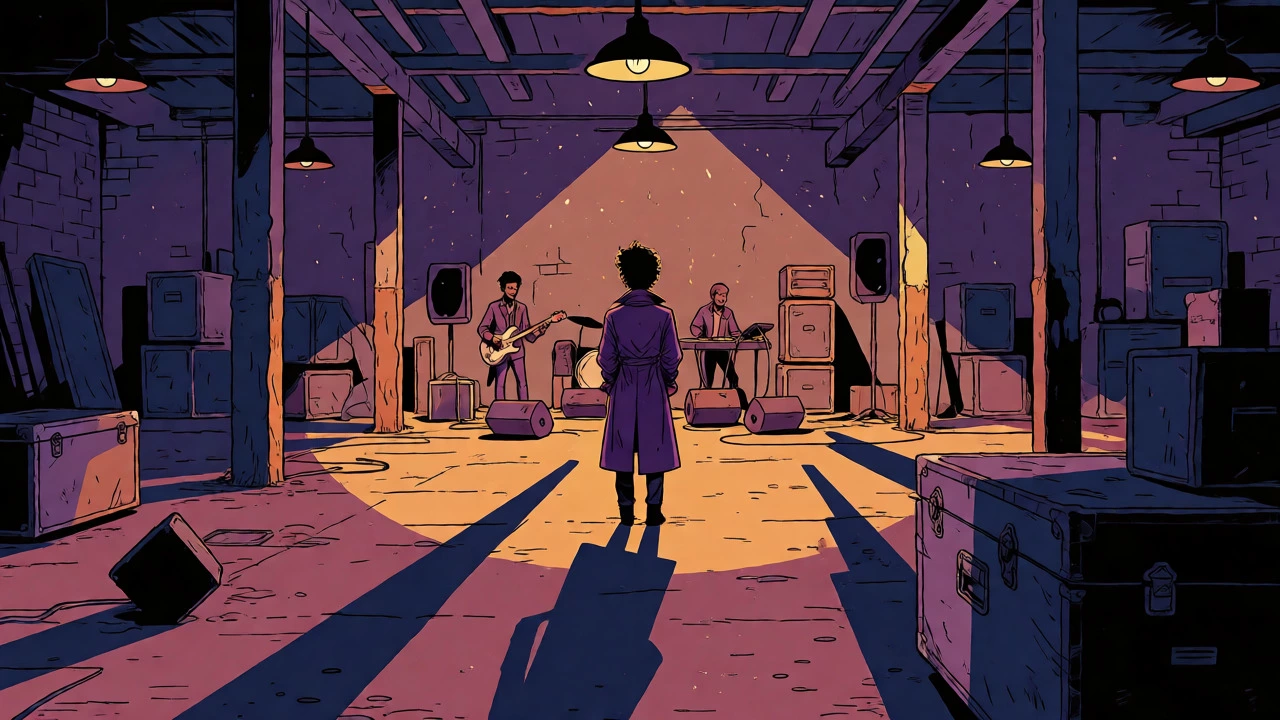
Before there was Paisley Park, there was the Warehouse. Located on Highway 7 in St. Louis Park, this massive industrial space served as Prince's headquarters. It wasn't just a rehearsal room; it was a laboratory. Here, Prince assembled The Revolution, a band designed to be more than just backup musicians. He wanted a unit that could shift between funk, rock, and new wave instantly.
The lineup included Wendy Melvoin on guitar, Lisa Coleman on keyboards, Matt Fink on synths, Bobby Z on drums, and Brownmark on bass. This group didn't start out playing together. Wendy Melvoin, for instance, had never played with Prince before the summer of 1983. Her arrival changed the band's DNA. Before her, Prince often handled guitar parts himself or relied on keyboard-heavy arrangements. With Wendy, he gained a partner who could trade solos and push him into harder rock territories. The chemistry they built in those dusty warehouse sessions became the backbone of the album.
Prince demanded perfection. Rehearsals were grueling. Songs like "Computer Blue" started as 14-minute experimental jams. The band would play through these extended structures, testing dynamics and transitions. Prince treated the Warehouse not as a place to polish songs, but to deconstruct them. He wanted to see where the music broke and how it could be rebuilt. This process created a sonic identity that was tight, aggressive, and deeply personal.
First Avenue: The Night Everything Changed
If the Warehouse was the brain, First Avenue was the heart. On August 3, 1983, the club hosted a benefit concert for the Minnesota Dance Theater. This wasn't just another gig. It was the first time Wendy Melvoin performed live with Prince. The stakes were incredibly high because director Albert Magnoli needed footage for the film Purple Rain.
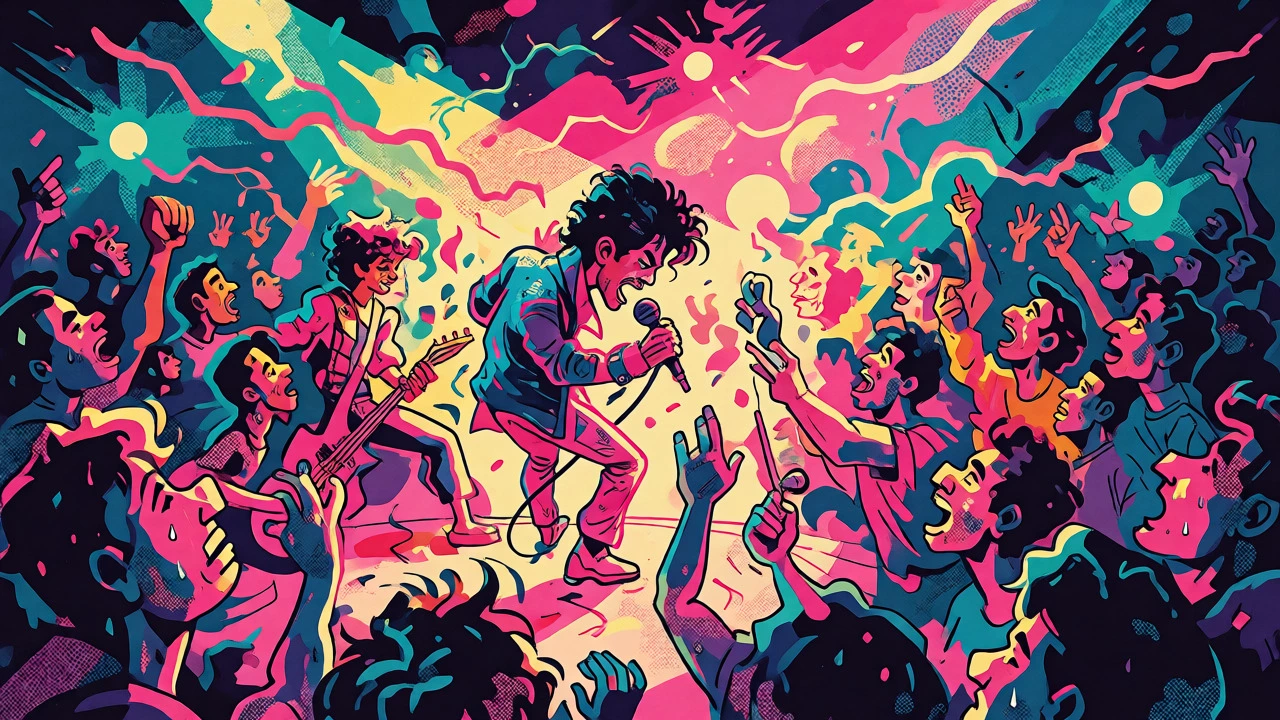
The band played with a ferocity that can still be heard on the record. Three key tracks-"I Would Die 4 U," "Baby I'm a Star," and "Purple Rain"-were captured during this performance. But calling them "live recordings" is misleading. Prince used the audience's energy as a foundation, but he wasn't done. He brought the tapes to Los Angeles to fix what he felt was wrong. He removed verses, added string sections, and tightened the drum hits. The result is a hybrid: the sweat and spontaneity of a club show combined with the glossy finish of a Hollywood production.
First Avenue itself became a character in the story. The venue closed for 25 days during filming, costing the production $100,000. That investment paid off. The club remains a pilgrimage site for fans today, standing as a monument to the night the sound clicked into place.
Sunset Sound: Polishing the Raw Edge
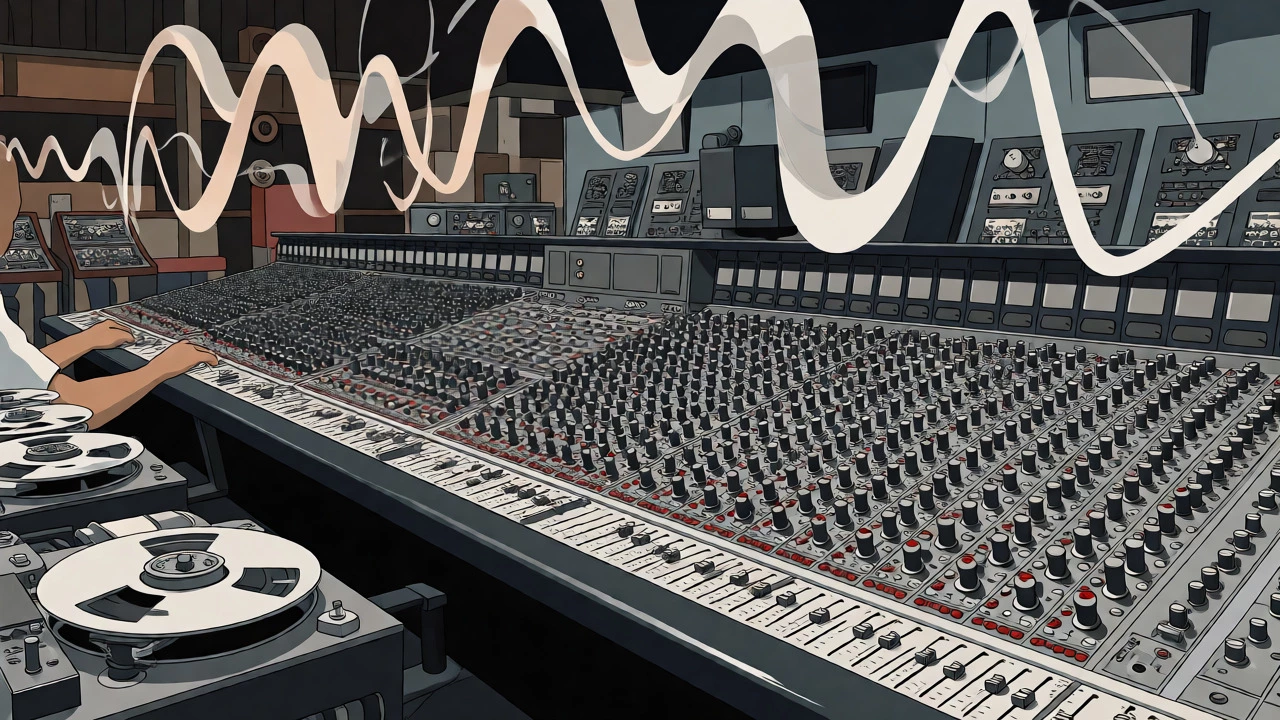
Once the basic tracks were laid down in Minneapolis, the project moved to Sunset Sound in Hollywood. This is where the technical wizardry happened. Engineers Susan Rogers, Peggy McCreary, and David Leonard worked on the sessions. Rogers has noted that the majority of the album was completed here, leveraging the studio's original API console.
Why did this matter? The API console was known for its clean, punchy transients. It allowed Prince to achieve a level of clarity that was rare in 1984. He wanted the synthesizers to cut through the mix without sounding muddy. He wanted the guitar solos to scream but not distort unpleasantly. At Sunset Sound, he could fine-tune every frequency. For example, "Computer Blue" was reduced from its 14-minute Warehouse version to under four minutes. David Leonard recalled triggering synthesizers from hi-hats, a complex synchronization task that required precise editing.
Prince also commissioned a custom console for his home studio in Chanhassen that mimicked the Sunset Sound desk. This detail shows his obsession with consistency. He wanted the sound in his head to match the sound coming out of the speakers, whether he was writing at home or mixing in LA.
Defining the Minneapolis Sound
What exactly is the Minneapolis Sound? It’s not just synth-pop. It’s a collision of worlds. In the early 1980s, Minneapolis had a vibrant Black music scene rooted in R&B, jazz, and funk. But young musicians like Prince, Morris Day, Jimmy Jam, and Terry Lewis were also listening to British New Wave and punk. They took the mechanical precision of electronic instruments and fused it with the soulful grit of American roots music.
Technically, the sound relied on specific tools. The Linn LM-1 drum machine provided a robotic yet funky beat. Oberheim OB-Xa and OB-8 synthesizers created those thick, futuristic pads. Yamaha keyboards added bright melodic lines. But crucially, these electronic elements were never left alone. They were always backed by live bass, distorted guitar, and powerful vocals. The contrast between the cold machines and the warm human performance is what gives the sound its emotional weight.
| Feature | Traditional Funk (e.g., Parliament) | Minneapolis Sound (e.g., Purple Rain) |
|---|---|---|
| Rhythm Section | Live drums, organic groove | Linn LM-1 drum machine mixed with live kits |
| Keyboards/Synths | Fender Rhodes, clavinet | Oberheim, Yamaha, heavy synth leads |
| Guitar Style | Chanking, rhythmic scratching | Rock-influenced solos, two-guitar interplay |
| Vocal Delivery | Group chants, falsetto layers | Screaming, gospel-inflected, theatrical |
The Network: More Than Just One Genius
It’s easy to credit Prince alone, but the Minneapolis Sound was a community effort. Prince cultivated a local network of talent that fed into each other. The Time, fronted by Morris Day, shared members and producers with Prince’s camp. Jimmy Jam and Terry Lewis, who played on early Prince records, went on to produce Janet Jackson. Jesse Johnson, guitarist for The Time, collaborated closely with Prince.
This environment was competitive but collaborative. Musicians bounced between projects. A player might lay down a bassline for Vanity 6 in the morning and rehearse with The Revolution in the afternoon. This cross-pollination ensured that the sound remained cohesive across different artists. When you listen to *Purple Rain*, you’re hearing the culmination of years of interaction among these local talents. It wasn’t a vacuum; it was a village.
Reception and Legacy
When Warner Bros. released *Purple Rain* on June 25, 1984, few expected it to dominate globally. The film cost $7 million, financed by independent investors outside the music industry. It was a gamble. But the gamble paid off spectacularly. The album spent six consecutive months at number one on the Billboard 200. The film grossed $70 million and won Prince an Academy Award for Best Original Song Score.
Critics recognized the innovation immediately. AllMusic’s Stephen Thomas Erlewine called it a consolidation of funk and R&B with bold moves into rock and psychedelia. The Library of Congress preserved the album, citing its use of futuristic synthesizers. Today, "Purple Rain" ranks number 18 on Rolling Stone’s list of the greatest songs of all time. Pitchfork named it the best song of the 1980s.
The legacy goes beyond sales figures. *Purple Rain* proved that electronic production could coexist with rock virtuosity. It made Minneapolis a global music capital. And it showed that a film soundtrack could stand on its own as a profound artistic statement. The album remains a masterclass in using technology to enhance, rather than replace, human emotion.
Frequently Asked Questions
Did Prince write all the songs on Purple Rain?
Yes, Prince wrote all nine tracks on the standard edition of the album. However, some songs involved significant collaboration in arrangement. For instance, "Computer Blue" was developed extensively with The Revolution during rehearsals, and Wendy & Lisa contributed to the composition of certain musical passages, though Prince retained primary songwriting credit.
Were the final three songs on Purple Rain really live?
They are based on live performances from the August 3, 1983, concert at First Avenue. However, they were heavily edited and overdubbed at Sunset Sound in Los Angeles. Prince added string sections, fixed vocal errors, and adjusted instrumentation, so they are technically "studio-enhanced live" recordings rather than pure live takes.
What role did the Linn LM-1 play in the Minneapolis Sound?
The Linn LM-1 drum machine was central to the Minneapolis Sound. Its distinctive snare and kick sounds provided a mechanical, crisp rhythm bed that contrasted with the live bass and guitar. Prince used it to create tight, repetitive grooves that defined the era's aesthetic, blending electronic precision with funk rhythms.
Why is First Avenue important to Prince's history?
First Avenue is the venue where The Revolution debuted live and where the core tracks for the *Purple Rain* album were recorded. It was Minneapolis's premier club, and its closure for the film shoot highlighted its cultural significance. Today, it remains a historic landmark associated with Prince's career.
How did Sunset Sound influence the album's sound?
Sunset Sound provided the high-end engineering environment needed to refine the raw Minneapolis tracks. Using their API console, engineers achieved a clear, punchy mix that balanced synthesizers, guitars, and vocals. This technical polish helped the album achieve radio-friendly clarity while maintaining its artistic edge.