
When you hear a song like Zach Bryan’s "Something in the Orange" or Kacey Musgraves’ "Follow Your Arrow," it’s easy to think you’re listening to something fresh, rebellious, new. But what you’re really hearing is the echo of a decade that changed country music forever-the 1970s. This wasn’t just a time when country got popular. It was when the genre figured out who it really was: raw, honest, stubborn, and willing to fight for its soul.
The Three Faces of 1970s Country
Country music in the 1970s didn’t have one sound. It had three. And each one still lives in today’s charts.
The first was Countrypolitan. Think smooth strings, background choirs, and polished studio magic. Nashville didn’t just make country music here-they made pop music that just happened to have fiddles. Glen Campbell’s "Rhinestone Cowboy" wasn’t just a hit. It was a blueprint. It crossed over to Top 40 radio, sold millions, and proved country could be glamorous. Lynn Anderson’s "Rose Garden" spent 14 weeks at No. 1 in 1971. That wasn’t luck. That was strategy. The producers knew: if you softened the edges, made the vocals sweeter, and added a little orchestra, you could sell country to people who never thought they liked it.
Then came the Outlaws. And they weren’t asking for permission.
While Nashville polished its boots, Texas musicians like Willie Nelson, Waylon Jennings, and Jerry Jeff Walker picked up their guitars and walked out of the studio. They recorded in barns. They used live drums. They kept the rough edges. No strings. No choirs. Just truth. "I’m not here to make hits," Jennings said. "I’m here to make music." That attitude became a movement. Johnny Cash, already a legend, joined them. So did Hank Williams Jr. and Tanya Tucker. Their sound was grittier, slower, louder. It spoke to people who felt ignored-not just by the industry, but by the world. And today? Kacey Musgraves, Margo Price, Chris Stapleton-they’re all wearing Outlaw boots. They didn’t invent rebellion. They inherited it.
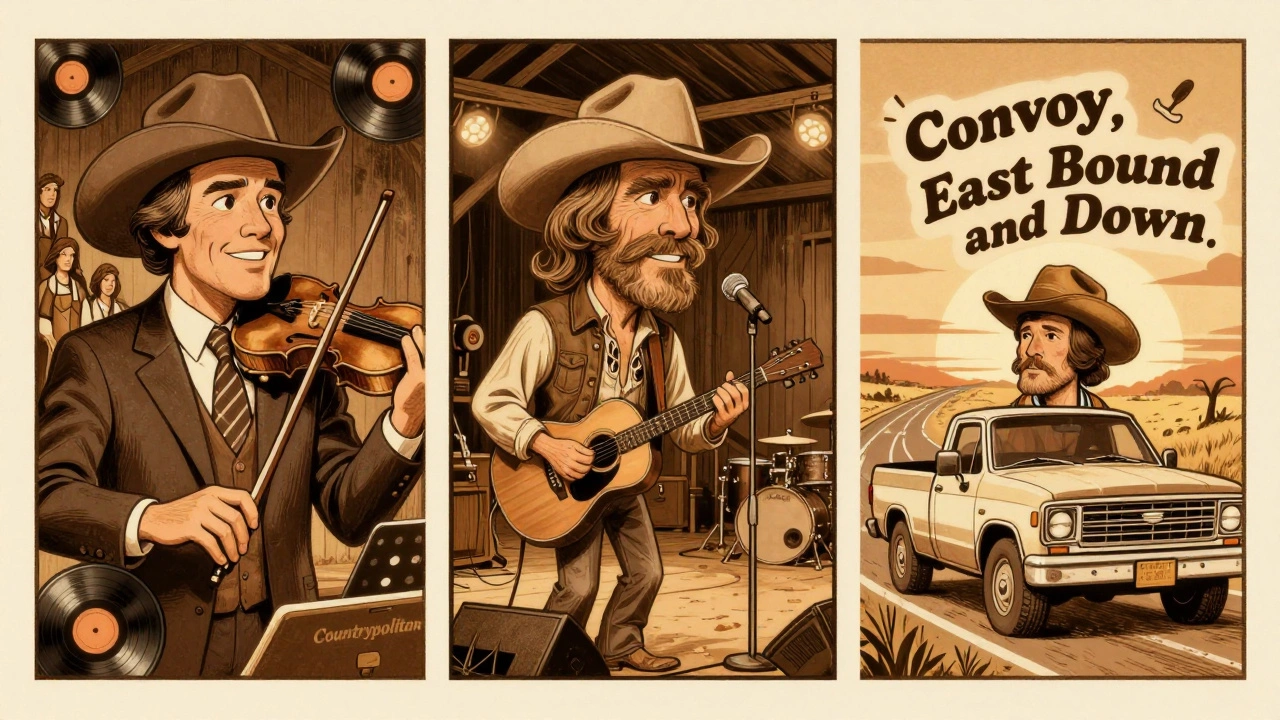
The third pillar? The working class. The truckers. The blue-collar folks who worked long hours and didn’t have time for fancy words. Songs like C.W. McCall’s "Convoy," Red Sovine’s "Teddy Bear," and Jerry Reed’s "East Bound And Down" turned truckers into heroes. These weren’t just songs about driving. They were about freedom. Loneliness. Survival. "Convoy" wasn’t just a chart-topper-it was a cultural moment. CB radios blared in pickup trucks from Maine to California. People sang along like it was a national anthem. And that connection? It never left. When Garth Brooks sang "Friends in Low Places," he wasn’t inventing a new idea. He was channeling the same spirit.
The Women Who Changed Everything
If you think country music was just a man’s game in the 1970s, you’re wrong. Three women didn’t just break the mold-they smashed it.
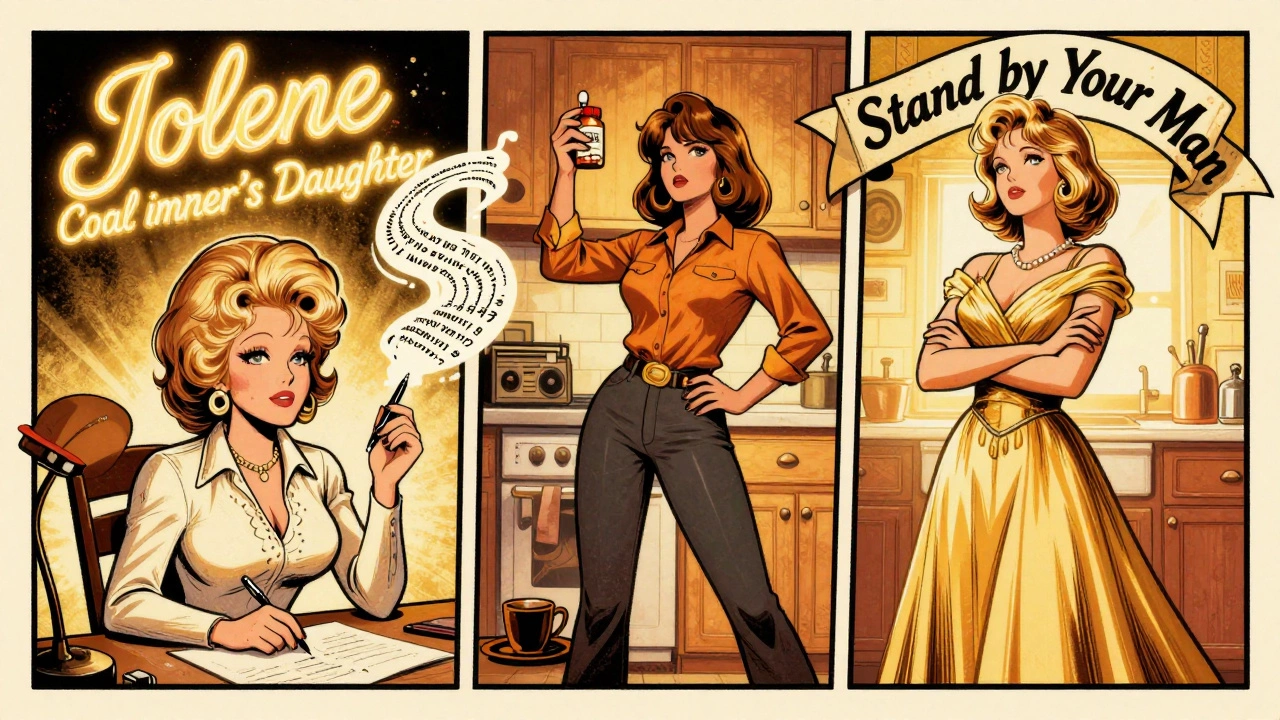
Dolly Parton didn’t just sing about heartbreak. She wrote it. "Coal Miner’s Daughter" wasn’t a song. It was a memoir. "Jolene" wasn’t a plea. It was a warning. She didn’t need a producer to tell her what to say. She already knew. Loretta Lynn did the same. "The Pill" was banned on radio. But women listened. They played it in kitchens, in trucks, in living rooms. She sang about birth control, divorce, abuse-things no one else dared touch. Tammy Wynette? "Stand by Your Man" got misread as a feminist setback. But read it again. It wasn’t about submission. It was about loyalty in a world that kept breaking promises.
These women didn’t wait for permission. They wrote their own stories, and they made sure the world heard them. Today’s female artists-Shania Twain, Miranda Lambert, Carly Pearce-they didn’t come from nowhere. They came from these women. They inherited the right to speak plainly, to be angry, to be real.
The Gambler, The Legend, The Voice
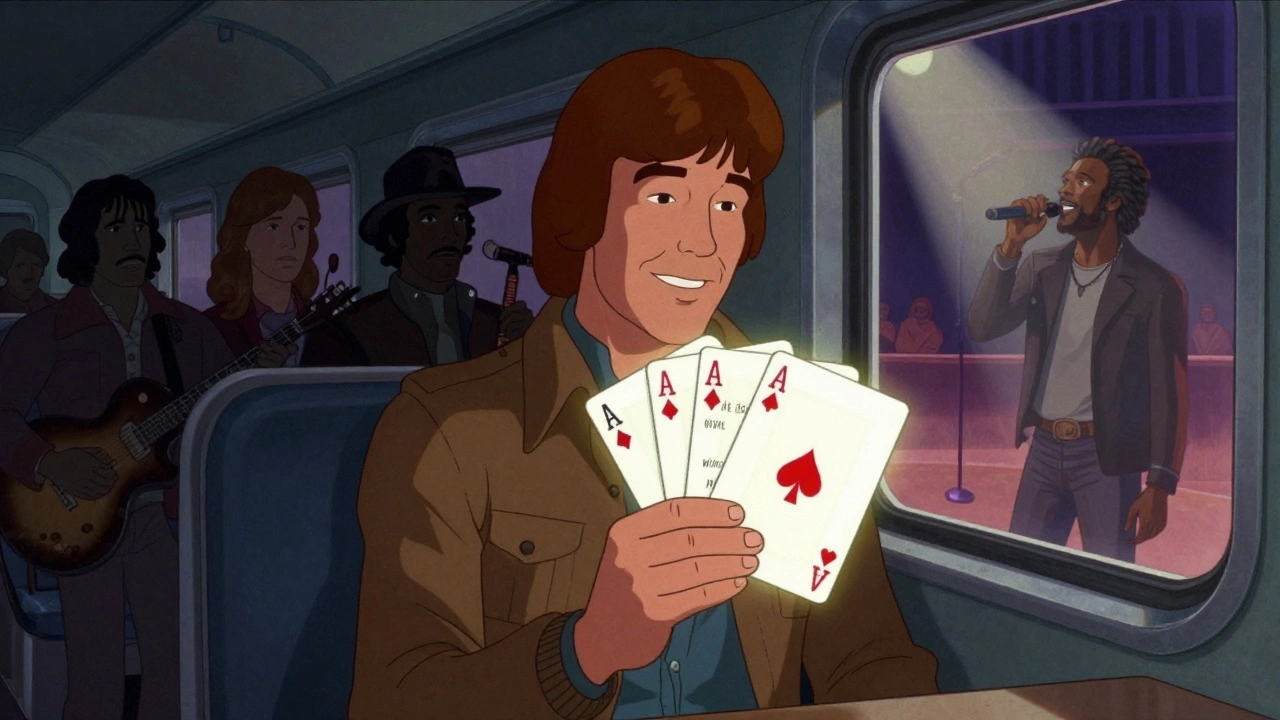
Kenny Rogers’ "The Gambler" dropped in 1978. It wasn’t just a song. It was a philosophy.
"Every gambler knows that the secret to survivin’ / Is knowin’ what to throw away and knowing what to keep."
That lyric didn’t just fit a country song. It fit America in 1978. Vietnam was over. Watergate had shattered trust. Inflation was climbing. People were tired of lies. "The Gambler" gave them a way to make sense of it all-not with politics, but with a story. A man on a train. A deck of cards. A lesson about life. The song hit No. 1 on the country chart. Then it crossed over to pop. It won a Grammy. And it spawned TV movies that turned Rogers into a national icon.
That’s the power of storytelling. Country music didn’t need fireworks. It just needed honesty. And "The Gambler" proved it.
The Racial Divide That Still Lingers
Here’s a truth no one talks about enough: country music in the 1970s was still deeply divided by race.
Charley Pride was the only Black artist breaking through. He had the voice. The charisma. The hits. But his manager didn’t put his face on his first album cover. Why? Because they thought white audiences wouldn’t accept a Black man singing country. When they finally revealed his face, it wasn’t a celebration. It was a spectacle. Interviews focused on his skin color before his music. "How does it feel to be the only one?" they asked. He never complained. He just kept singing.
That silence wasn’t strength. It was survival. And it left a mark. Even today, Black artists in country music fight to be seen as more than "the Black country singer." The doors opened a crack in the 1970s-but they never fully swung wide. The legacy? A genre still struggling with who gets to belong.
How the 1970s Still Rules Today
Look at modern country. What do you see?
Chris Stapleton’s "Tennessee Whiskey"? Raw vocals. No auto-tune. Just a man, a guitar, and a story. That’s Outlaw.
Kacey Musgraves’ "Golden Hour"? Smooth, layered, blending pop and country like it was nothing. That’s Countrypolitan.
Zach Bryan’s "Something in the Orange"? Written in a motel room. Recorded on a phone. Went viral on TikTok. No label. No hype. Just truth. That’s the spirit of the Outlaws.
Even the big pop-country hits? They’re still trying to do what Glen Campbell did in 1975-cross over without losing the heart.
The 1970s didn’t just set trends. It set rules. You can be polished. You can be rough. You can be political. You can be personal. But you can’t be fake.
Modern country doesn’t exist without the 1970s. It’s not a revival. It’s a continuation.
The Unfinished Legacy
The 1970s gave country music its voice. But it also left it with a question: Who gets to speak?
Today, artists are pushing harder than ever. Lil Nas X. Mickey Guyton. Brittney Spencer. They’re not asking for a seat at the table. They’re building a new one.
And that’s the real legacy of the 1970s-not just the music, but the idea that country doesn’t have to look or sound one way. It just has to feel real.
What made the Outlaw movement so important to country music?
The Outlaw movement was a rebellion against Nashville’s polished, formulaic production. Artists like Willie Nelson and Waylon Jennings refused to follow studio rules. They recorded live, kept raw vocals, and wrote their own songs. This wasn’t just about sound-it was about control. They said artists should own their music, not the record labels. That idea changed everything. Today, artists like Kacey Musgraves and Chris Stapleton follow that same path: independence over industry.
How did Dolly Parton influence modern country artists?
Dolly Parton didn’t just sing songs-she wrote them. She told stories about poverty, heartbreak, and strength with a clarity no one else had. Songs like "Coal Miner’s Daughter" and "Jolene" gave women in country music permission to be complex, not just sweet. She proved a woman could be a hitmaker, a songwriter, and a businesswoman all at once. Modern artists like Miranda Lambert and Kacey Musgraves built their careers on the foundation she laid: honesty, songwriting mastery, and fearless self-expression.
Why is "The Gambler" still relevant today?
"The Gambler" works because it’s not really about cards. It’s about life. The lyrics teach you how to choose what matters and let go of what doesn’t. In a world full of noise, that message is timeless. It’s why people still quote it. Why it’s used in movies, TV shows, and even graduation speeches. The song’s power comes from its simplicity and truth-two things modern country still struggles to find.
Did the Countrypolitan sound hurt country music’s authenticity?
It didn’t hurt it-it expanded it. Countrypolitan made country music accessible to people who’d never listened before. It brought in new fans, new money, and new studios. But it also created a backlash. The Outlaw movement was a direct response: "This isn’t real country." So instead of killing authenticity, Countrypolitan forced country to define it. Today, artists pick sides: they go glossy for pop charts or raw for critical acclaim. The tension between those two paths? That started in the 1970s.
Why is Charley Pride’s story important to understanding country music history?
Charley Pride proved Black artists could succeed in country music-but only by enduring constant racial scrutiny. His manager hid his race on album covers because they feared backlash. Once he became famous, every interview focused on his skin color, not his talent. He had to be twice as good to be seen as once as worthy. His story isn’t just about one man. It’s about the industry’s long-standing barrier to diversity. And it’s why today’s Black country artists still fight to be heard without being labeled.
What the 1970s gave country music wasn’t just a sound. It was a choice: stay polished, stay safe, or get real, get loud, and get heard. Every artist today is still making that same choice.


