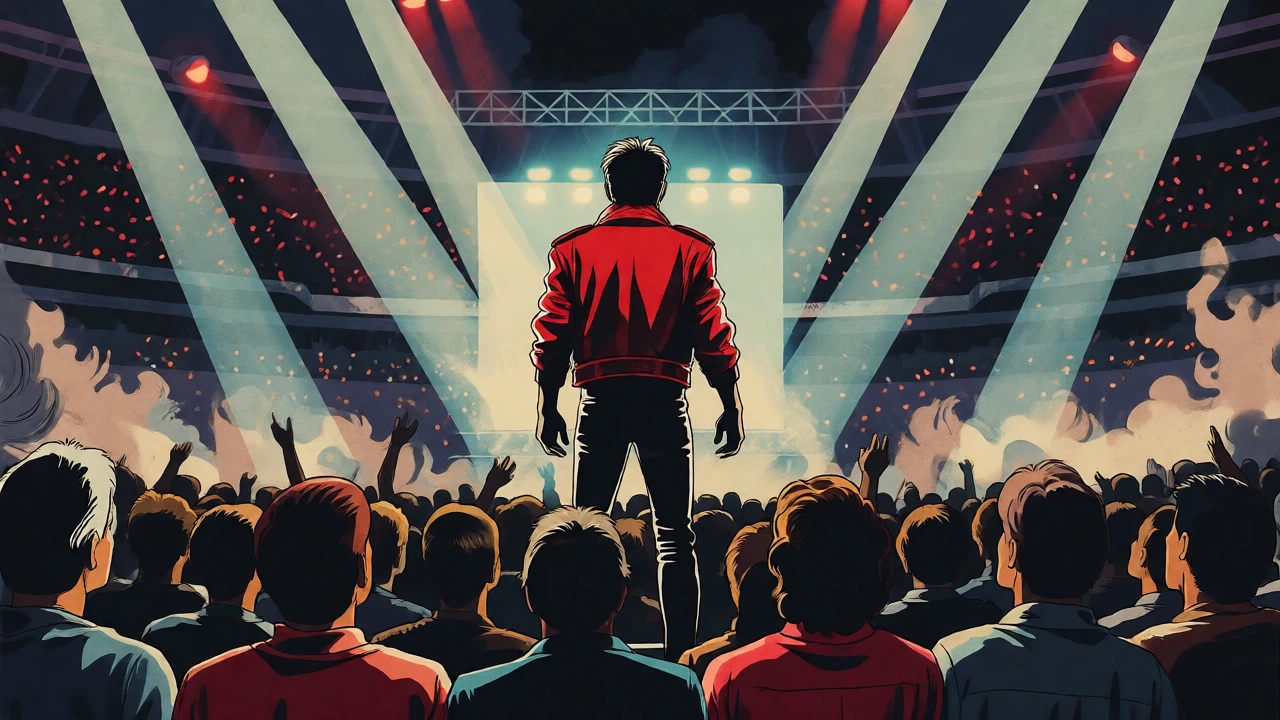

Imagine standing in the back row of a stadium with 50,000 people. You can barely see the performer’s face, but you know exactly who it is because of a single red leather jacket or a purple velvet suit. That was the power move of 1980s stage costumes. These weren't just clothes; they were engineered visual signals designed to cut through the haze of smoke machines and bright lights. The decade marked a shift where fashion on stage stopped being about covering the body and started being about communicating a brand instantly. It was a collision of high-tech construction and raw, unapologetic spectacle.
The Shift from Wardrobe to Engineering
Before the 1980s, stage outfits often borrowed from everyday streetwear or traditional theatrical norms. By 1980, production budgets for music and theatre exploded. Designers became full creative partners rather than just wardrobe managers. They had the budget to specify custom materials and complex constructions. This era demanded garments that could survive the physical torture of touring while looking perfect on MTV, which launched in 1981 and changed how audiences consumed performance forever.
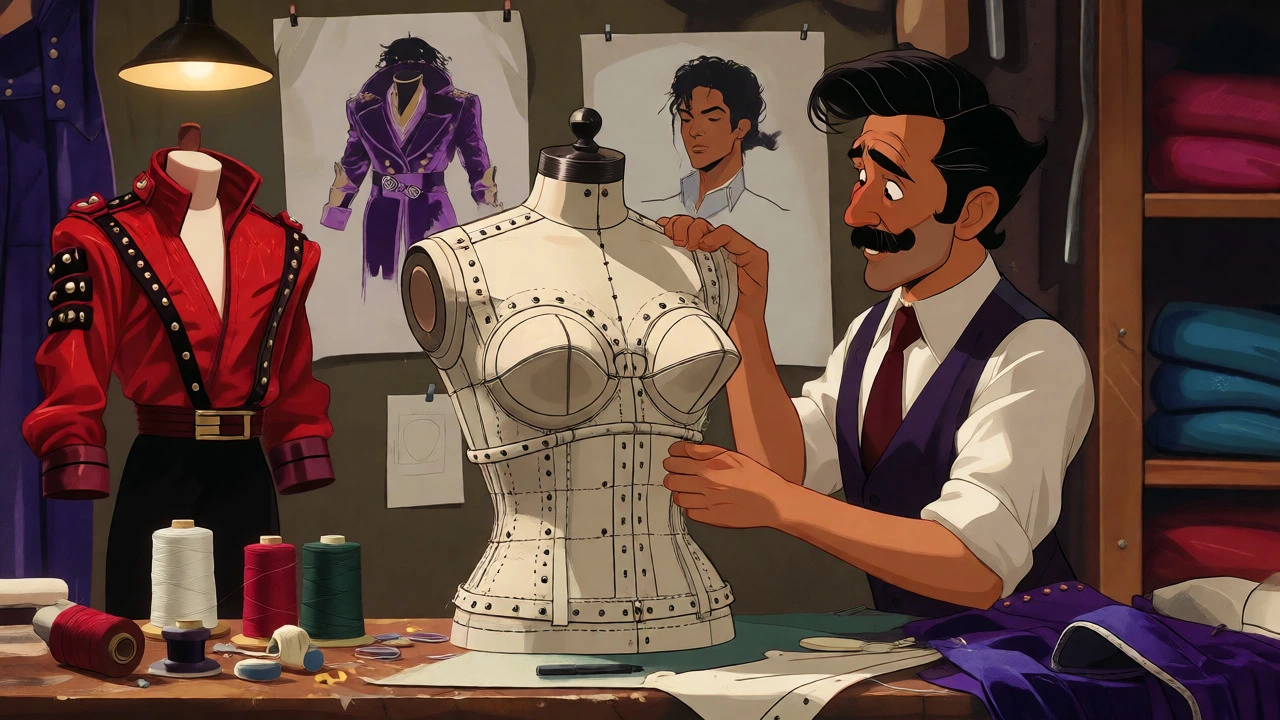
Consider the work of designers like Michael Bush and Dennis Tompkins, who crafted most of Michael Jackson's iconic looks. They didn't just sew jackets; they built mannequins to Jackson's exact measurements to ensure precision fits. Why? Because a loose seam meant disaster during a spin. A heavy badge could throw off balance during a jump. Every element had to be calculated. If you’ve ever tried to dance in a stiff costume, you know the struggle. These designers solved that by balancing weight distribution and flexibility, allowing Jackson to execute moves that seemed physically impossible.
Key Takeaways
- Precision Fit: Custom mannequins ensured costumes moved with the performer, not against them.
- Visual Hierarchy: Single bold accessories (like MJ’s glove) created instant recognition over distance.
- Material Hybridity: Combining delicate fabrics with durable hardware (studs, chains) allowed for both flash and function.
- Narrative Clarity: In theatre, extreme fashion was toned down to avoid looking comic, unlike pop maximalism.
Pop Icons and the Art of Distraction
Michael Jackson’s red leather jacket from the "Thriller" video wasn't just stylish; it was a functional piece of armor. Paired with black pegged pants and white socks, the high-contrast palette emphasized his footwork. The silhouette did the talking. Similarly, Madonna's cone bra corset from the "Blond Ambition" Tour, designed by Jean Paul Gaultier, used rigid architectural forms. Yet, inside the boning, the structure allowed her to dance through a setlist of over 20 songs without losing breath or shape. It proved that you could look restrictive and feel free if the engineering was right.
Prince took a different route with his purple velvet suit from the "Purple Rain" era. The ruffled shirt and high heels signaled androgyny and flair, but the suit remained stable enough for aggressive guitar playing. He showed that flamboyance didn't have to mean fragility. His cane and eyeliner completed the image, creating a persona that was larger than life yet grounded in musical performance.
Theatre vs. Arena: Different Rules
Not everyone was dancing in sequins. Mainstream theatre in the 1980s still clung to realism. Costume Supervisor Jackie Orton noted that authentic 1980s street fashion was often too exaggerated for the stage, risking a comedic effect rather than dramatic impact. So, theatre designers picked specific elements-like shoulder pads or bold prints-to hint at the era without overwhelming the narrative.
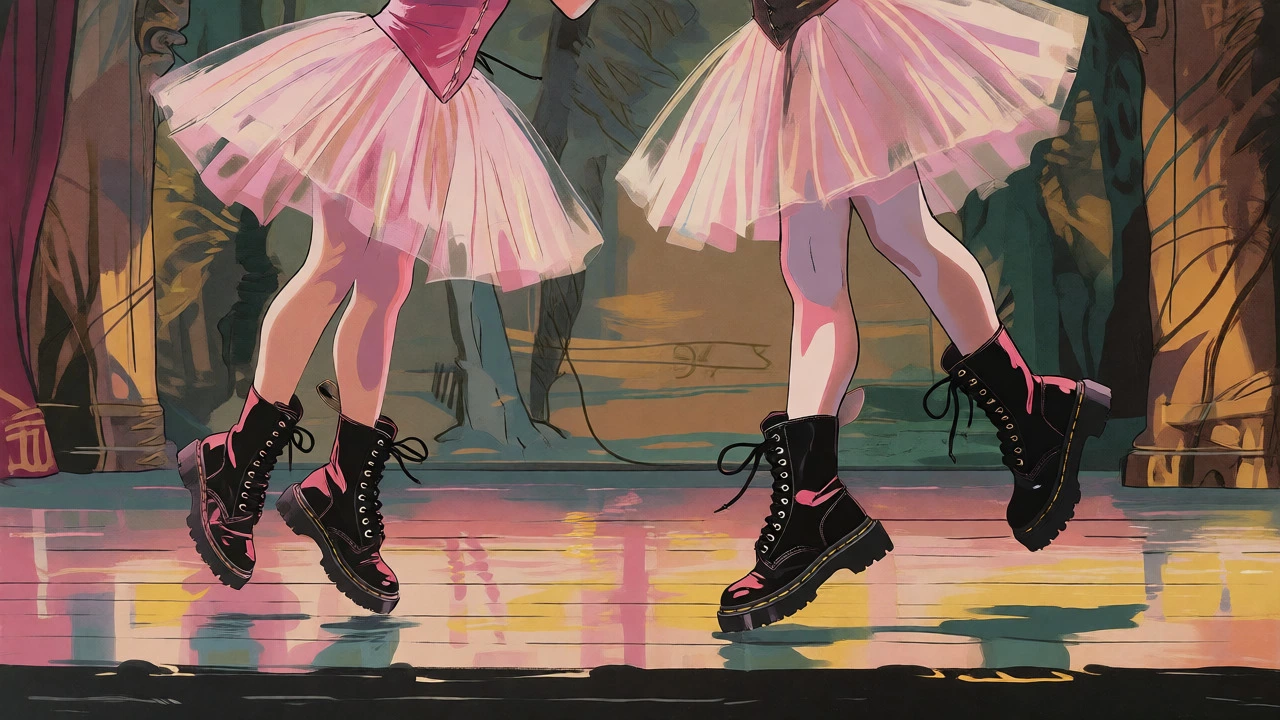
A fascinating hybrid emerged in productions like the Royal Shakespeare Company’s 1989 "A Midsummer Night’s Dream." Designer Sue Blane paired fairy tutus with Dr. Martens boots. Think about that: delicate tulle meets thick-soled combat boots. The boots provided ankle support and traction on slippery stages, fulfilling a safety requirement, while visually referencing punk culture. It was a clever way to inject modern energy into classical texts without breaking the actors' ability to move safely.
| Feature | Pop/Arena Style (e.g., MJ, Madonna) | Theatre/Rock Opera (e.g., RSC, Juno and Avos) |
|---|---|---|
| Primary Goal | Instant brand recognition & visual spectacle | Narrative support & character realism |
| Materials | Leather, sequins, studs, synthetic blends | Period fabrics, reinforced silks, mixed textures |
| Construction Focus | Flexibility for choreography, durability for tours | Safety on complex sets, historical accuracy |
| Visual Strategy | Maximalist, high-contrast, bold accessories | Moderated extremes, symbolic details |
Engineering the Flash
Laurie Greenan, a designer known for heavy metal aesthetics, studied S&M clothing for its use of metal hardware. She adapted these elements for mainstream performance by removing overt sexual connotations but keeping the durability. Metal studs and rivets require reinforced seams. If you stitch a heavy stud onto thin silk, it tears. The 1980s solution was layering backing fabrics. This technical detail is invisible to the audience but critical for a garment that might be worn for two hours every night for months.
Designers also learned to distribute weight carefully. A jacket covered in miniature gold license plates, like the one Bush and Tompkins made for Jackson, needed balanced placement to avoid torque on the shoulders. If the decoration was too heavy on one side, the performer would lean. It’s subtle physics, but it makes the difference between a smooth glide and a stumble.
The Legacy of Functional Spectacle
Today, we see echoes of this everywhere. Madonna’s 2023 Celebration Tour referenced her 1980s New York roots with updated punk tailcoats. Mass-market retailers sell replicas of the Thriller jacket for under $40, proving the designs have cultural staying power. But beyond nostalgia, the principles remain. Modern performers still need costumes that allow for intense movement while reading clearly on 4K screens.
The 1980s taught us that flash isn't frivolous. When done right, it’s functional. It helps the audience connect with the artist across vast distances. It protects the performer during rigorous shows. And it creates a visual language that transcends lyrics. Whether you’re watching a stadium show or a local theatre production, remember: the best costumes don't just look good; they work hard.
Why were 1980s stage costumes so expensive?
Production budgets increased significantly in the late 1970s and 1980s. Designers could afford custom materials, intricate embellishments, and specialized construction techniques rather than adapting off-the-rack clothing. High-profile tours required multiple identical outfits for backup dancers and stunt doubles, further driving up costs.
How did designers handle the weight of heavy accessories?
They used strategic weight distribution and reinforced internal structures. For example, heavy metal studs were backed with durable fabrics to prevent tearing. Large decorative elements were placed to maintain balance on the performer's body, ensuring they didn't restrict movement or cause fatigue during long performances.
Did all 1980s stage costumes prioritize flash over comfort?
No. While some looks appeared restrictive, many were engineered for comfort. Precision-fitting mannequins ensured garments moved with the body. Designers like Laurie Greenan specifically selected materials that were durable and safe, avoiding overly tight or hazardous elements despite their aggressive appearance.
What role did MTV play in costume design?
MTV, launched in 1981, shifted focus to close-up visuals. Costumes needed detailed finishes that looked good on camera, not just from a distance. This led to more intricate embroidery, unique textures, and accessories that stood out in high-definition music videos.
Are 1980s stage costumes still relevant today?
Yes. Their influence persists in modern tours and fashion. Artists like Madonna continue to reference 1980s silhouettes. The core principle-balancing visual impact with functional mobility-remains a standard in contemporary stage design, especially for large-scale arena performances.