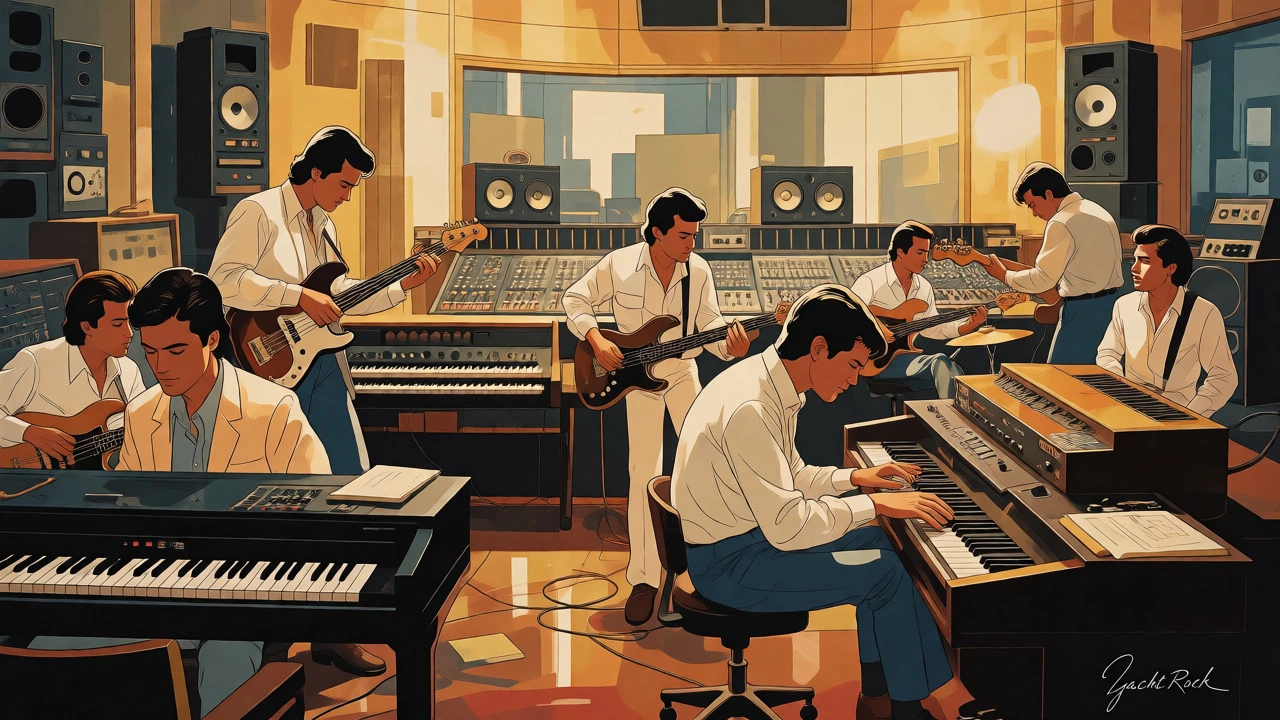

You probably know the sound. It’s that smooth, sun-drenched vibe where the bassline is tight, the vocals are silky, and the production costs more than your first car. For years, this was yacht rock-a term we didn’t even use until 2005. But in the late 1970s and early 1980s, this polished style dominated the airwaves. Then, almost overnight, it felt like everyone stopped caring about perfect harmonies. What happened? Did the genre die? Or did something else take over?
The truth is messier and more interesting than a simple death notice. The shift wasn't just about one band replacing another. It was a fundamental change in what society valued in music. We moved from valuing technical mastery and expensive studio polish to valuing speed, attitude, and visual shock. This article breaks down how punk and new wave dismantled the yacht rock empire, not by being better musicians, but by changing the rules of the game.
What Was Yacht Rock Really?
Before we talk about its end, we need to define what ended. Yacht rock is a retrospective label for highly polished American soft rock associated with Los Angeles studios between 1975 and 1984. Think Steely Dan, Toto, Christopher Cross, and Hall & Oates. These weren't garage bands; they were musical engineers.
The ecosystem relied on a small network of elite session musicians. If you wanted a hit in LA, you called guys like David Paich or Jeff Porcaro. They played on each other's albums, creating a distinct, cohesive sound. The priority here was control. Every note was calculated. The goal was adult professionalism-music that sounded expensive, safe, and compatible with FM radio.
Commercially, this worked. Look at the charts:
| Artist | Song | Peak Position | Year |
|---|---|---|---|
| Chicago | If You Leave Me Now | No. 1 | 1976 |
| Hall & Oates | Rich Girl | No. 1 | 1977 |
| Doobie Brothers | What a Fool Believes | No. 1 | 1979 |
| Christopher Cross | Sailing | No. 1 | 1980 |
| Toto | Africa | No. 1 | 1983 |
These songs weren't accidents. They were products designed for maximum radio compatibility. But while these hits were climbing the charts, a different kind of energy was brewing in basements and dive bars.
Punk’s Attack on Polish
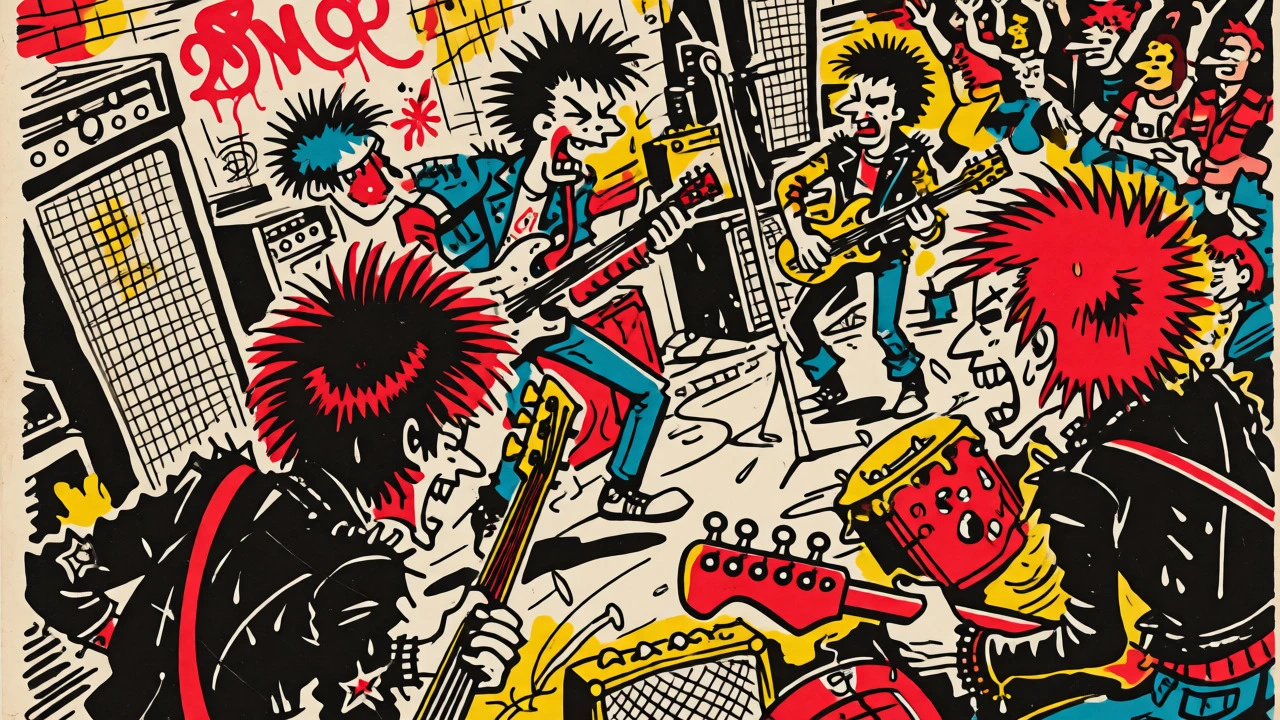
Punk rock emerged in the mid-1970s as an unfiltered rebellion against mainstream excess. To understand why punk killed yacht rock, you have to look at the economic context. In places like Akron, Ohio, manufacturing jobs were disappearing. Young people had less money and less hope. The idea of spending thousands on a studio album felt disconnected from their reality.
Punk offered a counter-narrative. You didn't need to be a virtuoso. You needed three chords and the truth. Bands like The Ramones proved that a group with basic equipment could make culturally important records. This shifted prestige away from instrumental polish toward authenticity and danger.
The symbolic opposition mattered more than the actual skill level. Some punk records used major-label budgets, sure. But the idea of DIY (Do It Yourself) changed everything. Suddenly, being too clean looked suspicious. Being rough looked honest. Yacht rock, with its layered backing vocals and electric pianos, started to look like the establishment. And the establishment was losing its cool.
New Wave Bridges the Gap
If punk was the wrecking ball, new wave was the architect building the new house. New wave didn't reject melody; it rejected pretension. It took punk’s energy and added synthesizers, reggae beats, and classic pop songwriting.
Bands like Blondie showed that you could be part of the NYC punk scene and still have a No. 1 hit. Their track "Heart of Glass" reached the top spot in 1979. This was crucial. It proved that the anti-establishment aesthetic could sell millions of records. The Pretenders did the same thing, combining punk rebellion with melodic hooks that landed them in the U.S. Top Ten.
This transition rewarded concise choruses and distinctive sonic signatures. While yacht rock focused on long-term album listening, new wave brought back the power of the single. In fact, 1978 was the best-selling year for seven-inch singles in UK chart history. The economy of music was shifting from deep cuts to immediate hooks.
MTV Changes the Game
You can blame punk for the attitude shift, but you can blame MTV for the visual shift. When MTV launched on August 1, 1981, with The Buggles' "Video Killed the Radio Star," it didn't just play videos. It redefined stardom.
Before MTV, a band’s image was secondary to their sound. After MTV, image became primary. Record companies started adding £50,000 to marketing budgets just for videos. Artists who relied on vocal blend and subtle production details struggled to compete with acts that had striking visuals.
Consider Duran Duran or Cyndi Lauper. Their appeal rested on hair, clothing, choreography, and set design. Yacht rock artists, often older and studio-centered, didn't fit this mold. They weren't bad looking, but they weren't designed for a screen-first culture. The center of cultural excitement moved toward acts that appeared contemporary, synthetic, and theatrically self-aware.

Did Yacht Rock Actually Die?
Here’s the twist: yacht rock didn't vanish. Its techniques survived. Professional session playing, sophisticated harmony, and adult-contemporary production continued. They just moved into different lanes-soundtracks, background music, and later, digital production.
The decline was really a loss of dominance. Between 1975 and 1982, polish was the symbol of modernity. By 1985, it was the symbol of the past. The priorities had shifted so radically that the old metrics no longer applied. You couldn't compare Toto to Madonna because they were playing different sports.
This isn't to say one was better. It’s that the market rewards what feels current. In the early 80s, current meant fast, loud, weird, and visual. Smooth, slow, complex, and audio-focused felt dated. Even when Toto’s "Africa" hit No. 1 in 1983, it was an outlier in a landscape increasingly defined by synth-pop and hip-hop.
The Retrospective Rebranding
So why do we care now? Because nostalgia rewrote history. The term "yacht rock" was coined in 2005 by J.D. Ryznar and his team for a satirical web series. Before that, these artists were just "soft rock" or "adult contemporary." The label turned a disparate group of musicians into a coherent genre.
Today, yacht rock is a brand. It sells tours, playlists, and documentaries. But remember: the original artists didn't call themselves yacht rockers. They were just making records. The end of the era wasn't a funeral; it was a pivot. The industry learned that audiences would trade perfection for personality if the price was right.
If you listen closely to today’s pop stars, you’ll hear echoes of both worlds. The polished production of Billie Eilish owes a debt to the studio craft of yacht rock, while her visual branding owes everything to the MTV-era logic established by new wave. The battle never really ended; it just merged.
Was yacht rock considered a real genre in the 1970s?
No. The term "yacht rock" was invented in 2005. During the 1970s and early 1980s, these artists were categorized as soft rock, adult-oriented rock (AOR), or simply pop. The unified identity is a retrospective creation.
Did punk rock directly cause the decline of yacht rock?
Not directly alone. Punk challenged the aesthetic values of polish and expense, but MTV, disco, hip-hop, and changing demographics all contributed. Punk provided the cultural vocabulary for rejecting corporate rock, but the commercial shift was multi-causal.
How did MTV affect yacht rock artists?
MTV disadvantaged many yacht rock artists because their appeal was auditory and nuanced, relying on vocal blends and production detail. MTV favored visual spectacle, quick hooks, and strong personas, which benefited new wave and pop acts like Duran Duran and Madonna.
Is there a difference between punk and new wave?
Yes. Punk emphasized raw energy, speed, and DIY ethics, often rejecting traditional musicianship. New wave retained punk's novelty and compactness but incorporated synthesizers, electronic rhythms, and more accessible pop structures, making it more commercially viable.
Why is yacht rock popular again today?
It represents a nostalgic ideal of craftsmanship and relaxation. Modern listeners appreciate the high level of musicianship and the optimistic, non-aggressive tone, which contrasts with the chaotic nature of modern media consumption.