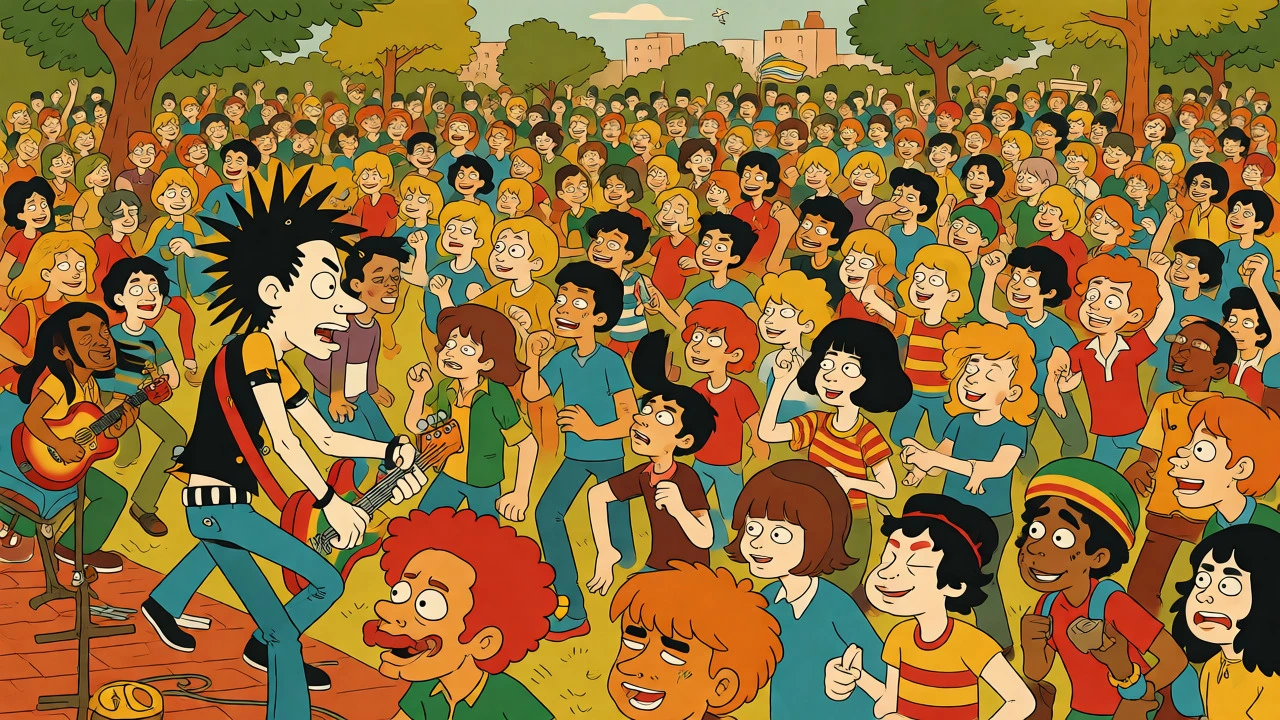

Imagine standing in a crowd of 100,000 people in Hackney, London, on a sunny day in April 1978. You’re not there for a typical rock concert. You’re there because a band convinced you that music could actually stop fascism. That’s the power The Clash wielded. They didn’t just play loud chords; they turned punk rock into a vehicle for political awakening, proving that three-chord songs could tackle unemployment, racism, and global imperialism with equal force.
If you think punk was just about safety pins and spitting at audiences, you missed the real revolution. The Clash showed us that anger without direction is just noise. They took the raw energy of the mid-1970s crisis in Britain and channeled it into something structured, historical, and deeply human. This isn’t just a story about a band; it’s about how popular culture can wake people up to the world around them.
Key Takeaways
- Local Roots: The Clash’s politics started with street-level observations of unemployment and racism in London, not abstract theory.
- Movement Building: They were central to Rock Against Racism (RAR), helping turn punk into a mass anti-fascist movement.
- Global Reach: Albums like London Calling and Sandinista! expanded their scope from British streets to Cold War geopolitics.
- Musical Diversity: Their use of reggae, ska, and rockabilly wasn’t just experimental; it was a political statement against cultural isolation.
- Lasting Legacy: They proved that politically engaged music could be commercially successful and critically acclaimed simultaneously.
From Street Boredom to Political Awareness
Punk didn’t emerge in a vacuum. By the mid-1970s, Britain was drowning in economic despair. Industrial communities were dying, unemployment was skyrocketing, and trust in political institutions had collapsed. Into this void stepped Joe Strummer and Mick Jones, who formed The Clash in London in 1976. Unlike many of their peers, they didn’t want to escape reality through nihilism. They wanted to confront it.
Manager Bernie Rhodes pushed them to write about what they saw outside their windows. This directive changed everything. Instead of singing about cars or girls, they sang about "Career Opportunities," mocking the dead-end jobs offered to youth. They looked at the police and saw oppressors, not protectors. This local social realism gave their music an urgency that resonated with millions of bored, angry young people who felt invisible to the mainstream media.
Rock Against Racism: Music as Solidarity
You can’t talk about The Clash’s political awakening without talking about race. In 1976, the far-right National Front was gaining traction in Britain, recruiting disaffected white youths. The music scene risked becoming segregated, with reggae for Black audiences and rock for white ones. The Clash refused to accept this division. They embraced reggae and ska, genres rooted in Caribbean immigrant experiences, and used their platform to bridge the gap.
This commitment culminated in Rock Against Racism (RAR). On April 30, 1978, RAR organized a massive carnival in Victoria Park, Hackney. Organizers expected 10,000 attendees. Over 100,000 showed up. The lineup included The Clash, Steel Pulse, and X-Ray Spex. It wasn’t just a gig; it was a declaration that punk and reggae audiences shared common enemies. The slogan "Love Music, Hate Racism" became a practical tool for building interracial solidarity, proving that cultural mixing could be a form of resistance.
London Calling: The Peak of Political Artistry
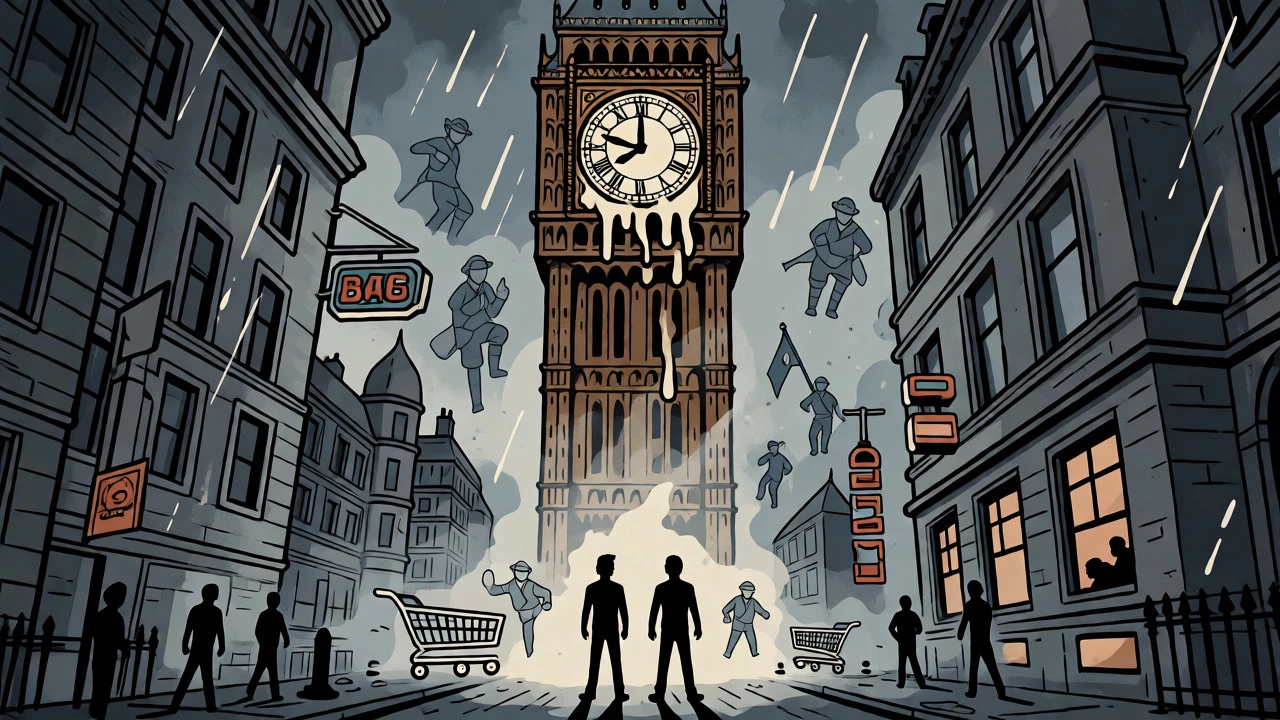
If early punk was a scream, London Calling (1979) was a sermon. Recorded at Wessex Sound Studios, this double album demonstrated that political expansion and musical experimentation go hand in hand. The title track captured a sense of impending doom-nuclear anxiety, flooding, and media crisis-suggesting Britain had lost control of its future.
But it was the deeper cuts that revealed their sophistication. "Clampdown" described how rebellious youth are eventually absorbed into the workforce, turning into compliant adults trapped by debt. "Lost in the Supermarket" critiqued consumer culture through the lens of personal alienation. They even tackled history directly. "Spanish Bombs" linked the Spanish Civil War of the 1930s to contemporary Basque nationalism, showing listeners that today’s conflicts have deep roots.
| Album/Era | Primary Focus | Key Songs | Musical Style |
|---|---|---|---|
| Debut (1977) | Local Social Realism | White Riot, Career Opportunities | Raw Punk, Reggae Cover |
| Give 'Em Enough Rope (1978) | Historical Analogy | English Civil War | Harder Punk, Polished Production |
| London Calling (1979) | Social Breakdown & Consumerism | Clampdown, Lost in the Supermarket | Punk, Ska, Rockabilly, Jazz |
| Sandinista! (1980) | International Anti-Imperialism | Washington Bullets, Sandinista! | Dub, Hip-Hop, World Music |
Global Politics and the Triple Album Experiment
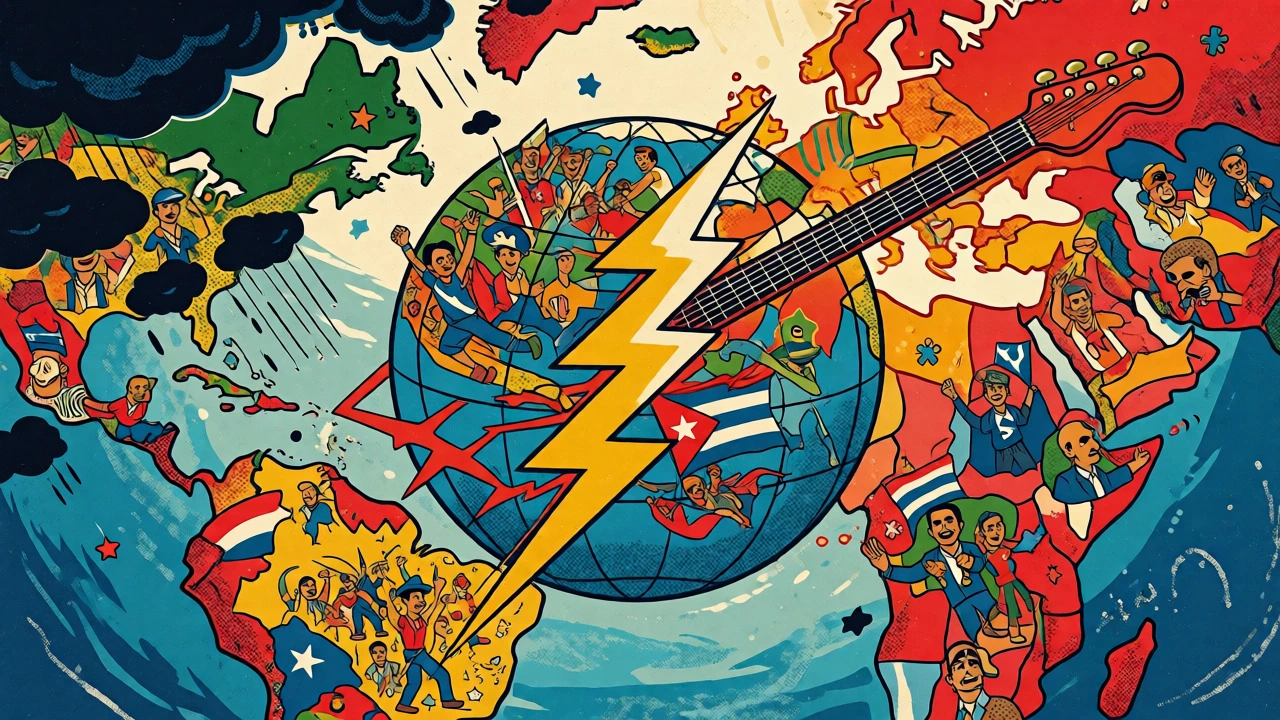
By 1980, The Clash looked beyond Britain. Their fourth studio album, Sandinista!, was a triple album containing 36 tracks. The title referenced Nicaragua’s Sandinista National Liberation Front, which had overthrown the Somoza dictatorship. This wasn’t just a catchy name; it was a fierce indictment of United States policy in Latin America.
The song "Washington Bullets" is perhaps their most concentrated piece of political education. In just a few verses, Joe Strummer covered the Cuban Revolution, the Bay of Pigs invasion, the overthrow of Chilean President Salvador Allende, and the murder of singer Víctor Jara. Crucially, the song didn’t just bash the US. It also criticized Soviet repression in Afghanistan and Tibet. This nuance is vital. The Clash weren’t blindly pro-communist; they were anti-authoritarian. They opposed empire, whether it wore a star-spangled banner or a red flag.
This approach treated lyrics as compressed history lessons. For many rock fans, these songs were the first time they’d heard of Víctor Jara or the specifics of the Nicaraguan revolution. The band used their commercial visibility to introduce mainstream audiences to complex geopolitical realities, challenging the idea that pop music must be intellectually lightweight.
Nuance, Contradictions, and Criticism
No political movement is free from criticism, and The Clash were no exception. Their song "White Riot" remains controversial. Written after the 1976 Notting Hill Carnival disturbances, it asked why white working-class youth weren’t revolting alongside their Black neighbors. Critics argue the title and imagery could be misread as celebrating racial conflict rather than criticizing passivity. While the intent was clear-to challenge white apathy-the execution left room for ambiguity.
Furthermore, some scholars note that The Clash sometimes romanticized distant struggles. As internationally mobile musicians, they could afford to sing about poverty in the Third World while living comfortably in London. There’s a tension between their militant imagery and their actual lives. Yet, this doesn’t diminish their impact. They didn’t offer perfect solutions; they offered questions. They forced listeners to think about who controls public life and how economic power reinforces racism.
Another critique comes from the nature of their activism. Did their music actually change policy? Probably not directly. But it changed culture. It helped normalize the idea that artists have a responsibility to speak out. Before The Clash, political rock often sounded preachy. The Clash made it sound urgent, danceable, and cool. They avoided the trap of doctrinaire manifestos, preferring narrative and irony to lecture halls.
The Legacy of "The Only Band That Matters"
Rolling Stone magazine famously dubbed them "The Only Band That Matters." While hyperbolic, the phrase stuck because it reflected their unique position. They bridged the gap between underground punk credibility and mainstream commercial success. London Calling was voted the best album of the 1980s by Rolling Stone, despite being released in late 1979. This recognition validated their approach: you could be politically radical and musically adventurous without sacrificing quality.
Their influence extends far beyond punk. Bands like Green Day, Manic Street Preachers, and Rage Against the Machine inherited their model. They showed that genre plurality-mixing reggae, dub, funk, and rock-is itself a political act against cultural segregation. Today, as we face new forms of inequality and political polarization, The Clash’s questions remain relevant. Who holds power? How do we build solidarity across differences? Can art drive change?
Their breakup in 1986 didn’t end the conversation. If anything, it cemented their status as historical icons. We listen to them now not just for the nostalgia, but because the issues they raised-economic exclusion, police brutality, imperial overreach-are still unresolved. They didn’t provide answers, but they taught a generation how to ask the right questions.
Frequently Asked Questions
Why did The Clash cover reggae songs?
The Clash covered reggae songs like "Police and Thieves" to connect with Black British and Caribbean communities. This musical borrowing was a political statement against racial segregation in music, showing solidarity with immigrants facing similar issues of police violence and economic marginalization.
What was Rock Against Racism?
Rock Against Racism (RAR) was a movement founded in 1976 to oppose the rise of the far-right National Front in Britain. It united punk and reggae audiences under the slogan "Love Music, Hate Racism," organizing large concerts like the 1978 Victoria Park Carnival to demonstrate cross-racial solidarity.
Is "White Riot" a racist song?
No, though it is often misunderstood. The song criticizes the passivity of white working-class youth compared to the active resistance of Black and Caribbean residents during the Notting Hill Carnival riots. It urges white workers to join the fight against the system that oppresses everyone, rather than celebrating racial superiority.
Why is London Calling considered so important?
London Calling is celebrated for blending diverse musical styles (punk, reggae, jazz) with sophisticated political commentary. It addressed nuclear anxiety, consumerism, and historical memory, proving that punk could be both commercially successful and intellectually rigorous. It is frequently ranked among the greatest albums of all time.
Did The Clash support communism?
Not uncritically. While sympathetic to revolutionary movements like the Sandinistas in Nicaragua, The Clash were primarily anti-imperialist and anti-authoritarian. Songs like "Washington Bullets" criticize both US intervention and Soviet repression, showing their opposition to state power regardless of its ideological label.
Next Steps for the Curious Listener
If you’re new to The Clash, don’t start with their debut if you find raw production difficult. Start with London Calling. It’s accessible, varied, and contains their most polished political arguments. Listen closely to the lyrics of "Clampdown" and "Lost in the Supermarket." Then, move to Sandinista! to hear how they handled global politics. Pair your listening with a documentary on Rock Against Racism to understand the context. The goal isn’t just to enjoy the tunes, but to hear how music can shape political consciousness.