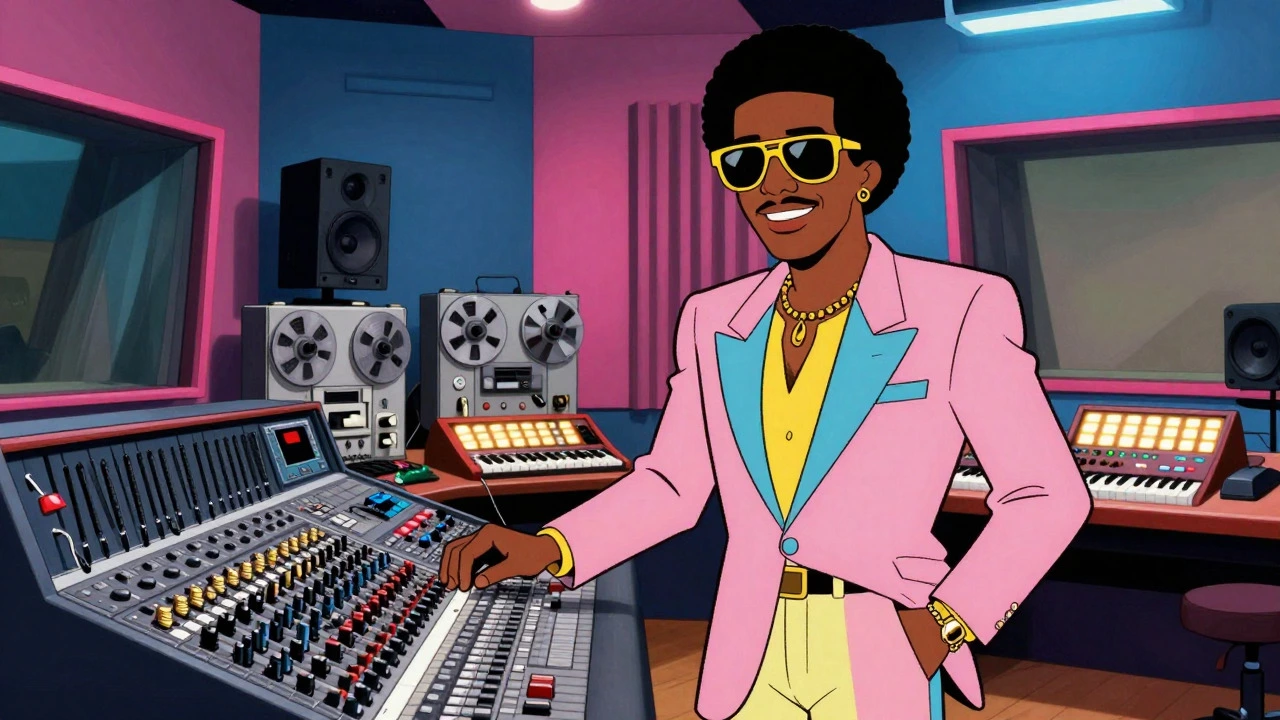

Turn on any playlist labeled "80s Hits" or "Classic R&B," and you will hear a specific sound. It’s tight, syncopated basslines meeting crisp, mechanical drum beats. It’s synthesizers mimicking brass sections and vocal harmonies layered until they shimmer. This wasn’t an accident. It was engineered by a small group of producers who decided that the disco era was over and something sharper, more electronic, and undeniably cool was needed.
We often remember the singers-the voices that filled our car stereos-but the architects behind the glass were just as vital. From the West Coast studios of Los Angeles to the cold winters of Minneapolis, these men built the sonic vocabulary of modern pop. Today, we’re looking at the heavy hitters who defined 1980s funk: Leon Sylvers III, the duo of Jimmy Jam and Terry Lewis, the talkbox wizard Roger Troutman, and the synth pioneer Kashif.
The SOLAR Sound: Leon Sylvers III’s Dance Floor Revolution
If you want to understand how funk survived the death of disco, you have to look at Leon Sylvers III. Born in Memphis but making his mark in Los Angeles, Sylvers didn’t just produce records; he created a brand. In 1978, Dick Griffey hired him as the in-house producer for SOLAR Records, a label founded by Black artists for Black artists. The mandate? Make it funky, make it danceable, and make it hit.
Sylvers’ approach was distinct. He moved away from the live-band heaviness of the 70s toward a cleaner, more polished aesthetic. Think about Shalamar’s “A Night to Remember” or The Whispers’ “And the Beat Goes On.” Those tracks don’t feel like jam sessions; they feel like precision instruments. Sylvers used early drum machines and synthesizer basses, but he kept the soul intact with dense, layered vocal arrangements.
Between 1980 and 1983, Sylvers was everywhere. He produced full albums for Shalamar, The Whispers, Midnight Star, and Lakeside. His work on Shalamar’s 1982 album *Friends* topped the R&B charts, proving that this new electro-soul sound could dominate commercially. He wasn’t just following trends; he was setting the template for what would become known as boogie and electro-funk.
Jam & Lewis: The Minneapolis Sound Explodes
While Sylvers was crafting hits in LA, a different kind of funk was brewing in the Midwest. Jimmy Jam and Terry Lewis started as members of The Time, Prince’s protégé band. But their ambition outgrew the stage. They wanted to build worlds in the studio.
In 1982, they formed Flyte Tyme Productions. Their breakthrough came when they defied Prince’s rule against outside production work to produce the S.O.S. Band’s “Just Be Good to Me” in 1983. Prince fired them, which turned out to be the best thing that could have happened. Free from the band, Jam & Lewis unleashed a flood of hits that redefined R&B.
Their secret weapon? Technology used unconventionally. They famously used the Oberheim OB-8 synthesizer to play horn lines instead of hiring a brass section. This gave their tracks a sharp, staccato bite that cut through mixes. They also leaned heavily on the Roland TR-808 drum machine. While others saw the 808 as too synthetic, Jam & Lewis programmed it with human swing, creating what fans now call “808 Soul.”
By the mid-80s, they were producing for everyone. Cherrelle’s “I Didn’t Mean to Turn You On,” Alexander O’Neal’s debut, and eventually Janet Jackson’s *Control* in 1986. That last one changed everything. It proved that funk-infused production could carry mainstream pop, blending hard-edged drums with narrative songwriting. They weren’t just making dance records; they were building emotional landscapes with electronics.
Roger Troutman and the Voice of Zapp
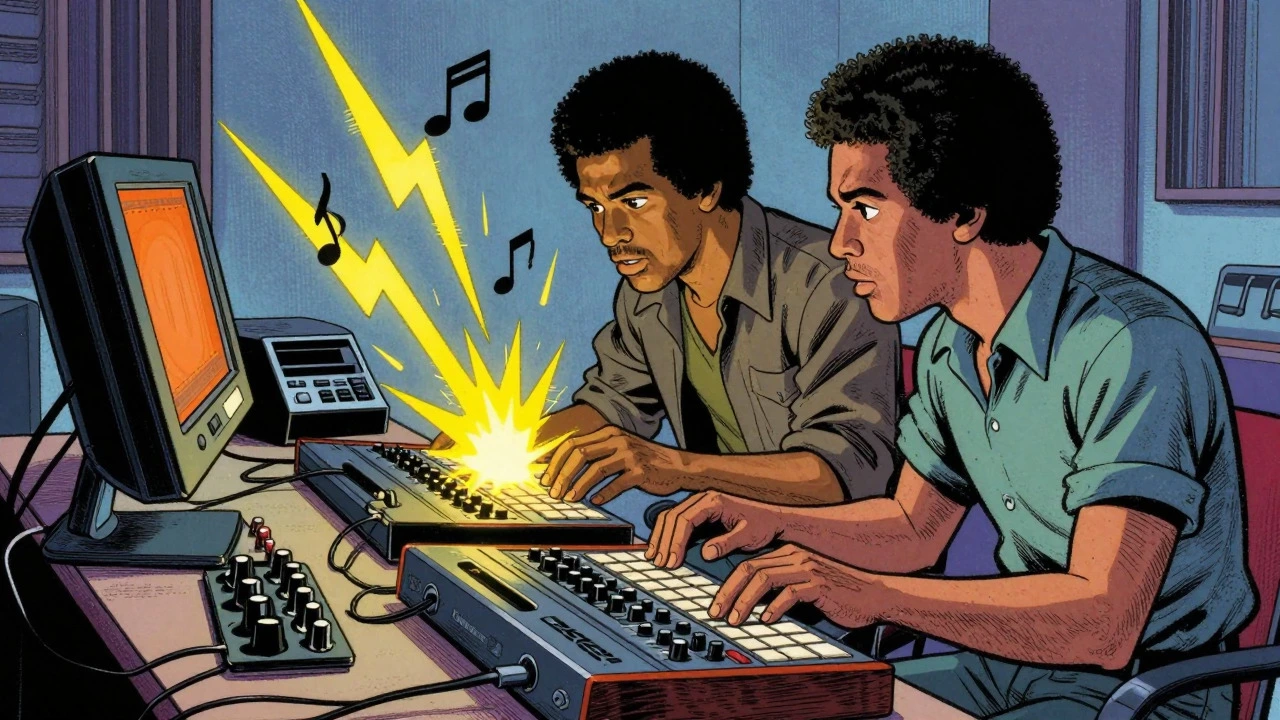
Then there was Roger Troutman. If Jam & Lewis were about polish, Troutman was about attitude. As the leader of Zapp, he brought a raw, robotic energy to funk that felt alien yet irresistible. Born in Hamilton, Ohio, Troutman found his muse after meeting Catfish Collins, brother of funk legend Bootsy Collins. This connection led to Bootsy producing Zapp’s self-titled debut in 1980.
Troutman’s signature tool was the talkbox. By running a synthesizer signal through a plastic tube into his mouth, he could shape the tone with his vocal tract, creating a voice that sounded like a robot trying to sing. Tracks like “More Bounce to the Ounce” are practically unplayable without that iconic, chattering lead line. It was playful, aggressive, and utterly unique.
Zapp’s music was heavily sampled by West Coast hip-hop producers in the late 80s and 90s. When Dr. Dre or J Dilla dug through crates later, they found Troutman’s grooves waiting for them. His work bridged the gap between funk and rap, providing the rhythmic backbone for an entire generation of rappers. Without Troutman’s experimental use of the talkbox and analog synths, the sound of G-Funk might never have existed.
Kashif: Bringing Synthesizers to Mainstream R&B
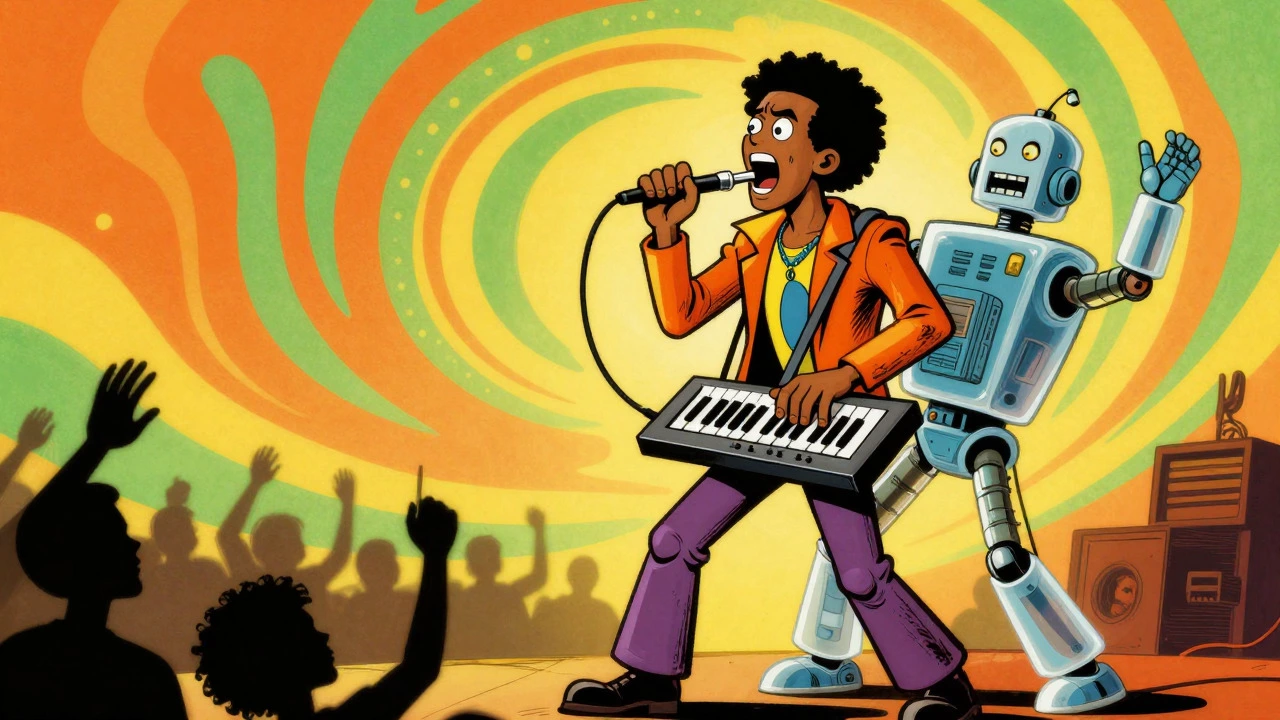
While Troutman pushed funk into sci-fi territory, Kashif (born Michael Jones) was quietly revolutionizing ballads and mid-tempo R&B. A multi-instrumentalist from Harlem, Kashif became one of the first producers to fully embrace polyphonic synthesizers in mainstream soul music during the early 80s.
Before Kashif, many R&B productions still relied on traditional string sections and piano. Kashif replaced those textures with lush, warm synth pads. Listen to his production on Whitney Houston’s 1985 debut album or George Benson’s *In Your Eyes*. The warmth isn’t accidental; it’s carefully crafted using gear like the Yamaha DX7 and various analog synths. He made technology feel intimate.
Kashif also wrote and produced for Evelyn “Champagne” King, Howard Johnson, and Barry White. His ability to blend complex harmonic structures with accessible melodies made him a go-to guy for labels wanting to cross over. He showed that you didn’t need a live orchestra to create emotion; you just needed the right patch on a synthesizer and a great singer.
| Producer | Signature Style | Key Equipment/Technique | Notable Artists Produced |
|---|---|---|---|
| Leon Sylvers III | Clean Electro-Soul, Boogie | Early Drum Machines, Layered Vocals | Shalamar, The Whispers, Midnight Star |
| Jam & Lewis | Minneapolis Sound, 808 Soul | Oberheim OB-8 (Synth Horns), Roland TR-808 | Janet Jackson, S.O.S. Band, Alexander O'Neal |
| Roger Troutman | Electro-Funk, Talkbox Grooves | Talkbox, Analog Synthesizers | Zapp, Bootsy Collins collaborations |
| Kashif | Synth-Driven R&B Ballads | Polyphonic Synthesizers, Yamaha DX7 | Whitney Houston, George Benson, Evelyn King |
Why Their Work Still Matters Today
You might wonder why we’re digging up these names in 2026. The answer is simple: listen to any top-charting hip-hop or R&B track today. The DNA is there. The way Travis Scott processes his vocals owes a debt to Troutman. The trap hi-hats and 808 sub-basses are direct descendants of Jam & Lewis’s programming. Even the polished, layered vocal stacks in modern pop trace back to Sylvers’ work at SOLAR.
These producers didn’t just adapt to the digital age; they forced it to happen. They took expensive, clunky hardware and made it sing. They proved that soul wasn’t about acoustic guitars and upright basses-it was about feeling, rhythm, and innovation. Whether it was the icy precision of Minneapolis or the sunny bounce of LA, they taught us that funk isn’t a genre; it’s a mindset.
Who were the most influential funk producers in the 1980s?
The most influential figures include Leon Sylvers III, who defined the SOLAR Records sound; Jimmy Jam and Terry Lewis, who pioneered the Minneapolis Sound; Roger Troutman, famous for his talkbox work with Zapp; and Kashif, who integrated synthesizers into mainstream R&B. Other notable names include James Mtume, Nile Rodgers, and Quincy Jones.
What is the difference between the SOLAR sound and the Minneapolis sound?
The SOLAR sound, championed by Leon Sylvers III, focused on clean, polished electro-soul with bright rhythm guitars, crisp handclaps, and dense vocal harmonies, designed for club dancing. The Minneapolis sound, developed by Jam & Lewis and Prince, was grittier and more experimental, relying heavily on the Roland TR-808 drum machine and synthesizers mimicking horns, creating a harder, more industrial edge.
How did Roger Troutman influence hip-hop?
Roger Troutman’s use of the talkbox and his heavy, syncopated basslines in Zapp’s music provided essential samples for West Coast hip-hop producers in the late 1980s and 1990s. His robotic vocal textures and funk grooves became foundational elements of G-Funk and other subgenres, influencing producers like Dr. Dre and J Dilla.
Did Kashif produce for Whitney Houston?
Yes, Kashif contributed significantly to Whitney Houston’s self-titled debut album in 1985. He co-wrote and produced tracks that showcased his ability to blend lush synthesizer arrangements with powerful vocal performances, helping to define her early sound.
What equipment did Jimmy Jam and Terry Lewis use to create their sound?
Jam & Lewis primarily used the Roland TR-808 drum machine for its distinctive kick and snare sounds, and the Oberheim OB-8 synthesizer to create horn-like stabs and melodic lines. They also utilized analog tape multitracking to layer vocals and instruments, giving their productions a rich, textured quality.