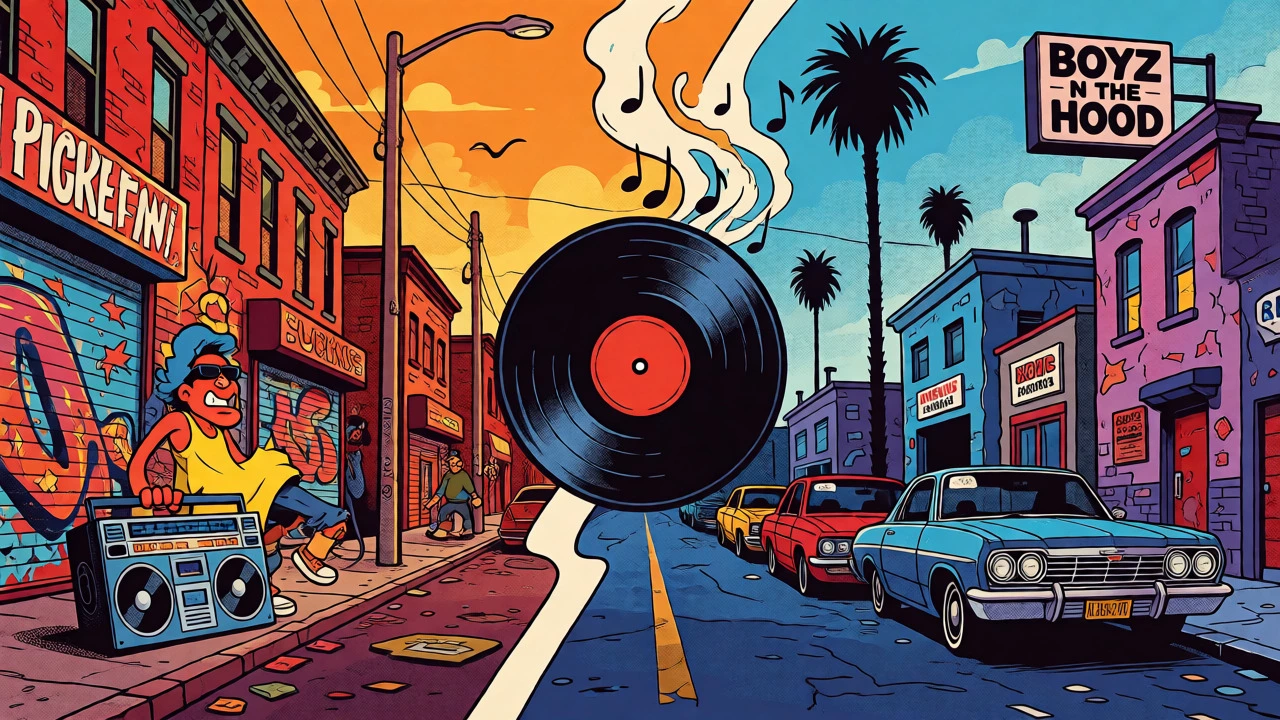

You probably remember the song before you remember the scene. Maybe it was Warren G’s smooth baritone drifting out of a car window in Above the Rim, or Coolio’s haunting choir sample echoing through a classroom in Dangerous Minds. For a decade, from roughly 1991 to 1999, hip-hop wasn’t just background noise for movies; it was the engine driving them. This wasn’t accidental. It was a deliberate, highly profitable industrial shift where rap moved from being a niche genre to becoming the primary promotional and cultural system for American cinema.
If you grew up in the ’90s, you know that buying the soundtrack CD was often more important than seeing the movie. Sometimes, you never even saw the movie. The album stood on its own as a cultural artifact, a curated playlist that defined your identity, your slang, and your view of the world. But how did this happen? Why did Hollywood suddenly decide that gangsta rap and R&B were the keys to box office gold? And what happened when the money started talking louder than the art?
The Blueprint: From Block Party to Business Model
To understand the explosion of the mid-’90s, you have to look at the cracks in the foundation that appeared in the late ’80s. Films like Do the Right Thing (1989) proved that Spike Lee could use Public Enemy’s "Fight the Power" not just as a tune, but as a political statement woven into the fabric of the narrative. It worked. Audiences felt the heat. Then came New Jack City (1991), which updated the blaxploitation crime formula with contemporary street authenticity and a heavy hip-hop soundtrack. These films showed studios something crucial: Black urban narratives had massive commercial potential if packaged correctly.
The real game-changer arrived with Boyz n the Hood (1991). Directed by John Singleton, this wasn’t just a movie about South Central Los Angeles; it was a sonic map of the neighborhood. The soundtrack, released through Qwest Records, featured Ice Cube’s "How to Survive in South Central" and helped push West Coast rap into mainstream visibility. It hit No. 4 on the Billboard 200. Suddenly, record labels realized they weren’t just licensing songs; they were cross-marketing entire ecosystems. A film release became a launchpad for singles, music videos on MTV, and radio play. The synergy was undeniable.
Death Row and the G-Funk Takeover
If Boyz n the Hood built the house, Above the Rim (1994) threw the party. This is arguably the peak of the era’s label-film integration. Dr. Dre and Suge Knight oversaw the soundtrack, turning it into a showcase for Death Row Records. You didn’t just get songs; you got a brand. Warren G and Nate Dogg’s "Regulate" became an MTV staple, reaching No. 2 on the Hot 100. The album sold over two million copies and spent ten weeks at No. 1 on the R&B Albums chart.
This model was different. It wasn’t just about fitting music to scenes; it was about using the film to sell the label. Artists like Snoop Doggy Dogg, Tha Dogg Pound, and Lady of Rage were promoted directly through the movie’s marketing machinery. The film itself was secondary. As VIBE noted later, people would buy the soundtrack even if the movie was mediocre. The music was the product. The movie was the commercial.
| Film Title | Release Year | Peak Billboard 200 | Certification | Signature Track |
|---|---|---|---|---|
| Boyz n the Hood | 1991 | No. 4 | Platinum | "How to Survive in South Central" |
| Above the Rim | 1994 | No. 2 | 2x Platinum | "Regulate" |
| Dangerous Minds | 1995 | No. 1 | 3x Platinum | "Gangsta's Paradise" |
| Friday | 1995 | N/A (High Sales) | 2x Platinum | "Keep Their Heads Ringin'" |
Crossing Over: When Rap Met Mainstream Hollywood
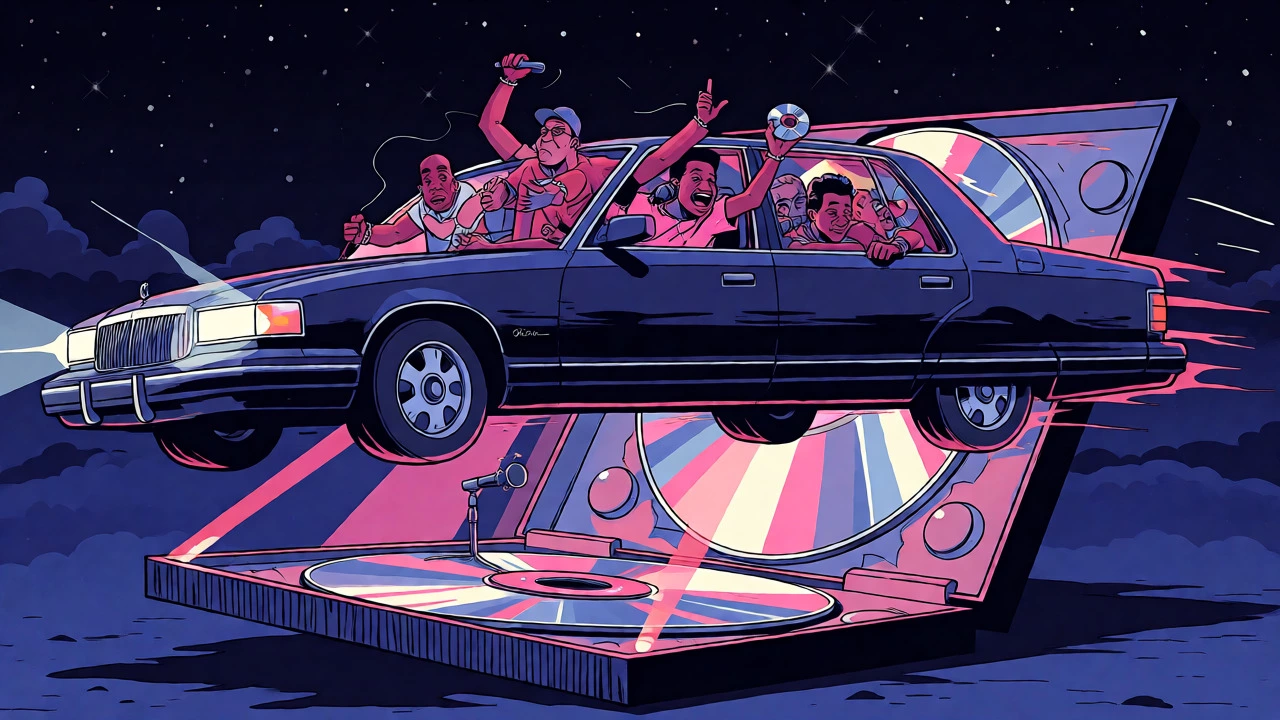
By 1995, the strategy had evolved. Studios realized hip-hop could sell tickets to white suburban audiences too. Enter Dangerous Minds (1995). Michelle Pfeiffer played a teacher in an inner-city school, but the real star was Coolio’s "Gangsta's Paradise." The track sampled Stevie Wonder’s "Pastime Paradise," bridging classic soul with modern rap aggression. The soundtrack went triple platinum. This was a pivotal moment: hip-hop had crossed from explicitly Black urban dramas into general Hollywood fare without losing its edge-or its market power.
Baz Luhrmann’s Romeo + Juliet (1996) pushed this further. He used hip-hop to modernize Shakespeare, attracting younger viewers who might have skipped the Bard otherwise. Tracks from artists like Everlast and Radiohead sat alongside classical motifs. It proved that the "hip-hop aesthetic"-the fashion, the attitude, the rhythm-was now a universal language for youth culture, regardless of whether the characters were wearing jeans or doublets.
The Cultural Package: More Than Just Beats
These soundtracks exported more than audio. They sold a visual and behavioral package. If you listened to Menace II Society (1993), you were absorbing the sounds of sirens, police radios, and helicopters-what scholars call "sonic surveillance." The music reinforced the film’s themes of entrapment and social control. But it also popularized specific slang, fashion choices (think oversized jerseys and baggy pants), and attitudes toward masculinity and survival.
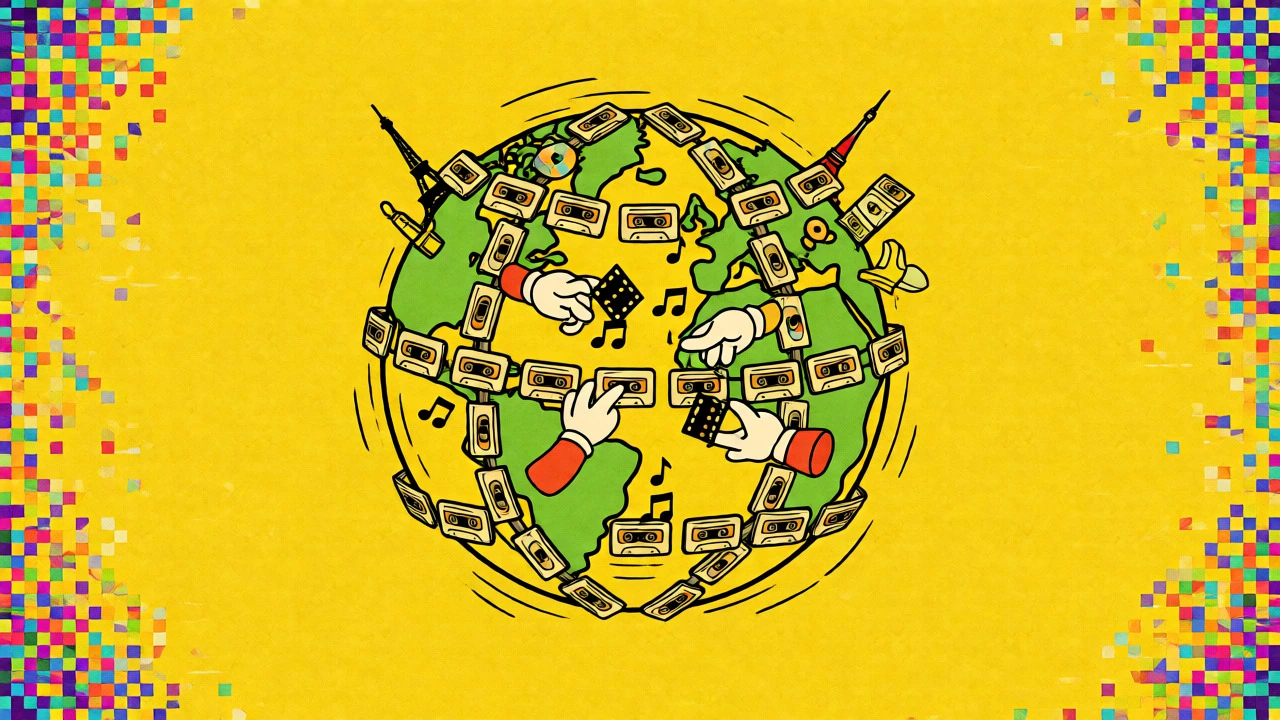
The reach was global. In Europe and emerging markets, these films and albums became carriers of Black American culture. Kids in Berlin or Tokyo learned about Los Angeles geography, police brutality, and hustling economics through Dr. Dre’s basslines. The soundtrack became a passport to understanding a specific slice of American life, filtered through the lens of entertainment. It created a shared vocabulary for a generation that consumed media differently than their parents had.
The Cracks in the Foundation: Commerce vs. Art
But there was a cost. As the money poured in, the line between artistic expression and cold commerce blurred. Critics argued that the best films used hip-hop to explore complex social issues, while the worst reduced Black experience to marketable tropes: danger, crime, and hyper-masculinity. The Independent pointed out that sometimes the soundtrack was the only reason a film got greenlit, leading to shallow narratives padded with famous faces.
Misogyny and homophobia within mainstream rap also drew scrutiny. While the music provided energy and authenticity, it sometimes reinforced stereotypes that limited the representation of Black women and LGBTQ+ individuals in cinema. The "street" aesthetic became a commodity, stripped of its political roots and repackaged for mass consumption. Did the soundtrack empower the artist, or did it exploit the culture? The answer, unfortunately, was often both.
Why It Ended and Why It Matters Today
The distinct industrial pattern of the ’90s faded as technology shifted. The rise of Napster and digital downloads broke the physical CD bundle. People stopped buying whole albums to support a movie; they bought single tracks. Streaming services further fragmented the experience, separating songs from their cinematic context. The unified marketing machine fractured.
Yet, the legacy remains. Modern music supervision still relies on the principles established then: using culturally specific music to establish place and identity quickly. The rapper-to-actor pipeline (from Tupac to Ice Cube to Donald Glover) was forged in this fire. We still see the influence in how brands partner with artists, creating integrated media experiences that mirror the Above the Rim model. The 1990s taught Hollywood that music isn’t just accompaniment-it’s a co-star, a marketer, and a historian all rolled into one.
Why were 1990s hip-hop soundtracks so commercially successful?
They leveraged a powerful cross-marketing ecosystem. A film release triggered simultaneous promotion via MTV/BET music videos, radio singles, and retail CD sales. Labels like Death Row used films to launch new artists, while studios used hip-hop’s popularity to draw younger, diverse audiences to theaters.
Which 1990s hip-hop soundtrack was the biggest seller?
Dangerous Minds (1995) was certified triple platinum by the RIAA, indicating over 3 million shipments in the US alone. However, Above the Rim (1994) was equally influential culturally, selling over 2 million copies and dominating R&B charts.
Did the movies help the music or did the music help the movies?
It was symbiotic, but increasingly skewed toward music helping movies. Early examples like Boyz n the Hood balanced both. By the mid-’90s, many films existed primarily as vehicles for soundtrack sales, with critics noting that the album often outperformed the film in critical acclaim and revenue.
What role did MTV play in this era?
MTV served as the primary promotional mechanism and arbiter of celebrity. Airplay on MTV turned soundtrack singles into household names, driving CD sales and ticket purchases. It bridged the gap between underground rap scenes and mainstream suburban audiences.
Why don't we have "soundtrack eras" like this anymore?
The decline of physical media (CDs) and the rise of streaming changed consumer behavior. People no longer buy albums to support a film; they stream individual hits. Additionally, the fragmentation of music tastes means fewer artists command the unified cultural attention that figures like Dr. Dre or Puff Daddy held in the ’90s.