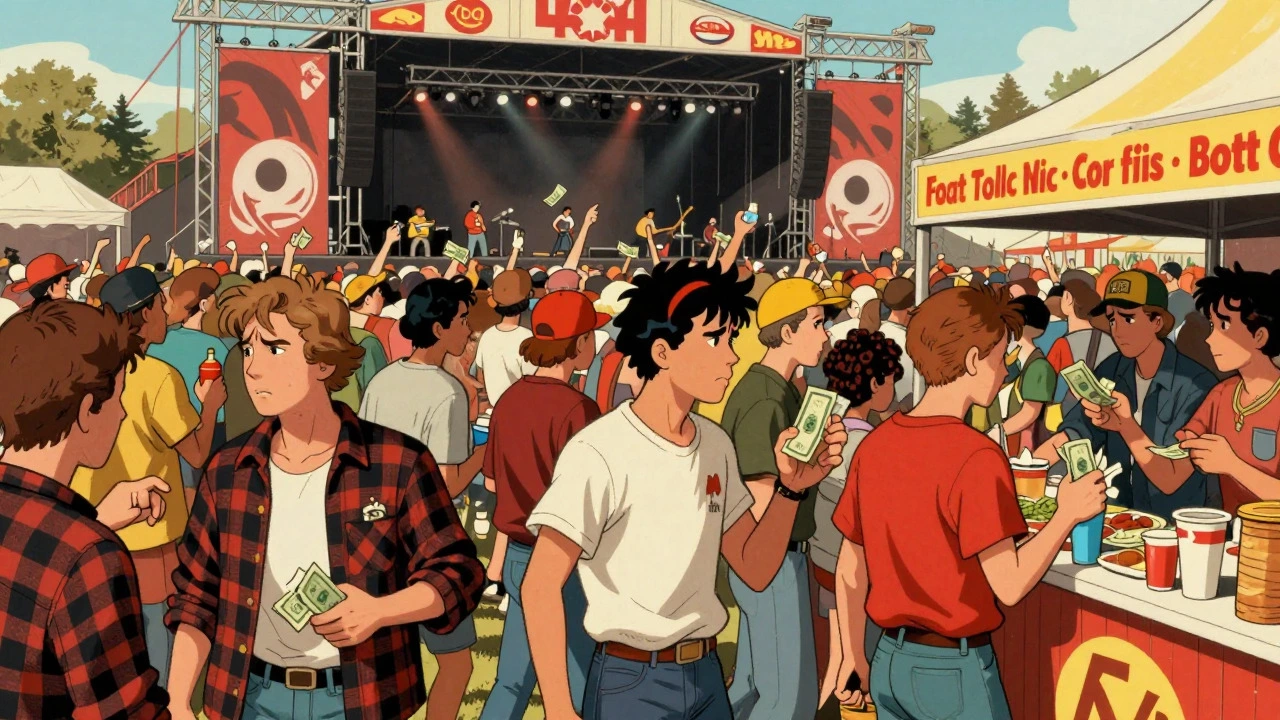

Remember when going to a concert meant just listening to the music? In the early 1990s, that simple idea was under siege. As music festivals exploded in popularity, they also exploded in price and corporate sponsorship. What started as underground gatherings for misfits and rebels quickly turned into massive marketing platforms for major labels and brands. This shift sparked a fierce backlash from fans, artists, and organizers who felt the soul of live music was being sold off for profit.
Key Takeaways
- The 1990s marked a turning point where festivals shifted from communal experiences to profit-driven businesses.
- Events like Lollapalooza and Woodstock '99 became flashpoints for criticism over high ticket prices and heavy branding.
- In Britain, the Criminal Justice and Public Order Act (CJA) 1994 effectively criminalized free raves, pushing the DIY scene further underground.
- Movements like Riot Grrrl and UK free party collectives actively rejected commercial structures to preserve autonomy and community.
The Rise of Corporate Festivals
To understand the backlash, you have to look at what was happening on the main stage. Lollapalooza is a touring alternative rock festival launched in 1991 by Perry Farrell. It began as a farewell tour for Jane's Addiction, but it quickly became the defining event of the decade. By 1993, critics were already complaining. A reviewer in the *Deseret News* called the event "crassly commercial," noting that attendees spent an average of $50 on food and merch on top of a $27.50 ticket. That’s a lot of money for a group of people who identified as anti-establishment.
Perry Farrell himself wasn't immune to the critique. He lamented that the festival's "sales clout" was turning it into a "money-making exercise for major-label marketing experts." The tension peaked in 1996 when Metallica was booked as headliners. For many purists, this was the final betrayal of the underground ethos. It signaled that if you had enough cash, you could buy your way into the counterculture. Promoters saw this not as a loss of spirit, but as a business opportunity. They described Lollapalooza as a "collective brand" that aggregated multiple marketing opportunities, essentially turning a subculture into a product line.
Woodstock '99: When Greed Met Chaos
If Lollapalooza was the slow burn, Woodstock '99 was the explosion. Organizers hoped to replicate the magic of 1969, but they did so with a modern, profit-first mindset. The 30th-anniversary festival was heavily sponsored and priced accordingly. Critics argued that "commercialization and greed" played a significant role in its eventual failure. Attendees weren't just paying for music; they were paying for a branded experience that included expensive concessions and limited free water.
The result was a mix of frustration and chaos. While media outlets later painted the event as purely chaotic, participants often pointed to the economic pressure as a root cause. You can’t have a genuine communal vibe when everyone is watching their wallet. The contrast between the original 1969 model-funded by planners raising money themselves-and the 1999 corporate framework highlighted how far the industry had drifted from its roots.
The British Crackdown and Free Parties
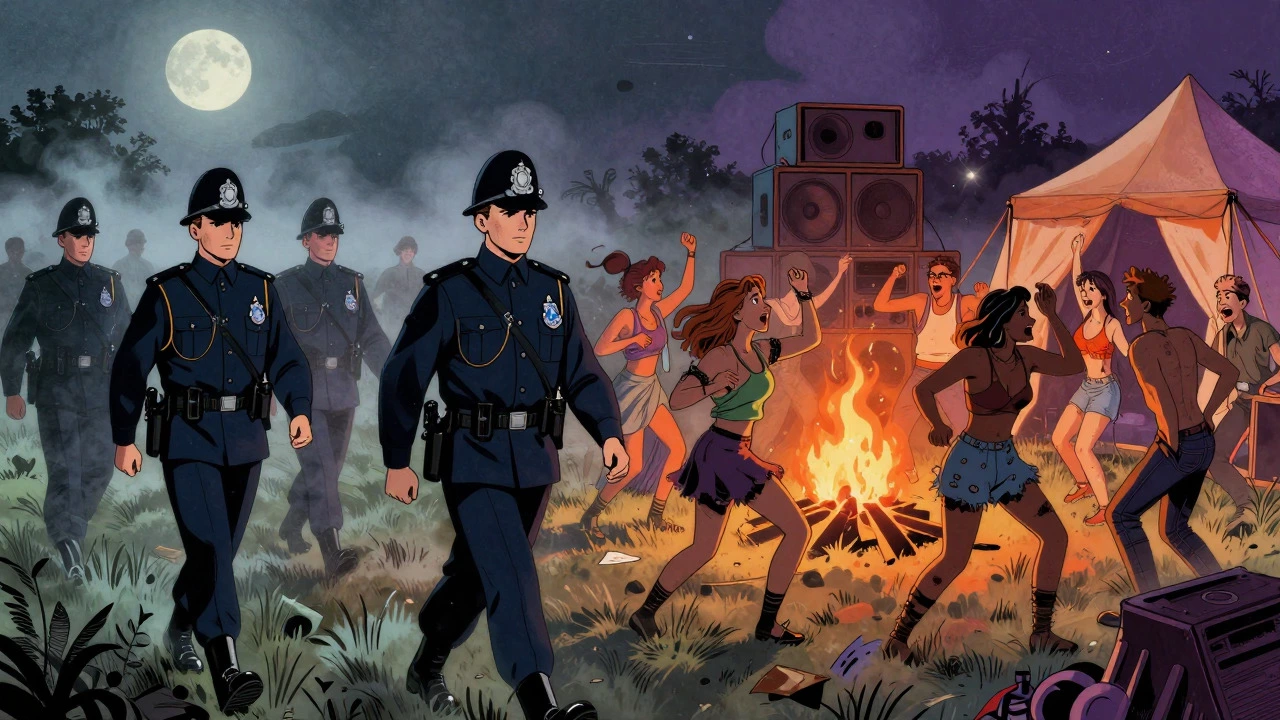
While American debates focused on ticket prices, the situation in Britain was more severe. Here, the state itself became the adversary of the DIY spirit. In the early 1990s, large-scale police operations targeted both commercial and non-commercial events. This culminated in the passage of the Criminal Justice and Public Order Act (CJA) 1994 is UK legislation that restricted outdoor gatherings featuring repetitive beats.
This law specifically targeted unlicensed raves and free parties. Collectives like DiY Sound System is a Nottingham-based free party collective founded in the early 1990s found themselves prime targets. DiY operated on a strict ethical code: no fences, no security, no start or finish time, and no rip-off. Their goal was to "bring the club to the countryside and the countryside into the club." To them, profit was the enemy because it damaged the "freedom of the space." When the CJA passed, it didn't just regulate these events; it effectively criminalized a lifestyle. Street protests in London in 1993 and 1994 showed just how much grassroots resistance existed against these changes.
Riot Grrrl and Feminist DIY Resistance
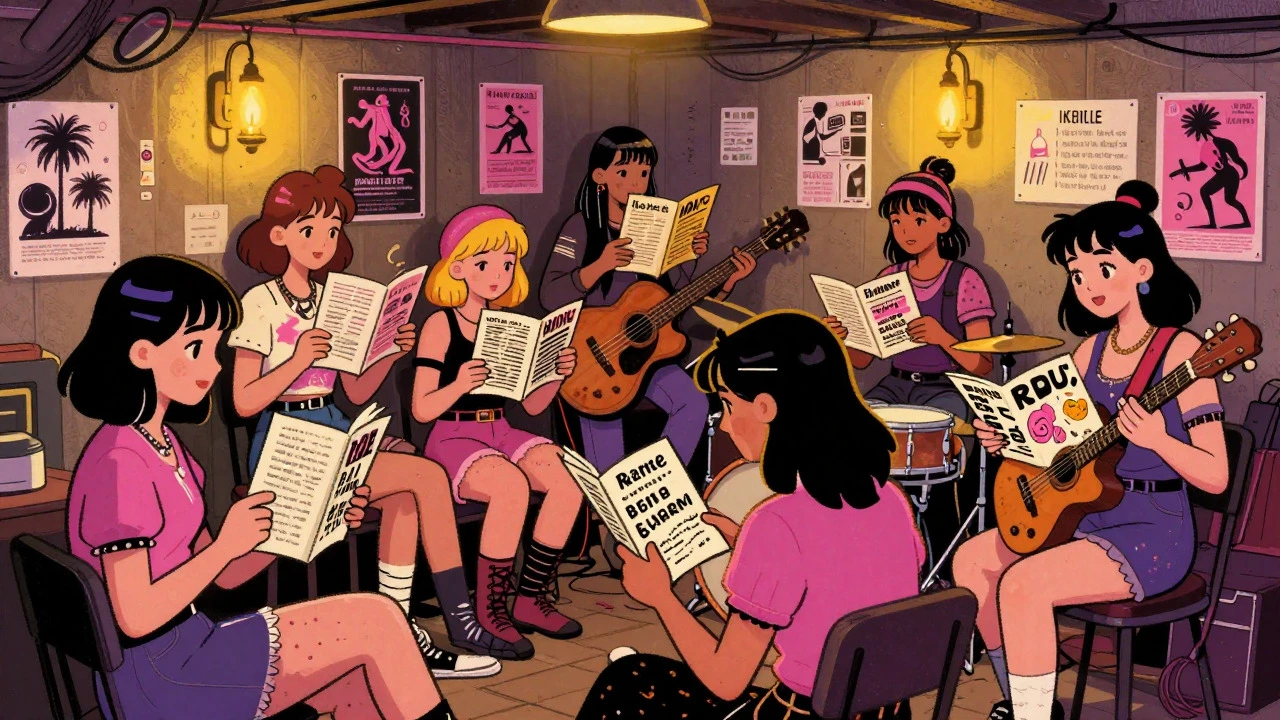
In the United States, another form of backlash emerged from the feminist punk scene. Riot Grrrl is a subculture emerging from the punk rock scene in the early 1990s that united young women against capitalist and patriarchal ideologies. Originating around 1990-1991 in Olympia, Washington, and Washington, D.C., the movement relied heavily on homemade zines and self-organized shows.
Riot Grrrl was explicitly anti-consumerist. While mainstream media tried to capitalize on the trend, figures like Kathleen Hanna of Bikini Kill refused interviews, fearing misrepresentation. They created spaces where girls could discuss sexual violence and body politics outside the reach of corporate music infrastructure. This was a direct rejection of the idea that cultural value must be tied to commercial success. By controlling their own media and venues, they maintained autonomy in an era where major labels were creating fake independent imprints to obscure corporate ties.
DIY vs. Corporate: A Practical Comparison
The difference between these two approaches wasn't just philosophical; it was logistical. Corporate festivals required professionalized infrastructures: fenced sites, ticketing systems, paid security, insurance, and branded stages. This created a high barrier to entry for both organizers and attendees. DIY festivals, on the other hand, relied on voluntary labor, borrowed equipment, and word-of-mouth promotion via zines and flyers.
| Feature | Corporate Model (e.g., Lollapalooza) | DIY Model (e.g., DiY Free Party) |
|---|---|---|
| Primary Goal | Profit maximization and brand exposure | Community building and cultural autonomy |
| Funding Source | Ticket sales, sponsorships, merchandise | Voluntary contributions, shared resources |
| Security & Access | Fenced site, ID checks, paid entry | Open access, informal social control |
| Risk Profile | Low operational risk, high financial liability | High vulnerability to weather/police raids |
| Audience Relationship | Consumer/Vendor dynamic | Participant/Organizer collaboration |
For DIY organizers, the trade-off was clear. You got less convenience and safety, but you kept control over your culture. For corporate promoters, the trade-off was the opposite: you provided comfort and spectacle, but you surrendered the democratic nature of the gathering. This fundamental conflict defined the decade's cultural landscape.
The Legacy of the Backlash
The 1990s set the stage for everything that followed. The reliance on brand sponsorship became structurally embedded in the festival industry after the legislative changes of that era. Today, we see the same tensions playing out in different forms. Modern mega-festivals still prioritize ticket sales and branding, leading to complaints about feeling "packed in like sardines." Meanwhile, there is a renewed interest in the histories of free parties and Riot Grrrl. These movements are now viewed not just as nostalgic relics, but as vital inspirations for current underground scenes that prioritize self-organization over monetization.
The debate isn't over. It has simply evolved. Whether you're attending a massive stadium show or a small basement gig, the question remains: Are you here to consume a product, or to participate in a community? The 1990s taught us that the answer depends on who holds the keys to the gate.
Frequently Asked Questions
Why was Lollapalooza considered controversial in the 1990s?
Lollapalooza faced criticism because it transformed from an underground alternative rock tour into a highly commercial enterprise. Critics pointed to rising ticket prices, expensive food and water, and heavy corporate sponsorship as signs that the festival had lost its counter-cultural integrity and become a marketing tool for major labels.
What was the impact of the CJA 1994 on UK raves?
The Criminal Justice and Public Order Act (CJA) 1994 effectively criminalized unlicensed outdoor gatherings featuring repetitive beats. This led to increased police crackdowns on free parties and raves, forcing many collectives to operate more covertly and accelerating the decline of the open-air rave culture in Britain during the mid-1990s.
How did Riot Grrrl resist commercialization?
Riot Grrrl resisted commercialization by relying on DIY infrastructure such as homemade zines, self-organized shows, and grassroots communication. Key figures often refused mainstream media interviews to avoid misrepresentation, ensuring that the movement remained controlled by its participants rather than corporate interests.
What is the difference between a free party and a ticketed festival?
A free party typically operates without fences, formal security, or mandatory entry fees, relying on voluntary contributions and communal effort. In contrast, a ticketed festival uses a transactional model with paid entry, regulated access, and professional management, prioritizing safety and convenience at the cost of some participant autonomy.
Did the 1990s backlash succeed in stopping commercialization?
Commercialization continued to grow throughout the 2000s and 2010s, becoming deeply embedded in the festival economy. However, the backlash succeeded in preserving distinct DIY traditions and providing a historical framework for critiquing corporate practices. It ensured that alternative models of gathering remained visible and relevant.


