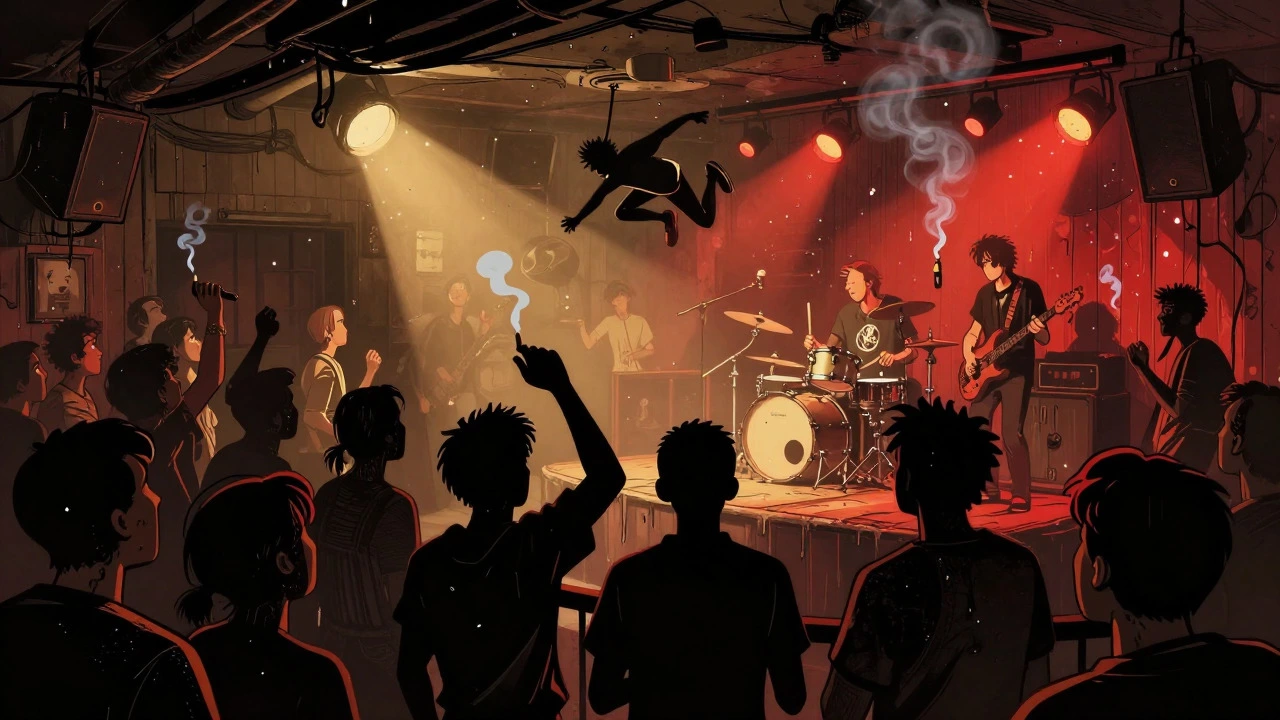

Imagine standing in a sweaty basement club in 1991, inches away from a band that hasn't released an album yet. Now imagine being on a sun-baked field in Arizona the same summer, watching that same genre explode before half a million people across North America. That jump-from intimate underground rooms to massive outdoor festivals-is the defining story of 1990s alternative rock is a musical movement that shifted from subcultural clubs to mainstream arenas and festivals, fundamentally changing how live music was experienced and produced. It wasn’t just about the songs; it was about where we heard them and who we heard them with.
The Club Circuit: Where It All Started
Before the stadiums and the sponsor booths, there were the clubs. In the early 1990s, the alt-rock scene was still rooted in the DIY ethos of the 1980s punk and college-rock movements. Venues like The Crocodile in Seattle or small bars in Portland held maybe 300 to 500 people. Tickets were cheap, often under $10, and the barrier between the band and the audience was non-existent. If you wanted to see Nine Inch Nails or Trent Reznor's project, you stood right at the pit. Stage-diving wasn’t a spectacle; it was part of the conversation.
Bands like Jane’s Addiction, Living Colour, and Siouxsie and the Banshees built their followings here. These shows were intense and personal. You could hear the feedback in the amps, smell the sweat, and feel every kick drum in your chest. There were no delay towers for sound reinforcement because the room was too small for them. This intimacy created a sense of community that defined the early alt-rock identity. Fans felt like insiders, part of a secret club that mainstream radio hadn’t discovered yet.
Lollapalooza: The Traveling Circus
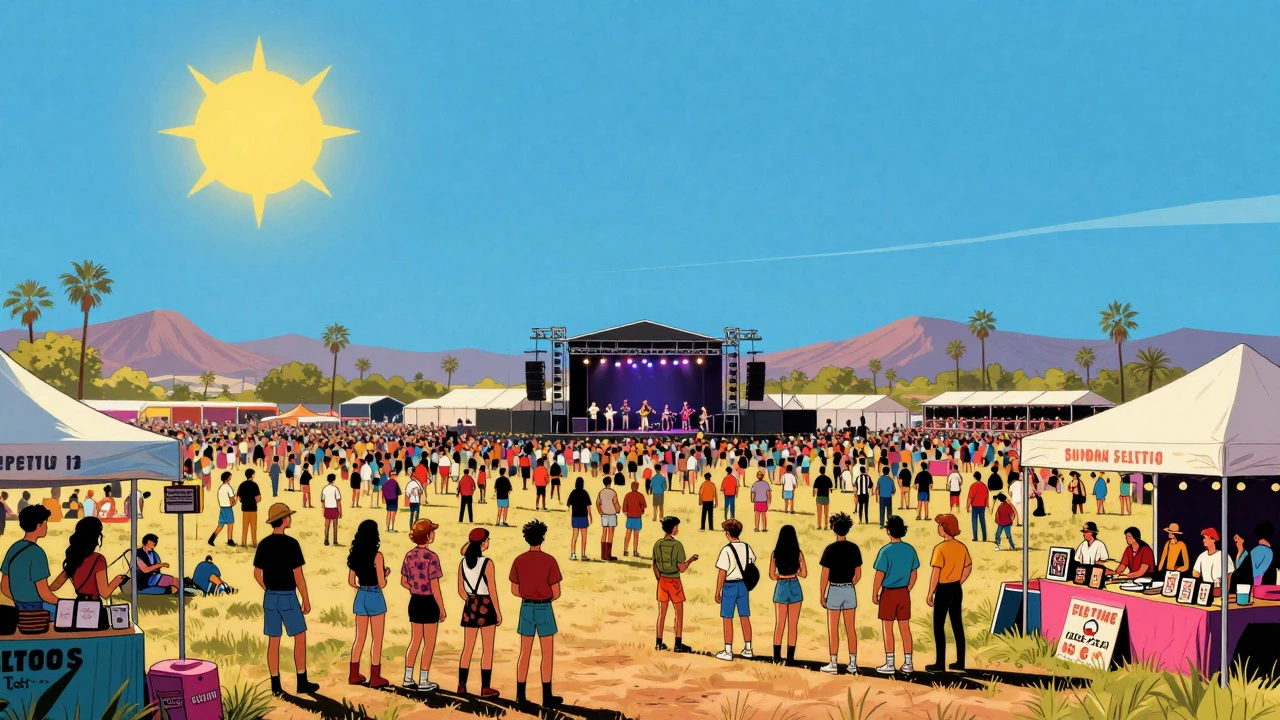
Then came the summer of 1991. Perry Farrell, lead singer of Jane’s Addiction, conceived Lollapalooza as a traveling multi-band alternative rock festival that launched in 1991, revolutionizing the live music industry by creating a mobile community for youth culture. He wanted a farewell tour for his band, but he had a bigger idea. Inspired by the UK’s Reading Festival, where bands played to crowds of 40,000, Farrell decided to bring that scale to the US. The first stop was July 18, 1991, at Compton Terrace in Chandler, Arizona. It was scorching hot. Accounts describe the heat as brutal, but the energy was electric.
The 1991 lineup included Jane’s Addiction, Rollins Band, Nine Inch Nails, Ice-T’s Body Count, and Butthole Surfers. It hit 20 to 21 cities across the US and Canada, drawing nearly 500,000 attendees. This was a seismic shift. Suddenly, bands that played to hundreds in clubs were playing to thousands in amphitheaters and fairgrounds. Lollapalooza wasn’t just a concert; it was a traveling carnival. By 1992, they added a second stage. You’d spend eight to ten hours there, seeing 10 to 15 bands. You’d stand in the sun or mud, wandering between stages, visiting booths run by political organizations, tattoo artists, and underground merchants. It was a countercultural fairground.
| Environment | Typical Scale & Duration | Example Contexts | Crowd Behavior & Production |
|---|---|---|---|
| Small Clubs | Hundreds of people, 2-3 bands, 2-3 hours | Pre-Lollapalooza tours by Jane’s Addiction, Nine Inch Nails | Close proximity, stage-diving, minimal barriers, basic PA/lighting, strong local identity |
| Arenas | 10,000-20,000 seats, 1-3 headliners, 2-4 hours | Korn at UNO Lakefront Arena (1998), Bush, Collective Soul tours | Large PA systems, moving lights, pyrotechnics, seated sections, professional security, clear stage separation |
| Festivals | 15,000-40,000+ per day, 10-15 bands, 8-10 hours | Lollapalooza 1991-1997, Woodstock ’94/’99, Reading Festival | Multiple stages, sponsor booths, intense weather conditions, large mosh pits, video screens, complex logistics |
The Arena Era: Mainstream Explosion
By the mid-to-late 1990s, alternative rock had fully crossed into the mainstream. Bands that once played dive bars were now selling out arenas. Think about Korn performing "Blind" at New Orleans’ UNO Lakefront Arena in 1998. This wasn’t a sweaty club show. It was a high-production spectacle. They used high-powered PA systems, moving spotlights, and smoke effects. The crowd was tens of thousands deep. The dynamic changed. You couldn’t touch the band anymore. There were barricades, security lines, and designated floor pits. The intimacy was gone, replaced by spectacle.
This era saw bands like Red Hot Chili Peppers, The Offspring, Bush, and Collective Soul dominating these spaces. The production values skyrocketed. Multi-camera video crews captured these events, broadcasting them to MTV and later archiving them for YouTube retrospectives. The "arena rock" template-pyrotechnics, huge screens, synchronized lighting-was adopted by alt-rock bands. It was less about the raw, unfiltered connection of the club days and more about delivering a polished, large-scale experience. For fans, this meant higher ticket prices but also the chance to see their favorite bands perform with a level of professionalism and visual flair that was previously reserved for stadium rock giants.
Festival Giants: Woodstock ’94 and ’99
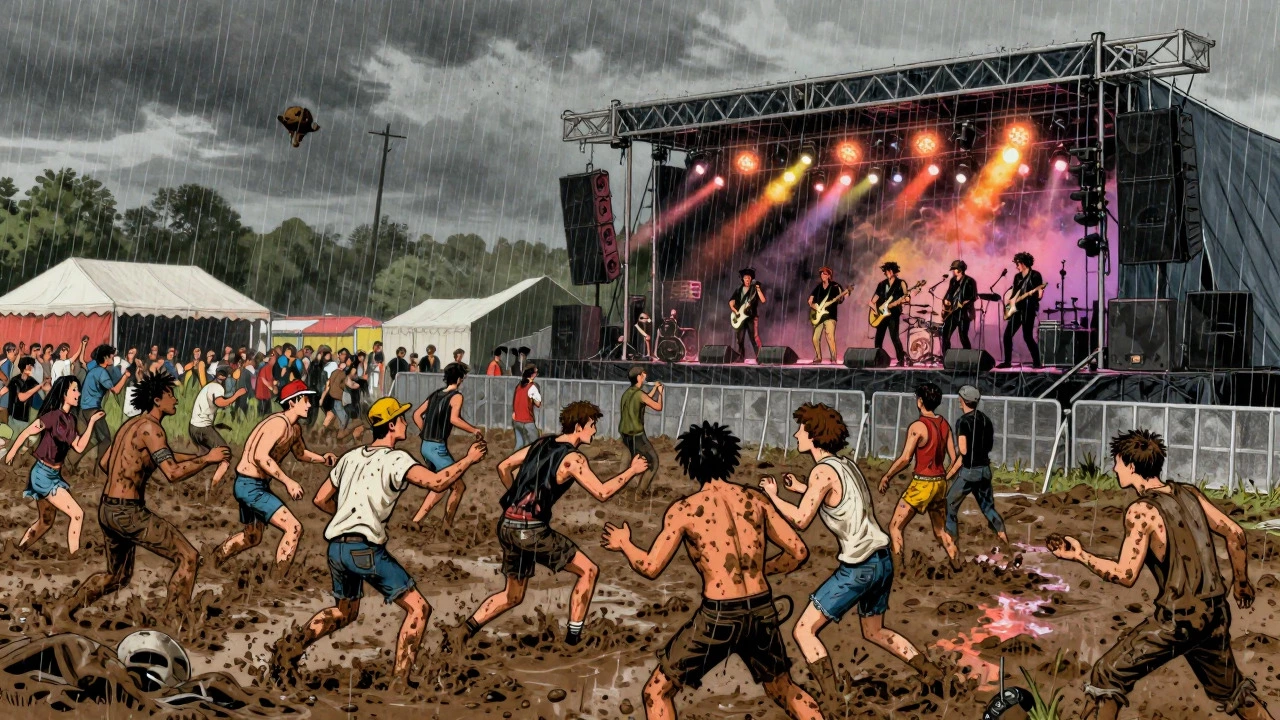
While Lollapalooza traveled, other festivals anchored themselves in specific locations, becoming cultural landmarks. Woodstock ’94 and Woodstock ’99 are the two most iconic examples of this festival-scale snapshot. Woodstock ’94 was muddy, emotional, and communal. Performances like The Cranberries’ "Dreams" and Blind Melon’s "No Rain" showed a different side of alt-rock. Tens of thousands of people sang along in unison, covered in mud, sharing a moment of collective catharsis. It was less aggressive than the club mosh pits, more about shared emotion.
Fast forward five years to Woodstock ’99. The vibe had shifted dramatically. This event became notorious for its chaos and volatility. Bands like Limp Bizkit, Rage Against the Machine, and Red Hot Chili Peppers played to massive, energized crowds. Rage Against the Machine’s performance of "Bulls on Parade" featured extensive backline gear and large delay towers. The mosh pits stretched dozens of meters back. Security barricades were essential. This was alt-metal and nu-metal taking over. The festival environment allowed for a scale of crowd behavior-crowd-surfing, intense moshing-that was impossible in clubs or even controlled arena settings. It highlighted the darker, more volatile side of the late-90s youth culture.
The Evolution of the Lineup
One of the most interesting aspects of the 1990s alt-rock live experience was the evolution of the lineups, particularly on Lollapalooza. In 1991, the bill was a cross-section of alternative rock, industrial, punk, funk-metal, and hip-hop. By 1993, Primus, Alice in Chains, Dinosaur Jr., and Arrested Development were on the bill. The definition of "alternative" was expanding. By 1994, Smashing Pumpkins and Beastie Boys headlined alongside A Tribe Called Quest and George Clinton & the P-Funk All Stars. It was eclectic, mixing genres that didn’t traditionally hang out together.
However, this expansion also caused friction. When Metallica was booked as a headliner in 1996, it sparked debate. Some fans argued the festival had lost its underground edge, tilting too far toward mainstream metal. This controversy illustrates how contested the term "alternative" was, even within the live scene. The lineup reflected the broader cultural shift: what was once niche was now dominant. The festival became a mirror of the changing tastes of American youth, blending punk, metal, hip-hop, and indie pop into a single, cohesive touring package.
Legacy and Impact
The impact of the 1990s alt-rock live experience is still visible today. Lollapalooza evolved from a 7-act touring bill into a four-day festival in Chicago’s Grant Park, hosting over 100 acts annually. It spawned similar events like Vans Warped Tour and Ozzfest. The model of the multi-stage, multi-day festival became the standard for summer music. Today, new artists still start in small venues, but the expectation of festival exposure is part of career planning. The pipeline from club to arena to festival was proven viable by Perry Farrell’s 1991 blueprint.
Yet, the specific textures of the 1990s remain unique. The sun-bleached midways of Lollapalooza, the muddy fields of Woodstock ’94, the volatile pits of Woodstock ’99-these are historical artifacts. They represent a time when alternative music was not just a genre but a lifestyle, a community, and a physical experience. Documentaries like "Lolla: The Story of Lollapalooza" and oral histories continue to attract audiences, proving that the energy of those shows still resonates. We may have better sound systems and safer venues now, but the raw, transformative power of that decade’s live music remains unmatched.
What made the 1990s alt-rock live experience different from today?
The 1990s experience was characterized by a rapid transition from intimate club shows to massive, unsanitized festivals. Unlike today's highly curated and corporate-sponsored events, 90s festivals like Lollapalooza and Woodstock ’99 were gritty, physically demanding, and culturally chaotic. The sense of discovery was stronger, as bands moved from underground status to mainstream fame in real-time during touring cycles.
How did Lollapalooza change the music industry?
Lollapalooza invented the modern traveling music festival model. By combining multiple bands, genres, and non-musical attractions into a single touring package, it created a new revenue stream for promoters and a new platform for artists. It proved that alternative music could sustain large-scale events, paving the way for mega-festivals like Coachella and Bonnaroo.
What was the difference between club shows and arena shows in the 90s?
Club shows were intimate, with direct physical contact between bands and fans, minimal production, and low ticket prices. Arena shows were high-production spectacles with large PA systems, lighting rigs, and strict security barriers. The shift represented the commercialization of alt-rock, moving from a subcultural identity to a mainstream product.
Why was Woodstock ’99 controversial?
Woodstock ’99 was marked by extreme crowd behavior, including violence and arson, fueled by poor organization, extreme heat, and the aggressive nature of the nu-metal and rap-metal lineup. It highlighted the challenges of managing massive, emotionally charged youth crowds and became a symbol of the chaotic end of the 1990s festival era.
Who were some key bands in the 1990s alt-rock live scene?
Key bands included Jane’s Addiction, Nine Inch Nails, Pearl Jam, Soundgarden, Red Hot Chili Peppers, Nirvana, Smashing Pumpkins, Rage Against the Machine, and Korn. These acts defined the sonic and visual landscape of alt-rock concerts, from intimate club sets to massive festival headlining slots.


