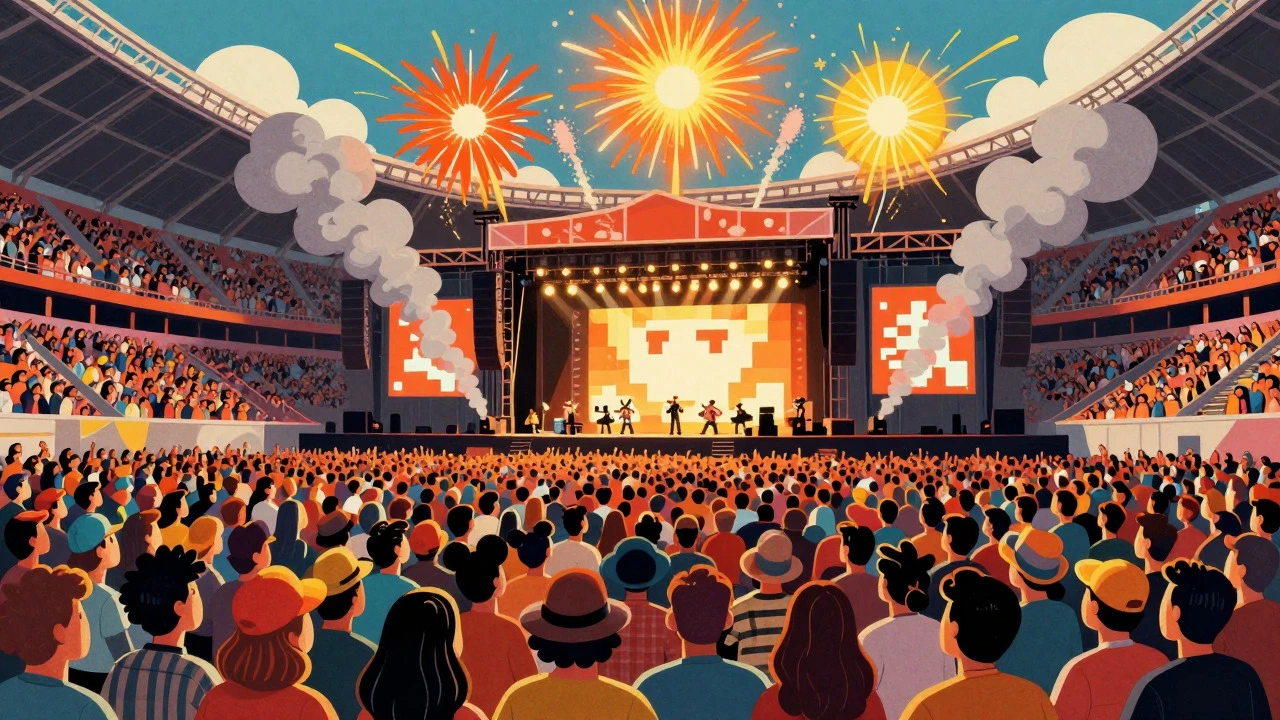

Picture this: it’s 1987. You’re standing in a sea of 60,000 people at a football stadium that hasn’t hosted a game in months. The air is thick with smoke from pyrotechnics, and a massive video screen-something you’d rarely see outside a cinema-dominates the stage. This wasn’t just a concert; it was an event that defined a decade. The 1980s didn’t just change music; it changed how we experience it live.
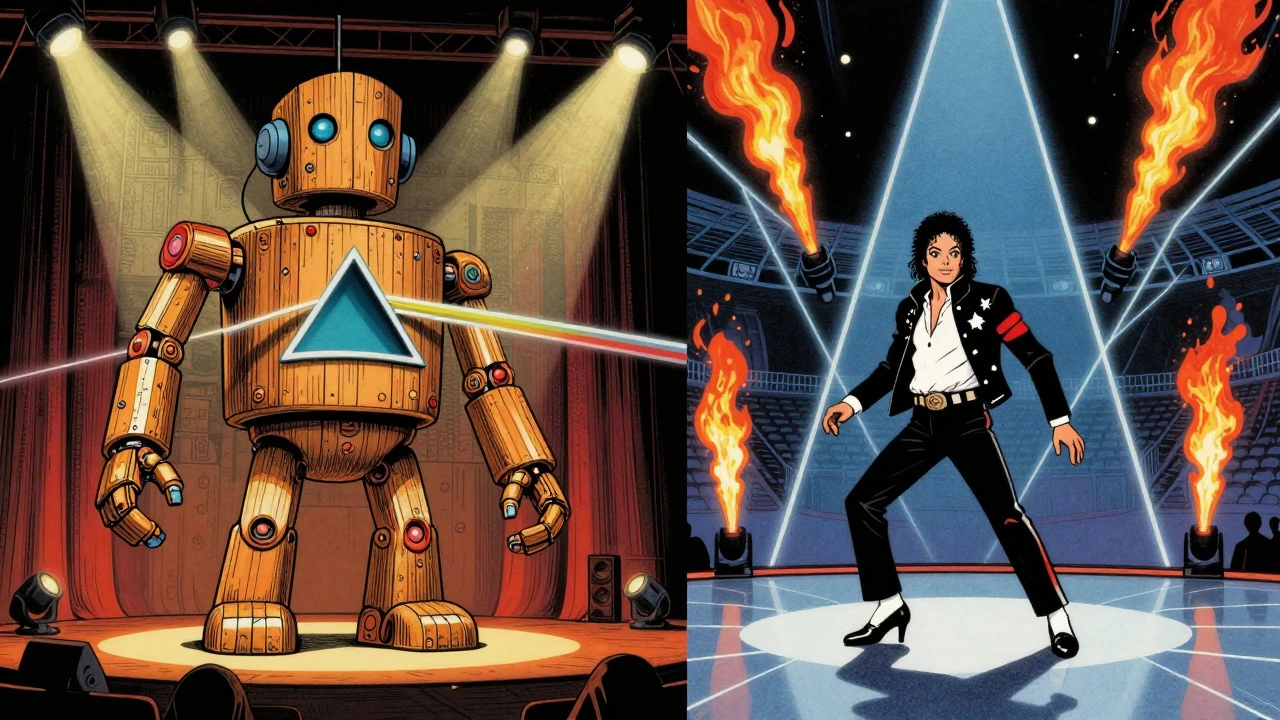
The global tour circuit of the 1980s was the birthplace of the modern mega-tour. Before this decade, big shows were occasional spectacles. By the late 80s, they were a standardized, multi-million dollar industry. Artists like Pink Floyd, a British progressive rock band known for their elaborate live productions and conceptual albums and Michael Jackson, the King of Pop who revolutionized music videos and live performance choreography weren't just playing songs; they were engineering logistical marvels that crossed continents and broke bank records. If you want to understand why today's concerts cost what they do or why artists play stadiums instead of clubs, you have to look back at this specific window of time.
The Birth of the Mega-Tour Economy
In the 1960s and 70s, bands like The Who and Led Zeppelin proved that rock acts could fill stadiums. But those were often one-off experiments or regional tours. The 1980s turned this into a business model. The "global tour circuit" emerged as a network of promoters, venues, and logistics experts who realized that if you could sell out a show in London, you could likely sell out one in Tokyo, Sydney, and New York.
The numbers tell the story. Between 1985 and 1994, the average major North American tour grossed around $55 million across 42 cities. That might not sound like much compared to today's figures, but remember: inflation. Adjusted for today's money, that’s a staggering amount. More importantly, it established the template. Artists stopped viewing touring as a promotional tool for album sales and started seeing it as the primary revenue stream. This shift is crucial. It meant that production values had to skyrocket to justify ticket prices, leading to the high-cost, high-reward environment we see now.
This era also saw the first tours cross the $100 million mark. Pink Floyd’s A Momentary Lapse of Reason Tour (1987-1989) grossed approximately $135 million. Michael Jackson’s Bad World Tour (1987-1989) brought in about $125.7 million. These weren't anomalies; they were benchmarks. They proved that a single artist could sustain a global presence for two years, moving millions of fans and generating hundreds of millions in revenue.
Defining Tours: Spectacle Over Sound
If you attended a major tour in the 1980s, you weren't just there for the music. You were there for the show. The definition of a "stadium rock" performance shifted from loud guitars to visual dominance. Let’s look at the key players who set the standard.
| Artist / Tour | Years Active | Estimated Gross | Total Attendees | Key Innovation |
|---|---|---|---|---|
| Pink Floyd - A Momentary Lapse of Reason | 1987-1989 | $135,000,000 | 4,250,000 | Massive puppetry and synchronized lighting rigs |
| Michael Jackson - Bad World Tour | 1987-1989 | $125,738,964 | 4,498,300 | Complex choreography and pyrotechnics for large crowds |
| David Bowie - Glass Spider Tour | 1987 | $86,000,000 | 3,000,000 | Theatrical stage design with a giant spider structure |
| Bruce Springsteen - Born in the USA Tour | 1984-1985 | ~$75,000,000* | 5,300,000+ | Endurance-based performances (up to 3 hours) |
| The Rolling Stones - Steel Wheels Tour | 1989 | ~$98,000,000 | Varies by source | Re-establishing legacy acts in the stadium era |
Notice the trend? It’s not just about who played the best guitar. It’s about who could move the biggest production. Pink Floyd’s tour featured enormous puppets and intricate lighting that required massive trucks to transport between countries. Michael Jackson’s Bad tour introduced a level of dance precision and special effects that made every night feel like a movie premiere. David Bowie’s Glass Spider tour literally hung a giant mechanical spider over the audience. These elements forced venues to upgrade their infrastructure, paving the way for the technical complexity of modern tours.
Bruce Springsteen took a different approach. His Born in the USA tour relied on stamina. He played three-hour sets, night after night, connecting emotionally with audiences rather than visually overwhelming them. Yet, he still drew over 5.3 million people. This proves that while spectacle was king, authenticity and endurance remained powerful draws in the 1980s circuit.
Live Aid: The Ultimate Global Event
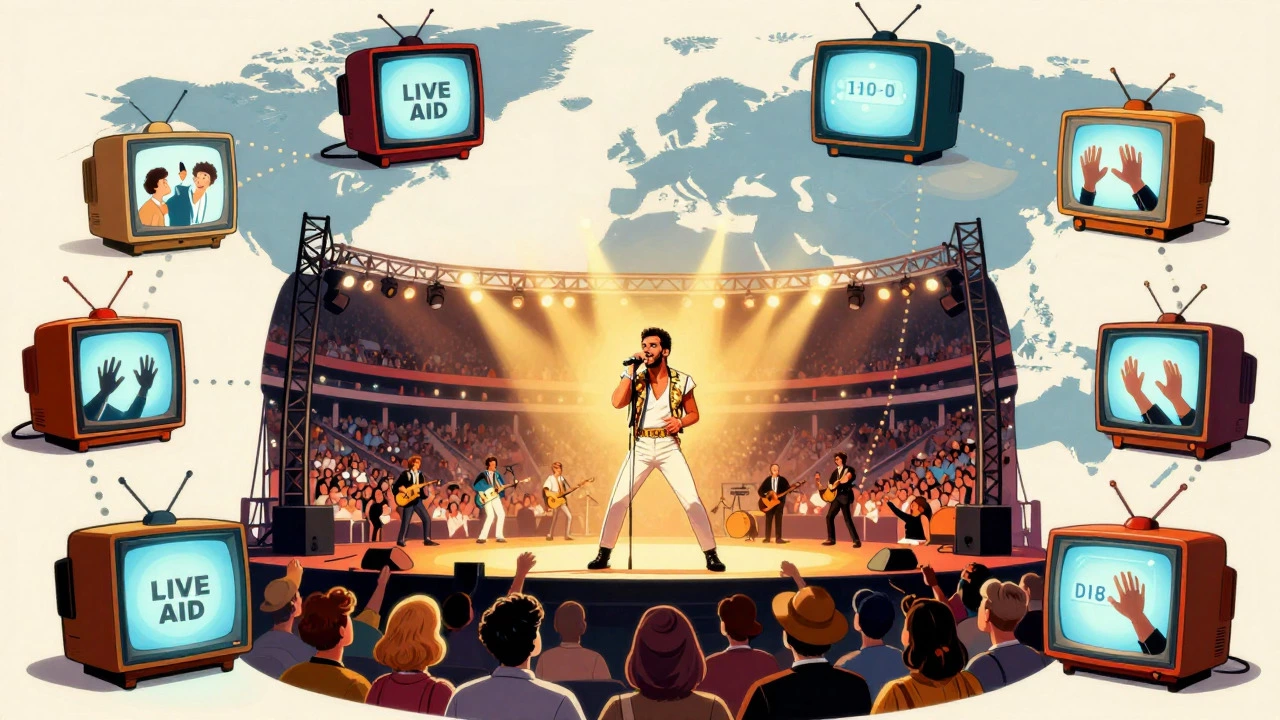
You can’t talk about the 1980s tour circuit without mentioning July 13, 1985. Live Aid, a dual-venue benefit concert held in London and Philadelphia to raise funds for famine relief in Ethiopia wasn't a traditional tour, but it used the exact same infrastructure. It was the moment the world realized that a concert could be a global media event.
Held simultaneously at Wembley Stadium in London and JFK Stadium in Philadelphia, Live Aid drew 150,000 people in person. But its true scale was digital-well, analog broadcast. Estimates suggest between 1.9 billion and 2 billion people watched on television. That’s nearly a third of the world’s population at the time. Queen’s performance at Wembley, fronted by Freddie Mercury, is widely cited as one of the greatest live performances in history. Why? Because it combined raw musical talent with the energy of a stadium crowd, all broadcast to billions.
Live Aid proved two things. First, charity could drive massive engagement. Second, the technology existed to link continents in real-time. This inspired subsequent events like Farm Aid and the Conspiracy of Hope tour. It showed that the "global circuit" wasn't just about selling tickets; it was about mobilizing culture. For artists, appearing on these stages boosted their credibility and reach in ways that no album chart could match.
Technical Evolution: From Amps to Video Walls
The 1980s saw a technological leap in live sound and visuals. In previous decades, if you sat far from the stage, you heard the echo of the crowd. In the 80s, engineers developed line-array speaker systems that delivered consistent sound quality even in open-air stadiums with 70,000 seats. This was critical for artists like U2 and Metallica, whose music relied on clarity and impact.
Video screens became essential. As stages grew larger, fans in the back rows couldn't see the performers. Large-format LED and projection screens solved this, turning concerts into multimedia experiences. Michael Jackson’s use of close-up shots during his moonwalk allowed fans in the nosebleeds to see his footwork. This innovation changed audience expectations forever. Today, if a tour doesn’t have a jumbotron, it feels incomplete. That standard was set in the 80s.
Logistics also evolved. Moving a stage setup that weighed tons across borders required new shipping regulations and local crew networks. Promoters like Live Nation’s predecessors began building relationships with international venues, creating the streamlined booking processes we see today. The 1980s tour circuit was essentially the R&D phase for the modern live entertainment industry.
Legacy: Why the 1980s Still Matter
So, why does this matter to you today? Because every headline-grabbing tour you see now-from Taylor Swift’s Eras Tour to Beyoncé’s Renaissance-stands on the shoulders of the 1980s giants. The economic model, the technical standards, and the global routing strategies were all codified in this decade.
The 1980s taught the industry that live music is a premium product. It justified higher ticket prices because the experience was unmatched. It also diversified the types of artists who could go global. While rock dominated, pop stars like Madonna and Michael Jackson proved that non-rock acts could command stadium audiences. This opened the door for hip-hop, R&B, and Latin artists to enter the global circuit in the following decades.
Furthermore, the 1980s established the idea of the "tour as a brand." Fans didn't just buy a ticket; they bought into a narrative. Whether it was Springsteen’s working-class anthem or Bowie’s theatrical alter-ego, the tour was an extension of the artist’s identity. This psychological connection drives fan loyalty today, leading to repeat attendance and merchandise sales that often exceed ticket revenue.
In short, the 1980s global tour circuit wasn't just a series of concerts. It was a cultural and economic revolution. It transformed music from a recorded medium into a shared, large-scale communal experience. When you walk into a stadium today, you’re walking into a space designed by the innovations of the 1980s.
Who had the highest-grossing tour of the 1980s?
Pink Floyd’s A Momentary Lapse of Reason Tour (1987-1989) is widely considered the highest-grossing tour of the decade, with estimated earnings of approximately $135 million. Michael Jackson’s Bad World Tour followed closely with around $125.7 million.
How did Live Aid influence the concert industry?
Live Aid demonstrated the power of global broadcasting and charity-driven events. It proved that concerts could reach billions of viewers worldwide, setting a precedent for future benefit concerts and highlighting the importance of media rights in live events.
Why were stadiums important in the 1980s?
Stadiums allowed artists to scale their revenue significantly. With capacities ranging from 50,000 to 80,000, they enabled tours to generate millions in gross revenue per leg. This shift moved the industry focus from club tours to large-scale, high-production spectacles.
Did any non-rock artists dominate the 1980s tour circuit?
Yes. Michael Jackson and Madonna were pivotal in bringing pop music to the stadium level. Their tours utilized choreography, fashion, and video technology to create unique experiences that rivaled rock concerts in scale and revenue.
What role did technology play in 1980s concerts?
Technology was central. Advances in sound reinforcement allowed clear audio in large venues, while video screens ensured visibility for all attendees. Pyrotechnics and complex lighting rigs became standard, raising the bar for production quality.
How does the 1980s tour circuit compare to today?
While today's tours earn more due to inflation and dynamic pricing, the 1980s established the core model: multi-continent routing, stadium venues, and high-tech production. The fundamental economics and logistics remain largely unchanged.