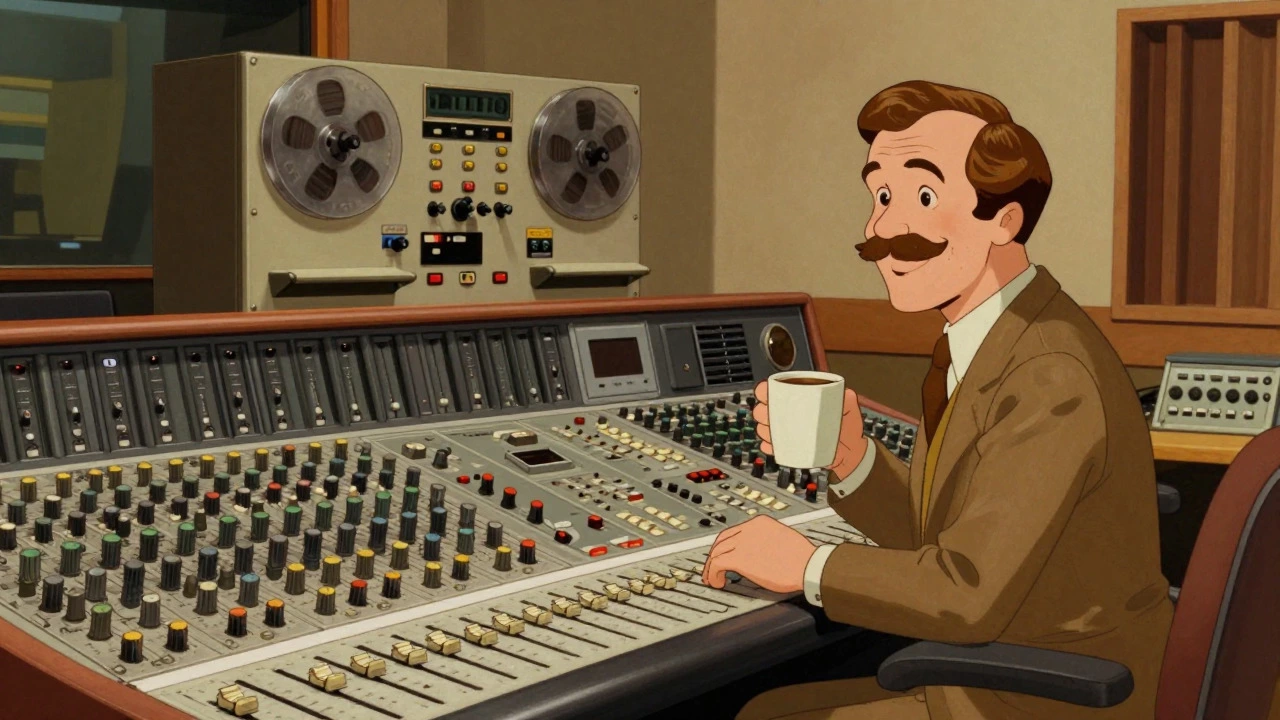

Imagine trying to build a skyscraper with only four floors. That was the reality for most record producers in the mid-1960s. If you wanted more instruments or vocals, you had to glue those four tracks together into one and start over, losing flexibility and quality with every step. Then came the 1970s, a decade that didn't just tweak the process-it completely rewired it. The introduction of multitrack recording on 16-track and 24-track analog tape machines turned the recording studio from a simple capture room into a complex instrument itself. This shift allowed artists to layer dozens of sounds, creating dense, polished soundscapes that defined the era's biggest hits.
This wasn't just about having more buttons on a console. It was a fundamental change in how music was constructed, mixed, and consumed. From the technical hurdles of tape hiss to the creative explosion of albums like Fleetwood Mac’s *Rumours*, the 1970s set the standard for modern production. Let’s look at exactly how this technology evolved and why it matters today.
From 8 Tracks to 24: The Hardware Leap
To understand the magnitude of the 1970s shift, you have to look at what came before. In the early 1960s, studios mostly used 4-track machines. By the late 60s, 8-track became the high-end standard. But even 8 tracks were restrictive. You had to make permanent decisions early in the process, bouncing multiple instruments onto a single track to free up space for others. This "bouncing" degraded audio quality because each generation added noise and lost high-frequency detail.
The turning point arrived with the commercialization of wider tape formats. Ampex introduced the MM-1000, a 16-track recorder using 2-inch magnetic tape, in 1966. While expensive-retailing between $10,000 and $15,000-it proved that higher track counts were viable. By 1968, MCI built the first 24-track recorder on 2-inch tape, installed at TTG Studios in Los Angeles. This machine became the gold standard throughout the 1970s.
| Year | Track Count | Tape Width | Key Manufacturer | Impact on Production |
|---|---|---|---|---|
| 1966 | 16 | 2-inch | Ampex (MM-1000) | Reduced need for early bouncing; allowed separate drum mics. |
| 1968 | 24 | 2-inch | MCI | Became industry standard; enabled complex overdubs. |
| 1973 | 4 (Home) | 1/4-inch (Quad converted) | TEAC | First affordable home multitrack options. |
| 1979 | 4 | Cassette | TASCAM (Portastudio) | Democratized recording for bedroom producers. |
With 24 tracks available, engineers no longer needed to submix drums or guitars early on. Each microphone could have its own lane. This meant mix decisions could be postponed until the final stage, giving producers unprecedented control over the sonic balance. The Record Plant in New York was among the first to go 24-track in 1970, setting a trend that quickly spread to major facilities worldwide.
Silencing the Hiss: The Role of Dolby A
There was a catch to adding more tracks: noise. Magnetic tape generates a constant background hiss. When you narrow the width of each track to fit more of them on the same 2-inch tape, the signal-to-noise ratio drops. A 24-track machine produces significantly more hiss than an 8-track. Without intervention, the background noise would swamp quiet passages and muddy the overall mix.
The solution was Dolby A-type noise reduction. A professional dynamic range compression system designed to reduce tape hiss by 10-15 dB. Introduced in the late 1960s, Dolby A became essential equipment in the 1970s. Unlike consumer systems like Dolby B (which offered about 6 dB improvement), Dolby A worked across multiple frequency bands, preserving audio fidelity while crushing the noise floor.
By 1972, Dolby introduced the M-Series units specifically for multitrack installations. The result was striking: a 16-track recording processed with Dolby A could actually sound cleaner than a traditional two-track stereo master recorded without it. This technological fix allowed producers to push levels lower and capture more dynamic range, contributing to the "clean" yet powerful sound associated with classic rock and pop records of the era.
Consoles and the "Virtual Earth" Mixer
Tape machines alone couldn’t handle the complexity of 24 inputs. Mixing consoles had to evolve in parallel. Early mixers suffered from crosstalk and noise when many channels were open simultaneously. The 1970s saw the widespread adoption of "virtual earth" summing circuits.
In a virtual earth mixer, each input channel connects to a low-impedance point (the "earth") rather than directly to other channels. This design drastically reduced interference between tracks. Combined with expanded auxiliary sends and sophisticated routing, these consoles allowed engineers to send individual tracks to different effects processors or headphone mixes independently. This flexibility was crucial for live-sounding overdubs, where musicians needed to hear specific parts clearly while playing along.
Breaking the Limit: SMPTE Timecode and Sync
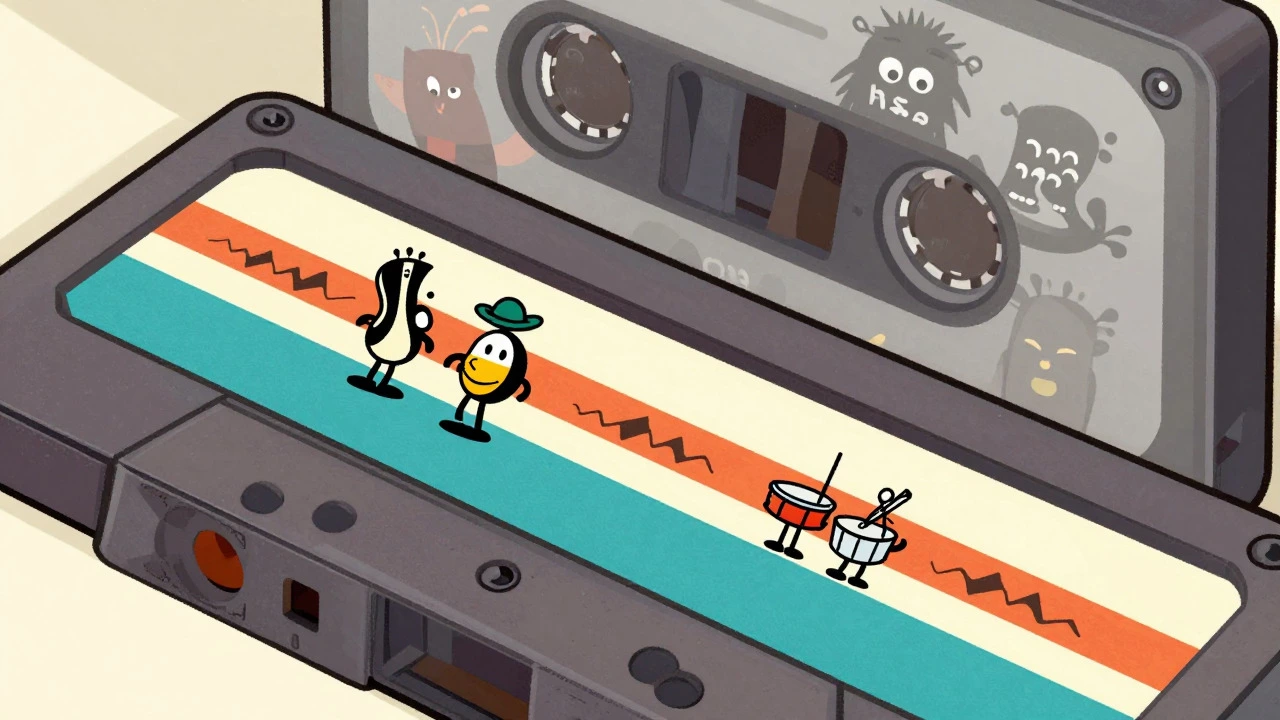
Even 24 tracks weren’t enough for some ambitious projects. Orchestral recordings, large choirs, and dense progressive rock arrangements often required more lanes. The breakthrough came with SMPTE timecode. A digital timing signal standardized in the early 1970s to synchronize audio and video devices.
SMPTE timecode allowed engineers to lock multiple tape machines together perfectly. By reserving one track on each machine for the timecode signal, studios could sync two 24-track decks to create a 48-track setup (effectively 46 audio tracks). This technique made it possible to record symphonies with separate tracks for strings, brass, woodwinds, and percussion, all editable individually. It also paved the way for complex video synchronization in film scoring, a practice that became standard in the late 1970s.
The Home Studio Revolution
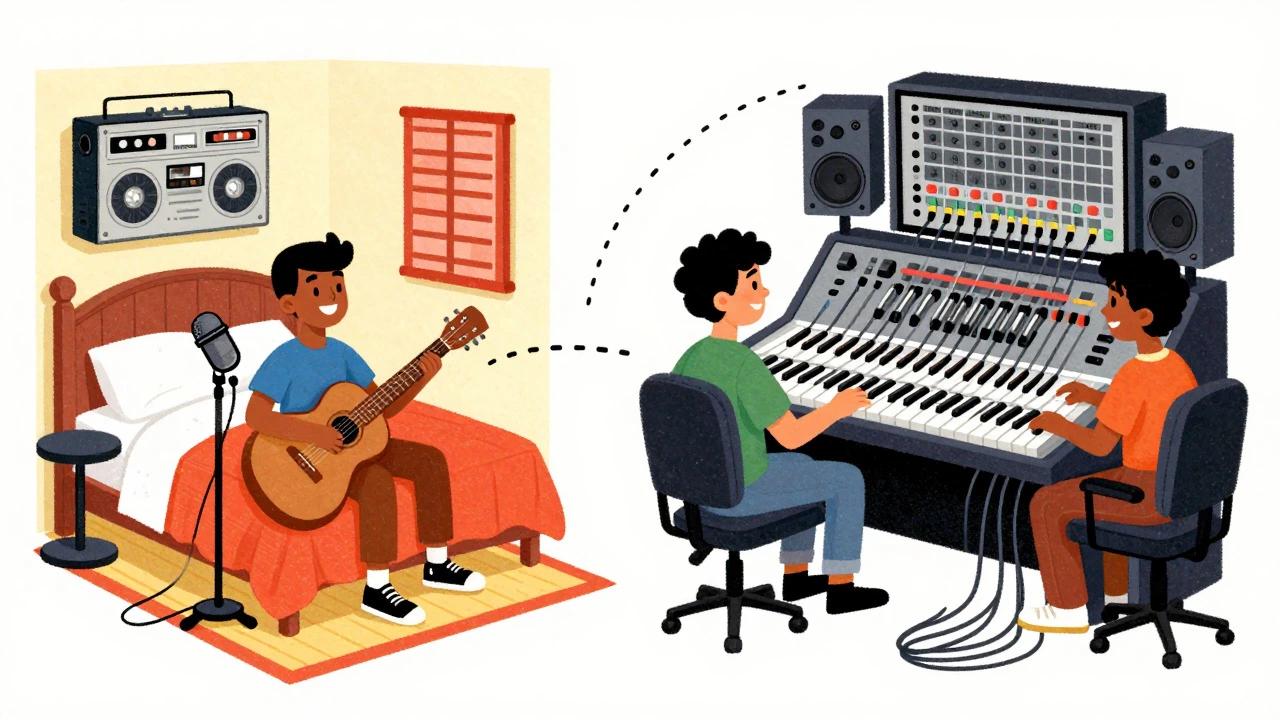
While professional studios were racing toward 48 tracks, another revolution was happening in living rooms. In 1972, TEAC began marketing consumer quadraphonic tape recorders. By 1973, they converted these machines for use as home multitrack recorders, offering 4 tracks on reel-to-reel tape. This gave hobbyists access to basic overdubbing capabilities previously reserved for pros.
The capstone of this movement arrived in 1979 with the TASCAM Portastudio. Using compact cassette tapes running at double speed, it delivered four tracks of surprisingly decent fidelity at a fraction of the cost of reel-to-reel gear. The Portastudio democratized recording, allowing punk bands, indie artists, and solo musicians to produce their own demos and albums. This shift laid the groundwork for the DIY culture that would explode in the 1980s and eventually lead to digital audio workstations (DAWs).
Creative Impact: Albums That Defined the Era
The technical advancements of the 1970s directly influenced the artistic output of the decade. Producers treated the studio as an instrument, layering sounds that could never be reproduced live.
- Pink Floyd - *The Dark Side of the Moon* (1973): Used 24-track capabilities to weave complex tape loops, synthesizers, and vocal harmonies into a seamless auditory experience. The precision of Dolby A and virtual earth mixers ensured clarity despite the density.
- Fleetwood Mac - *Rumours* (1977): Recorded primarily on 24-track machines, the album features intricate vocal overdubs and layered instrumentation that relied on the ability to isolate and adjust individual parts during mixing.
- Queen - *A Night at the Opera* (1975): Bohemian Rhapsody famously utilized extensive overdubbing, stacking dozens of vocal takes to create a fake choir effect, something impossible without high-track-count analog systems.
These records weren't just songs; they were architectural feats of sound engineering. The lushness and polish became the new benchmark, pushing other artists to adopt similar techniques.
Limitations and Legacy
Despite its power, 1970s analog multitracking had limits. Tape wear, azimuth errors, and mechanical drift required constant maintenance. Budget constraints still forced producers to make tough choices about which tracks to keep. And while 48-track setups existed, they were rare and expensive.
Yet, the legacy is undeniable. The concepts developed in the 1970s-separate tracking, non-destructive editing via bounce reduction, synchronized multi-machine workflows, and noise reduction-are still central to modern digital production. Even though we now use software instead of magnetic tape, the workflow remains rooted in the innovations of this transformative decade.
What was the standard number of tracks in a professional studio in the 1970s?
By the early 1970s, 16-track machines were becoming common, but 24-track recording on 2-inch tape became the dominant standard throughout the decade. Some elite studios experimented with 32 or even 48 tracks using synchronized machines.
Why was Dolby noise reduction so important in the 1970s?
As track counts increased, the width of each track on the tape decreased, leading to higher tape hiss. Dolby A-type noise reduction reduced this hiss by 10-15 dB, allowing for cleaner recordings and greater dynamic range, which was essential for the polished sound of the era.
How did SMPTE timecode change multitrack recording?
SMPTE timecode allowed engineers to synchronize multiple tape machines perfectly. This enabled studios to link two 24-track machines together to create up to 48 tracks, facilitating massive orchestral recordings and complex productions that exceeded the capacity of a single deck.
When did home multitrack recording become affordable?
Affordable home multitrack recording emerged in the mid-to-late 1970s. TEAC released converted quadraphonic machines in 1973, and the TASCAM Portastudio launched in 1979, bringing four-track recording to consumers via compact cassette technology.
What is a "virtual earth" mixer?
A virtual earth mixer is a circuit design used in mixing consoles that reduces noise and crosstalk between channels. It became standard in the 1970s to handle the increased number of inputs from 16- and 24-track tape machines, ensuring clean signal summation.


