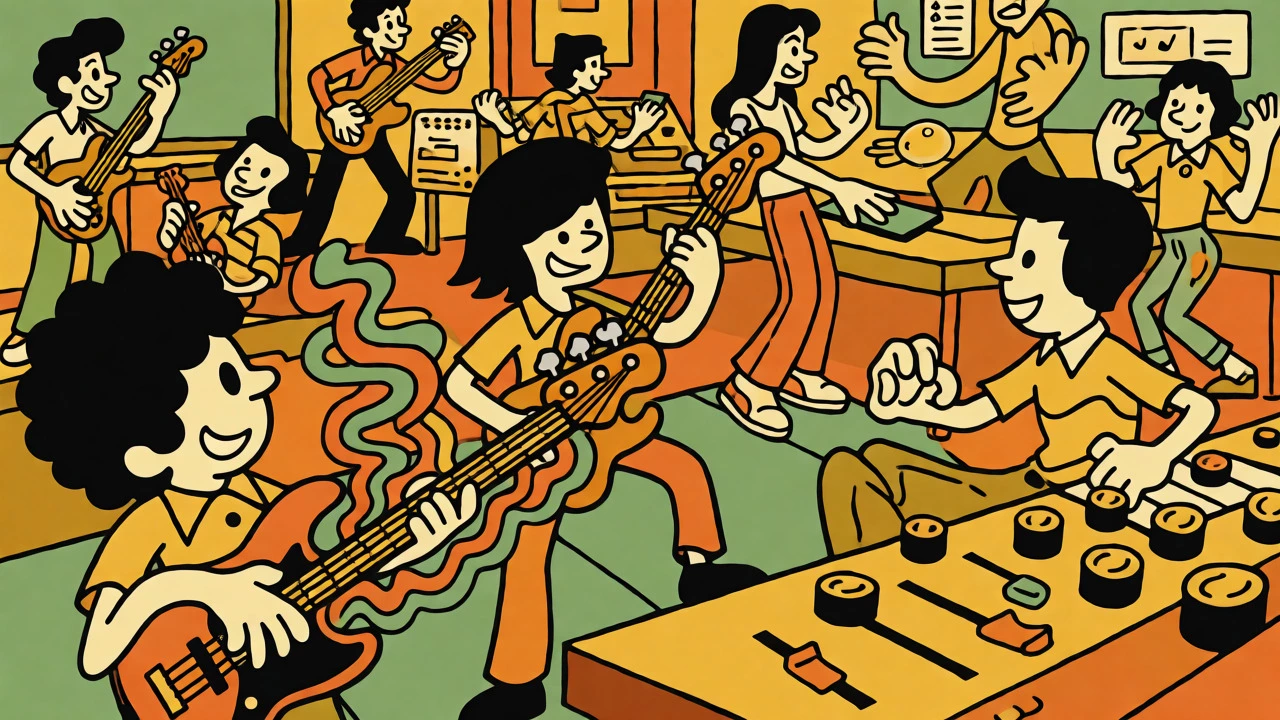

Walk into a modern classroom or rehearsal space, and you might hear a student playing a syncopated bass line that sounds suspiciously like James Brown’s band. Or maybe they’re layering tracks in a Digital Audio Workstation (DAW) to mimic the dense production of a Bee Gees hit. The 1970s weren’t just a decade of bell-bottoms; they were a seismic shift in how music was made, recorded, and consumed. For educators, this era offers a goldmine for teaching complex musical concepts without losing student engagement. But here’s the catch: simply playing "Bohemian Rhapsody" isn't enough. You need a structured music education syllabus that treats these genres as rigorous academic and practical disciplines.
If you are designing a curriculum, you likely face a common dilemma. How do you balance historical context with hands-on performance? How do you ensure students understand the cultural weight of reggae while also learning to play its off-beat "skank" rhythm? This guide breaks down how to build a syllabus that respects the complexity of 1970s genres-from the tight pockets of funk to the sprawling structures of progressive rock-while leveraging modern pedagogical models like Lucy Green’s informal learning approach.
Why the 1970s Belong in Your Curriculum
You might ask, "Why focus on one specific decade?" The answer lies in the technological and social explosion that occurred between 1970 and 1979. This period marked the transition from analog simplicity to multitrack complexity. By 1970, 16-track recording systems became standard, allowing producers to layer instruments in ways previously impossible. This technical leap directly influenced the musical language. Funk required precise interlocking parts because each instrument had its own track to shine. Progressive rock utilized synthesizers to create textures that didn't exist in nature.
Educationally, this decade bridges the gap between traditional notation-based training and the ear-based learning most popular musicians use today. The U.S. National Core Arts Standards emphasize Creating, Performing, Responding, and Connecting. A 1970s unit hits all four. Students perform by learning grooves, respond by analyzing production choices, connect by understanding the social movements behind punk or disco, and create by composing their own multi-section pieces. It’s not nostalgia; it’s a toolkit for modern musicianship.
Deconstructing the Genres: From Funk to Punk
A robust syllabus doesn't treat "the 70s" as a monolith. Each genre requires distinct technical attention. Let's look at three core areas often included in Funk, a rhythm-driven style built on syncopated bass lines and drumbeats, Disco, a beat-driven dance style characterized by four-on-the-floor kick drums, and Punk Rock, stripped-down hard rock with hostile or politically critical lyrics.
| Genre | Core Musical Characteristic | Suggested Classroom Activity |
|---|---|---|
| Funk | Syncopated bass/drum interlock; emphasis on "the one" (beat 1). | Transcribe a two-bar ostinato. Have students layer guitar and keyboard rhythms, focusing on articulation rather than note accuracy. |
| Disco | Four-on-the-floor kick; open off-beat hi-hat; string/horn pads. | Build a groove in a DAW. Analyze how repetition and breakdowns serve the dance floor function. |
| Punk | Power chords; fast tempo; distorted guitars; short forms. | Compose a 60-second song using only three chords. Discuss how aesthetic minimalism serves lyrical impact. |
| Reggae | Off-beat "skank" accompaniment; heavy bass prominence; one-drop drum pattern. | Practice the detached chord technique. Explore Jamaican colonial history to contextualize the rhythm's cultural roots. |
| Prog Rock | Changing meters; extended forms; synthesizer timbres. | Map the form of a 10-minute track. Compose a piece with contrasting sections and odd time signatures. |
Notice how the activities move beyond passive listening. In funk, the goal is "pocket"-the collective feel of the rhythm section. If students can’t lock in together, they haven’t learned the genre, regardless of how many notes they know. In punk, the challenge is restraint. Can they convey anger or urgency without shredding solos? These distinctions force students to think critically about intent versus execution.
The Informal Learning Model in Practice
Traditional music education often starts with scales and sight-reading. For 1970s pop, that’s backward. Most professional session musicians from that era learned by copying records. Lucy Green’s research supports this. Her model suggests five principles: students learn music they like; they copy recordings by ear; they work in friendship groups; they integrate performing, listening, and composing; and they use unstructured learning methods.
How does this fit a syllabus? Start Week 1 with student-selected tracks. Don’t dictate the playlist immediately. Ask them to bring in a 70s song they love. Then, reverse-engineer it. Instead of handing out sheet music, have them figure out the bass line by ear. This builds aural skills faster than any worksheet. Once they’ve grasped the feel, introduce formal theory. Show them why that bass line works against the drum pattern. This hybrid approach keeps motivation high while ensuring technical depth.
Be careful, though. Informal learning doesn’t mean no teaching. You still provide scaffolding. If a group struggles with a complex disco arrangement, demonstrate the string pad voicing. If they’re stuck on a reggae skank, show the right-hand technique. The teacher becomes a coach and consultant, not just a lecturer.
Recording as an Instrument
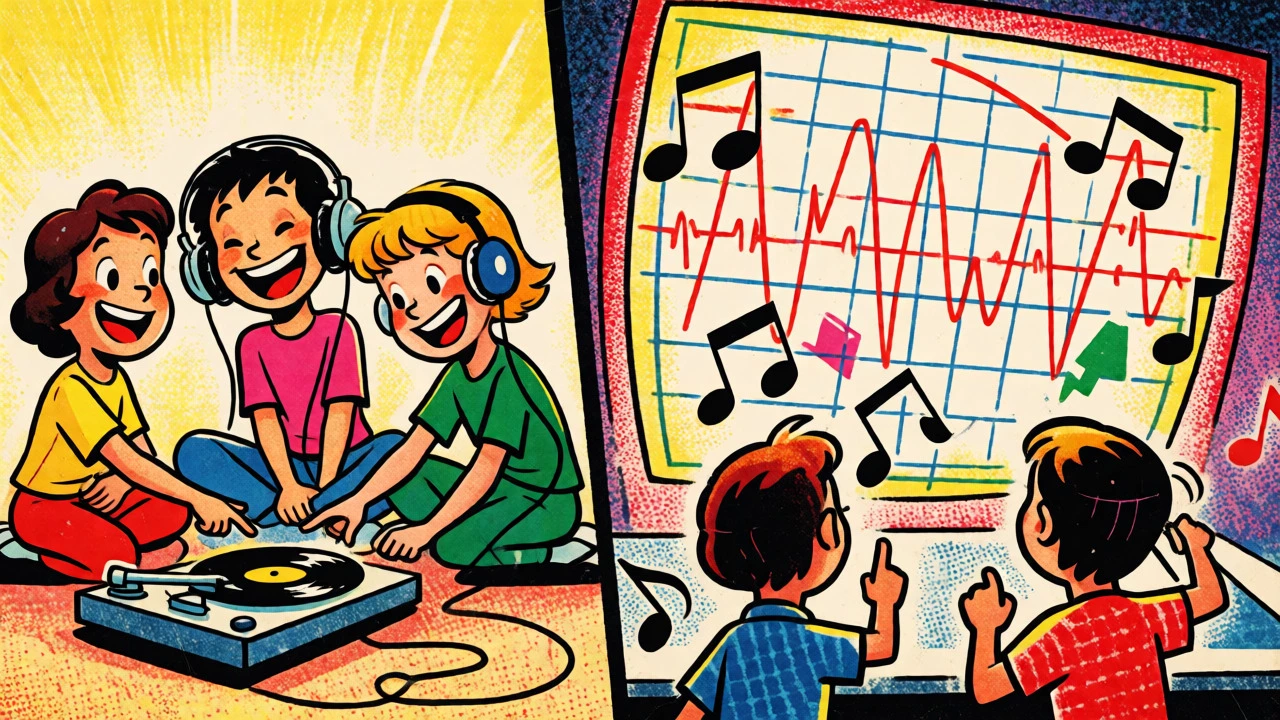
You cannot teach the 1970s without discussing technology. The studio became an instrument. Phil Spector’s "Wall of Sound" evolved into the cleaner, punchier productions of disco and funk. Multitracking allowed for overdubbing vocals and harmonies. Today’s students use DAWs like GarageBand, Logic Pro, or Ableton Live. Use these tools to simulate historical workflows.
Assign a project where students record a basic rhythm section live. Then, have them overdub other parts. Compare the results to a digital-only composition. Why did bands in 1975 record drums and bass together? Because the interaction created a human feel that quantization kills. Have students apply compression and EQ to see how it changes the groove. Does boosting the low-end make the funk feel heavier? Does adding reverb to the snare create a sense of space? These decisions are compositional choices, not just technical tweaks.
Cultural Context and Inclusivity
A major pitfall in teaching 1970s music is ignoring the people who created it. Much of the era’s innovation came from Black, Caribbean, working-class, and queer communities. Disco wasn’t just a white club phenomenon; it was rooted in gay and Black underground scenes. Reggae emerged from post-colonial Jamaica. If your syllabus only lists Led Zeppelin and The Eagles, you’re missing half the story.
Integrate critical listening that addresses race, class, and gender. When studying punk, discuss its anti-establishment stance and how it opened doors for women and minorities in rock. When studying soul, highlight the vocal improvisation traditions derived from gospel. Use primary sources: interviews, liner notes, and contemporary reviews. Avoid presenting commercial success as the only metric of value. A local funk band that never charted might offer more musical insight than a one-hit wonder.
Assessment Strategies That Work
Standardized tests don’t capture musicality. Your assessment rubric should reflect multiple intelligences. Consider a weighted model:
- Musical Interpretation & Ensemble Interaction (25%): Can they hold a groove? Do they listen to others?
- Composition/Arrangement (20%): Did they create something original or thoughtfully arranged?
- Listening & Analysis (20%): Can they identify instrumentation and structure?
- Production Technique (15%): Is the mix balanced? Are effects used intentionally?
- Historical Contextualization (10%): Do they understand the social forces behind the music?
- Reflective Process (10%): Can they articulate what they learned and how they grew?
This multimodal approach allows students with different strengths to succeed. A student who struggles with guitar might excel at mixing or writing lyrics. Rotate roles within groups so everyone gets a chance to be the producer, the historian, and the performer.
Troubleshooting Common Syllabus Issues
Teachers often worry about equipment costs. You don’t need a vintage Moog synthesizer. Software emulations are free or cheap. Another concern is copyright. Ensure you use licensed educational platforms for streaming analysis clips. Finally, watch out for superficial imitation. Students might copy the clothes but miss the soul. Push them to explain *why* a sound choice fits the emotion of the piece. If they can’t justify it, they haven’t truly learned it.
The 1970s offer a rich tapestry for music education. It’s a decade where technology met raw human expression. By structuring your syllabus around active creation, critical listening, and cultural awareness, you give students more than just history lessons. You give them the tools to become versatile, empathetic, and skilled musicians in a world that still echoes with the sounds of 40 years ago.
Do I need advanced equipment to teach 1970s production techniques?
No. Modern free DAWs like GarageBand or Audacity can simulate multitrack recording, overdubbing, and basic mixing. The key is understanding the workflow-recording separate parts and combining them-not the vintage hardware itself.
How do I handle students who prefer modern pop over 1970s music?
Use the informal learning model. Allow students to select a modern song and trace its rhythmic or harmonic roots back to 1970s genres. For example, show how Beyoncé’s "Cuff It" uses disco elements. This creates a bridge between their current tastes and the historical material.
Is sight-reading necessary for teaching funk or punk?
Not initially. These genres rely heavily on ear training and rhythmic feel. Introduce lead sheets or chord charts after students have internalized the groove. Sight-reading can be a secondary skill, especially for students who struggle with traditional notation.
How can I make reggae accessible if students don't know Jamaican culture?
Start with the music’s emotional and physical impact before diving into history. Teach the "one-drop" rhythm and the off-beat skank physically. Then, use documentaries or primary texts to explore the socio-political context. This ensures the cultural lesson feels relevant, not abstract.
What is the biggest mistake teachers make with 1970s curricula?
Treating the decade as a homogeneous "classic rock" block. This erases the distinct contributions of funk, disco, reggae, and punk, often marginalizing Black and female artists. Always differentiate genres and highlight diverse origins.


