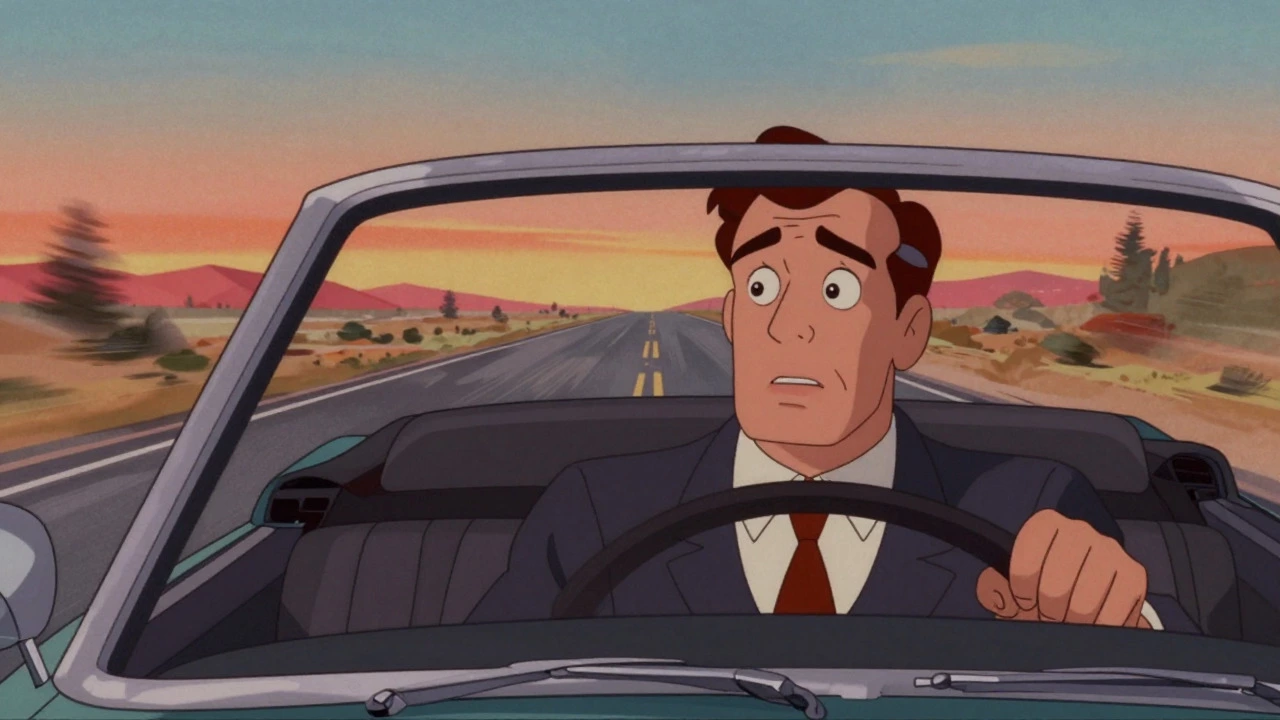

Imagine driving down a highway, windows down, and suddenly realizing you’ve been sleepwalking through your own life. That specific, terrifying clarity is the engine behind Talking Heads’s masterpiece, Once in a Lifetime. It’s not just a song; it’s a four-minute existential crisis set to a funk beat that refuses to let go. Released on the 1980 album Remain in Light, this track didn’t just top charts-it rewired how we think about pop music. If you’ve ever felt the ground shift beneath your feet while standing perfectly still, this song is speaking directly to you. We’re going to break down why this collaboration between David Byrne and Brian Eno remains the gold standard for art-rock innovation, decades after its release.
The Studio Alchemy of Remain in Light
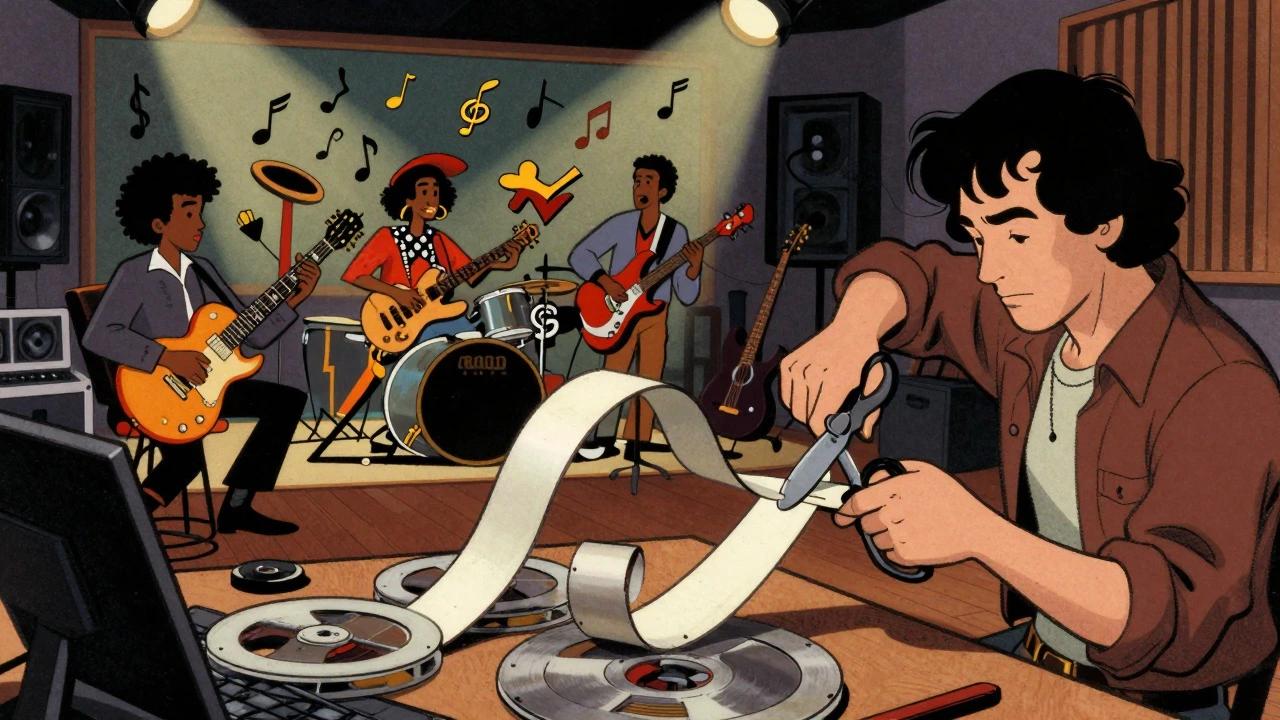
Creating Remain in Light wasn’t like recording a typical rock record. There were no traditional demos handed out at rehearsal. Instead, producer Brian Eno and the band spent weeks jamming in a New York studio, capturing hours of raw tape. Eno then acted less like a conductor and more like a sculptor, chopping these tapes into loops and isolating the "best parts." This method mirrored the avant-garde techniques of the late 1970s but applied them to pop structures. The result was a sonic fusion that critics now label as new wave, funk, and world music all at once.
The rhythmic backbone came from drummer Chris Frantz and bassist Tina Weymouth. They drew heavy inspiration from Fela Kuti, the Nigerian pioneer of Afrobeat. Kuti’s songs often ran ten minutes or longer, layering complex percussion over locked grooves. Talking Heads compressed that cyclical logic into a tight, radio-friendly format. You get the hypnotic, trance-like quality of African polyrhythms without needing an hour to listen. It’s efficient, urgent, and incredibly danceable.
Anatomy of the Groove
At the heart of the track is a two-note bass hook so solid that Guardian writer David Bridie famously said you could "drape a coat on it." Weymouth’s bassline doesn’t wander; it anchors the entire composition. Over this foundation, guitars and keyboards play interlocking patterns rather than strumming standard chords. This creates a dense lattice of sound where every instrument has a specific, repetitive job. It’s minimalist in execution but maximalist in texture.
Unlike many mainstream rock hits of the early 1980s that relied on big choruses and dynamic crashes, Once in a Lifetime builds tension through subtle additions. The volume stays relatively constant, but the intensity rises because of what gets added to the mix, not how loud it gets. This approach demands active listening. You have to pay attention to the spaces between the notes to hear the magic happen. It’s a bold choice for a single, proving that pop music could be intellectually stimulating without being inaccessible.
David Byrne’s Preacher Persona
If the groove is the body, David Byrne’s vocals are the nervous system. His delivery is half-spoken, half-sung, modeled on the cadence of evangelical preachers he heard on Southern radio. He reportedly rented a car and drove through the American South, collecting the melodic speech rhythms of "fire and brimstone" sermons. These rhetorical patterns shaped the lyric flow, turning the song into a secular sermon.
The verses use conditional statements-"You may find yourself..."-which mimic a call-and-response structure. The congregation isn’t there physically, but they exist in the second-person "you." Byrne isn’t singing a melody in the traditional sense; he’s chanting a mantra. The chorus, "Same as it ever was," repeats like a prayer or a curse. This performance style bridges the gap between rock singing and conceptual theater. It’s unsettling, hypnotic, and deeply human. In live performances, especially in the film Stop Making Sense, Byrne leans into this persona even harder, altering lyrics slightly to fit the moment. One line changes from "time isn’t holding up" to "time isn’t holding us," showing that the text is flexible, living material rather than a fixed script.
Existential Dread and Consumer Critique
What are these lyrics actually saying? On the surface, they list trophies of middle-class success: a large automobile, a beautiful house, a beautiful wife. Critics like Steve Huey read this as a commentary on the drudgery of living according to social expectations. We chase these items thinking they will bring fulfillment, only to realize we’re stuck in a loop. The water imagery in the refrain adds another layer, suggesting baptismal purification or being overwhelmed by forces beyond our control.
There’s a fascinating tension here. Byrne has stated the song is "pretty much about what it says," rejecting overly cryptic interpretations. Yet, fans and scholars continue to layer meanings onto it. Some see it as a critique of late capitalism; others view it as a personal mid-life crisis captured in real-time. A Reddit user described the feeling as "functioning on autopilot" until a sudden realization hits: "My God, what have I done?" This ambiguity is a hallmark of art-rock. It allows the listener to project their own anxieties onto the track, making it feel personally relevant regardless of the decade.
| Element | Description | Influence |
|---|---|---|
| Bassline | Repetitive two-note hook, minimal movement | Afrobeat (Fela Kuti) |
| Vocals | Spoken-word, preacher cadence, non-melodic chant | Southern Gospel / Performance Art |
| Rhythm | Pulsating 4/4 with syncopated accents | Funk / World Music |
| Production | Tape loops, isolated jams, layered textures | Avant-garde / Minimalism |
Visual Legacy and Cultural Impact
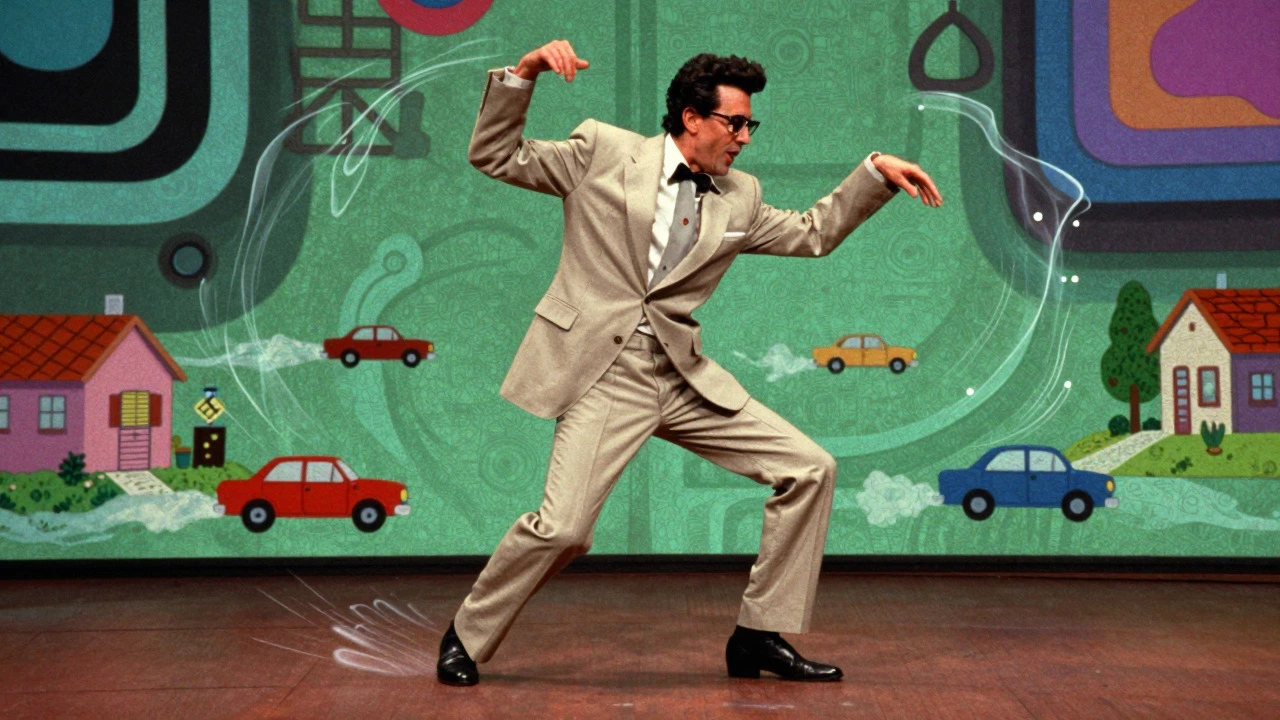
You can’t talk about this song without mentioning the video. Directed by Jean-Michel Baudry and David Byrne, it features Byrne in a suit performing spastic, ritualistic movements against green-screen backgrounds. It combined television-era visual language with avant-garde choreography. At the time, MTV was barely starting, and this video became one of its defining moments. It showed that a music video could be a piece of performance art, not just a promotional tool.
The song’s cultural footprint extends far beyond the 1980s. NPR included it in their list of the 100 most important works of American music of the 20th century. That places it alongside classics from jazz, blues, and rock ‘n’ roll. Even today, it appears in films and trailers, including a notable use in a documentary about George W. Bush, highlighting its political and existential overtones. The fact that Gen Xers, Millennials, and Gen Z listeners all cite it as a favorite proves its durability. It’s not a museum piece; it’s a living document of modern anxiety.
Why It Still Matters in 2026
We live in an era of information overload and rapid change. The feeling of time moving "inexplicably fast" is more acute now than it was in 1980. When Byrne sings about looking around and wondering how he got there, he’s voicing the collective sentiment of anyone who has scrolled through their life on autopilot. The song offers no easy answers, which is exactly why it comforts people. It validates the confusion.
For musicians, it remains a masterclass in arrangement. How do you make a simple bassline interesting? How do you build a climax without increasing volume? How do you deliver lyrics that are both conversational and poetic? Once in a Lifetime provides the blueprint. It’s a reminder that innovation doesn’t always mean using the newest technology. Sometimes, it means stripping away the excess and focusing on the core human experience.
Who wrote "Once in a Lifetime"?
The song was co-written by all members of Talking Heads-David Byrne, Chris Frantz, Jerry Harrison, and Tina Weymouth-along with producer Brian Eno. The collaborative nature of the writing process was central to its unique sound.
What genre is "Once in a Lifetime"?
It is primarily classified as art-rock and new wave, but it heavily incorporates elements of funk, Afrobeat, and world music. This multi-genre blend is a key reason it stands out from other pop songs of the era.
Is the song religious?
While the vocal delivery mimics the style of evangelical preachers, the content is largely secular. Fans often describe it as an "Atheist Gospel," using religious musical tropes to explore existential and philosophical themes rather than theological ones.
Why does David Byrne speak instead of sing?
Byrne adopted a spoken-word style inspired by Southern radio sermons. This technique allowed him to emphasize the rhythm of the words and create a sense of urgency and prophetic warning, distinguishing the track from conventional melodic rock songs.
What is the meaning behind the lyrics?
The lyrics depict a person realizing they have achieved societal markers of success (car, house, spouse) but feel empty inside. It’s a critique of consumerism and a reflection on the passage of time, urging listeners to wake up from their automatic lives.


