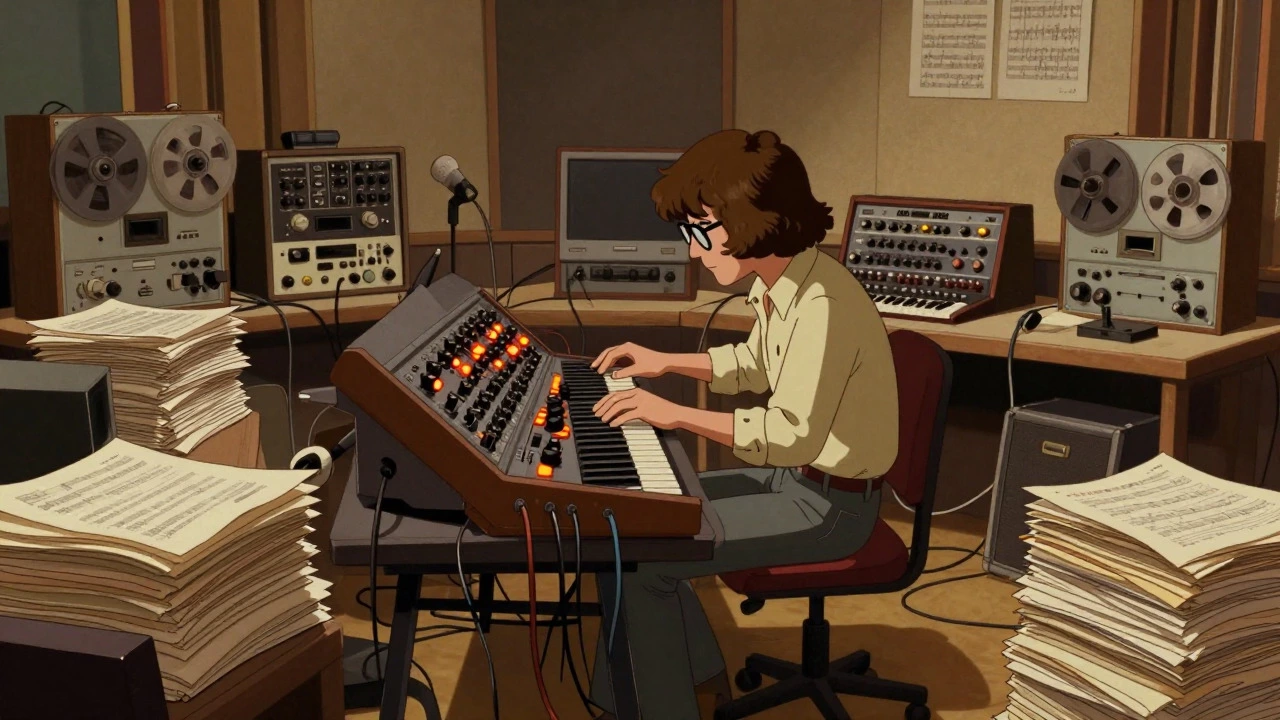

Picture this: it’s 1974. You’ve just bought a Moog Minimoog. It looks like a spaceship cockpit. There are sliders everywhere, but no preset buttons. No digital screens telling you what to do. If you wanted to make that iconic bass sound from your favorite record, you couldn’t just download a patch file. You had to understand electricity, signal flow, and music theory all at once. This was the reality of synth education in the 1970s.
The ecosystem of learning how to use these new machines wasn’t built on YouTube tutorials or Reddit threads. It was built on thick paper manuals, dealer-sponsored clinics, televised demonstrations, and hands-on workshops. Companies like ARP Instruments and Moog Music didn’t just sell hardware; they sold a new way of thinking about music creation. They had to teach musicians how to speak a new language: voltage-controlled synthesis.
The Manuals That Taught Us Everything
If you want to understand how people learned synthesis back then, you have to look at the manuals. Today, we often skip the manual entirely. We click "random" until something sounds cool. But in the 1970s, the manual was the teacher. In fact, many modern synthesists consider vintage manuals to be gold mines of knowledge because they explain fundamental concepts in ways that modern guides often skip over.
One of the most important educational texts of the era was Learning Music With Synthesizers, copyrighted in 1974 by ARP Instruments. This wasn’t just a quick start guide. It was a full study book. Authored by ARP executive David Friend, founder Alan R. Pearlman, and Thomas D., it was explicitly designed as a curriculum for learning music with synthesizers. It covered waveforms, filters, envelopes, and modulation, treating synthesis as a systematic craft rather than a magical black box. The Library of Congress even cataloged it (Card Number 74-77567), signaling its status as a serious educational resource.
On the Moog side, the company produced a sequence of operation manuals that functioned as applied courses. Historian Thomas L. Rhea has documented materials ranging from the Moog Sonic Six Operation Manual (1972) to the Minimoog Model D Operation Manual (1974). These documents didn’t just list button functions. They included "Sound Charts" that provided suggested settings for common sounds. For a musician trying to replicate a lead tone or a bass patch, these charts were invaluable. They turned factory documentation into a practical workshop you could take home.
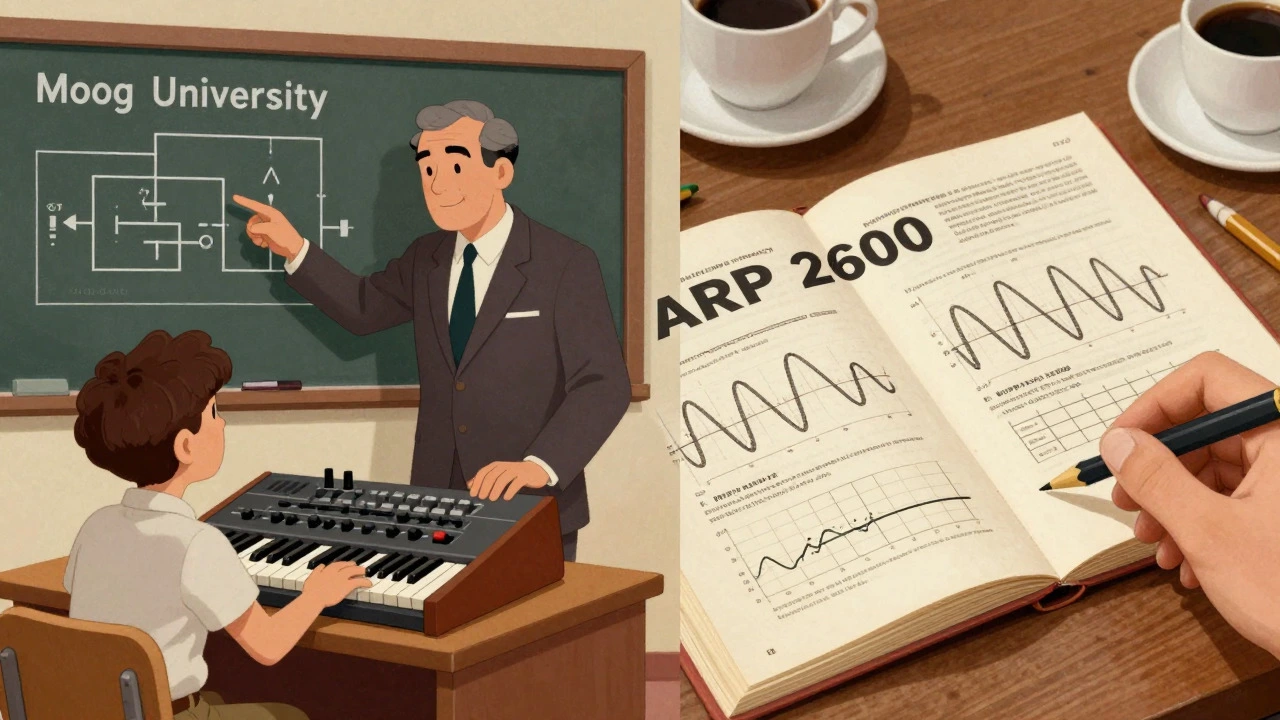
Community sentiment today still reflects the quality of these resources. Many synthesists refer to the ARP 2600 owner’s manual as the "synth Bible." Why? Because it explains signal flow and patching logic so clearly that it remains relevant decades later. Unlike modern manuals that assume you already know the basics, 1970s manuals had to teach you what an oscillator is, how a filter shapes sound, and why envelope generators matter. They started from zero.
Clinics and Dealer Training Programs
Reading a manual was only half the battle. You also needed to see the instrument in action and hear how others used it. This is where manufacturer-sponsored clinics and dealer training programs came in. These events bridged the gap between technical specification and musical application.
Moog Music ran a program called Moog University in the Buffalo/Kenmore, New York area. This was dealer sales training, but it went far beyond basic sales pitches. Dealers learned how to demonstrate, explain, and sell synthesizers to customers who were often intimidated by the complexity of the gear. By training dealers to be educators, Moog ensured that every potential buyer had access to knowledgeable guidance before purchasing.
These clinics also featured clinician-performers who demonstrated specific techniques. For example, around 1979, Tom Rhea presented a "Micromoog Ribbon Technique" session. This wasn’t just about showing off the ribbon controller; it was about teaching articulation, expression, and performance practice. Attendees learned how to use the hardware to create dynamic, expressive performances rather than static sounds.
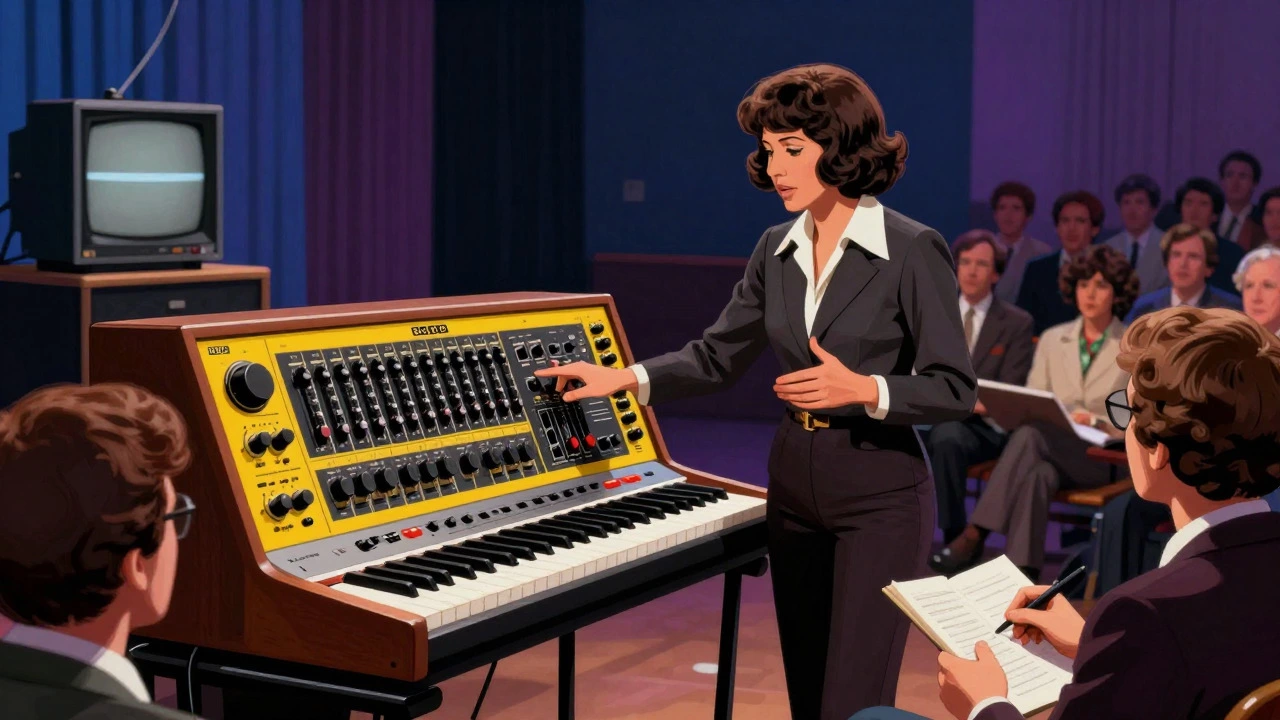
Televised demonstrations played a similar role in reaching a broader audience. A BBC segment from February 8, 1970, featured electronic-music composer Wendy Carlos demonstrating a Moog synthesizer. She explained the fundamentals of electronic sound and showed techniques used to adapt Johann Sebastian Bach’s compositions for her album Switched-On Bach. This broadcast combined visual demonstration with conceptual explanation, making complex ideas accessible to viewers who had likely never seen a modular system. It was a public clinic that reached thousands of people in a single program.
The Role of Magazines and Independent Textbooks
While manufacturers provided official education, independent publishers filled the gaps. Magazines like Synapse Magazine (published 1976-1979) became essential reading for anyone interested in electronic music. Synapse covered the development of synthesizers, featured interviews with artists like Kraftwerk and Brian Eno, and advertised new instruments such as the Oberheim Four-Voice and Korg MS-20.
This combination of interviews and ads served as informal education. Readers could see how instruments were being used on records and in studios while learning about new features and architectures through manufacturer messaging. It contextualized the technology within artistic practice, helping musicians understand not just how a synth worked, but why it mattered.
Independent textbooks also emerged during this period. One 1972 analog synthesis textbook is frequently cited by modern communities as "THE textbook for analog synthesis." While the title isn’t always specified in retrospectives, its influence is clear. It provided structured explanations of oscillators, filters, modulation sources, and signal routing that applied broadly to modular systems. Another notable work is Devarahi’s The Complete Guide to Synthesizers (1982), which is described as a study book with a course-like organization. It likely included exercises and progressive chapters designed for classroom or self-study use, reinforcing the idea that synthesis was a skill to be practiced, not just a tool to be owned.
Workshops and Hands-On Learning
The most effective way to learn synthesis is by doing. This principle drove the creation of hands-on workshops, both in the 1970s and today. Modern institutions continue this tradition, using vintage instruments to teach the same concepts that were introduced decades ago.
The CLASSic Synthesizer Studio at the Gassmann Electronic Music Studio at the University of California, Irvine, maintains a collection of vintage synthesizer equipment specifically for student use. Students gain hands-on experience with analog synthesizers from the late 1960s, 1970s, and early 1980s, including a Moog modular system, early Buchla systems, and a Roland Jupiter-6. This direct interaction with historical hardware allows students to understand the physicality of voltage control and the tactile nature of analog sound design.
Similarly, the Synthesizer Museum Berlin offers workshops limited to five participants, lasting about 1.5 hours each. These sessions cover basic modular patching, Buchla Music Easel sound design, and Prophet-5 programming. Participants explore pads, percussive patches, and modulation routing on both vintage and new models. This small-group format mirrors the structure of earlier Moog clinics, combining intensive instruction with guided exploration.
The learning curve for 1970s synth education required patience and dedication. Students needed basic music theory, comfort with audio signal flow, and willingness to engage with technical explanations. Manufacturer documentation assumed a working musician’s perspective, explaining how to create lead sounds, bass patches, and special effects. Independent textbooks added systematic theory and comparative analysis of different architectures. Support quality varied by manufacturer, with companies like ARP and Moog investing heavily in detailed materials, while smaller makers relied on brief leaflets. This disparity is reflected in the continuing reverence for ARP and Moog documentation compared to the relative obscurity of manuals from lesser-known brands.
| Resource Type | Key Examples | Primary Focus | Audience |
|---|---|---|---|
| Manufacturer Manuals | ARP 2600 Manual, Moog Minimoog Sound Charts | Technical operation, signal flow, patch examples | Owners, technicians |
| Study Books | Learning Music With Synthesizers, The Complete Guide to Synthesizers | Musical application, theory, progressive lessons | Students, educators |
| Clinics & Workshops | Moog University, Synthesizer Museum Berlin sessions | Hands-on practice, performance techniques | Dealers, musicians |
| Magazines | Synapse Magazine | Artist interviews, gear reviews, cultural context | Enthusiasts, professionals |
Legacy and Modern Relevance
Why does 1970s synth education matter today? Because the foundational concepts haven’t changed. Subtractive synthesis, voltage control, and modular architecture are still central to electronic music production. Modern synthesists often turn to vintage manuals to deepen their understanding. Video tutorials cite 1970s documentation as primary learning sources, highlighting the enduring clarity of these texts.
The hybridization of historical resources with modern media continues to shape synth education. Contemporary creators combine screen-based demonstrations with downloadable patches, while retro-oriented blogs archive titles like Synapse for deep historical reading. Analyst-oriented textbooks integrate case studies of 1970s instruments, bridging historical pedagogy with current practice.
The long-term viability of 1970s synth education materials is strong. They function simultaneously as historical documents, technical references, and living teaching tools. For present-day synthesists, studying these resources offers more than nostalgia; it provides a deeper grasp of the principles that underpin all analog synthesis. Whether you’re patching a Eurorack system or programming a modern digital synth, the lessons from the 1970s remain relevant.
What was the most important synth education book of the 1970s?
Many consider ARP's "Learning Music With Synthesizers" (1974) to be one of the most important texts. It was structured as a comprehensive study guide covering waveforms, filters, envelopes, and modulation, treating synthesis as a systematic craft for musicians.
How did Moog teach dealers to sell synthesizers?
Moog ran a program called "Moog University" in the Buffalo/Kenmore, New York area. This dealer sales training taught representatives how to demonstrate, explain, and sell synthesizers effectively, ensuring customers received knowledgeable guidance.
Why are vintage synth manuals still recommended today?
Vintage manuals explain fundamental concepts like signal flow and voltage control in clear, accessible ways. Because synthesizers were new, companies had to teach basics thoroughly, making these documents valuable resources for modern synthesists seeking deep understanding.
What role did magazines play in synth education?
Magazines like Synapse (1976-1979) provided informal education through artist interviews, gear reviews, and advertisements. They contextualized instruments within artistic practice, helping readers understand how synths were used in real-world music production.
Are there still workshops focused on 1970s synthesizers?
Yes. Institutions like the Synthesizer Museum Berlin and UC Irvine’s CLASSic Synthesizer Studio offer hands-on workshops using vintage hardware. These sessions teach modular patching, sound design, and performance techniques on original 1970s instruments.
Who created the ARP 2600 manual?
The ARP 2600 manual was created by ARP Instruments, Inc. It is highly regarded in the community for its clear explanations of signal flow and patching logic, often referred to as the "synth Bible" by enthusiasts.
Did Wendy Carlos contribute to synth education?
Yes. Wendy Carlos appeared in a BBC segment in 1970 demonstrating a Moog synthesizer. She explained electronic sound fundamentals and showed techniques used in "Switched-On Bach," providing a public clinic that reached a mass audience.