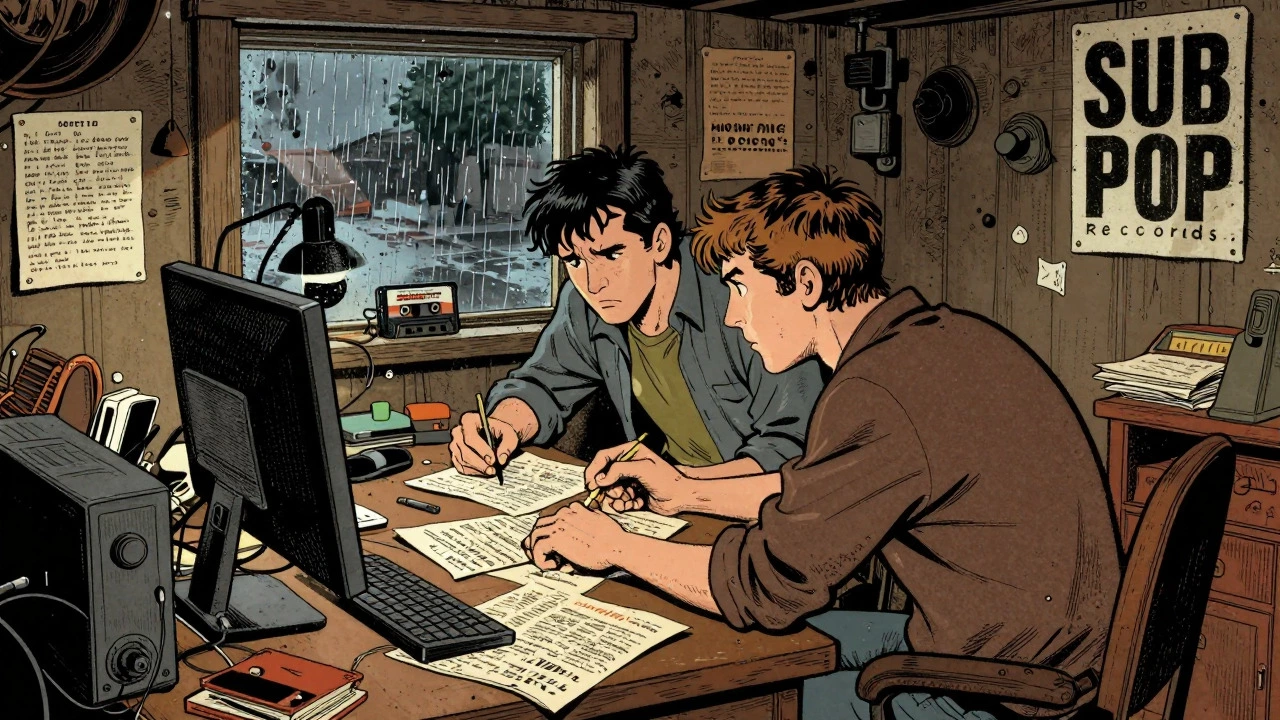

Imagine a small record label in Seattle with almost no money, yet it ends up defining the biggest music shift of the decade. That is exactly what Sub Pop Records did in the 1990s. Founded by Bruce Pavitt and Jonathan Poneman, the label didn't just release records; it created a brand that made "grunge" a global phenomenon. Before the term was even in the dictionary, Sub Pop was packaging heavy, distorted guitar rock into a coherent identity that the world couldn't ignore.
The story isn't just about famous bands like Nirvana. It's about how a financially struggling indie label used clever marketing, limited editions, and a bit of media manipulation to turn local noise into international fame. If you think grunge just appeared out of nowhere, this history shows the deliberate machinery behind the curtain.
The Roots: From Fanzine to Label
To understand the 1990s explosion, you have to look at 1980. Bruce Pavitt started publishing a fanzine called Subterranean Pop, which focused on independent music region by region. This wasn't just hobbyist writing; it was a conceptual framework for documenting scenes rather than chasing pop trends. When Pavitt teamed up with promoter Jonathan Poneman, they formed Sub Pop Records. Sources vary on the exact founding date-some say 1986, others 1988-but the core mission remained consistent: championing the "Seattle sound."
Early releases by bands like Green River and The Melvins laid the groundwork. In fact, the word "grunge" was already being used internally by Sub Pop as colorful marketing language before national media picked it up. One early catalog description for Green River’s Dry As a Bone EP described the music as "ultra-loose GRUNGE that destroyed the morals of a generation." So, the genre tag was born in a mail-order catalog, not in a newsroom.
Nirvana and the Catalyst Album
No discussion of Sub Pop in the 1990s is complete without Nirvana. Their debut album, Bleach, released in 1989, became the benchmark for the genre. It wasn't polished; it was raw, emotional, and heavy. Yet, it sold nearly 2,000,000 copies, making it Sub Pop’s best-selling record to this day.
Bleach functioned as both an artistic statement and a commercial anchor. It proved that audiences were hungry for this specific type of sonic aggression. For Sub Pop, it was a lifeline. The album helped popularize the aesthetic that the label was exporting worldwide, turning a regional curiosity into a global trend. When Nirvana later signed with a major label for Nevermind in 1991, it validated the entire model Sub Pop had built: find the talent, build the buzz, then let the majors pay the price.
The Genius of the Singles Club
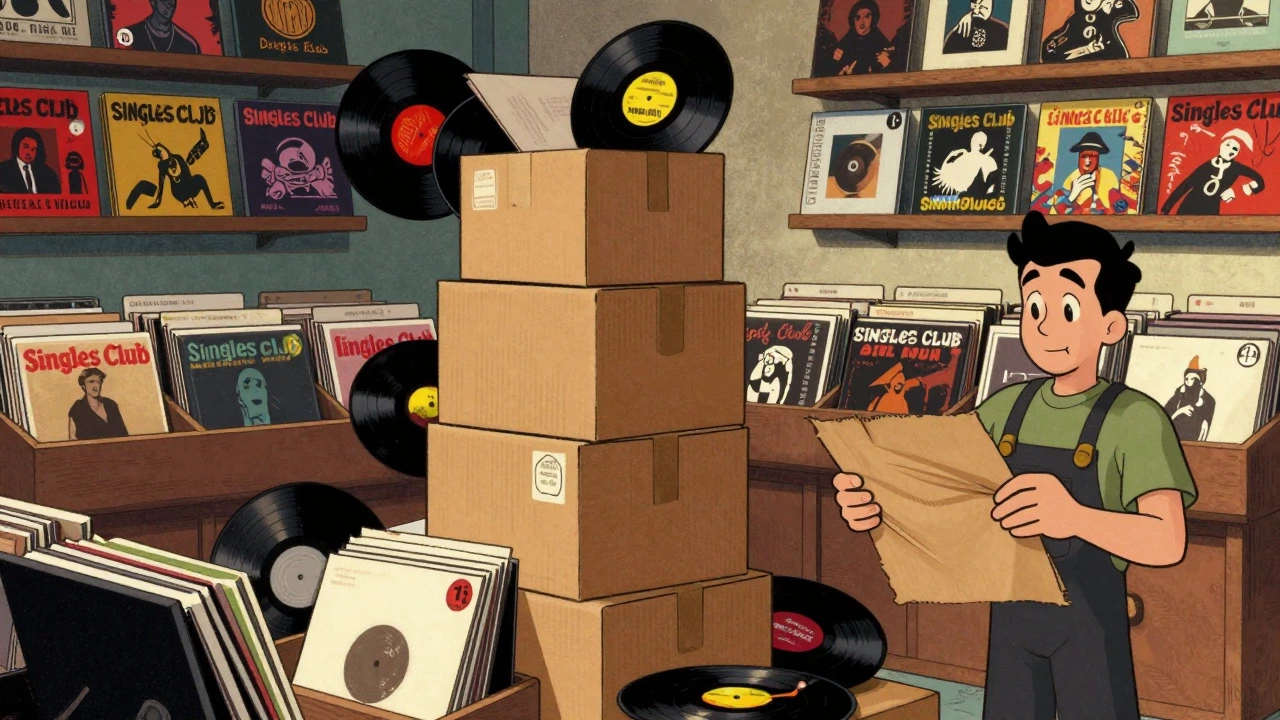
How does a broke label stay alive while building a cult following? Through scarcity. Sub Pop launched the Sub Pop Singles Club, a mail-order subscription service that shipped one limited-edition single per month to fans. Running from roughly 1988 or 1989 until 1993, the club issued 62 releases in total.
This was pure marketing genius. By limiting pressings, Sub Pop turned every record into a collector's item. Fans weren't just buying music; they were participating in a curated adventure through early-90s indie rock. The series included not just Seattle acts like Tad and Soundgarden, but also east-coast indie groups and avant-pop oddities. This broadened the label's appeal beyond just heavy rock, creating a diverse network of loyal subscribers who kept the lights on during lean years.
Media Manipulation and the "Grunge" Myth
Sub Pop didn't just make music; it made headlines. The label understood that media narratives could be shaped. A famous example occurred in 1992 when Megan Jasper, connected to Sub Pop through distributor Caroline Records, fabricated a fake "lexicon of grunge" for a New York Times reporter. She supplied humorous pseudo-slang that the newspaper printed as authentic insider jargon.
This prank highlights the gap between how insiders viewed the scene and how national media tried to codify it. Sub Pop played along, using the attention to boost its profile. The label was both architect and satirist of grunge culture, supplying the raw material while critiquing the media's attempts to fix the scene in rigid categories. This playful manipulation of press narratives was instrumental in positioning Sub Pop as the epicenter of the movement.
Financial Survival and the Warner Deal
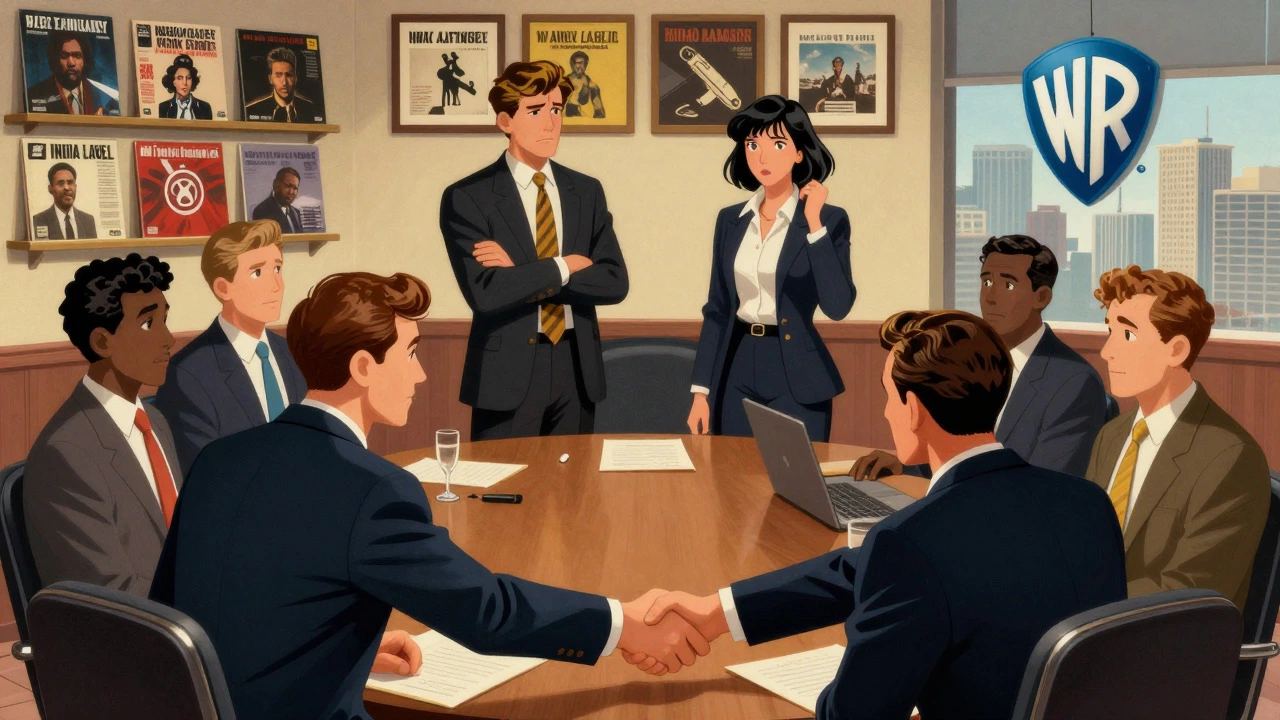
Despite the cultural visibility, Sub Pop was chronically cash-strapped. The founders spoke openly of "world domination" goals but were constrained by the high costs of pressing vinyl and promoting bands. To stabilize the ship, Sub Pop sold a 49% stake to Warner Music Group in 1995.
This hybrid ownership structure allowed Pavitt and Poneman to retain majority control while gaining corporate distribution muscle. It was a strategic move to consolidate gains from the early 1990s boom. By aligning with a major partner, Sub Pop ensured it could continue operating independently without going under, a common fate for many indie labels of that era.
Beyond Grunge: Diversifying the Catalog
While Sub Pop is synonymous with grunge, the label was never exclusively a one-genre shop. Even at its peak, its catalog ranged widely. Bruce Pavitt described some artists as "hippies with big amps," and the label released everything from spoken-word poetry to dream pop. Bands like Mudhoney represented the gritty side, while others occupied a non-conformist space between hardcore metal and post-punk.
This diversity was crucial for long-term viability. After the grunge boom faded, Sub Pop pivoted successfully to new sounds in the 2000s, signing acts like Fleet Foxes and The Shins. The foundation laid in the 1990s-a strong brand identity, a willingness to diversify, and a hybrid financial model-allowed the label to remain relevant decades after the flannel shirts stopped flying.
| Year | Milestone | Impact |
|---|---|---|
| 1989 | Release of Nirvana's Bleach | Established the label's commercial credibility; sold ~2 million copies. |
| 1990 | Consistent branding for Singles Club | Created a trackable series number system, boosting collectibility. |
| 1991 | Nirvana signs with DGC (major label) | Validated Sub Pop as a launchpad; brought massive mainstream attention to the label. |
| 1992 | "Lexicon of Grunge" hoax | Enhanced media presence through playful narrative control. |
| 1995 | Sale of 49% stake to Warner Music Group | Provided financial stability and distribution power while retaining independence. |
Frequently Asked Questions
Who founded Sub Pop Records?
Sub Pop Records was co-founded by Bruce Pavitt, a fanzine writer, and Jonathan Poneman, a local music promoter. They established the label in Seattle, Washington, with dates varying between 1986 and 1988 depending on the source.
What was the Sub Pop Singles Club?
It was a mail-order subscription service that shipped one limited-edition single per month to fans. Running from the late 1980s to 1993, it featured 62 releases and helped sustain the label financially while building a global collector base.
Did Sub Pop own Nirvana?
Sub Pop released Nirvana's early work, including the album Bleach. However, Nirvana later signed with a major label (DGC) for their breakthrough album Nevermind in 1991, meaning Sub Pop acted as a launching platform rather than a permanent home for the band's career.
When did Sub Pop sell to Warner Music Group?
In 1995, Sub Pop sold a 49% stake to Warner Music Group. This deal provided necessary capital and distribution support while allowing the original founders to retain majority control and creative independence.
Was Sub Pop only a grunge label?
No. While heavily associated with grunge, Sub Pop's catalog included diverse genres such as alternative rock, dream pop, and spoken word. The label actively diversified its roster to ensure long-term survival beyond the grunge boom.


