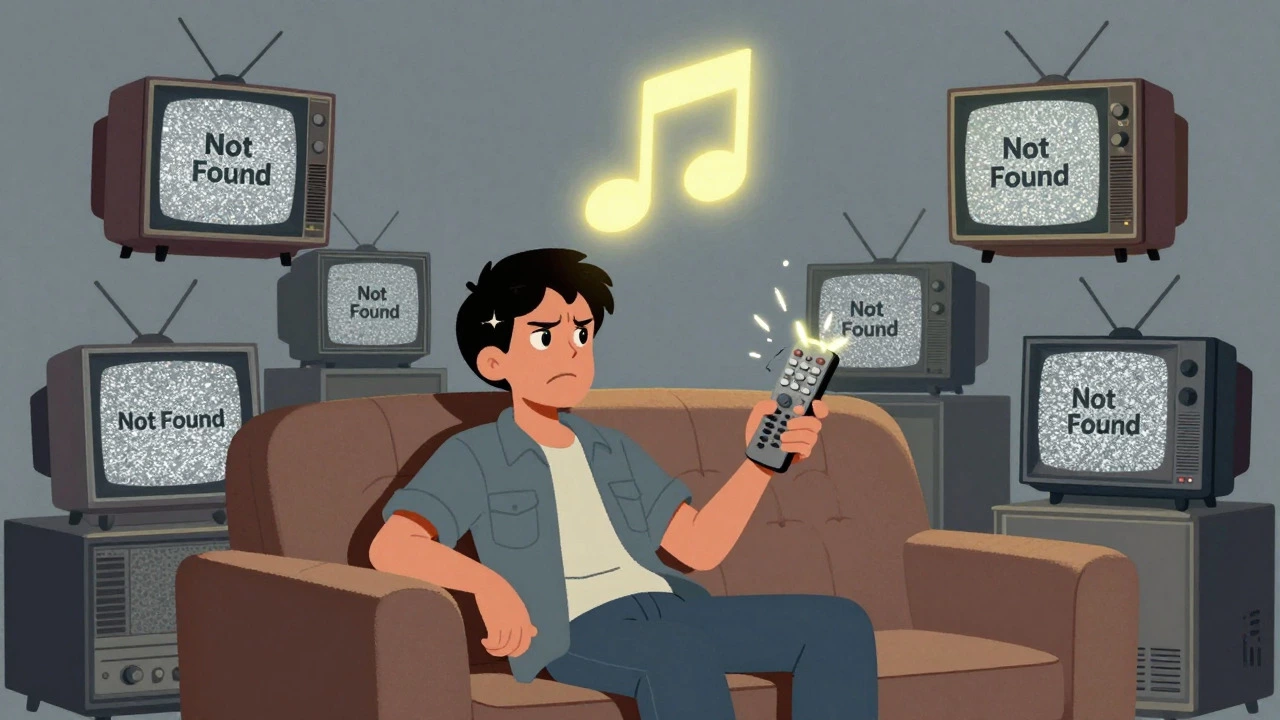

You want to watch Back to the Future is a beloved 1985 science fiction comedy film. You open your favorite subscription service. It’s not there. You check another. Still nothing. Meanwhile, you put on a playlist of 1980s hits, and within seconds, Toto’s “Africa” or Michael Jackson’s “Billie Jean” starts playing. This disconnect isn’t just frustrating; it reveals a massive gap in how streaming platforms handle video versus audio from the same era.
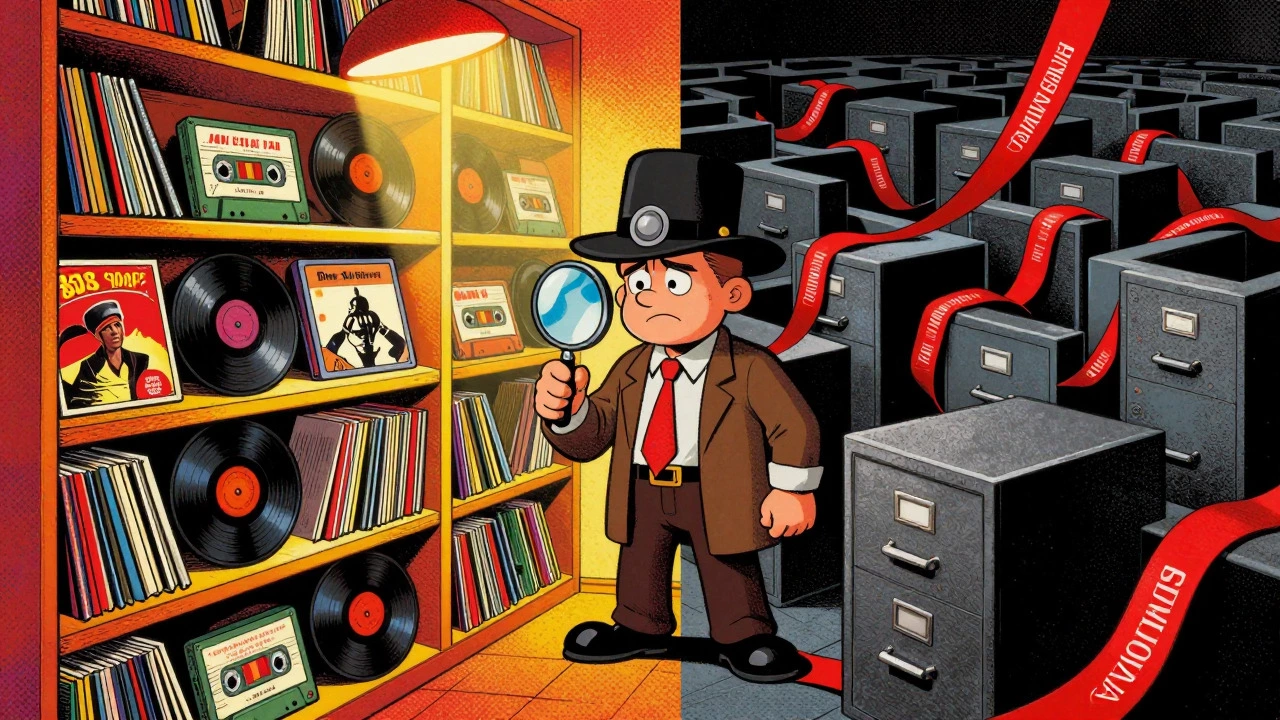
We often assume that because we can stream everything today, the past is fully accessible. But for 1980s cinema, that assumption is wrong. The landscape for discovering 1980s classics is split down the middle. Music from that decade is front-and-center, curated, and easy to find. Film and television from the exact same years are scattered, scarce, and often hidden behind paywalls or missing entirely. Understanding this difference changes how you hunt for nostalgia.
The Illusion of Infinite Choice
When we think about Subscription Video-on-Demand (SVOD) is paid streaming services like Netflix, Hulu, and Prime Video, we imagine endless libraries. In reality, these catalogs are heavily skewed toward new content. A study by Business Insider in July 2020 showed that on Netflix, only 2% of available movies and TV shows were from the 1980s. Hulu was identical at 2%. Even Amazon Prime Video, which tends to have a broader catalog, only offered 5% from that decade.
This means that for every 100 titles you see on Netflix, only two are from the 1980s. The rest are post-2010 releases. If you are looking for specific 1980s films, you are swimming against a tide of modern content. An audit from January 2026 found exactly 43 movies from the 1980s on Netflix US. That sounds like a lot until you realize the platform has thousands of titles. It is a drop in the bucket.
The problem gets worse when you look at critical acclaim. Writer Nick Schaden analyzed a list of acclaimed films from 1970 to 2009 using Letterboxd data. He found that Netflix offered access to only 2% of those landmark films. Hulu and Disney+ combined reached about 6%. Max reached 11%. Even if you subscribed to all three major US platforms, you would still miss out on 81% of the best films from those four decades, including the entire 1980s. Streaming isn’t preserving film history; it’s burying it under new releases.
Why Music Streaming Is Different
If video streaming hides the 1980s, audio streaming celebrates them. On Apple Music is a leading music streaming service with extensive curated playlists, you don’t have to search hard. There are playlists like “80s Hits Essentials” and “200 Most-Streamed Songs from the ’80s.” The latter contains nearly 200 songs totaling almost 15 hours of listening time. These aren’t buried deep in the app. They are promoted prominently.
Spotify is a global music streaming platform known for algorithmic and editorial playlists does the same thing. Playlists like “80s Classic Hits” feature Queen, Def Leppard, and Tears For Fears right at the top. The barrier to entry is zero. You click play, and you are immersed in the decade. This creates a false sense of completeness. Because you can easily hear the soundtrack of the 1980s, you might assume you can easily watch its movies. You can’t.
Music licensing is different from film licensing. Rights for songs are often cleared for long periods or owned by major labels that benefit from constant rotation. Film rights are fragmented. Studios hold onto their own content, and older films often require complex negotiations involving actors, directors, and distributors. This makes 1980s music a staple of streaming, while 1980s films remain elusive.
The Rise of Free and Niche Platforms
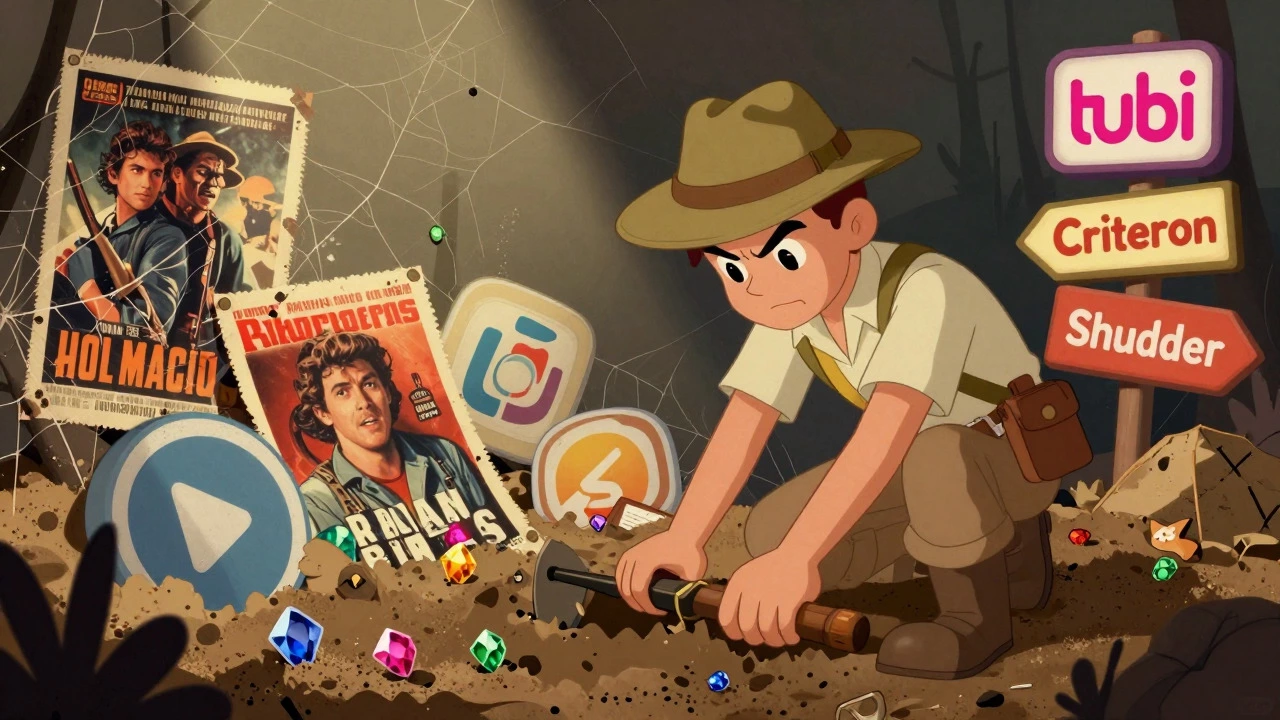
So where do you actually find those movies? The answer lies outside the big subscription boxes. Free ad-supported streaming television (FAST) services like Tubi is a free ad-supported streaming service with a large library of older films and Pluto TV have become the unsung heroes of 1980s discovery. Users consistently report finding dozens of lesser-known action and horror films from the 1980s on Tubi that aren’t available anywhere else.
Tubi doesn’t just have random old movies. It has dedicated channels for the 1980s. You can tune into a channel that plays nothing but 1980s films, creating a passive discovery experience similar to cable TV. Titles like “Lethal Weapon,” “Robocop,” and “Heathers” appear regularly. Because these services rely on ads rather than subscriptions, they are less pressured to prioritize brand-new blockbusters. They can afford to license older content that still draws an audience.
Niche platforms also fill the gaps. Criterion Channel is a streaming service focused on classic and important international films offers a robust collection of critically important 1980s cinema. Shudder is a streaming service specializing in horror, thriller, and supernatural fiction is packed with 1980s slashers and supernatural horrors. If you want arthouse gems, Mubi and Fandor provide rotating selections of obscure 1980s works. These services cater to specific tastes, ensuring that the 1980s aren’t just represented by mainstream hits but by the full spectrum of what was made during that decade.
The Fragmentation Problem
The biggest challenge for viewers today is fragmentation. You can’t just subscribe to one service and expect to see everything. A 2025 Reddit discussion revealed that fans often assemble multi-service bundles costing $50-$60 per month to ensure broad access to older films. This might include Sling TV for Turner Classic Movies (TCM), HBO Max for additional studio content, Criterion Channel for arthouse titles, and Kanopy for library-based access.
Even then, coverage is spotty. Some high-profile 1980s teen classics like “Ferris Bueller’s Day Off” and “The Breakfast Club” are frequently unavailable on major subscription services, requiring digital rental or purchase instead. This forces users to use third-party search engines like JustWatch to track down where a specific title is licensed at any given moment. The act of discovery has shifted from browsing a library to hunting down licenses.
| Service Type | Examples | 1980s Movie Coverage | Discovery Method | Cost Model |
|---|---|---|---|---|
| Major SVOD | Netflix, Hulu, Prime Video | Low (2-5%) | Curated hubs, limited selection | Monthly Subscription |
| FAST / Free | Tubi, Pluto TV | High (Relative) | Dedicated channels, linear viewing | Free (Ad-Supported) |
| Niche / Specialist | Criterion, Shudder, TCM | Targeted (Genre/Quality) | Expert curation, thematic collections | Subscription or Cable Add-on |
| Music Streaming | Spotify, Apple Music | Extensive | Frontline playlists, algorithms | Monthly Subscription |
How to Actually Find What You Want
If you are serious about discovering 1980s classics, you need a strategy. Relying on Netflix alone will leave you empty-handed most of the time. Start by identifying what genre you are interested in. For horror, go straight to Shudder. For critical cinema, try Criterion. For general entertainment, Tubi is your best free bet.
Use tools like JustWatch to filter by release year. Set the date range to 1980-1989. You will quickly see which platforms currently hold the rights to the titles you want. Be prepared to rotate your subscriptions. One month you might need Max for a specific Warner Bros. title, and the next month you might need Peacock for a Universal classic.
Don’t ignore community-driven resources. Reddit threads and YouTube creators often highlight hidden gems on niche platforms. A video titled “Where Can I Stream Classic 80s Films?” advised viewers to explore dedicated sections of free options before paying for premium bundles. Community knowledge fills the gaps left by corporate algorithms.
The Future of Nostalgia Access
Will this get better? Probably not significantly. The structural issues of film licensing mean that mainstream SVOD services will continue to prioritize new content. However, the rise of FAST services suggests that free, ad-supported models may become the primary home for older content. As more people cut cords, the demand for free alternatives grows, incentivizing companies like Tubi and Pluto to expand their 1980s libraries.
Music streaming will likely remain the gold standard for ease of access. The cultural impact of 1980s music ensures it stays relevant across generations. Films, however, will remain fragmented. Discovery will continue to be an active process rather than a passive one. You won’t stumble upon 1980s cinema as easily as you stumble upon 1980s music. You have to seek it out.
The good news is that the content is still there. It’s just hiding in plain sight on smaller platforms. By shifting your focus away from the biggest names and toward specialized and free services, you can rebuild the connection to the 1980s that streaming initially promised but failed to deliver.
Which streaming service has the most 1980s movies?
There is no single service with the most 1980s movies. Major subscription services like Netflix and Hulu have very small percentages (around 2%). Free services like Tubi and Pluto TV offer a higher relative volume of 1980s films through dedicated channels and larger back catalogs. For specific genres, niche services like Shudder (horror) and Criterion Channel (arthouse) have deeper selections.
Why is it harder to find 1980s movies than 1980s music on streaming?
Music licensing is generally more straightforward and centralized, allowing platforms like Spotify and Apple Music to curate large, permanent playlists. Film licensing is fragmented among many studios, distributors, and talent unions, making it expensive and complex to secure long-term streaming rights for older movies. As a result, music is prioritized for visibility, while films rotate in and out of catalogs.
Is Tubi good for watching 1980s classics?
Yes, Tubi is widely considered one of the best free sources for 1980s movies. It hosts dedicated 1980s channels and has a large library of action, horror, and drama films from that decade. Users frequently discover lesser-known titles on Tubi that are not available on paid subscription services.
Can I watch Back to the Future on Netflix?
Availability changes frequently. As of recent audits, major 1980s blockbusters like Back to the Future are often absent from Netflix's core subscription library and may require digital rental or purchase. Use a tool like JustWatch to check current availability across all platforms.
What is the best way to discover obscure 1980s films?
To find obscure 1980s films, avoid mainstream algorithms. Instead, use niche platforms like Criterion Channel, Mubi, or Fandor. Additionally, explore community-driven recommendations on Reddit forums like r/80smovies and follow YouTube creators who specialize in classic film discovery. These sources often highlight titles that major streaming services ignore.