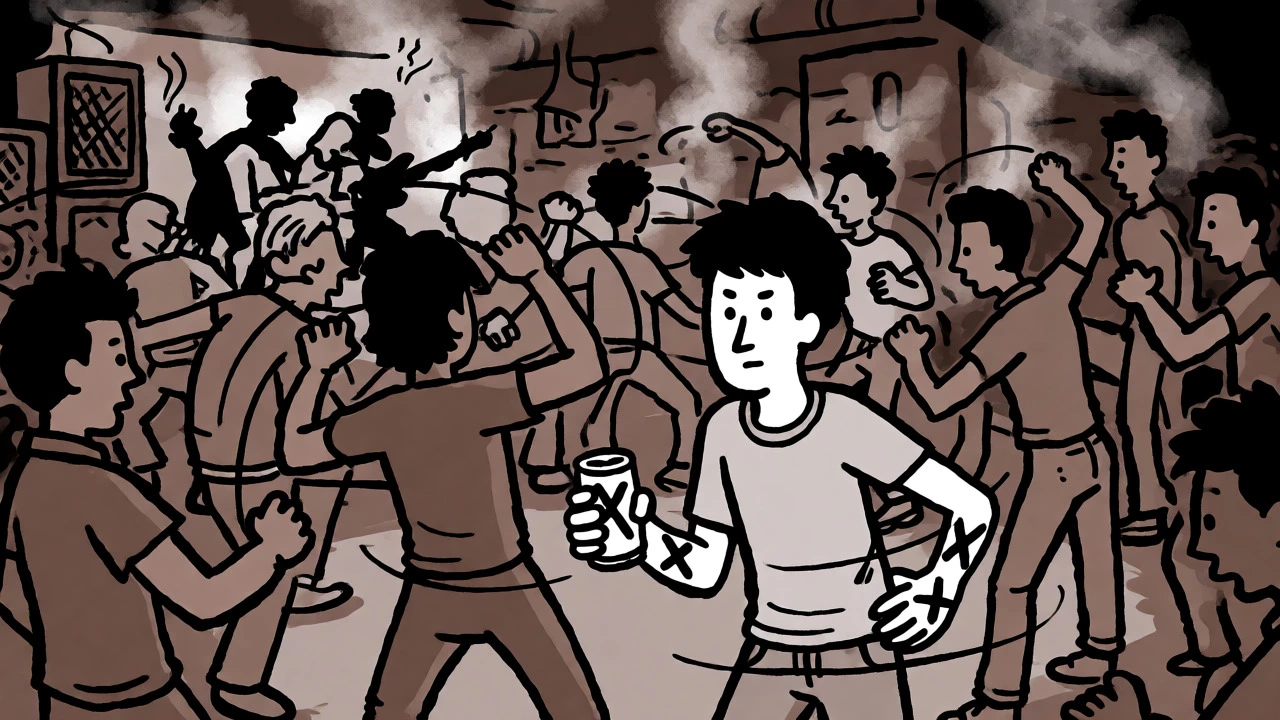

Imagine a room packed with teenagers. The air is thick with sweat and the smell of stale beer, but not everyone is drinking. In fact, some are wearing black X’s on their hands, not as a mark of exclusion from the bar, but as a badge of honor. This wasn’t a church group or a support meeting; it was a Straight Edge youth subculture that emerged from the Washington, D.C., hardcore-punk scene in the early 1980s. It sounds counterintuitive, doesn’t it? To find rebellion in sobriety? Yet, for thousands of young people, choosing not to drink or do drugs became the most radical act they could perform.
The story starts with a song. Not a long epic, but a frantic, 46-second blast called "Straight Edge" by the band Minor Threat. Released in 1981 on Dischord Records, this track didn’t just introduce a new sound; it coined a term that would define a generation. But here’s the twist: Ian MacKaye, the vocalist who wrote it, never intended to start a movement. He was simply stating his own truth. He didn’t want to join the party; he wanted to stay awake. What happened next-how a personal preference turned into a global identity-is a fascinating look at how music builds community, enforces ethics, and sometimes, gets way too intense.
The Spark: Minor Threat and the Birth of an Ethic
To understand straight edge, you have to understand the vacuum it filled. In the late 1970s and early 1980s, punk rock was often synonymous with nihilism, self-destruction, and substance abuse. If you weren’t wasted, were you even punk? Minor Threat challenged that assumption. Their song "Straight Edge" used first-person language: "I’m a person just like you / But I’ve got better things to do / Than sit around and fuck my head / Hang out with the living dead."
This wasn’t a commandment; it was a confession. MacKaye later explained that he wrote it to connect with other kids who felt alienated by the drinking culture. He wasn’t preaching; he was sharing. However, once that record hit the streets, fans took the baton and ran with it. They converted a personal statement into a collective identity. The lyrics became a manifesto, and the lifestyle became a uniform. By 1984, when Minor Threat re-recorded "Out of Step," the line "I don’t smoke, I don’t drink, I don’t fuck" made the boundaries explicit. It was no longer just about staying sober; it was about rejecting the entire hedonistic framework of adult society.
| Feature | Mainstream Punk/Hardcore Norms | Early Straight Edge Philosophy |
|---|---|---|
| Substance Use | Alcohol/drugs seen as essential for authenticity and rebellion. | Abstinence viewed as a higher form of rebellion and clarity. |
| Community Basis | Often centered around bars, clubs, and shared intoxication. | Centered on all-ages shows, zines, and mutual support networks. |
| Attitude Toward Self | Nihilism, self-destruction, and apathy were common themes. | Self-control, positive agency, and creative participation. |
| Sexual Ethics | Casual sex and promiscuity often celebrated as freedom. | Rejection of exploitative or "conquest-oriented" sexuality. |
From D.C. to Boston: The Scene Spreads
Ideas travel fast in underground networks. While Washington, D.C. provided the blueprint, Boston helped build the structure. Bands like SS Decontrol and DYS adopted the straight edge ethic early on, but they brought a different energy. The Boston scene was known for being more physically assertive and visibly collective. Here, straight edge wasn’t just about what you avoided; it was about what you did together. It fostered a tight-knit crew mentality where friends held each other accountable.
This expansion relied heavily on the DIY infrastructure of hardcore. There were no big labels telling kids what to buy. Instead, independent labels like Dischord and later Revelation Records distributed records through mail order and word of mouth. Zines-self-published magazines-became the internet of the 80s. Kids traded tapes, swapped flyers, and organized tours themselves. This face-to-face connection created a sense of belonging that didn’t require alcohol to lubricate social interactions. For many teenagers, these all-ages shows were the first places they felt truly accepted without having to fake being older or cooler than they were.
New York and the Rise of Youth Crew
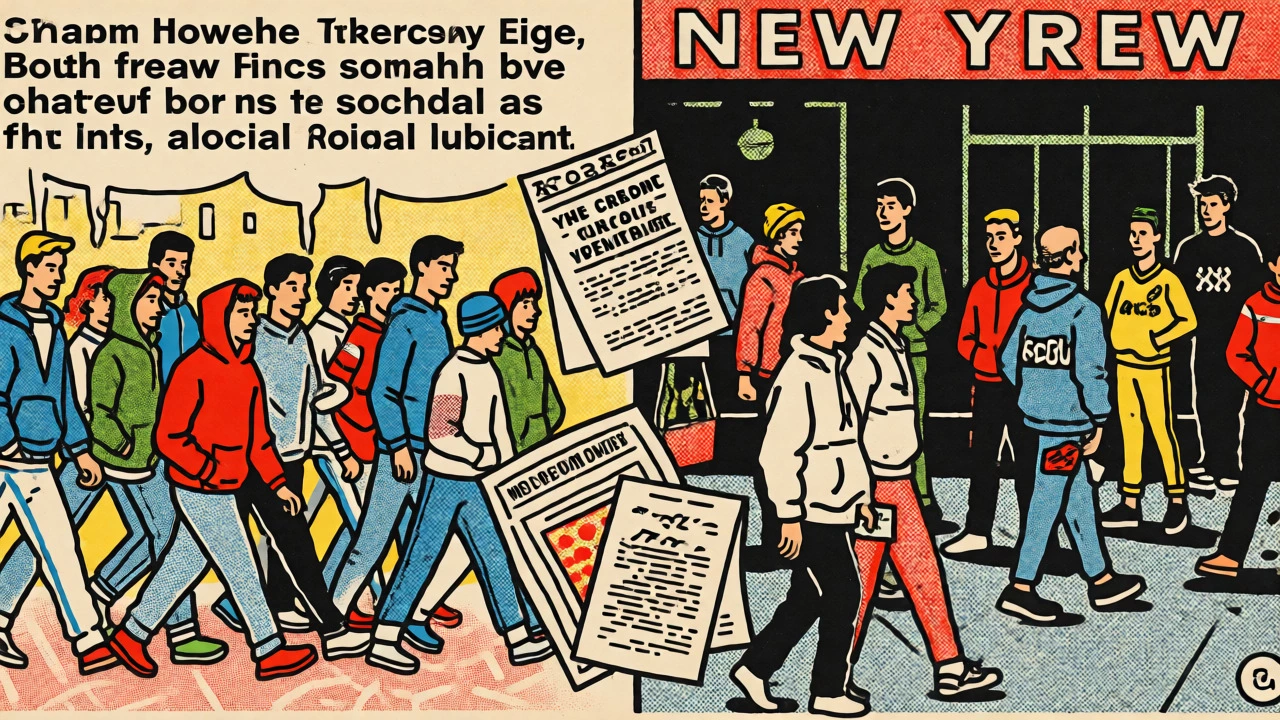
If Boston gave straight edge muscle, New York gave it style and organization. By the mid-to-late 1980s, bands like Youth of Today a New York hardcore band that helped transform straight edge into an organized youth-crew identity, Gorilla Biscuits, and Bold defined a new aesthetic. This era, often called "Youth Crew," was distinct. It wasn’t just about avoiding substances; it was about looking the part and acting the part.
The New York scene introduced a more polished, athletic image. Participants wore branded clothing, worked out, and projected an image of disciplined strength. Shows at venues like CBGB became hubs for this growing network. But with this increased visibility came stricter codes. The casual, messy vibe of early D.C. punk began to harden into specific expectations. You weren’t just straight edge if you didn’t drink; you were straight edge if you lived your life according to a rigorous set of principles. This shift marked the transition from a loose collection of individuals to a recognizable subculture with its own hierarchy and fashion.
Ethics Beyond Sobriety: Politics and Diet
As the decade progressed, the definition of "clean living" expanded. Initially, straight edge was primarily about abstaining from alcohol, tobacco, and recreational drugs. But for many participants, avoiding poison meant questioning everything else that harmed the body or the world. This led to a significant rise in vegetarianism and veganism within the scene.
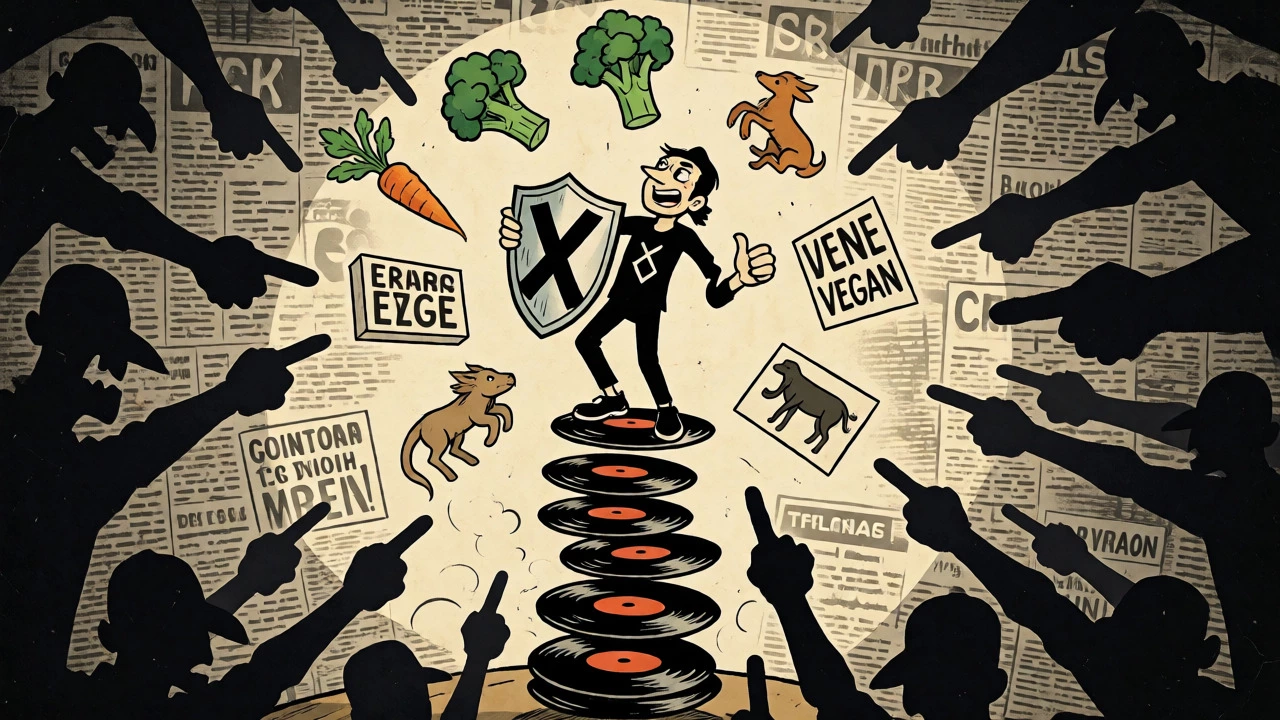
It wasn’t universal in the early days, but by the late 80s, animal rights and environmentalism were becoming central to the identity. Bands like Uniform Choice in Southern California helped bridge the gap between simple sobriety and broader ethical concerns. The logic was straightforward: if you refuse to put toxins in your body, why participate in systems that cause suffering to animals or destroy the planet? This evolution turned straight edge from a personal health choice into a political stance. It connected the individual’s body to larger issues of capitalism, exploitation, and ecological harm.
The Dark Side: Militancy and Exclusion
No historical account is complete without acknowledging the shadows. As straight edge grew, so did the pressure to conform. What started as a personal choice for some became a moral judgment for others. A subset of the community developed a militant attitude, viewing drinkers and drug users not just as different, but as morally inferior or weak.
This led to the stereotype of the "straight edge gang." In some cities, participants engaged in intimidation or even violence against those who didn’t adhere to the code. The irony is palpable: a movement rooted in self-control and anti-violence produced factions capable of aggression. Scholars note that this militancy often intersected with rigid ideas about masculinity. The scene could be unwelcoming to women, LGBTQ+ individuals, and people of color, despite its potential for inclusivity. The "X" on the hand, once a symbol of personal integrity, sometimes became a brand of purity testing, creating an environment where one had to constantly prove their worthiness to belong.
Why It Mattered Then-and Now
Straight edge in the 1980s wasn’t just a fad; it was a demonstration that alternative lifestyles could thrive outside mainstream approval. It proved that you could have fun, create art, and build deep friendships without numbing yourself. For many young people, it offered a path to adulthood that didn’t feel like a trap.
The legacy is complex. On one hand, it paved the way for modern wellness cultures and ethical consumerism. On the other, it serves as a cautionary tale about how quickly liberation can turn into dogma. Yet, the core message remains powerful: you have the power to define your own reality. Whether you agree with every aspect of the 1980s straight edge movement or not, its impact on music, community building, and youth culture is undeniable. It showed us that saying "no" can be just as loud, and just as revolutionary, as saying "yes."
Did Ian MacKaye intend to start the straight edge movement?
No. Ian MacKaye has repeatedly stated that he wrote the song "Straight Edge" as a personal statement about his own choices, not as a manifesto for others. He never intended it to become a collective identity or a set of rules for the punk community.
Was straight edge always associated with veganism?
No. In the early 1980s, straight edge primarily focused on abstaining from alcohol, drugs, and tobacco. Vegetarianism and veganism became increasingly prominent in the late 1980s and 1990s as the movement expanded its ethical scope to include animal rights and environmentalism.
What is the significance of the "X" symbol in straight edge?
The "X" originated from the practice of marking underage patrons’ hands with an X at bars and clubs to prevent them from buying alcohol. Straight edge participants reclaimed this symbol, wearing it proudly to signify their voluntary abstinence rather than their age restriction.
How did straight edge differ from traditional temperance movements?
Unlike religious or traditional temperance groups, straight edge emerged from secular hardcore punk. It rejected respectability politics and used loud, aggressive music and DIY aesthetics to frame sobriety as a rebellious, countercultural act rather than a moral duty imposed by authority.
Was the straight edge movement violent?
While the core philosophy emphasized self-control and non-intoxication, some factions within the scene, particularly in the late 1980s and beyond, became militant. These groups occasionally engaged in intimidation or violence against those who drank or used drugs, though this was not representative of the entire movement.