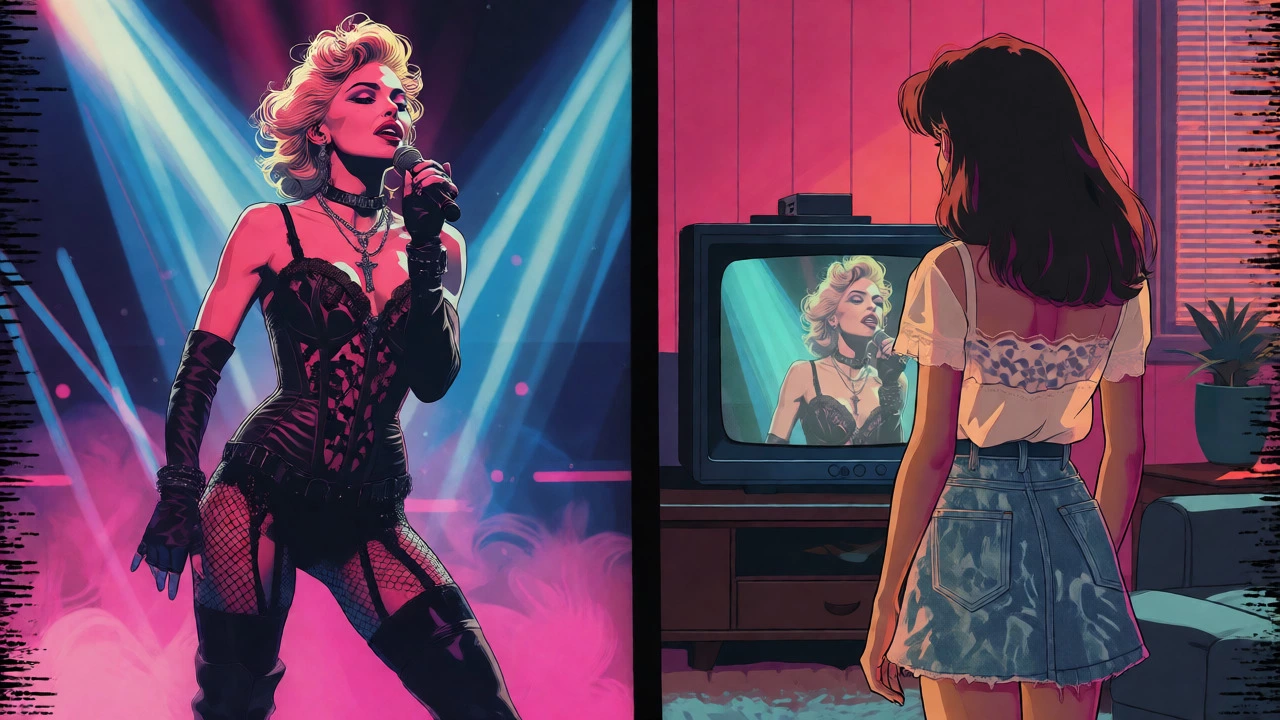

Did you ever wonder why your high school friend’s acid-wash jeans looked nothing like Madonna’s lace corsets, even though they both watched the same MTV video? That gap wasn’t an accident. It was the defining tension of 1980s music fashion. The decade didn’t just change what we listened to; it fractured how we dressed into two distinct worlds: the hyper-real spectacle on screen and the gritty, improvised reality on the sidewalk.
Before 1981, musicians were voices in a box or faces on a record sleeve. You imagined their clothes. After August 1, 1981, when MTV launched, clothing became a visual language broadcast directly into living rooms. Suddenly, a three-and-a-half-minute video could dictate global trends faster than any designer collection. But here is the twist most people miss: the flow wasn’t one-way. While pop stars dictated spectacle, street subcultures fed authenticity back to the stage. Let’s unpack how this dynamic exchange shaped the decade’s iconic looks.
The Screen as a Style Dictator
MTV turned artists into 24/7 style deities. Before cable television reached roughly 70% of American households by the mid-80s, fashion moved through magazines and word-of-mouth. It was slow. MTV compressed that timeline into days. A single video release could flood malls with knock-off red leather jackets before the next song hit the radio.
For pop icons like Madonna, the stage outfit was armor. Her "Boy Toy" era wasn’t about comfort; it was about readability under bright lights. Corsets, crucifixes, and fingerless gloves created a silhouette that popped on low-resolution screens. This was performance art. Fans tried to copy it, but let’s be honest-most teenagers couldn’t afford vintage lingerie-as-outerwear. Instead, they translated the vibe. They bought cheap lace tops from department stores and paired them with denim skirts. The stage look was extreme; the street look was an approximation.
Michael Jackson took this further. His military-inspired epaulets and sequined gloves weren’t just costumes; they were uniforms. When he debuted the red leather jacket in "Thriller," it became a global symbol of cool. On stage, it signaled power and precision. On the street, it signaled affiliation with a new kind of celebrity worship. The garment itself changed meaning depending on who wore it and where.
Glam Rock’s Theatrical Excess
If pop was about sleek spectacle, rock and metal were about volume. Literally. The New Romantic movement, led by bands like Duran Duran and Culture Club, treated concerts like Victorian theater. Satin suits, frilled shirts, and heavy makeup projected dandyism. Boy George’s gender-bending aesthetic challenged norms on camera, but off-camera, many fans stuck to safer versions of the look. A boy might wear eyeliner to school, but he probably skipped the full feathered hat.
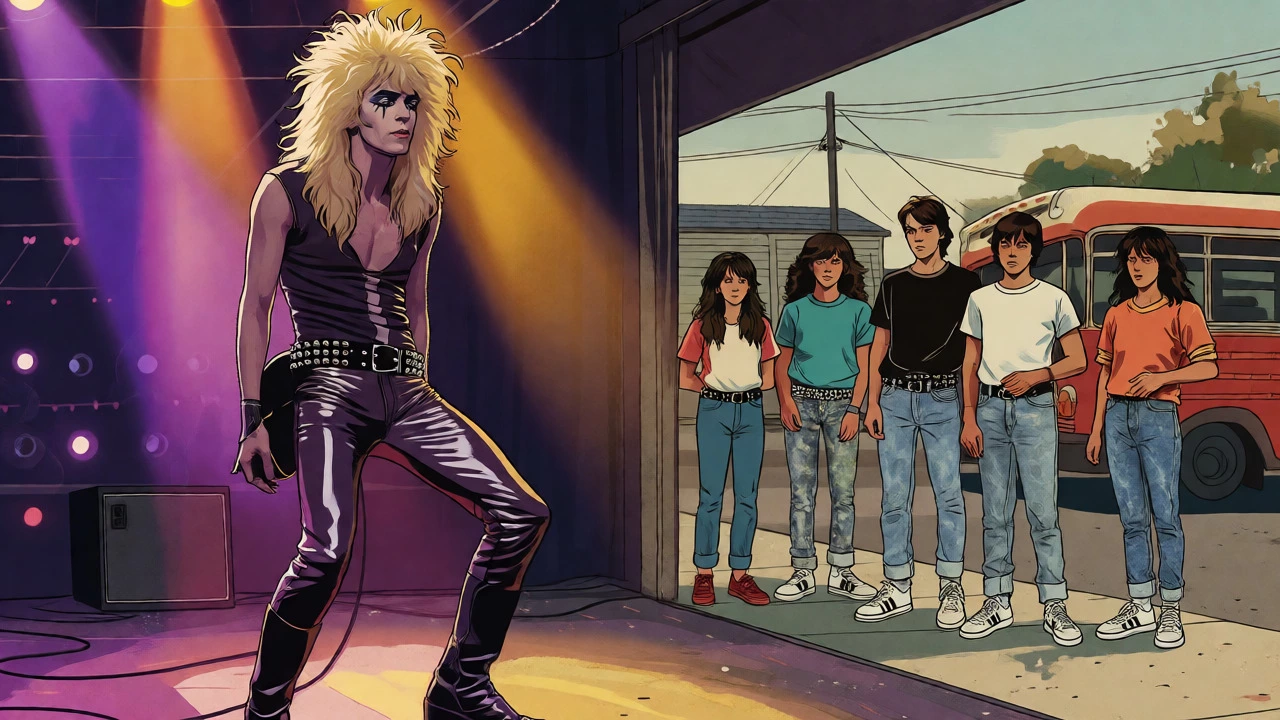
Glam metal bands like Mötley Crüe and Poison pushed silhouettes to absurd limits. Spandex leggings, studded belts, and hair held up by industrial-strength hairspray dominated arenas. These outfits prioritized visual impact over practicality. Try running for a bus in skin-tight metallic pants. You’ll fail. Yet, fans adopted these elements selectively. Acid-wash jeans and a single studded belt became standard street wear for suburban teens. The stage demanded excess; the street demanded durability.
| Element | Stage/Camera Version | Street/Fan Adaptation |
|---|---|---|
| Footwear | Platform boots, custom heels | Sneakers (Adidas, Nike), loafers |
| Hair | Extreme teasing, vibrant colors | Moderate volume, scrunchies |
| Jackets | Red leather, fur coats, capes | Denim vests, windbreakers |
| Accessories | Lace gloves, oversized chains | Costume jewelry, bandanas |
Hip-Hop: When the Street Became the Stage
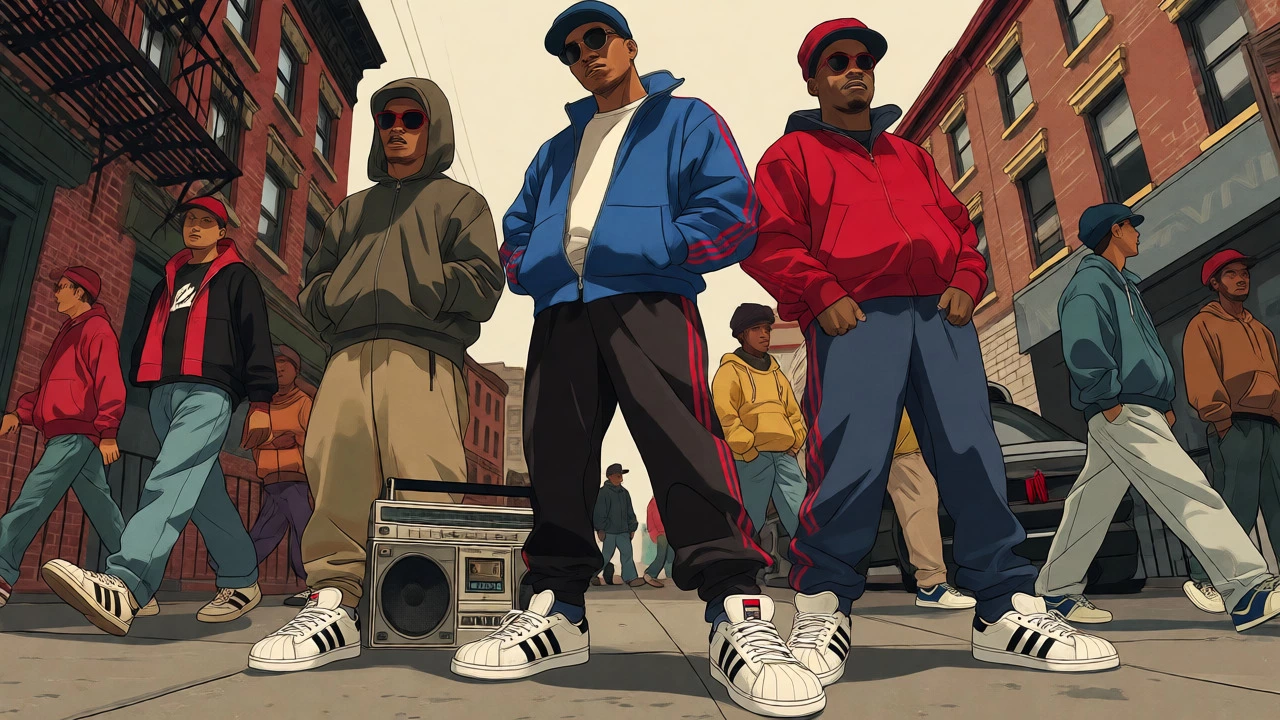
Here is where the binary breaks down completely. In pop and rock, the stage was a separate realm. In hip-hop, the stage was just an amplified version of the block. Groups like Run-DMC didn’t wear costumes. They wore what their neighbors wore. Unlaced Adidas shell-toe sneakers, Kangol hats, and tracksuits weren’t designed for TV; they were daily attire in Queens and Brooklyn.
This authenticity resonated because it felt real. When Run-DMC released "My Adidas" in 1986, they weren’t selling a fantasy. They were validating a local code. Corporate brands noticed. Adidas signed them, marking the first major endorsement deal for a hip-hop group based purely on street credibility. The feedback loop flipped. Artists didn’t invent the look; they showcased it. Fans saw themselves on screen, not aspirational figures.
Late-80s gangsta rap groups like N.W.A doubled down on this. Khaki Dickies work pants, white T-shirts, and Los Angeles Raiders caps weren’t fashion statements initially-they were uniform codes of West Coast hustler culture. By putting them on album covers and videos, N.W.A turned functional workwear into status symbols. On the street, wearing a Starter jacket meant something different than on stage. It signaled neighborhood loyalty. On camera, it signaled rebellion. The same fabric carried dual meanings.
The Feedback Loop: Stylists Watching the Sidewalk
We often think designers lead trends. In the 80s, stylists watched clubs. Projects like London’s Creative Youth highlight how industry professionals scanned urban scenes for innovation. If kids in a specific borough started wearing oversized blazers, stylists pulled those pieces for music videos. It was a bottom-up diffusion model.
Consider Prince. His stage wardrobe mixed ruffled shirts and purple suits, projecting androgyny. But reports suggest his off-stage studio wear was stripped-down and casual. He understood the camera needed drama. Meanwhile, fans in shopping malls copied the color palette but kept the cuts simple. The stage offered inspiration; the street offered interpretation.
Even fitness culture blurred lines. Aerobics videos made spandex and legwarmers mainstream. Rock stars wore neon leotards on tour for shock value. Gym-goers wore them for sweat management. The aesthetic crossed over, but the intent differed. One was performance; the other was function. Yet, both contributed to the "bigger is better" ethos that defined the decade’s silhouette.
Why the Distinction Matters Today
Understanding this split helps us decode modern nostalgia. When contemporary collections revive 80s styles, they often mix stage excess with street utility. Oversized blazers return from office wear; crop tops return from dance studios. The 1980s taught us that fashion isn’t just about clothes-it’s about context.
Vintage sellers today report high demand for specific items: New Romantic ruffled shirts, 80s leather jackets, and original Run-DMC tracksuits. Buyers aren’t just collecting fabric; they’re curating identities. They want the theatrical flair of the stage without losing the comfort of the street. The 80s proved that identity is fluid. You can be a corporate professional by day and a glam-rock fan by night, using clothing as a costume switch.
The legacy of this era is clear: technology accelerated trend cycles, but community rooted them. MTV spread images globally, but local neighborhoods gave them meaning. We live in a similar dynamic now with TikTok and Instagram. Influencers post curated looks; users adapt them for their realities. The medium changes, but the human desire to balance spectacle with belonging remains constant.
Frequently Asked Questions
Did 1980s fans actually wear the same clothes as their favorite stars?
Rarely exactly. Pop and rock stars wore exaggerated, expensive, or impractical outfits designed for cameras and stages. Fans adapted these looks using affordable materials. For example, instead of a designer red leather jacket, a teen might buy a vinyl alternative from a mall store. Hip-hop fans had more direct access since artists wore everyday streetwear, making replication easier and more accurate.
How did MTV change fashion distribution in the 1980s?
MTV shortened the time between seeing a trend and buying it. Before 1981, fashion moved slowly through print media. After MTV launched, a music video could launch a global trend within weeks. Stores stocked copies of artist outfits almost immediately, turning celebrities into primary fashion influencers rather than models or designers.
What was the biggest difference between stage and street fashion?
Practicality and exaggeration. Stage fashion prioritized visual impact under lights, using bold colors, shiny fabrics, and extreme silhouettes. Street fashion prioritized comfort, affordability, and social acceptability. While both followed the "bigger is better" aesthetic, street versions were toned down to fit daily life, schools, and workplaces.
Why was hip-hop fashion different from rock or pop fashion?
Hip-hop minimized the divide between stage and street. Artists like Run-DMC performed in the same clothes they wore daily-tracksuits, sneakers, and caps. This authenticity made hip-hop style highly accessible and replicable. In contrast, rock and pop artists often wore costumes that were difficult or unnecessary for everyday wear, creating a clearer separation between performer and fan.
Are 1980s fashion trends still relevant today?
Yes, many elements persist. Acid-wash denim, oversized blazers, logo-heavy sportswear, and statement accessories continue to cycle through fashion. Modern interpretations often blend the theatrical flair of 80s stage wear with the casual comfort of street styles, reflecting the same balance between self-expression and practicality that defined the decade.