
You walk into an arena today, and the show starts before the first chord rings out. A drone shot sweeps over a massive LED wall, lasers cut through fog machines, and a hydraulic lift raises a singer ten feet into the air. We take this for granted. But rewind to 1968, and rock concerts were mostly guys standing still, playing loud instruments under dim incandescent bulbs. So, how did we get from static bands to the fire-breathing, guillotine-wielding circus of modern heavy metal? It happened in the 1970s, when a handful of ambitious acts decided that music alone wasn't enough. They needed danger, drama, and visual shock. This era didn't just add lights; it invented the grammar of live spectacle.
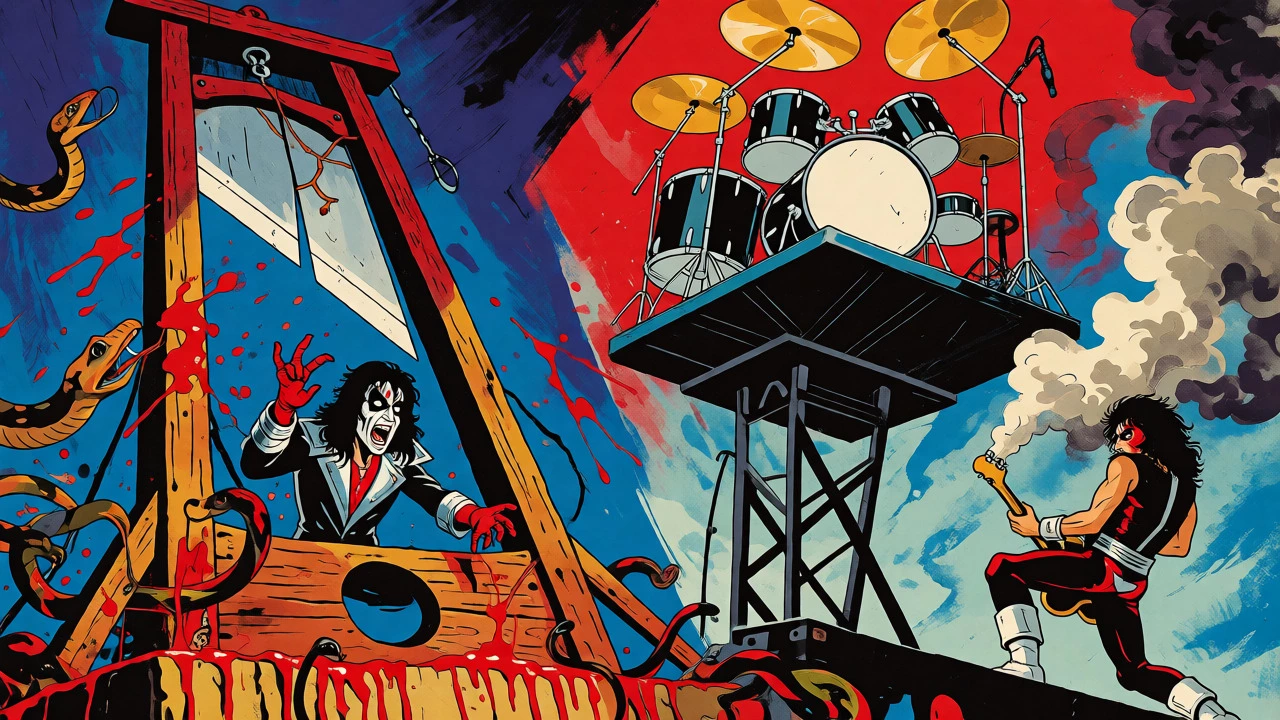
The shift began with Alice Cooper, who treated the stage like a horror movie set. Before him, shock was rare. Cooper made it the point. His 1973 Billion Dollar Babies tour wasn't just a concert; it was a narrative. He used mannequins, fake blood, snakes, and a giant toothbrush. But the centerpiece was the guillotine. Designed by magician James Randi, this prop featured a real 40-pound blade that dropped inches from Cooper’s neck. It turned a song performance into a ritual execution. The audience knew he would survive, but the tension was real. This wasn't just decoration; it was storytelling. Cooper proved that props could externalize themes of death and transgression, making the abstract concept of "heavy" visually literal.
KISS and the Industrialization of Shock
If Alice Cooper wrote the script, KISS built the factory. Formed in New York in 1973, KISS didn't just use effects; they engineered them into a brand. Think about the logistics. For their 1976 Destroyer tour, rehearsals started at Stewart Air Force Base because the band needed an aircraft hangar to fit their set. They employed roughly 63 technicians. Peter Criss’s drum kit rose 20 feet on a mechanical lift. Gene Simmons breathed fire and spat fake blood. Ace Frehley played a guitar that smoked. This was no longer a garage band experiment; it was a touring corporation.
The risks were high. During a December 1976 show in Lakeland, Florida, Frehley was electrocuted when his guitar touched an ungrounded railing. He knocked himself unconscious. That accident cost KISS $25,000 for a wireless radio-microphone system, not just for mobility, but for safety. Simmons once caught his hair on fire during a debut stunt. These weren't polished Hollywood moments; they were dangerous trial-and-error processes. Yet, the payoff was massive. By turning each member into a comic-book persona with specific powers-fire, lightning, levitation-they created a visual language that fans could instantly recognize. You didn't need to hear the music to know who was on stage.
Led Zeppelin and the Scale of Atmosphere
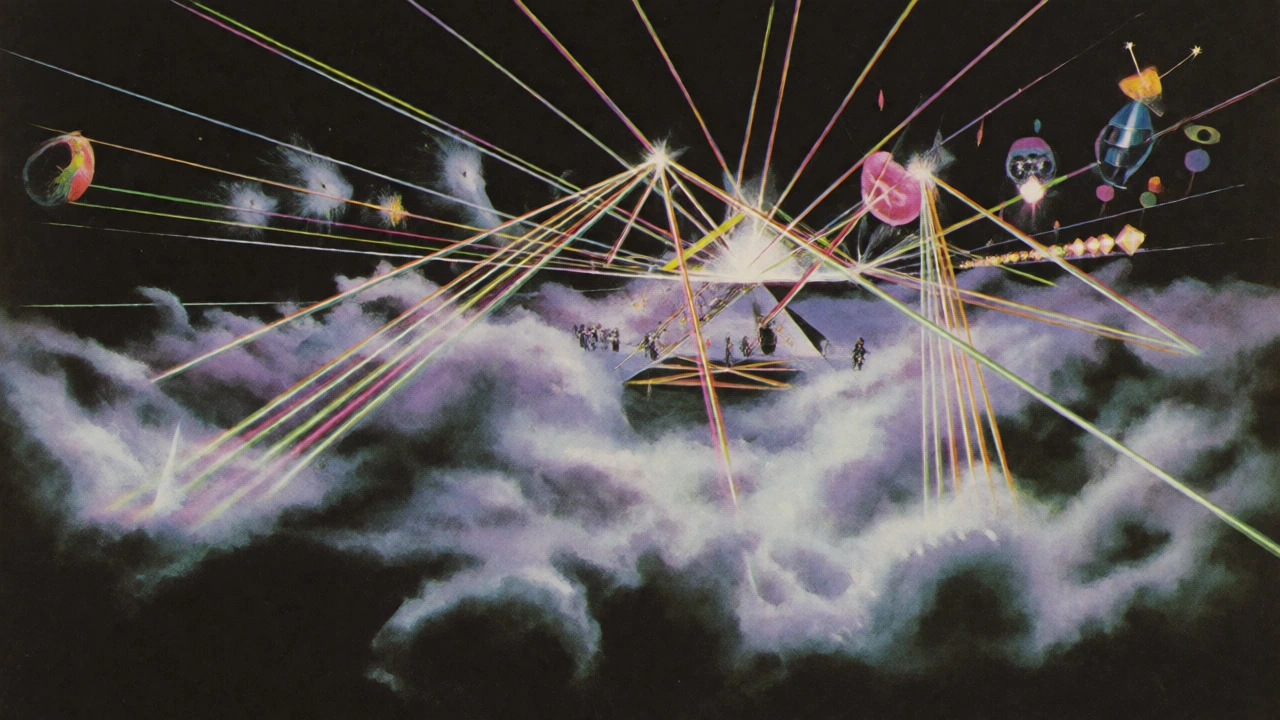
While KISS focused on character-driven stunts, Led Zeppelin mastered atmosphere. Their goal wasn't to tell a story, but to overwhelm the senses. In 1975, they introduced laser beams visible through dry-ice fog. Imagine three beams, each an inch wide, cutting across a darkened arena for 300 feet. It felt supernatural. John Bonham’s gong burst into flames at the end of "Whole Lotta Love," a simple effect that became iconic because of its timing and scale.
By 1977, Zeppelin’s production was a beast of engineering. They used more than 300 flashbulbs that could ignite simultaneously to spell out the band's name during encores. At the Los Angeles Forum, Jimmy Page was surrounded by rotating laser pyramids during instrumental breaks. This required specialized lighting designers and rental companies, marking a shift from improvised tricks to professional infrastructure. The band didn't just play songs; they manipulated space. The sheer size of their stage-often 80 by 40 feet-meant that effects had to be large enough to be seen from the nosebleeds. This pushed the entire industry toward bigger venues and brighter displays.
Pink Floyd and the Cinematic Influence
You might ask, why talk about Pink Floyd in an article about metal? Because they raised the ceiling. While not a metal band, their 1973 Dark Side of the Moon tour exploded model airplanes and beds onstage. They used inflatable pigs and pyrotechnic waterfalls. This cinematic approach influenced every act that followed. When Alice Cooper performed at Pittsburgh’s Three Rivers Stadium in 1972, he used a floating pyramid with a 60-foot base. It malfunctioned and broke apart, sending balloons into the parking lot. These failures show that spectacle was experimental. There was no manual. Crews adapted carnival devices and film effects to the road. The ambition often outpaced the technology, leading to spectacular crashes that audiences loved almost as much as the successes.
The Engineering Behind the Smoke
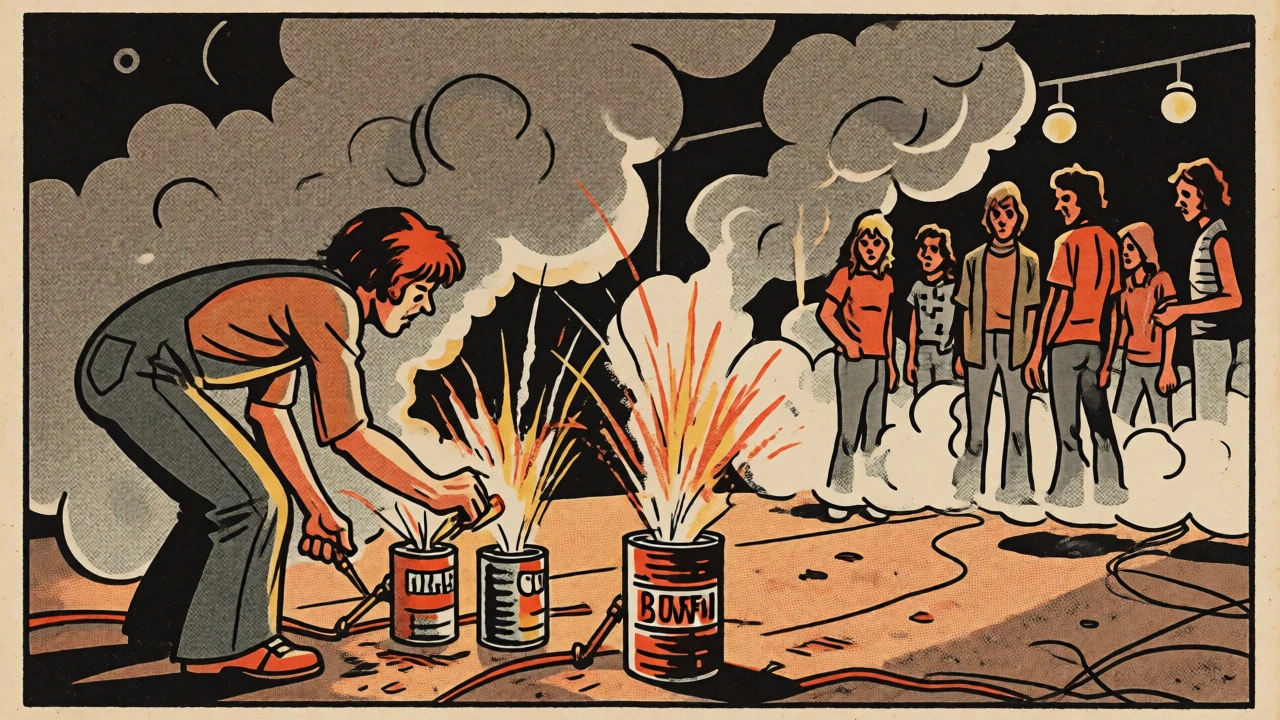
The transition from isolated tricks to synchronized design was gradual. Early smoke effects came from modified coffee cans filled with commercial fireworks. Roadies crawled onto stages to light fuses manually. By the late 1970s, productions relied on cue sheets, hydraulics, and specialized operators. Fire marshals became regular attendees, sometimes stopping shows if aisles were blocked or if pyrotechnics exceeded local codes. This friction forced professionalism. Bands couldn't just blow stuff up anymore; they had to negotiate with city officials and insurance companies.
This era established the core tools of modern metal shows:
- Thematic Props: Objects that represent the band's identity (Cooper’s guillotine, KISS’s rockets).
- Persona-Based Costumes: Makeup and armor that turn musicians into characters.
- Atmospheric Effects: Fog, smoke, and lasers to define space and mood.
- Mechanical Movement: Lifts and risers to change vertical dynamics.
- Choreographed Cues: Timing effects precisely to musical beats rather than random triggers.
The economic driver was clear. As bands moved from clubs to stadiums holding tens of thousands, distant fans needed visual anchors. A small guitar solo is hard to see from row Z. A flaming guitar is not. Spectacle solved the problem of legibility in large spaces. It also differentiated acts in a crowded market. If two bands sounded similar, the one with the exploding drums got the press coverage.
Risks, Costs, and Legacy
This evolution wasn't free. Transportation costs skyrocketed. Labor demands grew. Dependence on venue electricity became critical. A blown fuse could kill the show. Accidental injuries were common. But the legacy is undeniable. By 1979, the blueprint was set. Iron Maiden, Judas Priest, Ozzy Osbourne, and later Metallica inherited this model. They didn't invent the spectacle; they refined it. The 1970s taught us that a concert is a multi-sensory event. Music provides the emotional core, but visuals provide the memory hooks. Today’s billion-dollar tours are direct descendants of those chaotic, smoky, dangerous nights in the '70s. The birth of spectacle wasn't a single invention; it was a collective arms race between ambition and physics.
| Band | Primary Visual Focus | Key Prop/Effect | Production Scale | Safety Challenge |
|---|---|---|---|---|
| Alice Cooper | Narrative Horror | Guillotine with 40lb blade | Theatrical / Touring | Manual ignition of early smoke bombs |
| KISS | Superhero Personas | Levitating drum kit (20ft) | Industrial / Arena | Frehley electrocution; Simmons hair fire |
| Led Zeppelin | Atmospheric Scale | Laser beams & burning gong | Massive Stage Architecture | Fire marshal restrictions on pyro |
| Pink Floyd | Cinematic Surrealism | Exploding airplane & pigs | Stadium / Experimental | Mechanical failure (pyramid collapse) |
Why did pyrotechnics become so popular in 1970s metal?
Pyrotechnics helped solve a practical problem: visibility. As rock bands moved from clubs to stadiums, audiences grew too large to see subtle movements. Explosions, flames, and bright lights ensured that even fans in the upper decks could feel the energy and identify key moments in the performance.
Who invented the stage guillotine used by Alice Cooper?
The guillotine was designed by James Randi, a famous magician and skeptic, along with ideas associated with illusionist Will Rock. It was not just a prop but a functional mechanism with a real 40-pound blade, requiring precise timing to ensure Cooper’s safety while maintaining the illusion of execution.
What was the biggest risk for bands using pyrotechnics in the 1970s?
Injury and regulatory shutdowns were major risks. Ace Frehley was electrocuted in 1976, and Gene Simmons caught fire. Additionally, fire marshals frequently threatened to stop shows if aisles were blocked or if effects violated local safety codes, forcing bands to constantly negotiate with venue authorities.
How did Led Zeppelin differ from KISS in their use of spectacle?
KISS focused on character-driven stunts and recognizable personas, using props like rockets and levitating drums to build a brand. Led Zeppelin emphasized atmospheric scale, using lasers, fog, and massive stage structures to create immersive, almost supernatural environments without relying on fixed narrative plots.
Did Pink Floyd influence heavy metal stage shows?
Yes. Although not a metal band, Pink Floyd’s use of large-scale visual dramaturgy, such as exploding props and inflatables, raised the expectations for what a stadium show could be. Metal acts adopted this cinematic approach to compete in the same large venues, integrating complex visuals into their performances.
