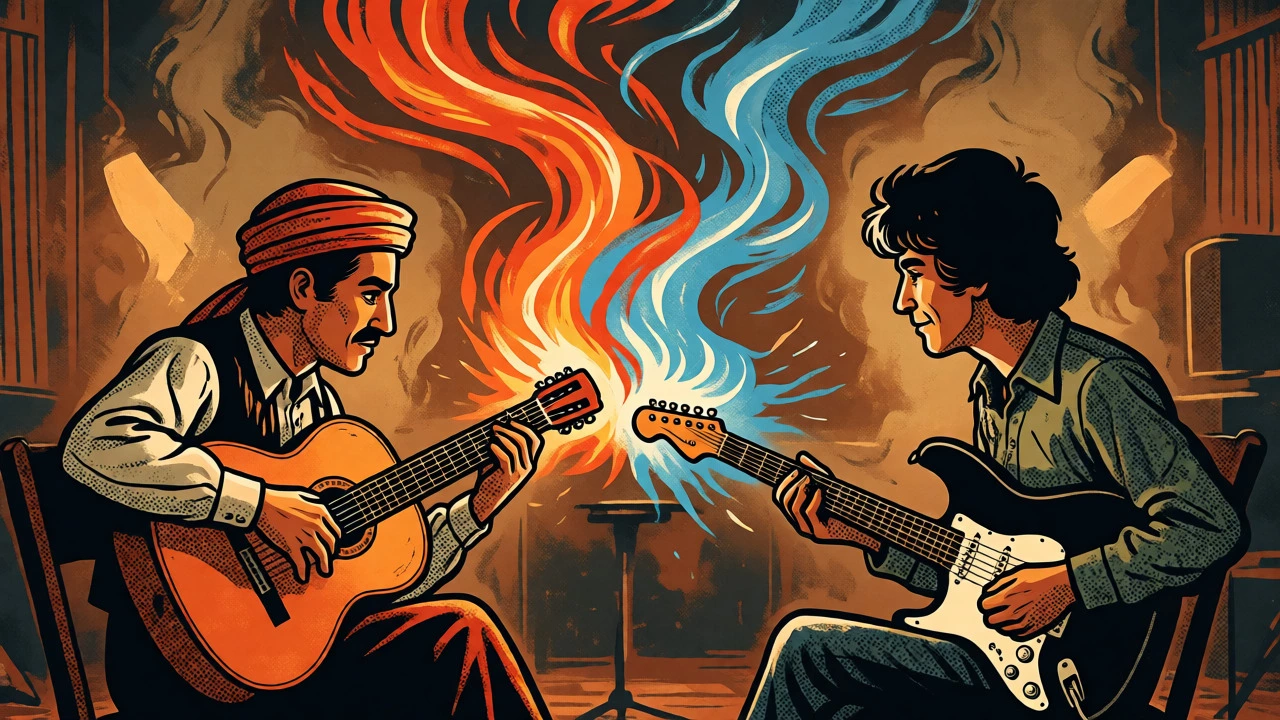

Imagine hearing the wail of a Hammond organ melt into the sharp, rhythmic bite of a flamenco guitar. That’s not a glitch in your speakers; it’s the sound of Rock Andaluz, or Andalusian Rock. It’s one of the most fascinating musical hybrids to emerge from Europe in the 1970s, blending the complex structures of British progressive rock with the raw, emotional depth of Andalusian folk traditions. If you’ve ever wondered how Spain managed to create a rock scene that didn’t just copy its American or British counterparts but actually reinvented them, this is where you start.
| Element | Description |
|---|---|
| Musical Roots | Progressive Rock, Psychedelia, Jazz-Rock, Flamenco (Palos like Bulerías, Soleá) |
| Peak Era | Late 1960s to early 1980s (Post-Franco transition) |
| Key Instruments | Flamenco Guitar, Hammond Organ, Synthesizers, Electric Guitar, Percussion |
| Cultural Context | Andalusian regional identity, counter-culture, democratic transition |
The Prehistory: Breaking the Barrier
Before bands started selling out stadiums in Madrid, there was a quiet experiment happening between two guitarists. In 1966, the legendary Roma guitarist Sabicas (Agustín Castellón) sat down with American jazz-rock guitarist Joe Beck. They recorded an album called Rock Encounter, which wasn’t released until 1970. This collaboration is often cited by historians as the first real crack in the wall between traditional flamenco and Western rock. It wasn’t a full-blown genre yet, but it proved that the intricate fingerpicking of flamenco could hold its own against electric distortion and drum kits.
This early interaction set the stage for what would become a massive cultural movement. But unlike the polite experiments of Sabicas and Beck, the next wave was loud, political, and deeply rooted in local identity.
Triana: The Architects of the Sound
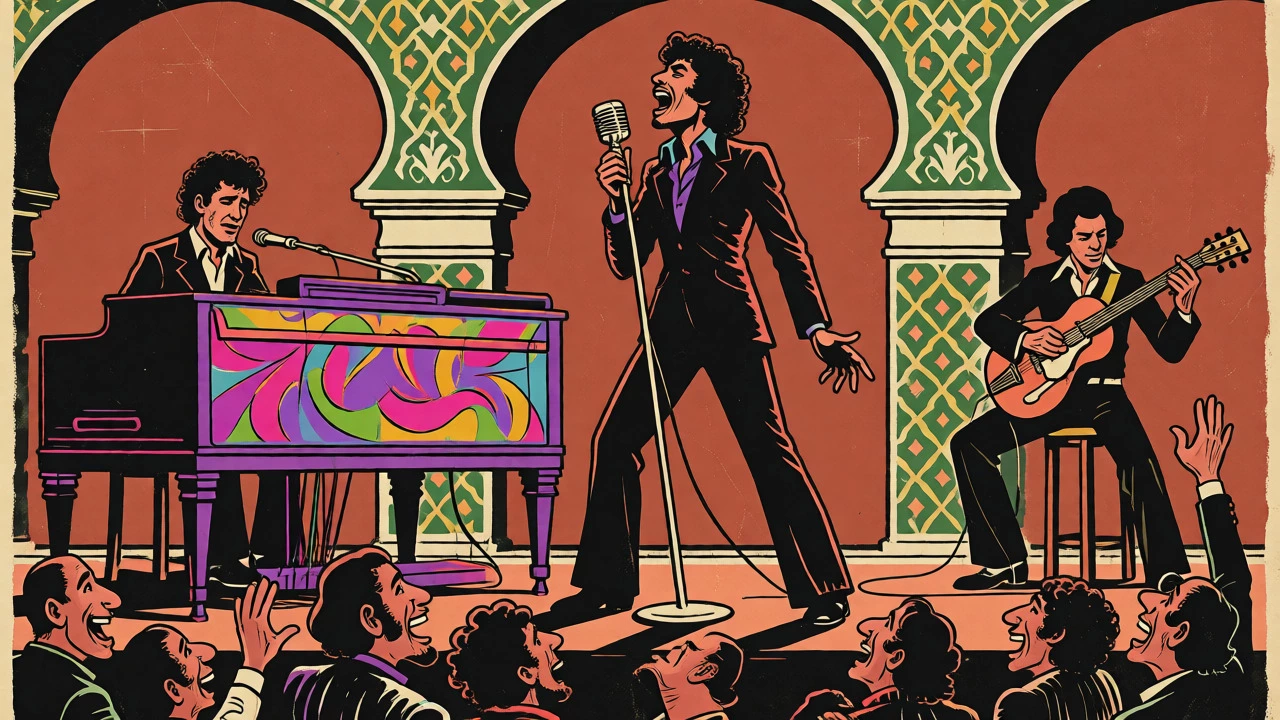
If you only listen to one band from this era, make it Triana. Formed in Seville in 1974, they are widely considered the pioneers who defined the genre. Their self-titled debut album, known simply as El Patio (1975), is the blueprint. It combined the extended, symphonic arrangements typical of bands like Emerson, Lake & Palmer with the melodic modes and rhythmic cycles of flamenco.
Their frontman, Jesús de la Rosa Luque, wrote lyrics in Spanish that spoke directly to the experiences of young Andalusians during Spain’s difficult transition from dictatorship to democracy. Songs like "Abre la Puerta" aren’t just catchy; they’re anthems of liberation. Triana didn’t just add a flamenco guitar solo to a rock song; they built entire songs around flamenco structures. They used the compás (rhythmic cycle) as the foundation, layering psychedelic keyboards and heavy drums on top. By the time their third album, Sombra y Luz (1979), came out, they had sold nearly 300,000 copies in Spain, making them arguably the biggest rock band in the country at the time.
The Ecosystem: More Than Just One Band
While Triana gets the headlines, Rock Andaluz was an ecosystem, not a solo act. Several other bands emerged in the late 70s, each taking the hybrid formula in different directions. You can’t understand the scene without knowing these key players:
- Imán, Califato Independiente: Based in Cádiz, they leaned heavily into symphonic prog and long-form instrumental pieces. Their track "Tarantos del Califato Independiente" is a 20-minute epic that uses a traditional flamenco form as the skeleton for a progressive suite.
- Cai: Also from Cádiz, led by keyboardist Chano Domínguez, Cai moved toward a more jazz-influenced sound. Their album Más allá de nuestras mentes diminutas (1978) shows a clear influence from Canterbury-scene prog, mixing odd meters with Andalusian melodies.
- Guadalquivir: From Seville, this group focused on instrumental jazz-rock fusion. Their debut LP, famously pressed on green vinyl, highlighted technical proficiency and improvisation over vocal hooks.
- Alameda: Hailing from Málaga, Alameda kept things more song-centered and traditionally Andalusian. Their vocals and melodies were closer to folk roots, even while backed by rock instrumentation.
- Medina Azahara: Often seen as the successors to Triana’s commercial success, they brought a harder, heavier edge to the mix. While still using flamenco elements, their sound was more aligned with hard rock and less with the psychedelic prog of Triana.
Politics, Identity, and the "Gypsy Rock" Label
You have to understand the political climate to get why this music mattered. In the late 1970s, Spain was shaking off the weight of Francisco Franco’s dictatorship. Regional identities, suppressed for decades, were exploding back into the public sphere. For Andalusians, adopting Anglo-American rock forms felt like a way to modernize, but rejecting them entirely felt like isolation. Rock Andaluz offered a third path: a modern sound that was unmistakably Spanish.
However, this fusion wasn’t without controversy. Musicologists like Diego García-Peinazo point out a tension in the genre. On one hand, these bands claimed authenticity and local pride. On the other, they were appropriating flamenco-a tradition deeply tied to the Roma community-into a rock format dominated by non-Roma musicians. The term "gypsy rock" was sometimes used, highlighting both the allure and the problematic distance between the performers and the source material. It was a negotiation of identity, trying to be both modern and traditional, global and local.

The Legacy: From Vinyl to Digital Hybrids
The classic period of Rock Andaluz largely ended with the death of Jesús de la Rosa in a car accident in 1983. The original energy dissipated, and the specific blend of prog and flamenco faded from the mainstream. But the idea didn’t die. It evolved.
In recent years, we’ve seen a resurgence of cross-cultural hybrids, though the tools have changed. Today, artists like Rocío Márquez and producer Bronquio create works like Tercer Cielo (2022), which mixes avant-garde electronic production with traditional flamenco styles. This isn’t quite the same as the organ-led prog of the 70s, but it shares the same DNA: the refusal to keep genres in separate boxes. Contemporary projects might mix flamenco with hip-hop, jazz, or ambient electronica, proving that the structural compatibility between flamenco and experimental music remains strong.
Where to Start Listening
If you want to dive into this world, don’t start with obscure deep cuts. Start with the classics. Here is a quick listening guide:
- Triana - El Patio (1975): The essential starting point. Listen to "En el Lago" and "Abre la Puerta."
- Triana - Sombra y Luz (1979): More polished, more atmospheric. A peak of the genre.
- Imán, Califato Independiente - Imán, Califato Independiente (1978): For those who prefer instrumental complexity and long jams.
- Cai - Más allá de nuestras mentes diminutas (1978): Great for fans of jazz-fusion and keyboard-heavy prog.
- Modern Context - Rocío Márquez & Bronquio - Tercer Cielo (2022): To hear how the flame has been passed to the digital age.
Rock Andaluz reminds us that globalization doesn’t always mean homogenization. Sometimes, when cultures collide, they create something entirely new. It’s a testament to the power of music to bridge gaps-not just between countries, but between centuries and communities.
What is Rock Andaluz?
Rock Andaluz, or Andalusian Rock, is a musical genre that emerged in Spain in the late 1960s and 1970s. It fuses the structures and instruments of progressive rock and psychedelia with the rhythms, melodies, and vocal styles of traditional flamenco music from Andalusia.
Why is Triana considered the most important band in this genre?
Triana is credited with creating the definitive template for Rock Andaluz. Their albums, particularly El Patio and Sombra y Luz, successfully integrated flamenco guitar and vocal phrasing into progressive rock structures, achieving massive commercial success and critical acclaim in post-Franco Spain.
Is Rock Andaluz the same as Flamenco Pop?
No. While both use flamenco elements, Rock Andaluz is rooted in progressive rock, jazz-rock, and psychedelia, featuring complex compositions and instrumental solos. Flamenco pop is generally more accessible, radio-friendly, and structured around standard verse-chorus pop formats.
When did the classic era of Rock Andaluz end?
The classic era is generally considered to have ended around 1983, coinciding with the tragic death of Triana’s lead singer, Jesús de la Rosa. While reunions and later bands continued the style, the specific cultural moment of the late 70s transition period passed.
Are there modern bands playing this style?
Yes, though the sound has evolved. Modern acts like Medina Azahara (who started in the 80s but continue today) and contemporary experimental artists like Rocío Márquez collaborate with producers to mix flamenco with electronic, hip-hop, and indie influences, keeping the spirit of fusion alive.