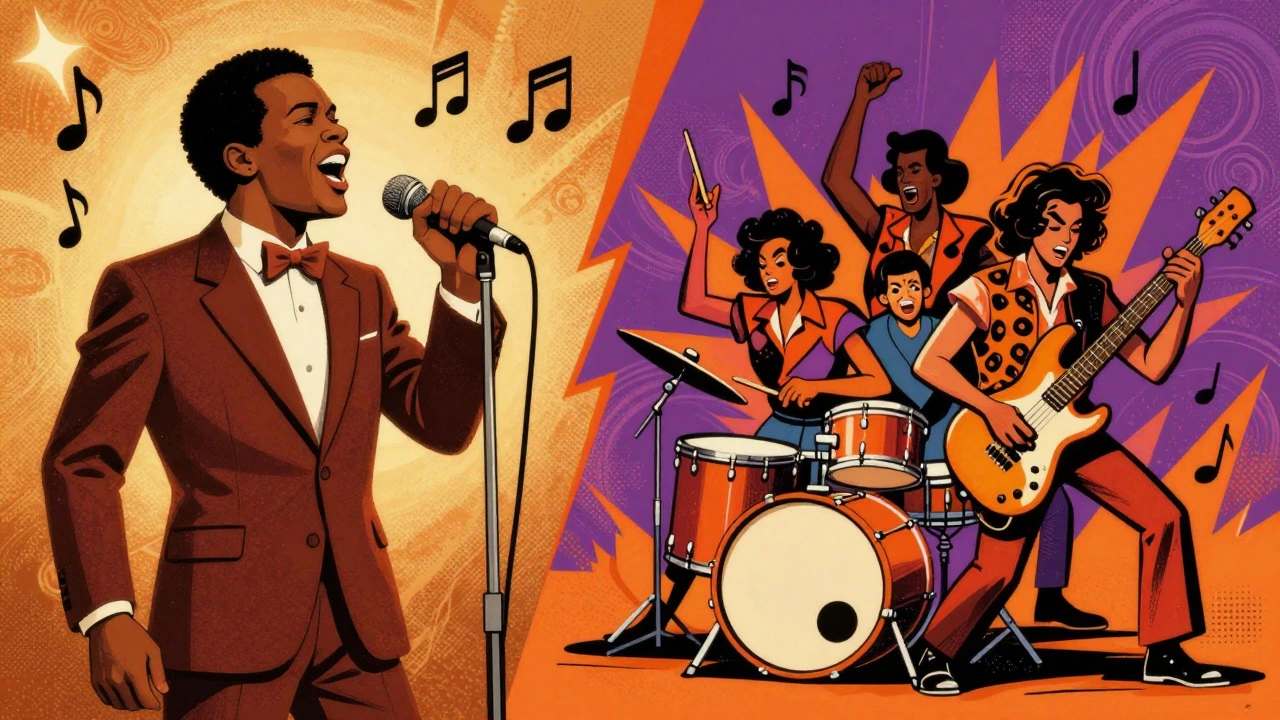

Put on a pair of headphones and listen to Sly & the Family Stone, a band that defined the boundary between soul and funk with their hit 'Dance to the Music'. Now switch to a track by Marvin Gaye, the legendary singer known for his smooth vocals and socially conscious albums like 'What's Going On'. At first glance, they might seem like different worlds. One is all about the groove, making your feet move uncontrollably. The other pulls at your heartstrings with raw emotion. But if you look closer at the 1970s, you’ll see these two genres were not just neighbors-they were family. They shared DNA, borrowed clothes from each other’s closets, and together shaped the sound of Black America.
The 1970s were a chaotic, transformative decade. The Civil Rights Movement had shifted gears, moving from street protests to cultural assertion. In this landscape, Soul music, a genre rooted in gospel and R&B that emphasizes emotional vocal delivery and melodic song structures began to evolve. It wasn’t just singing anymore; it was becoming more complex, layered, and experimental. Simultaneously, Funk, a rhythm-driven genre characterized by syncopated bass lines, heavy drums, and interlocking instrumental riffs exploded onto the scene. Funk didn't replace soul overnight. Instead, it grew out of it, taking the rhythmic elements of soul and turning them up to eleven. To understand one, you have to understand the other.
The Roots: Where Soul Came From
To get where we are, we need to start at the beginning. Soul music emerged in the late 1950s and 60s, blending African-American gospel music with rhythm and blues (R&B). Gospel gave it the fire-the call-and-response patterns, the melisma (stretching syllables across multiple notes), and the intense emotional delivery. R&B provided the instrumentation: electric guitars, horns, and steady backbeats.
By the early 1970s, soul had matured. It wasn't just about catchy singles anymore. Artists started treating the album as an art form. This shift was driven by labels like Motown Records, a Detroit-based record label founded by Berry Gordy that dominated pop charts with polished soul hits and Stax Records, a Memphis-based label known for its raw, gritty soul sound and integration of Black musicians. Motown focused on polish and crossover appeal, while Stax leaned into the grit of the South. But even within these distinct styles, there was a common thread: the song was king. The melody, the lyrics, and the lead vocalist were the stars of the show.
The Shift: How Funk Took Over the Rhythm
If soul is about the melody, funk is about the rhythm. Specifically, it’s about the "one." James Brown, known as the Godfather of Soul who pioneered funk by emphasizing the first beat of the measure and stripping down harmonic complexity is credited with inventing this approach. He told his bands to forget the chorus-verse structure and focus entirely on the groove. He wanted the bass and drums to lock in so tightly that the rest of the instruments became percussion.
This change was radical. In traditional soul, the bass line often followed the chord changes, providing a harmonic foundation. In funk, the bass line became independent, playing syncopated, repetitive riffs that drove the song forward. Guitarists stopped strumming chords and started playing sharp, staccato chops. Drummers moved away from simple beats to complex, polyrhythmic patterns. This created a hypnotic, danceable texture that felt different from anything before it.
| Feature | 1970s Soul | 1970s Funk |
|---|---|---|
| Primary Focus | Melody, Vocals, Emotion | Rhythm, Groove, Danceability |
| Harmonic Structure | Complex chord progressions, verse-chorus forms | Simple or static chords, vamping loops |
| Bass Role | Supports harmony, follows chord changes | Lead instrument, plays syncopated riffs |
| Vocal Style | Emotional ballads, virtuosic leads, choirs | Chants, spoken word, rhythmic hooks |
| Key Artists | Marvin Gaye, Al Green, Curtis Mayfield | Parliament-Funkadelic, The Meters, Kool & the Gang |
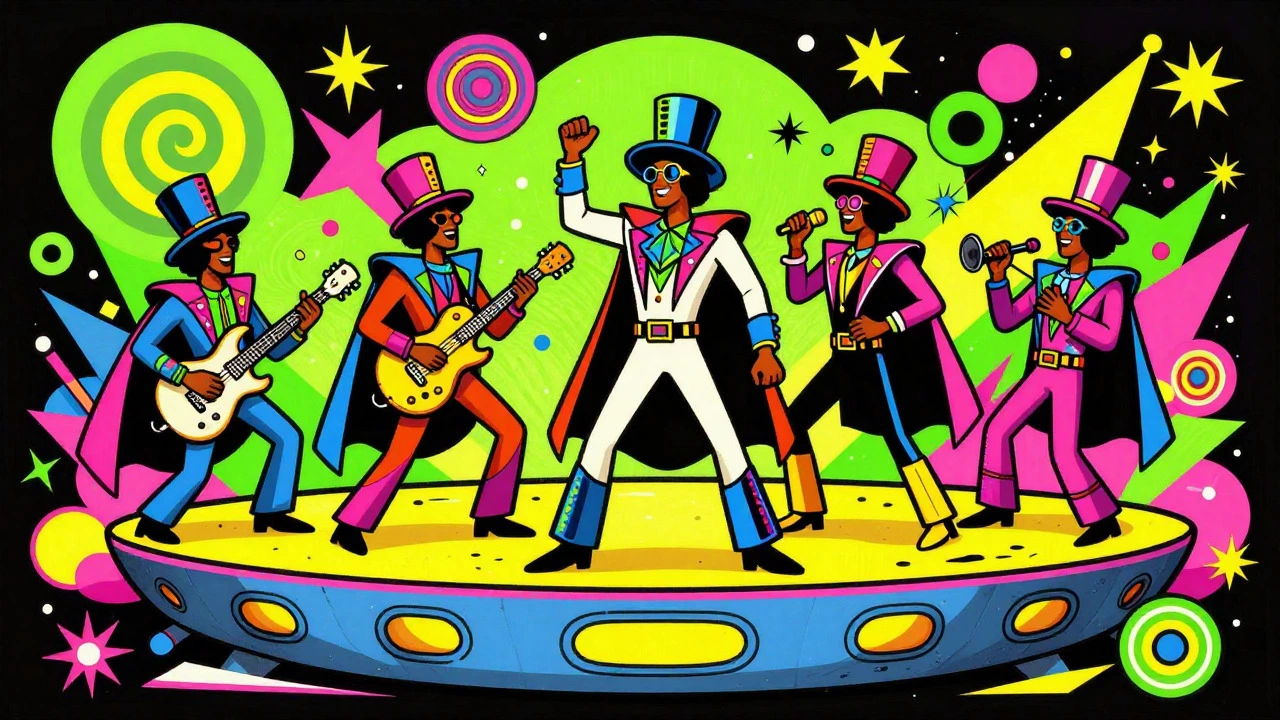
The Blurring Lines: Psychedelic Soul and P-Funk
Here’s where it gets interesting. You can’t draw a hard line between soul and funk in the 1970s because many artists did both. Take Curtis Mayfield, a singer-songwriter whose work blended soulful melodies with funky rhythms and social commentary. His soundtrack for the movie *Super Fly* (1972) is pure soul in its storytelling but undeniably funky in its rhythm. Or look at Stevie Wonder, a multi-instrumentalist who incorporated funk rhythms into his soul-pop masterpieces during his classic period. Albums like *Talking Book* and *Innervisions* feature tight, funky grooves underpinning deeply soulful vocals.
Then there was the rise of psychedelic soul. Producers like Norman Whitfield, a producer who mixed rock textures with soul vocals to create psychedelic soul for acts like The Temptations worked with The Temptations to create songs like "Cloud Nine" and "Ball of Confusion." These tracks featured distorted guitars and driving bass lines that sounded like rock and roll but retained the vocal harmonies of soul. This style paved the way for funk, showing that soul could be heavier, louder, and more aggressive.
On the other side, George Clinton, the leader of Parliament-Funkadelic who created a sci-fi themed funk collective that emphasized group performance over individual stardom led Parliament-Funkadelic (P-Funk) to turn funk into a theatrical experience. While P-Funk was heavily rhythmic, their lyrics and stage shows were steeped in the communal spirit of soul. They weren't just playing music; they were creating a culture. And that culture was deeply connected to the broader Black experience of the time.
Cultural Context: More Than Just Music
You can’t talk about 1970s soul and funk without talking about what was happening outside the studio. The 1960s Civil Rights Movement had achieved legislative victories, but economic inequality and social tension remained high. The Black Power movement gained traction, emphasizing pride, self-sufficiency, and cultural identity. Music reflected this shift.
Soul music became a voice for political dissent. Marvin Gaye's What's Going On (1971) is the perfect example. It’s a concept album that addresses war, poverty, and environmental destruction. It’s soulful, yes, but it’s also a protest. Similarly, Al Green, a singer known for his powerful falsetto and gospel-influenced soul records’s early 70s hits like "Let's Stay Together" captured the romantic idealism of the era, while later works explored deeper spiritual themes.
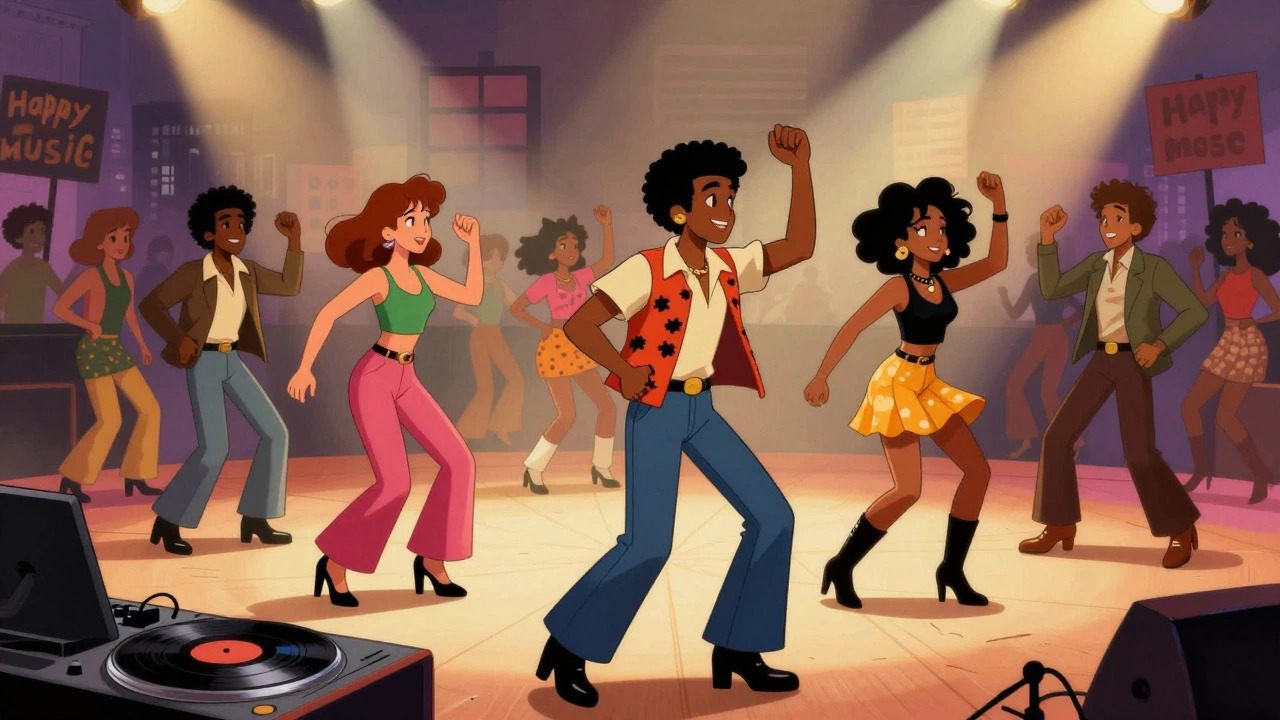
Funk, meanwhile, offered a different kind of resistance. It was less about explicit protest lyrics and more about embodied joy. As drummer Hamilton Bohannon put it, funk was "happy music" that reunited African Americans "one nation under a groove." In a society that still marginalized Black people, the dance floor became a space of freedom. Bands like The Meters, a New Orleans funk band known for their intricate rhythmic interplay and instrumental prowess from New Orleans and Kool & the Gang, a band that transitioned from hard funk to smoother disco-funk hits in the mid-70s provided the soundtrack for parties and clubs where people could escape reality and celebrate their identity.
Fashion also played a role. The bell-bottoms, platform shoes, and Afrocentric designs worn by soul singers were mirrored by the flamboyant, futuristic costumes of P-Funk. Both styles rejected mainstream white fashion norms and embraced a bold, unapologetic Black aesthetic. This visual language reinforced the musical message: Black culture was vibrant, creative, and powerful.
The Legacy: Why It Still Matters
By the late 1970s, disco began to dominate the charts, pushing both soul and funk to the sidelines. But the influence of these genres never faded. In fact, they laid the groundwork for almost every major Black music genre that followed. Hip-hop producers sampled funk breaks extensively-think of the drum break from James Brown’s "Funky Drummer" or the bassline from The Meters' "Cissy Strut." These samples became the backbone of rap music.
Contemporary R&B owes its existence to the fusion of soul and funk. Artists like D'Angelo, a neo-soul artist who revived the raw, organic sound of 70s soul and funk in the 1990s and Erykah Badu in the 1990s looked back to the 1970s for inspiration, blending the vocal stylings of soul with the rhythmic complexity of funk. Even today, when you hear a modern pop song with a heavy bass drop and a catchy hook, you’re hearing the ghost of 1970s funk and soul.
Understanding the overlap between soul and funk helps us appreciate the richness of American music history. It wasn’t a competition; it was a conversation. Soul asked questions, and funk answered with rhythm. Together, they created a cultural movement that resonated far beyond the dance floor.
Is James Brown considered a soul or funk artist?
James Brown is known as the "Godfather of Soul," but he is equally responsible for creating funk. His early career was rooted in soul and R&B, but in the late 1960s, he shifted his focus to rhythm, emphasizing the first beat of the measure and simplifying chord structures. This evolution made him the bridge between soul and funk.
What is the main difference between soul and funk?
The main difference lies in the focus of the music. Soul prioritizes melody, emotional vocal delivery, and harmonic complexity. Funk prioritizes rhythm, groove, and danceability, often using repetitive bass lines and syncopated drums instead of complex chord progressions.
Did soul music die in the 1970s?
No, soul didn’t die, but it evolved. By the mid-1970s, the dominant sound on the charts shifted toward funk and disco. However, soul continued in forms like "quiet storm" and adult contemporary. Later, it influenced neo-soul and modern R&B, keeping its legacy alive.
How did funk influence hip-hop?
Funk provided the foundational beats and basslines for hip-hop. Early DJs sampled iconic funk breaks from artists like James Brown, The Meters, and Parliament-Funkadelic to create the rhythmic basis for rap tracks. The emphasis on groove in funk directly translates to the boom-bap sound of old-school hip-hop.
Who are some key artists that blended soul and funk?
Artists like Sly & the Family Stone, Stevie Wonder, Curtis Mayfield, and Earth, Wind & Fire successfully blended soulful vocals and melodies with funky rhythms. Their work demonstrates how the two genres could coexist and enhance each other.