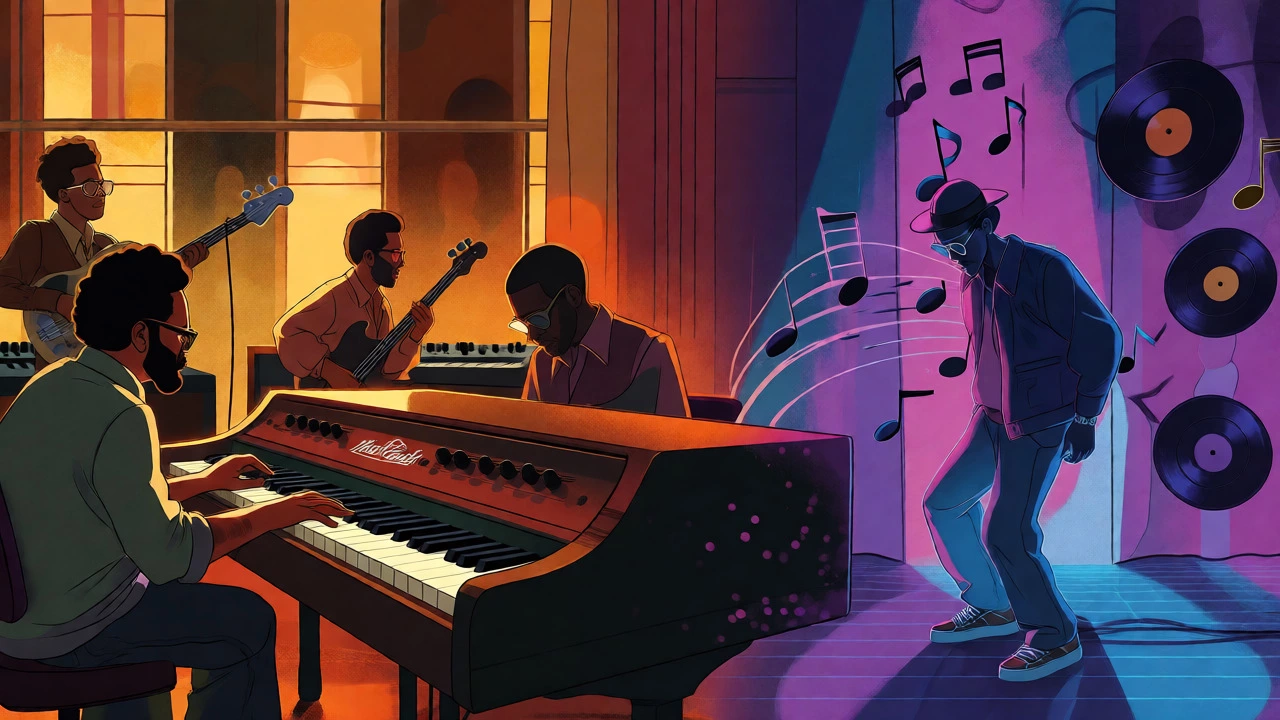

You hear a song today with lush chords, a lazy drum groove, and lyrics that feel like a therapy session. You might think it’s modern alternative R&B. But if you peel back the layers, you’ll find the blueprint was drawn twenty years earlier. The smooth, sophisticated sound of Neo Soul is not an invention of the 1990s; it is a direct resurrection of 1970s soul aesthetics, filtered through hip-hop sensibilities. This genre didn’t just borrow from the past-it rebuilt it.
Why does this matter? Because understanding where neo soul came from explains why artists like D’Angelo or Erykah Badu sounded so different from their pop-R&B peers. They weren’t chasing trends. They were chasing the spirit of Marvin Gaye and Curtis Mayfield. If you’re trying to grasp the DNA of modern R&B, you have to look at how the 1970s saved the genre from becoming too sterile.
The Blueprint: What Made 1970s Soul Different?
To understand neo soul, you first need to know what it was reviving. In the early 1970s, soul music shifted. It moved away from the tight, dance-floor energy of the 1960s Motown hits. Artists began treating albums as cohesive artistic statements rather than collections of singles. Think of Marvin Gaye’s What’s Going On (1971). It wasn’t just love songs. It tackled the Vietnam War, police brutality, and ecology. The production was warm, using live bands instead of rigid studio tricks.
Curtis Mayfield’s Superfly soundtrack (1972) did the same thing for film scores. It used falsetto vocals over complex arrangements that felt both gorgeous and morally serious. These records had a specific "feel." The drums were behind the beat. The bass lines were played by humans, not sequenced by machines. The keyboards-often Fender Rhodes-had a warm, electric hum. This is the sonic palette that neo soul artists would later steal, not with shame, but with pride.
Why the 1980s Created a Void
If the 1970s were about warmth, the 1980s were about polish. Technology changed everything. Drum machines like the LinnDrum replaced live drummers. Synthesizers replaced horn sections. Vocals became heavily processed. By the late 1980s and early 1990s, mainstream R&B was slick, programmed, and often emotionally distant. It was catchy, sure, but it lacked the grit and improvisation of the previous decade.
Musicians started to miss the human element. They missed the mistakes that made a performance feel real. A few pioneers began pushing back. Tony! Toni! Toné!, led by Raphael Saadiq, released albums in the early 1990s that featured live instrumentation and retro styling. They weren’t quite neo soul yet, but they lit the fuse. Then came Joi’s Pendulum Vibe in 1994, which critics noted for its 1970s-style arrangements. The stage was set for a full-blown revival.
Naming the Movement: Kedar Massenburg’s Stroke of Genius
Here is a fun fact: the term "neo soul" wasn’t coined by an artist. It was coined by a marketer. In the late 1990s, Kedar Massenburg, a Motown executive managing D’Angelo and Erykah Badu, needed a way to sell these records. Radio stations didn’t know where to put them. They weren’t traditional R&B, but they weren’t rock or jazz either. Massenburg called them "neo soul" to signal that this was a new take on old school soul.
This label stuck because it described the intent perfectly. These artists were paying devotion to the era of classic soul. As AllMusic notes, they sought a style with "few concessions" to post-1975 trends. They wanted the complexity of jazz harmony and the social consciousness of 1970s funk, but they delivered it with a 1990s hip-hop attitude. It was a deliberate rejection of the polished, auto-tuned future in favor of an analog past.
The Sonic Specifications: Live Bands vs. Drum Machines
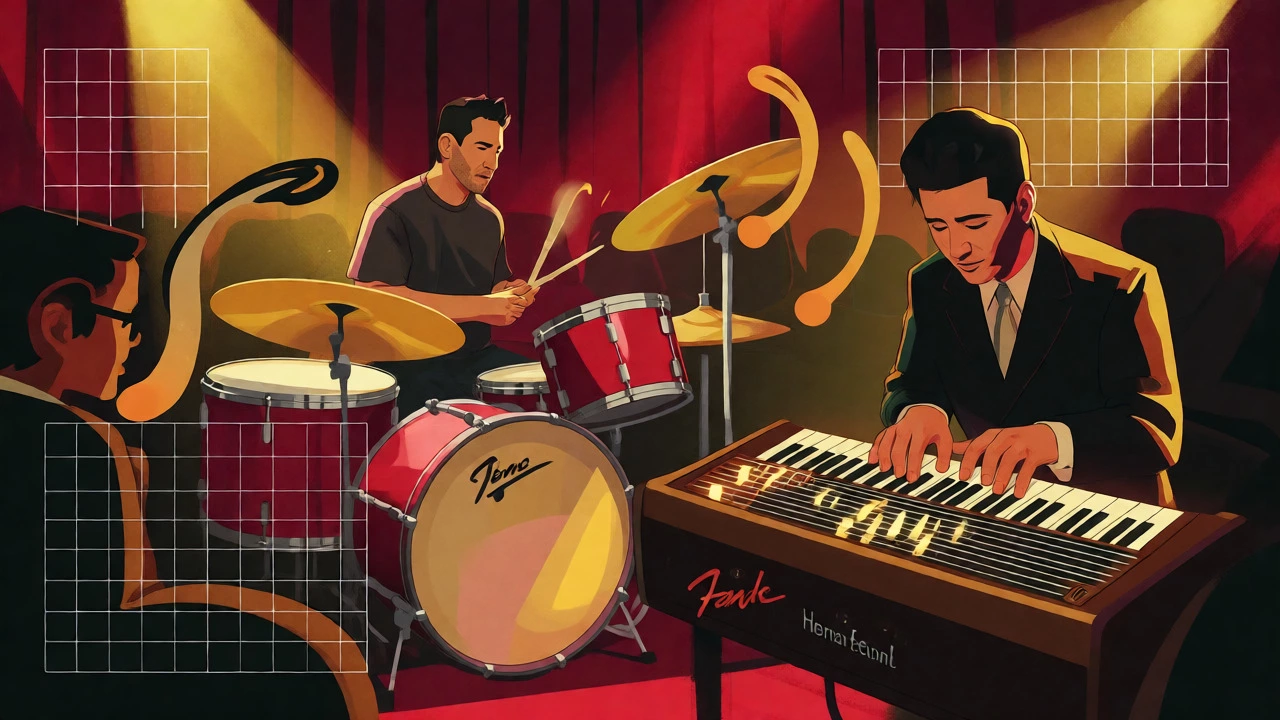
How do you actually build a neo soul track? It comes down to three main elements that directly mirror 1970s recording techniques.
- Live Instrumentation: Instead of sampling a breakbeat, neo soul producers hired real musicians. You heard actual bass players, drummers, and keyboardists playing together in the room. This created a natural push-and-pull in the rhythm.
- Jazz-Influenced Harmony: Standard pop uses simple chord progressions. Neo soul borrowed extended chords from jazz-major 7ths, minor 9ths, and suspended chords. This gave the music a sophisticated, sometimes melancholic mood.
- Loose Timing: Modern digital audio workstations allow you to snap every note to a perfect grid. Neo soul producers refused to do this. They kept the drums slightly "behind the beat," creating a laid-back, head-nodding groove reminiscent of Stevie Wonder’s mid-70s work.
This approach required expensive studio time and skilled players. It also meant that no two takes were exactly alike. That imperfection was the point. It felt human.
The Key Players and Their 1970s Heroes
The movement exploded between 1995 and 2002. Several key albums served as bridges between the two eras. Let’s look at how specific artists channeled their predecessors.
| Neo Soul Artist | Key Album (Year) | Primary 1970s Influence | Sonic Characteristics |
|---|---|---|---|
| D’Angelo | Voodoo (2000) | Stevie Wonder / Sly Stone | Complex polyrhythms, heavy bass, psychedelic textures |
| Erykah Badu | Baduizm (1997) | Gil Scott-Heron / Billie Holiday | Spoken word intros, minimal beats, spiritual themes |
| Maxwell | Urban Hang Suite (1996) | Prince / Marvin Gaye | Falsetto vocals, romantic ballads, guitar-driven soul |
| Lauryn Hill | The Miseducation... (1998) | Curtis Mayfield / Bob Marley | Social commentary, reggae influences, raw emotion |
| The Roots | Things Fall Apart (1999) | James Brown / Funkadelic | Live hip-hop band, jazz fusion, political lyricism |
D’Angelo’s Voodoo is perhaps the purest example. Recorded largely at Electric Lady Studios-the same NYC studio Jimi Hendrix built in 1970-D’Angelo worked with Questlove and J Dilla to create a dense, swirling soundscape. It sounded like something from 1973, but the lyrics addressed modern relationships and Black identity. Erykah Badu, meanwhile, leaned into the spiritual and poetic side of soul, channeling the vibe of Gil Scott-Heron’s spoken-word performances.
The Soulquarians: Where Hip-Hop Met Soul
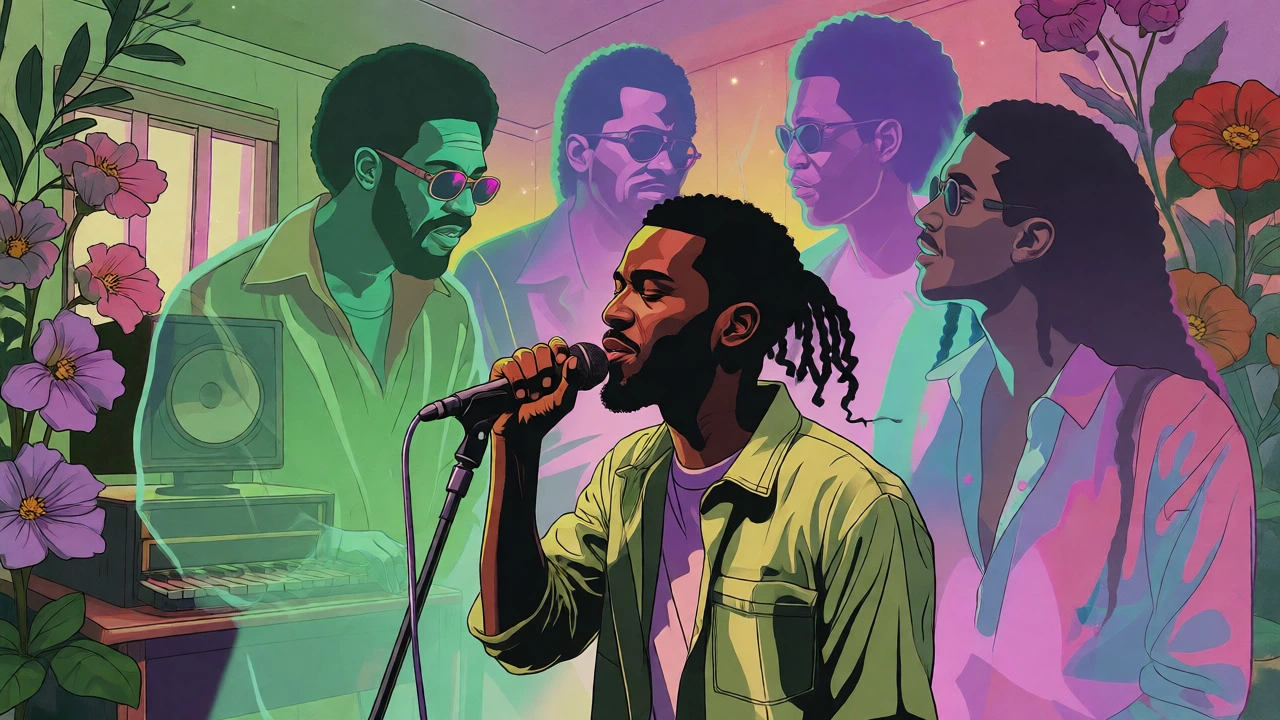
You can’t talk about neo soul without mentioning the Soulquarians. This wasn’t a formal band, but an informal collective of artists who collaborated constantly. It included D’Angelo, Erykah Badu, Common, Bilal, and producer J Dilla. They shared a philosophy: use live instruments, keep it organic, and respect the ancestors.
Their collaboration resulted in some of the most important albums of the era, such as Common’s Like Water for Chocolate (2000) and Mos Def’s Black on Both Sides (1999). These records proved that hip-hop could be sophisticated and musical, not just sample-based. The 1970s influence here was less about copying melodies and more about adopting the ethos of artistic freedom and technical proficiency.
Commercial Success and Eventual Decline
For a brief window, neo soul dominated the prestige end of the music industry. Albums went platinum. Critics raved. But by the mid-2000s, the trend faded. Why? The music business struggled with "unapologetic and complicated black artists," as critic Tyler Lewis noted. Neo soul didn’t fit neatly into radio formats. It was too slow for clubs, too complex for pop radio, and too urban for adult contemporary.
Meanwhile, newer R&B styles emerged that embraced digital production again. Auto-tune returned. Beat-making became faster and cheaper. The labor-intensive process of hiring a live band became harder to justify financially. However, the decline wasn’t a failure. It was a transition. The aesthetic didn’t die; it just went underground and evolved.
The Legacy Today: From Alternative R&B to Lo-Fi
Today, you hear neo soul everywhere. Artists like Frank Ocean, Solange, and Anderson .Paak carry the torch. They don’t always call themselves neo soul, but they use the same tools: jazz chords, live drums, and introspective lyrics. Even in genres far removed from R&B, like lo-fi hip-hop, you’ll find samples of 1970s soul records that were popularized by the neo soul movement.
The cycle continues. New generations discover Marvin Gaye through D’Angelo, then go back to listen to the original. The bridge remains intact. If you want to make music that feels timeless, study the neo soul playbook. Hire a real drummer. Learn your major 7th chords. And don’t be afraid to leave a little space in the mix.
Who invented the term neo soul?
The term was coined by Kedar Massenburg, a Motown executive, in the late 1990s. He used it to market the work of artists like D’Angelo and Erykah Badu, distinguishing their live-instrumentation style from the programmed R&B dominating radio at the time.
What are the key musical characteristics of neo soul?
Neo soul is defined by live instrumentation (especially Fender Rhodes pianos and electric bass), jazz-influenced harmonic progressions, loose or 'behind-the-beat' drumming, and socially conscious or spiritually aware lyrics. It deliberately avoids the quantized precision of standard digital R&B production.
Which 1970s artists influenced neo soul the most?
Marvin Gaye, Curtis Mayfield, Stevie Wonder, and Sly Stone are frequently cited as primary influences. Their emphasis on album-oriented storytelling, complex arrangements, and social commentary provided the template for neo soul artists.
Did neo soul achieve commercial success?
Yes, particularly between 1995 and 2002. Albums like Lauryn Hill’s The Miseducation of Lauryn Hill and D’Angelo’s Voodoo achieved platinum status and critical acclaim, though the genre never matched the sheer volume of sales seen in mainstream pop-R&B.
Is neo soul still relevant today?
Absolutely. While the specific label 'neo soul' peaked in the early 2000s, its aesthetic principles dominate modern alternative R&B. Artists like H.E.R., Daniel Caesar, and Summer Walker continue to use the live-band, jazz-chord approach pioneered by the genre’s founders.