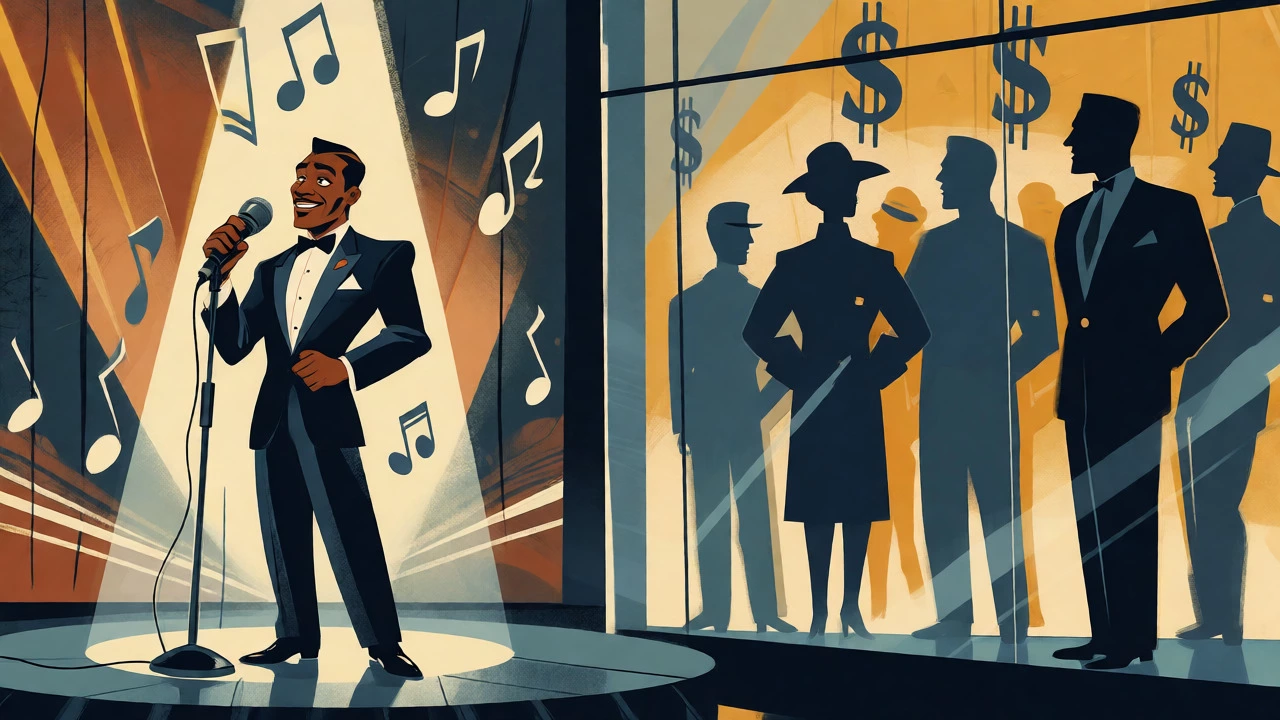

Imagine hosting your own national TV show in the 1950s. You’re brilliant, you’re beloved by critics, and audiences love you. But there’s one problem: no major advertiser will touch you because of your race. That was the reality for Nat King Cole. His story isn’t just a footnote; it’s the starting gun for how soul and R&B fought for space on the small screen. This wasn’t just about getting famous-it was about proving that Black culture could anchor mainstream entertainment.
The Sponsorship Wall and Early Barriers
Before we talk about the hits, we have to talk about the money. In the mid-1950s, television was new, shiny, and strictly controlled by corporate sponsors. When NBC launched The Nat King Cole Show on November 5, 1956, it was a groundbreaking moment. Cole became the first African American to host a network variety program. He had Ella Fitzgerald, Sammy Davis Jr., and Harry Belafonte on his guest list. The show was critically acclaimed. So why did it end in December 1957, barely a year later?
Sponsors were scared. They feared backlash from white advertisers who didn’t want their products associated with a Black host. Without a national sponsor to foot the bill, the show folded. It’s a stark reminder that visibility on TV wasn’t just about talent; it was about commercial viability as defined by white gatekeepers. Historians like Christopher H. Sterling and Michael C. Keith note that while Black musicians appeared frequently in early variety programming, these appearances often reinforced existing racial hierarchies rather than breaking them down. Presence didn’t equal power.
Motown Takes Over the Airwaves
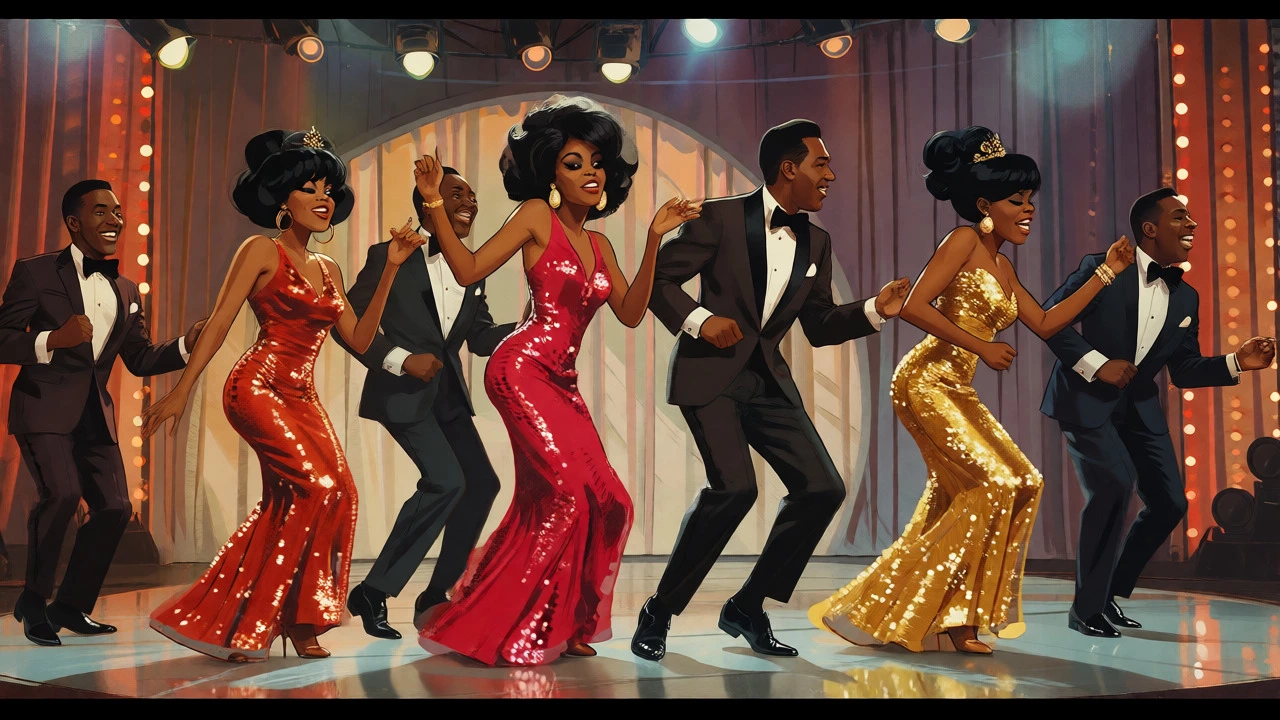
If Cole showed the ceiling, Motown smashed through it with a sledgehammer. Berry Gordy understood something crucial: television events could bypass the weekly grind of variety shows. Enter TCB (Taking Care of Business), broadcast on NBC on December 9, 1968. Starring Diana Ross & the Supremes and the Temptations, this special was a gamble. Would two Black groups headline a network prime-time slot?
| Program/Event | Year | Format | Significance |
|---|---|---|---|
| The Nat King Cole Show | 1956-1957 | Weekly Variety | First Black-hosted network series; failed due to lack of sponsorship. |
| TCB | 1968 | TV Special | First time two Black groups headlined a network special; won time slot. |
| The Flip Wilson Show | 1970-1974 | Comedy-Variety | Integrated Black music into mainstream comedy format led by a Black star. |
| Soul Train | 1971-2006 | Syndicated Variety | Longest-running first-run syndicated show; centered Black audience and style. |
| Motown 25 | 1983 | Anniversary Special | Cultural reset; featured Michael Jackson’s moonwalk to 47 million viewers. |
TCB didn’t just survive; it thrived. It beat out other programs to become the top-rated variety show of 1968 and earned an Emmy nomination. This proved that when Black artists were given center stage in a high-production environment, they didn’t need to be "safe" or diluted. They could carry the night. This success paved the way for more ambitious projects, showing networks that Black audiences were a lucrative market worth targeting directly, not just an afterthought.
Flip Wilson and the Comedy-Variety Hybrid
While Motown focused on musical spectacle, Flip Wilson brought a different kind of visibility. His show, which premiered on NBC in September 1970, mixed sketch comedy with musical performances. Wilson’s approach was what he called a "fruit salad"-a mix of Black and white entertainers. He hosted everyone from James Brown and Aretha Franklin to Johnny Cash and Bing Crosby.
This format was significant because it normalized Black stardom within a broader entertainment context. Wilson wasn’t just a singer; he was a comedian, a writer, and a producer. By placing soul and R&B acts alongside country stars and rock icons, he challenged the segregation of genres. Viewers saw Stevie Wonder performing next to Joan Rivers, suggesting that Black music was part of the American cultural fabric, not a separate niche. However, even here, the limits were visible. Wilson had to balance his humor to avoid alienating conservative suburban audiences, a tightrope walk that many Black performers had to master to stay on air.
Soul Train: The Game Changer
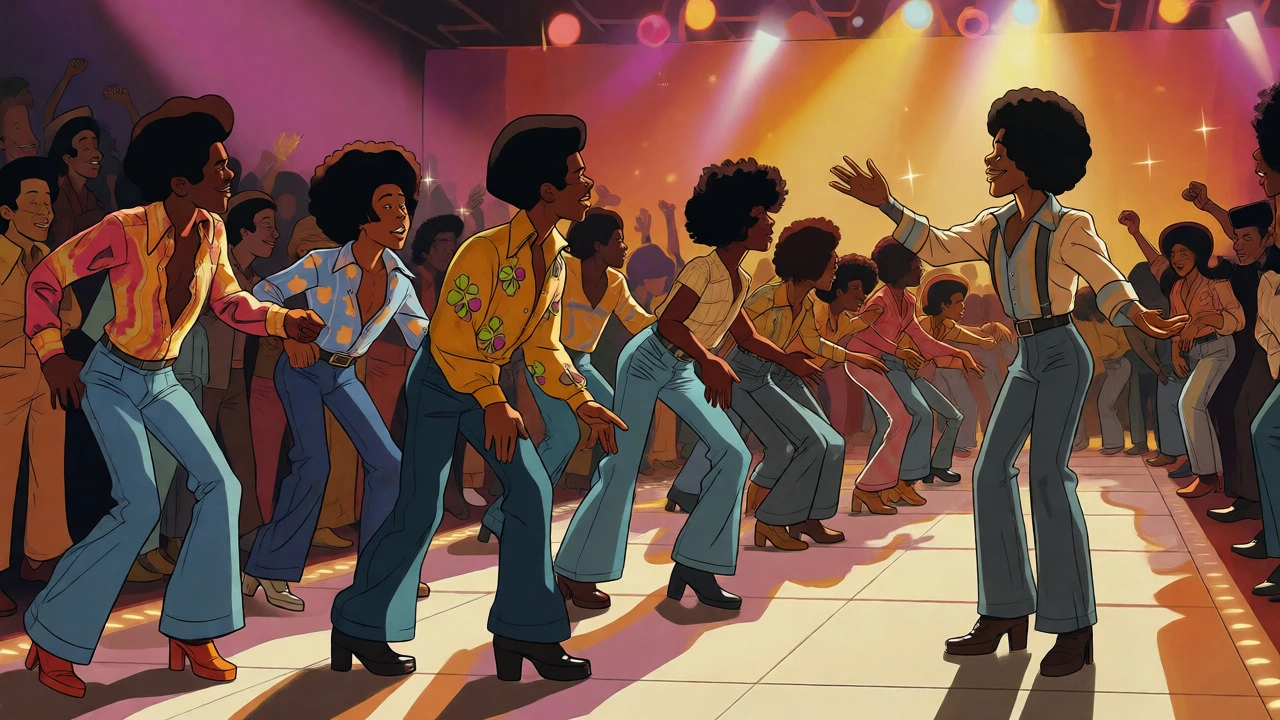
If you ask anyone over thirty about soul music on TV, they’ll mention one name: Soul Train. Created by radio announcer Don Cornelius in Chicago, it started as a local black-and-white show in 1970. Cornelius put $400 of his own money into the pilot. By October 1971, it went national in syndication.
What made Soul Train different? It wasn’t trying to appeal to everyone. It was unapologetically Black. The set design, the fashion, the hair, and the dancing were all rooted in Black aesthetics. The "Soul Train Line," where dancers lined up and grooved down the aisle, turned ordinary teenagers into stars. For the first time, young Black Americans saw themselves reflected positively on national television, not as servants or sidekicks, but as cool, stylish, and vibrant.
Commercially, this was genius. Sponsors like Johnson Products (makers of Afro Sheen) realized that advertising on Soul Train reached a specific, loyal demographic. The show grew from seven cities to over 90 markets by 1974. It ran for 35 seasons, becoming the longest-running first-run nationally syndicated show in TV history. It wasn’t just a show; it was a business model that monetized Black culture directly.
The Event Special and Cultural Reset
By the 1980s, the landscape had shifted. MTV was rising, and traditional variety shows were fading. But television still had one trick up its sleeve: the event special. On May 16, 1983, NBC aired Motown 25: Yesterday, Today, Forever. This wasn’t just a concert; it was a coronation.
Michael Jackson’s performance of "Billie Jean" is the most famous moment, where he debuted the moonwalk. But the impact was broader. The special drew an estimated 47 million viewers, giving NBC a massive ratings win. It reminded the world of the roots of modern pop music. It connected the dots between the Supremes, the Jackson 5, and the solo superstars of the ’80s. For older fans, it was nostalgia; for younger ones, it was education. It proved that soul and R&B weren’t relics-they were the foundation of contemporary music.
Limits of Visibility
We shouldn’t paint a picture of inevitable progress. Getting on TV didn’t fix racism. Scholars point out that while Black performers gained visibility, the structures of television remained largely white-controlled. Network executives decided who got picked up, and sponsors held the purse strings. Even Soul Train faced challenges later on. As music videos took over and hip-hop emerged, some critics felt the show’s format became dated. Don Cornelius himself reportedly disliked hip-hop, which created friction with the evolving sound of Black youth.
Yet, the legacy remains. These shows created a visual language for soul music. They gave faces to voices. They allowed a generation to see their culture celebrated, not just tolerated. From Nat King Cole’s struggle for sponsorship to Michael Jackson’s moonwalk, the journey of soul on television reflects the broader struggle for recognition in American media. It was messy, commercially driven, and often imperfect-but it changed everything.
Why did The Nat King Cole Show fail despite critical acclaim?
The show ended primarily because NBC could not secure a national sponsor willing to back a program hosted by an African American. Advertisers feared losing white customers, leading to financial unsustainability despite strong reviews and audience interest.
What made TCB different from regular variety shows?
TCB was a one-off special starring Diana Ross & the Supremes and the Temptations. Unlike weekly variety shows, it was a high-profile event that allowed two Black groups to headline a network prime-time slot without the pressure of sustaining a weekly format, proving they could draw top ratings.
How did Soul Train differ from mainstream variety shows?
Soul Train was created by and for Black audiences. It centered on Black fashion, dance, and music styles rather than adapting to white mainstream norms. Its syndication model allowed it to target urban markets directly, making it culturally distinct from network shows like Ed Sullivan.
Did appearing on TV guarantee success for soul artists?
Not necessarily. While TV exposure boosted careers, success depended on record sales, touring, and industry support. Some artists faded despite frequent appearances, while others leveraged TV fame into long-term stardom. It was a tool, not a guarantee.
Why is Motown 25 considered a cultural landmark?
Motown 25 reunited past and present Motown stars, highlighting the label’s influence on pop culture. Michael Jackson’s moonwalk during "Billie Jean" became a global phenomenon, bridging the gap between classic soul and modern pop for a massive audience of 47 million viewers.