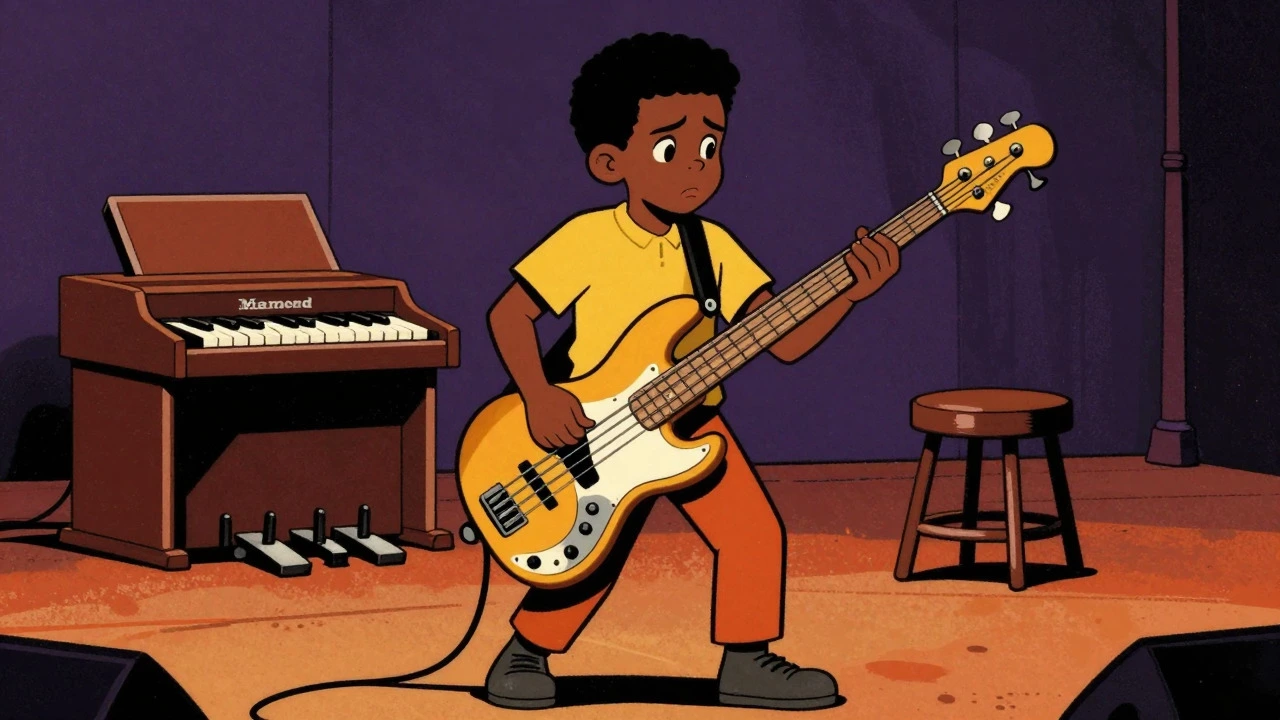

Imagine a band on stage. The drummer walks out. The organ player’s pedals break. You’re left with just a guitar and a singer. What do you do? Most musicians would pack up and go home. Larry Graham is a pioneering bassist born in Beaumont, Texas, who invented the slap bass technique to replace missing drums in his family trio. He didn’t have that luxury. In the early 1960s, he was fifteen years old, playing in a small trio with his mother, Dell Graham, in the San Francisco Bay Area. When their drummer quit and their Hammond organ’s bass pedals died, Graham had to solve a problem no one had asked him to solve: how to make a bass guitar sound like a drum kit.
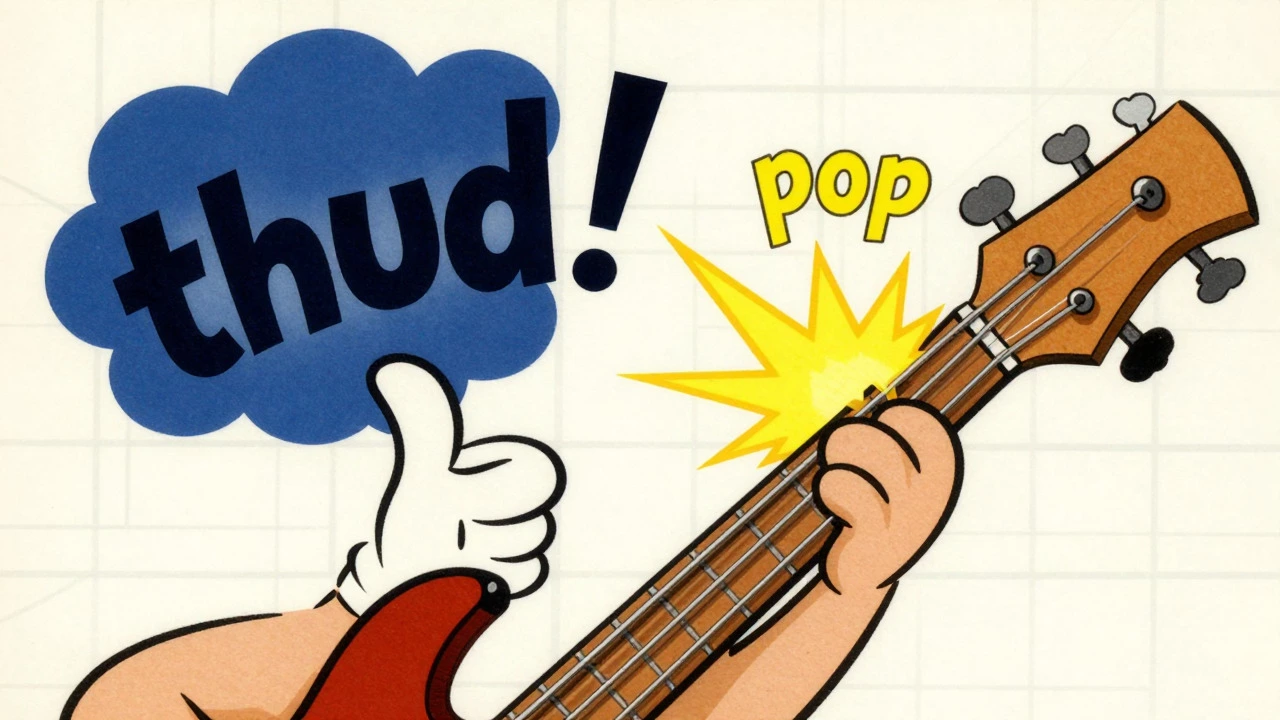
The solution wasn’t a grand artistic vision. It was pure survival. Graham started hitting the low E string with his thumb to mimic a kick drum. He called it "thumping." Then, he hooked his index finger under the higher strings and pulled them away from the fretboard, letting them snap back against the wood to create a sharp, snare-like crack. He called this "plucking" or "popping." Together, these two motions became "thumpin' and pluckin'." Decades later, the music world would label this revolutionary approach as slap bass is a percussive electric bass playing technique involving striking strings with the thumb and popping them with fingers to emulate drum sounds. But at the time, Graham thought he was just making noise so his mom could keep singing.
The Accidental Birth of a Sound
We often think of musical innovations as carefully crafted inventions. We imagine composers sitting in studios, tweaking knobs until they find the perfect tone. Slap bass didn’t happen that way. It happened because Larry Graham was broke, young, and desperate to keep the show going. Around 1960-1962, the trio needed a rhythm section. Without a drummer, the groove fell apart. Without working organ pedals, the low end vanished. Graham picked up a Fender Precision Bass-a solid-body instrument designed for amplification-and realized he could use its physical properties to create percussion.
He struck the strings near the end of the fingerboard. The side of his thumb hit the metal string, causing it to bounce violently against the steel frets. This created a short, loud transient-a "thud" that sat right where a kick drum should be. Then came the pop. By pulling the D or G string hard enough to lift it off the neck and releasing it instantly, he generated a bright, high-frequency snap. This mimicked the snare drum’s attack. He wasn’t trying to invent a new genre. He was trying to fill the silence left by a missing drummer. As Graham has said in interviews over the years, he didn’t even realize he was doing something special. He just knew it worked.
Sly and the Family Stone: Putting Slap on the Map
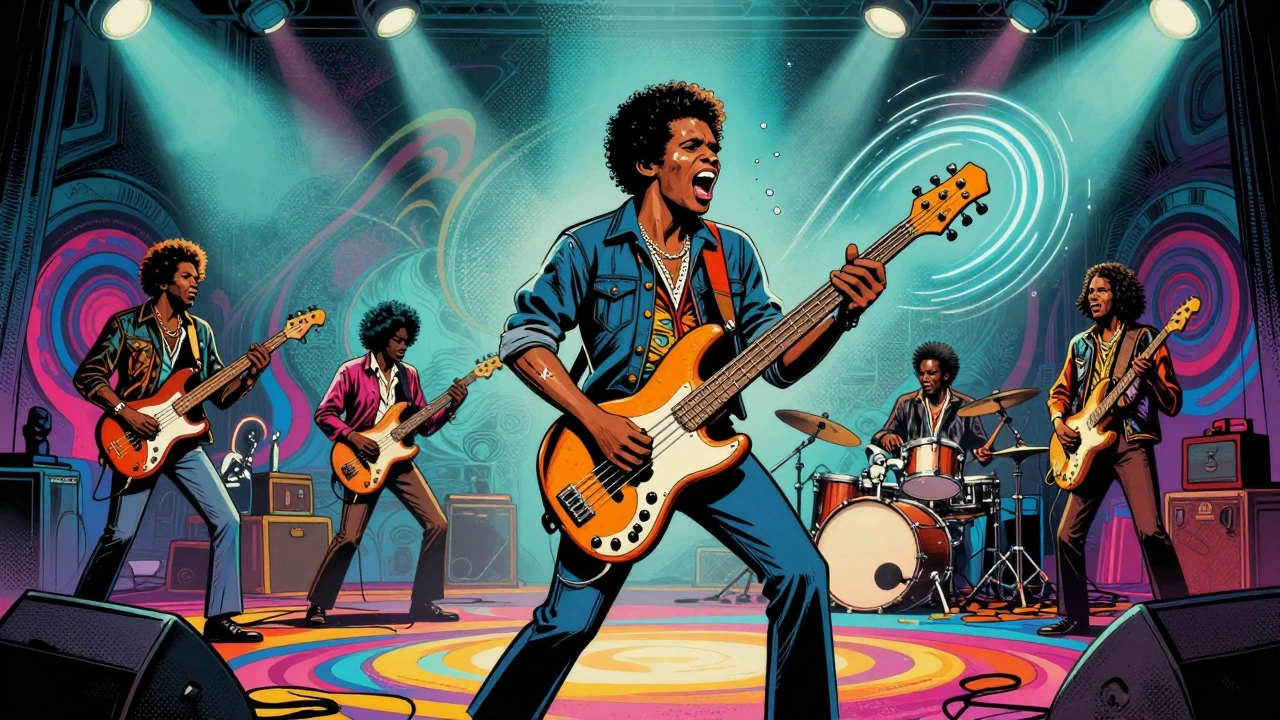
If the family trio was the laboratory, Sly and the Family Stone is a racially integrated funk-rock band formed in San Francisco in 1966, known for popularizing the slap bass technique in mainstream music. was the global stage. By 1967, Graham had joined Sly Stone’s band. This was a pivotal moment. For the first time, Graham’s "thump and pluck" style was being recorded, amplified, and broadcast to millions. The band was already pushing boundaries with their mixed-race lineup and psychedelic soul sound. Adding Graham’s percussive bass lines changed everything.
Tracks like "Dance to the Music" (1968) and "Thank You (Falettinme Be Mice Elf Agin)" (1969) showcase the technique in its raw, powerful form. On "Thank You," Graham doesn’t just support the harmony; he drives the rhythm. His thumb strikes lock tightly with the kick drum, while his pops accent the snare hits. The result is a groove that feels aggressive, urgent, and incredibly danceable. This wasn’t background noise anymore. The bass had become a lead voice. The Billboard charts took notice. "Thank You" hit number one on the R&B chart in early 1970. Suddenly, kids all over America were picking up bass guitars and trying to copy that snapping sound.
How Slap Bass Actually Works
To understand why this technique changed music, you have to look at the physics. Traditional fingerstyle playing involves plucking the strings with the index and middle fingers. It produces a warm, round tone. Pick playing offers a sharper attack but still lacks the percussive impact of a drum. Slap bass changes the dynamic range entirely.
- The Thump: Striking the low E or A string with the thumb creates a high-amplitude transient. This sound is rich in low frequencies but also contains significant mid-range punch. It mimics the body of a kick drum.
- The Pop: Pulling the higher strings (D or G) away from the fingerboard and releasing them creates a bright, snare-like click. This sound is heavy in high frequencies, often above 3 kHz. It cuts through the mix like a whip crack.
- Muting: To prevent unwanted ringing, players must mute the strings with both hands. Left-hand muting involves lightly touching adjacent strings, while right-hand muting uses the palm to dampen vibrations after the strike.
The contrast between these sounds is stark. Analyses of classic funk tracks show that the dynamic range between a ghost note and a full slap accent can exceed 20 dB. This allows the bassist to communicate complex rhythmic information without needing a separate drum kit. In the late 1960s, when funk tempos hovered around 90-120 beats per minute, this precision was crucial. Graham’s lines often emphasized 16th-note subdivisions, creating a dense, interlocking grid with the drums.
From Upright to Electric: A Historical Context
It’s important to clarify what Graham actually invented. He didn’t invent the concept of slapping a string. Jazz and blues bassists had been slapping upright double basses since the 1920s. Players like Pops Foster used this technique to add percussive flair to swing rhythms. However, the upright bass is an acoustic instrument. Its sound is limited by the size of its body and the sensitivity of its pickups (if any).
Graham’s innovation was adapting this percussive approach to the electric bass guitar is a solid-body instrument with electromagnetic pickups that allows for high-volume amplification and precise control over attack and sustain.. The electric bass has a shorter scale length, thinner strings, and magnetic pickups that respond aggressively to sudden movements. When Graham slapped the string, the pickup captured not just the vibration of the string, but the noise of the string hitting the frets. This created a new sonic palette-one that was brighter, louder, and more articulate than anything heard before. As German music encyclopedias note, the technique became established primarily on the electric bass in the 1970s within funk, directly following Graham’s influence.
| Technique | Primary Action | Tonal Character | Rhythmic Role |
|---|---|---|---|
| Fingerstyle | Plucking with index/middle fingers | Warm, round, smooth | Harmonic support, steady pulse |
| Pick Playing | Striking with plectrum | Bright, consistent, sharp | Rock/pop drive, clear articulation |
| Slap Bass | Thumb strike + finger pop | Percussive, aggressive, wide dynamic range | Lead rhythmic voice, emulates drums |
The Evolution and Legacy of Slap
Once Graham put slap bass into the spotlight, other musicians rushed to refine it. In the mid-1970s, Louis Johnson is a funk bassist known for expanding slap techniques with octave jumps and double-thumb patterns in the Brothers Johnson. took the technique to new heights. Playing with his brother George in the Brothers Johnson, Louis introduced faster tempos, complex octave slapping, and intricate double-thumb patterns. While Graham’s style was rooted in simplicity and groove, Johnson’s approach leaned toward technical virtuosity. Later players like Mark King of Level 42 and Flea of the Red Hot Chili Peppers continued to push the boundaries, incorporating harmonics, tapping, and rapid-fire fills.
Despite these advancements, the core philosophy remains tied to Graham’s original intent: serve the song. Many modern bass educators argue that slap bass is often overused. Beginners frequently try to slap every line, resulting in cluttered mixes and lost grooves. Graham himself has cautioned against this. In recent interviews, he emphasizes that slap is just one tool in the toolbox. It should be used when it enhances the rhythm, not when it distracts from it. The best slap lines are the ones you feel in your chest, not just hear with your ears.
Why It Still Matters Today
Fifty years later, slap bass is still a defining element of funk, R&B, and pop. Producers sample those classic breaks from the 1970s. Hip-hop beats borrow from the syncopated patterns Graham pioneered. Even in genres far removed from funk, the percussive quality of slap adds energy and excitement. But beyond the technical aspects, Graham’s story reminds us of something deeper about music. Innovation often comes from constraint. When resources are scarce, creativity flourishes. Graham didn’t have a drummer. So he became the drummer. He didn’t have a perfect setup. So he made do with what he had. That spirit of resourcefulness is what makes his contribution timeless.
For anyone learning bass today, studying Graham’s work is essential. It teaches you about timing, dynamics, and the importance of listening to the rest of the band. It shows you that you don’t need fancy gear to make a big sound. You just need a good ear, a steady hand, and the willingness to experiment. Whether you’re aiming for a tight pocket or a flashy solo, understanding the roots of slap bass will make you a better musician. And if you ever find yourself in a jam session without a drummer, maybe-just maybe-you’ll remember Larry Graham’s advice: thump the low string, pop the high one, and keep the groove alive.
Who invented slap bass?
Larry Graham is widely credited with inventing the slap bass technique on the electric bass guitar in the early 1960s. He developed the "thump and pluck" method to compensate for the absence of a drummer in his family trio.
What band did Larry Graham play with?
Larry Graham is best known for his work with Sly and the Family Stone, where he refined and popularized the slap bass technique on major hits like "Thank You (Falettinme Be Mice Elf Agin)." He also founded the band Graham Central Station.
How does slap bass differ from fingerstyle playing?
Fingerstyle involves plucking strings with the fingers for a warm, smooth tone. Slap bass uses the thumb to strike the lower strings and fingers to pop the higher strings, creating a percussive, drum-like sound with a wider dynamic range.
Did anyone slap bass before Larry Graham?
Yes, upright bass players in jazz and blues had been using slapping techniques since the 1920s. However, Graham was the first to adapt this percussive approach to the electric bass guitar, making it a central part of funk music.
Is slap bass still used in modern music?
Yes, slap bass remains a vital technique in funk, R&B, pop, and hip-hop production. While styles have evolved with more technical variations, the core groove-oriented approach pioneered by Graham continues to influence bassists worldwide.