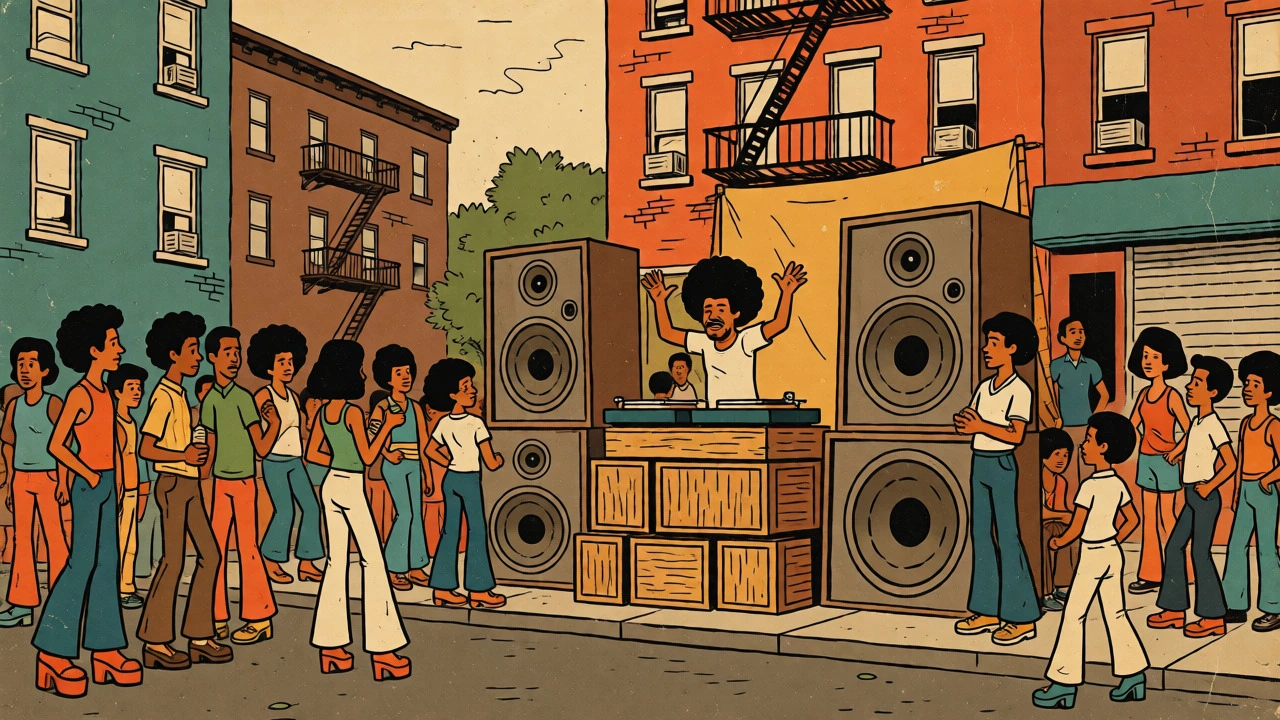

Imagine a room in the West Bronx, August 1973. The air is thick with humidity and anticipation. There are no professional bouncers, no metal detectors, and no liability insurance policies. Yet, when DJ Kool Herc spun his records at his sister Cindy Campbell’s Back-to-School Jam, chaos didn’t erupt into violence. Instead, order emerged from a fragile web of neighborhood trust, crew loyalty, and unwritten rules. How did a scene born in poverty, gang conflict, and infrastructure collapse manage to keep hundreds of young people safe while they danced to breakbeats?
The answer isn't that it was easy. It wasn't. The early hip-hop events were high-stakes social experiments. They operated in an environment where youth unemployment hovered between 60% and 80%, and street gangs controlled blocks. Safety wasn't provided by the city; it was negotiated by the community. This article breaks down how those informal systems worked, why they mattered, and what modern event planners can learn from the gritty, brilliant improvisation of the 1970s Bronx.
The Myth of Lawlessness: Order Through Community Trust
We often romanticize the 1970s Bronx as a lawless wasteland, but that view misses the point. When public services crumbled-when police were understaffed and fire departments couldn't respond to every blaze-the community filled the gap. Security wasn't a job you hired; it was a role you earned through respect. Organizers like Herc didn't just bring speakers; they brought social capital. If you knew the right people, you were safe. If you didn't, you might be asked to leave or face consequences.
This relational security meant that access to a party was tied to reputation. A respected local crew could guarantee that a DJ’s equipment remained intact. But this system had a dark side. It relied on intimidation. As historian Jeff Chang notes, the environment was defined by robbery and muggings. In this context, "security" often meant showing force to deter theft. The safest parties were those where the organizer had deep roots in the neighborhood, creating a buffer against external threats. Without that legitimacy, a party could turn into a target for rival crews looking to steal sound systems or assert dominance.
Equipment Protection: The Real Reason for Crews
Why did DJs need bodyguards? Because their gear was worth more than most cars in the neighborhood. Turntables, mixers, and custom-built speakers were expensive investments, often financed through hustling or savings. Theft was rampant. Nelson George, a prominent music journalist, recounts how groups like the Casanovas provided security for Grandmaster Flash. These weren't just friends; they were enforcers. Their presence signaled to outsiders that stealing the speakers would result in immediate retaliation.
However, this protection came with a cost. Sometimes, the "security" crew itself became a threat. Reports indicate that large groups of toughs would arrive, refuse to pay admission, and demand accommodation. The line between protector and extortionist was thin. For organizers, the challenge was balancing the need for muscle with the risk of alienating the crowd. The best setups used smaller, identifiable groups of trusted adults rather than massive, anonymous crowds of tough guys. This reduced the chance of random violence while still deterring theft.
| Aspect | Informal (1970s Bronx) | Modern Standard |
|---|---|---|
| Personnel | Trusted crew members, local toughs | Licensed security guards, stewards |
| Authority Source | Reputation, fear, neighborhood ties | Contract, law, organizational policy |
| Response to Conflict | Negotiation, intimidation, expulsion | De-escalation, removal, police call |
| Equipment Safety | Physical guarding, ransom risks | Insurance, locked rooms, inventory checks |
| Legal Status | Often unpermitted, tolerated by police | Permitted, insured, regulated |
Turning Fights into Dance Battles
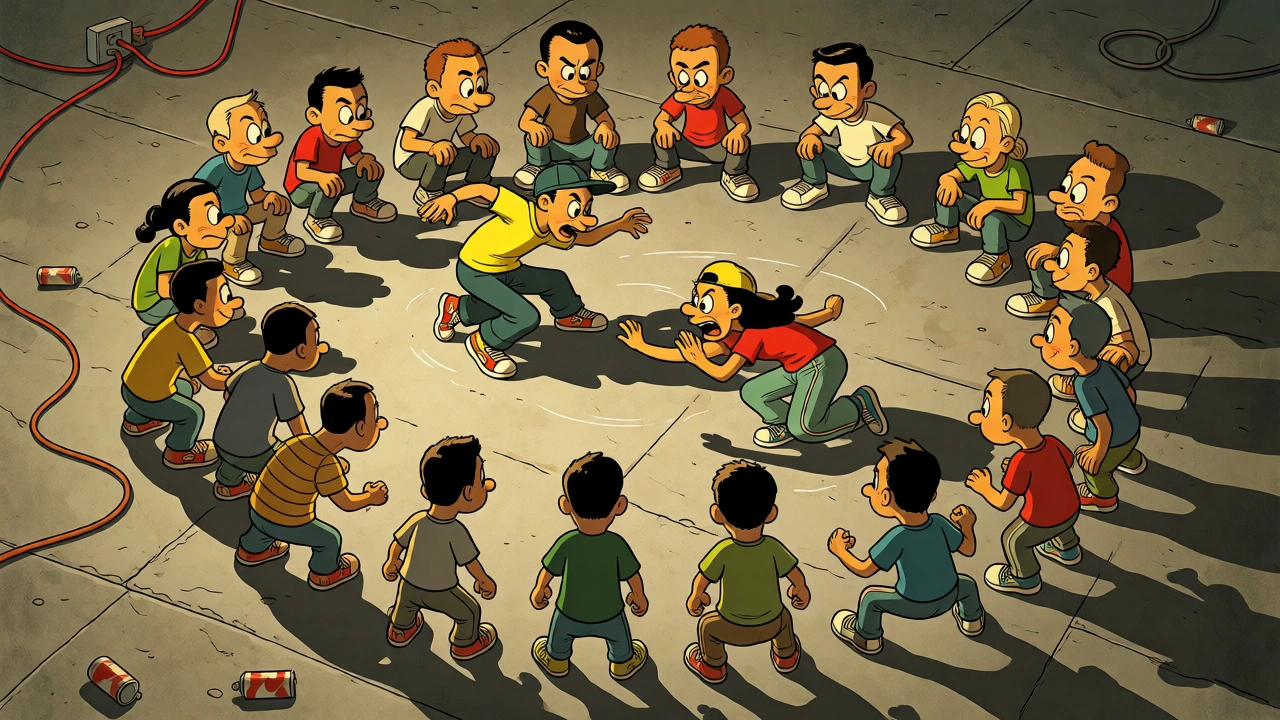
One of the most brilliant innovations of early hip-hop was converting aggression into performance. In a neighborhood where disputes could quickly escalate into fistfights, the dance circle offered a release valve. Dancers entered the center one at a time. You didn't push; you waited your turn. You didn't throw punches; you threw moves. This structure transformed potential conflicts into competitions of skill.
The etiquette here was strict, even if it wasn't written down. Respect the performer. Don't interfere with someone's set. Accept the outcome without escalating to violence. Scholars describe this as "social choreography," where survivalism and strategizing played out on the concrete. If two dancers had beef, they settled it in the cipher. The crowd judged the winner based on originality, timing, and footwork. This kept the peace because losing a dance battle was less damaging to one's ego than losing a fight. It allowed young men-and some women-to compete for status without bloodshed.
The Role of MCs and DJs as Crowd Managers
While crews handled physical security, the MC and DJ managed the emotional temperature of the room. The MC wasn't just a hype man; he was the master of ceremonies in the truest sense. He announced the next dancer, identified which crew was present, and calmed disputes before they boiled over. By dedicating songs and keeping attention focused on the music, the MC directed the crowd's energy.
The DJ played a crucial role too. By isolating the "break"-the instrumental section of a song-he created a structured space for dancing. This rhythmic framework gave dancers clear boundaries. When the beat dropped, the crowd knew what to expect. This predictability reduced anxiety and prevented chaotic surges. The relationship between the DJ, the MC, and the crowd was symbiotic. The DJ provided the foundation, the MC provided the narrative, and the crowd provided the energy. When any part of this triangle failed, the party could fall apart.
Infrastructure Hazards: Electricity and Space
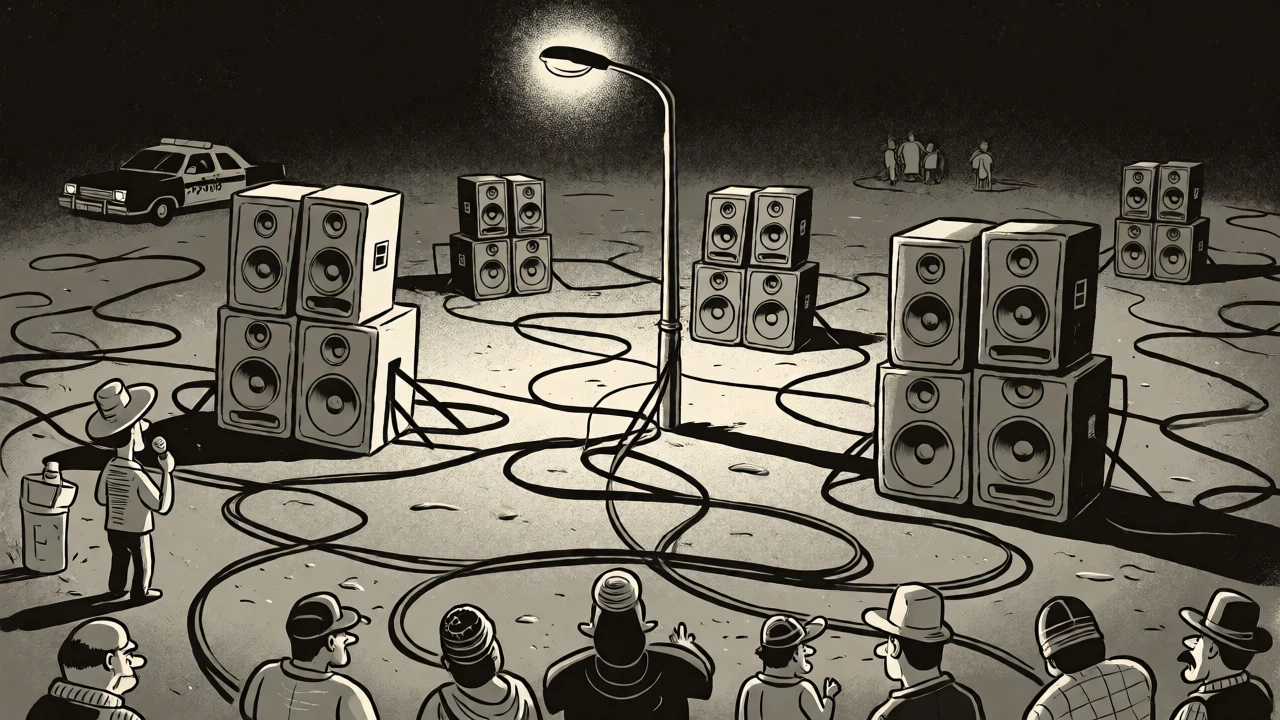
Let's be real: these parties were dangerous due to infrastructure, not just people. Outdoor jams often plugged equipment directly into streetlights. This was illegal then and remains so now. It created serious risks of electrocution, fire, and tripping hazards, especially when rain mixed with exposed wiring. There were no professional electricians on site, no ground-fault circuit interrupters, and rarely any first aid kits.
Crowd control was another major issue. As attendance grew, parties moved from recreation rooms to parks like Cedar Playground. The Sedgwick Avenue rec room held about 100 people, but demand quickly exceeded capacity. Moving outdoors solved the space problem but introduced new ones. Speakers were placed on the ground or on makeshift stands, often blocking exit routes. Cables snaked across the floor. Spectators crowded in too close, compressing the dance area. Modern safety standards require clear perimeters around electrical zones and multiple accessible exits. In the 1970s, these were afterthoughts, if considered at all.
Police Relations: Tolerance, Not Approval
You might wonder why the police didn't shut these parties down. The simple answer is that they had bigger problems. With shootings, fires, and robberies consuming resources, noise complaints from block parties were low priority. Police often tolerated unpermitted events as long as no one was shot or stabbed. This tolerance was unstable, though. It depended on the mood of the precinct and the size of the crowd. One bad incident could lead to a crackdown.
This ambivalence meant that organizers lived in a state of legal limbo. They didn't have permits, so they couldn't rely on police protection during emergencies. If a fight broke out, calling the cops might mean getting your party shut down and your equipment confiscated. So, communities handled issues internally. This self-reliance fostered a strong sense of ownership among attendees. People looked out for each other because they knew help wasn't coming from outside.
Gender Dynamics and Exclusionary Norms
It's important to acknowledge that "safety" wasn't universal. The early scene was male-dominated. Groups like the Mercedes Ladies fought hard for recognition in a space where women were often sidelined. Security crews were predominantly male, and their enforcement styles could be intimidating or harassing toward women. Party etiquette often excluded women from leadership roles or treated them as spectators rather than participants.
A truly safe environment requires inclusivity. While the 1970s model succeeded in reducing gang violence, it often reinforced gender hierarchies. Modern interpretations of hip-hop safety must address this legacy. True etiquette includes protection from harassment and equal opportunity to perform. Ignoring this aspect paints an incomplete picture of historical safety.
Lessons for Today’s Event Planners
What can we take away from this history? First, community engagement matters. A security team that knows the neighborhood and respects its culture is more effective than one that treats attendees as suspects. Second, structure reduces conflict. Clear rules for participation, whether in a dance battle or a general crowd flow, prevent misunderstandings. Third, infrastructure cannot be ignored. Improvised solutions save money but create risks. Use inspected generators, cable ramps, and designated techs.
If you're planning a themed retro event or studying cultural history, remember that the 1970s model was a response to neglect, not a blueprint for luxury. Its strength was adaptability and human connection. Its weakness was informality and lack of accountability. Combine the spirit of community stewardship with modern duty-of-care standards. That’s how you keep the party alive and everyone safe.
Why were security crews necessary at early hip-hop parties?
Security crews were essential primarily to protect expensive DJ equipment from theft and to maintain order in neighborhoods plagued by gang conflict and high crime rates. They acted as deterrents against outsiders who might disrupt the event or steal gear.
How did dance battles help reduce violence at these events?
Dance battles provided a structured outlet for aggression. Instead of fighting physically, rivals competed through skill, creativity, and timing in a cipher. This allowed them to settle status disputes without physical harm, reinforcing community norms of respect and fair play.
Were 1970s hip-hop parties legally permitted?
Most were not. Many operated without official permits, relying on police tolerance due to resource constraints. Noise complaints were often deprioritized compared to violent crimes, allowing these gatherings to continue despite lacking formal authorization.
What were the main safety hazards besides violence?
Major hazards included improvised electrical connections (often plugging into streetlights), which posed shock and fire risks. Additionally, poor crowd management led to compression injuries, and the lack of medical facilities meant minor injuries could become serious.
Did women have equal safety and participation in early hip-hop events?
Not always. The scene was male-dominated, and security dynamics often favored men. Women faced barriers to entry and recognition, and while they participated as dancers and promoters, they often navigated a landscape with different safety expectations and fewer leadership opportunities.