
Imagine spending months crafting a beat that defines a generation, only to have it pulled from shelves because you used two seconds of someone else’s drum break. That wasn’t a hypothetical nightmare for hip-hop producers in the late 1980s; it was becoming their reality. Before digital samplers turned every record store into a potential goldmine, hip-hop operated on an informal code: borrow what sounds good, tweak it until it’s yours, and ask forgiveness later. But as the technology improved and the stakes got higher, the legal system stepped in with a hammer. The shift from "catch me if you can" to strict licensing didn’t just change who paid whom-it fundamentally altered how hip-hop sounded.
The Digital Revolution Meets Old-School Copyright
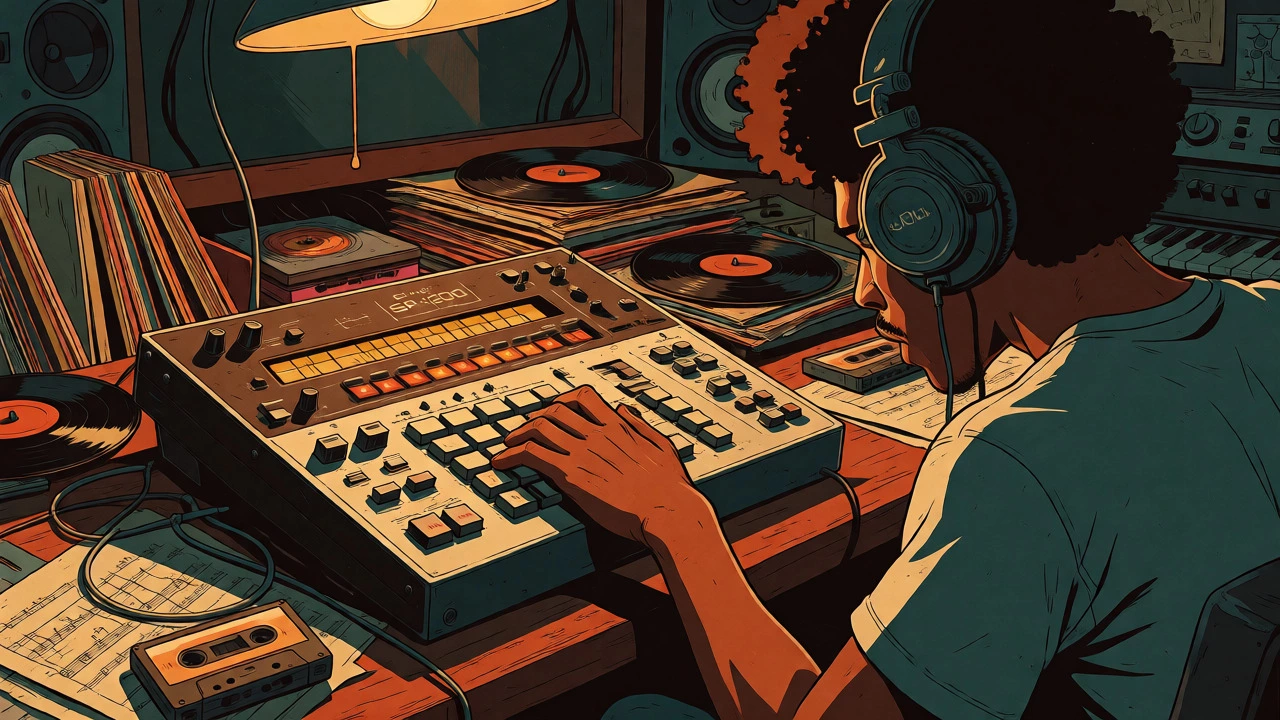
To understand why the law suddenly mattered so much, you have to look at the gear. In the early days, DJs looped breakbeats by hand, spinning two copies of the same vinyl back-to-back. It was physical, imperfect, and hard to detect. Then came the E-mu SP-1200, released in August 1987. This machine was a game-changer, offering 12-bit audio and about 10 seconds of total memory. Its gritty, lo-fi sound became the sonic signature of late-80s rap. Shortly after, the Akai MPC60 arrived in 1988, combining a sampler, sequencer, and 16 pressure-sensitive pads. These tools allowed producers to isolate specific drum hits, bass lines, or vocal snippets with surgical precision.
This technological leap created a collision course with Copyright Law. Under the Copyright Act of 1976, owners held exclusive rights to reproduce and distribute their work. Crucially, this protected two separate things: the underlying musical composition (the melody and lyrics) and the sound recording itself (the actual performance captured on tape). Most producers in the late 80s were ignoring both. They assumed that if they chopped a sample enough, pitched it up, or buried it under layers of noise, it wouldn’t count as infringement. There was no clear rule saying "under three seconds is free," despite what many producers believed. Fair use under 17 U.S.C. §107 is a complex, fact-specific defense, not a safe harbor for lazy clearance.
The Warning Shot: De La Soul vs. The Turtles
If there was a moment when labels started sweating, it was 1989. De La Soul released Three Feet High and Rising, an album celebrated for its dense, eclectic collage of samples. One track, "Transmitting Live From Mars," used roughly 12 seconds of The Turtles’ 1968 hit "You Showed Me." The Turtles’ members, Mark Volman and Howard Kaylan, sued, alleging unauthorized use. They sought $1.7 million in damages.
This case sent shockwaves through the industry. It wasn’t just about the money-though the reported settlement was massive for the time-it was about the precedent. Here was a group using a short, transformed snippet of a classic rock song, integrated seamlessly into a new artistic statement. If that could trigger a seven-figure lawsuit, what about the hundreds of other samples on the album? The dispute highlighted a terrifying truth for independent labels: you could release a critically acclaimed, commercially successful album and still face financial ruin if a copyright holder decided to chase you. The "release first, pay later" strategy was cracking.
The Gavel Drops: Grand Upright v. Warner Bros.
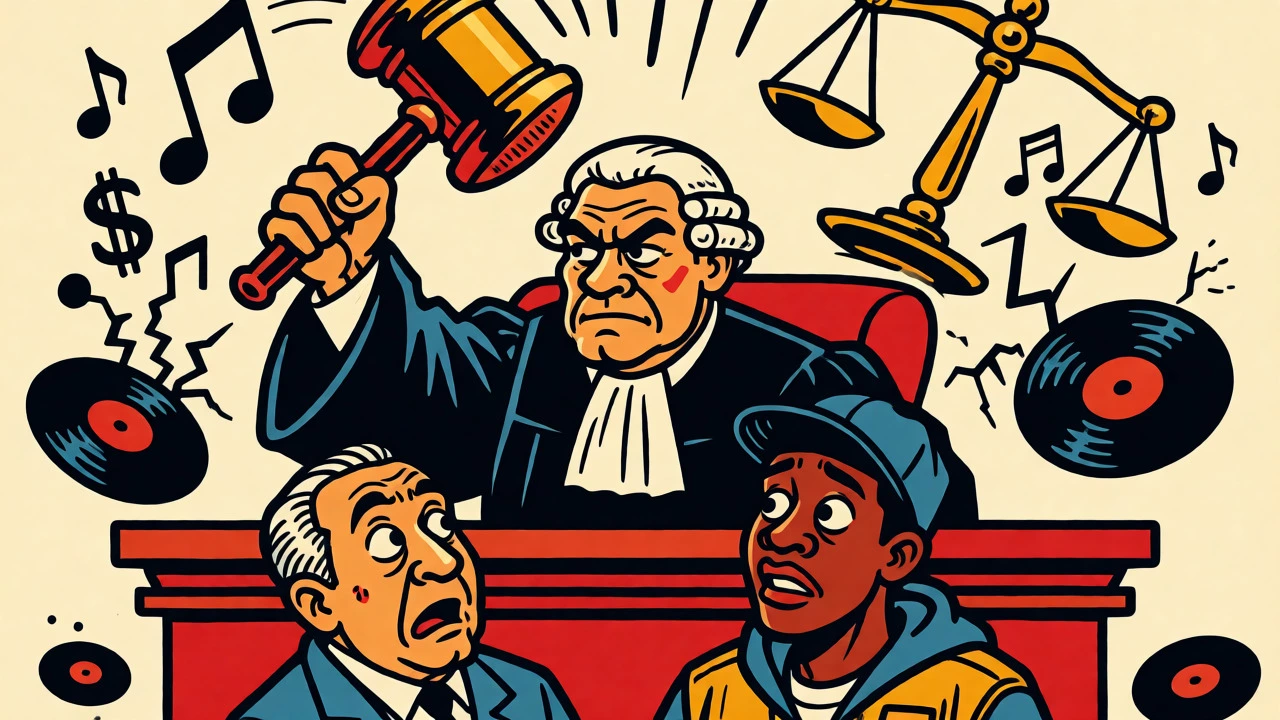
While De La Soul provided the warning, Grand Upright Music Ltd. v. Warner Bros. Records, Inc. delivered the verdict. Decided in December 1991, this case involved Biz Markie’s track "Alone Again," which sampled Gilbert O’Sullivan’s "Alone Again (Naturally)." Unlike previous disputes that settled quietly, this one went to trial. Judge Kevin Thomas Duffy didn’t mince words. His opinion famously began with "Thou Shalt Not Steal," treating the unauthorized sample not as a minor accounting error, but as serious theft.
The court granted an injunction stopping the sale of the single and album, ordered Biz Markie to pay $250,000 in damages, and referred the matter to the U.S. Attorney for possible criminal prosecution. This was the tipping point. The ruling made it clear that ignorance was no excuse. Evidence showed the defendants knew permission was required but proceeded anyway. For major labels like Warner Bros., the risk of criminal liability and reputational damage was too high to ignore. Overnight, the industry shifted. Sampling was no longer a creative gamble; it was a legal compliance issue.
The Economic Ripple Effect on Production
You might think these lawsuits just changed paperwork, but they changed the music itself. When every sample needs a license, you start counting them. Consider the Beastie Boys’ Paul’s Boutique. Engineer Mario Caldato Jr. estimated that 95% of the album’s sounds were samples, costing over $250,000 just to clear them. Public Enemy’s It Takes a Nation of Millions to Hold Us Back contained upwards of 100 to 200 samples. If each had been cleared at standard rates, the cost per CD would have been astronomical-some estimates suggested retail prices near $159 just to cover publishing claims.
| Album/Artist | Sample Strategy | Estimated Legal Impact |
|---|---|---|
| De La Soul | Dense collage, obscure sources | $1.7M lawsuit threat; forced future caution |
| Beastie Boys | High density, recognizable breaks | $250k+ in clearance costs alone |
| Biz Markie | Single prominent melodic sample | Injunction halted sales; $250k damages |
Faced with these costs, producers adapted. You saw fewer wall-of-sound collages and more focused beats. Artists began relying on original instrumentation, synthesizers, and live bands to avoid the hassle of clearing dozens of fragments. Those who did sample often chose shorter, less recognizable clips or negotiated ownership splits rather than flat fees. The era of the "sample flip" as a casual act ended; it became a business transaction.
Creativity vs. Ownership: The Cultural Shift
The debate wasn’t just about money; it was about art. Supporters of strict enforcement argued that musicians deserve payment for their work, period. If you build your hit on someone else’s hook, they should get a cut. Critics, however, argued that hip-hop is inherently participatory and collage-based. By requiring permission for every second of audio, the law favored those who owned old catalogs over new creators. This created "clearance culture," where independent artists with smaller budgets couldn’t afford to make the kind of dense, textured albums that defined the late 80s.
This shift also killed some albums forever. Tracks removed from reissues because the original masters couldn’t be located or the rights holders were unreachable became common. The fear of litigation stifled experimentation. Why take a risk on a weird, obscure sample if it might cost you your entire profit margin? The result was a safer, more polished, but sometimes less adventurous sound in the mainstream hip-hop of the 1990s.
What Happened Next?
Did sampling die? No. It evolved. Producers became better at hiding their sources, using filters, distortion, and layering to make samples unrecognizable. Interpolation-re-recording a melody instead of using the original tape-became popular because it only required clearing the composition, not the master recording. The market for sample clearance grew into a specialized industry, with lawyers and brokers dedicated solely to tracking down rights holders.
The late 1980s didn’t end hip-hop’s love affair with sampling; it professionalized it. The rules established then determine how we hear music today. Every time you hear a modern trap beat built on a chopped soul record, remember that the producer likely spent hours negotiating a contract before hitting "record." The creativity remained, but the freedom to steal without consequence vanished.
Was there a specific number of seconds that was legal to sample in the 1980s?
No. The belief that samples under six seconds (or sometimes three) were automatically legal is a myth. Copyright law does not specify a duration threshold. Legality depends on factors like substantial similarity, whether the sample is the "heart" of the song, and market impact. Even a one-second clip can be infringing if it’s highly recognizable and central to the original work.
Why was the Biz Markie case more significant than the De La Soul case?
While the De La Soul/Turtles dispute raised awareness, it was settled out of court. The Biz Markie case (Grand Upright v. Warner Bros.) resulted in a federal court injunction that physically stopped sales and included a referral for criminal prosecution. Judge Duffy’s harsh language and the explicit order to stop selling the album signaled to major labels that unauthorized sampling carried severe commercial and legal risks, forcing an immediate industry-wide policy change.
How did sampling laws affect independent hip-hop artists?
Independent artists suffered disproportionately. Major labels could absorb high clearance costs or negotiate favorable deals due to their volume. Independents often couldn’t afford the fees or the legal expertise needed to clear complex samples. This led to a divide where major-label releases became cleaner and more expensive to produce, while underground scenes either avoided sampling entirely or continued the risky "bootleg" approach, limiting their commercial reach.
What is the difference between clearing a composition and a master recording?
Clearing a composition involves paying the songwriter or publisher for the right to use the melody and lyrics. Clearing a master recording involves paying the record label or artist for the right to use the specific recorded performance. A producer typically needs both licenses to legally sample a record. Interpolating a melody (re-recording it) only requires clearing the composition, which is often cheaper and easier than clearing the master.
Did sampling laws stop all sampling in hip-hop?
Not at all. Sampling remains a core element of hip-hop production. However, the practice shifted from informal borrowing to formal licensing. Producers now budget for clearance costs, use software to identify samples, and often rely on interpolation or original instrumentation to reduce legal exposure. The aesthetic changed, with some producers favoring harder-to-clear, obscure sources or heavily processed sounds to minimize recognition.