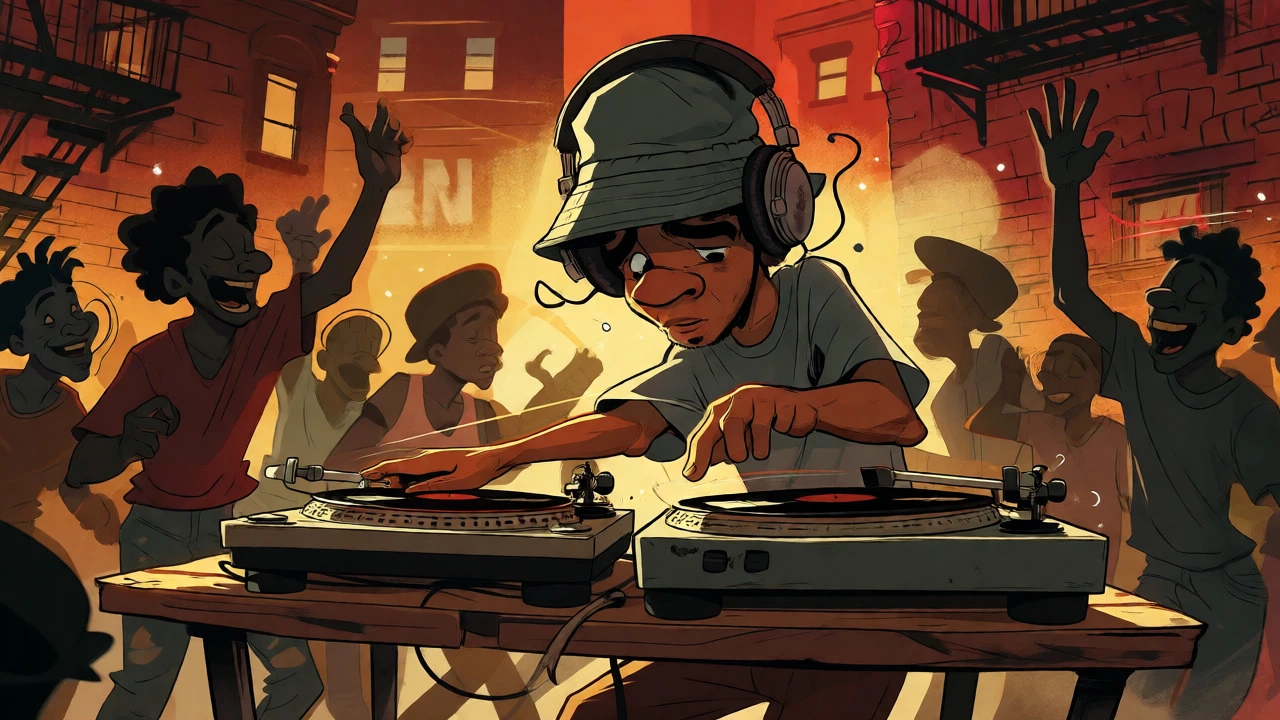

Imagine taking a five-second horn blast from a forgotten 1970s funk record, chopping it into tiny pieces, pitching it down until it sounds like a ghost, and layering it under a drum beat that makes your head nod involuntarily. That is sampling, the foundational art of hip-hop. It isn’t just copying; it’s alchemy. For decades, producers have dug through crates of vinyl to find hidden gems, transforming old recordings into entirely new musical statements. But how did this practice start? Why does a chopped-up soul record sound better than a live band? And what happens when the lawyers get involved?
The Birth of the Breakbeat
To understand sampling, you have to go back to the South Bronx in the early 1970s. Before digital samplers existed, DJs were the original producers. DJ Kool Herc is widely credited with inventing the technique known as the "merry-go-round." He noticed that crowds danced hardest during the instrumental breaks of funk and soul records-those few seconds where the drums and bass took center stage. To keep the energy high, Herc used two copies of the same record on two turntables. When the break ended on one deck, he would quickly switch to the other copy and restart the break. This created an endless loop of percussion.
Grandmaster Flash refined this craft, focusing on precision timing and the ability to cut perfectly into the break. By 1981, his track "The Adventures of Grandmaster Flash on the Wheels of Steel" proved that the turntable was an instrument. It assembled fragments from about ten different records into a single cohesive performance. This was the precursor to modern sampling. The goal wasn't to hide the source but to celebrate it, creating a collage of sounds that resonated with the local community.
Crate Digging: The Hunt for Sound
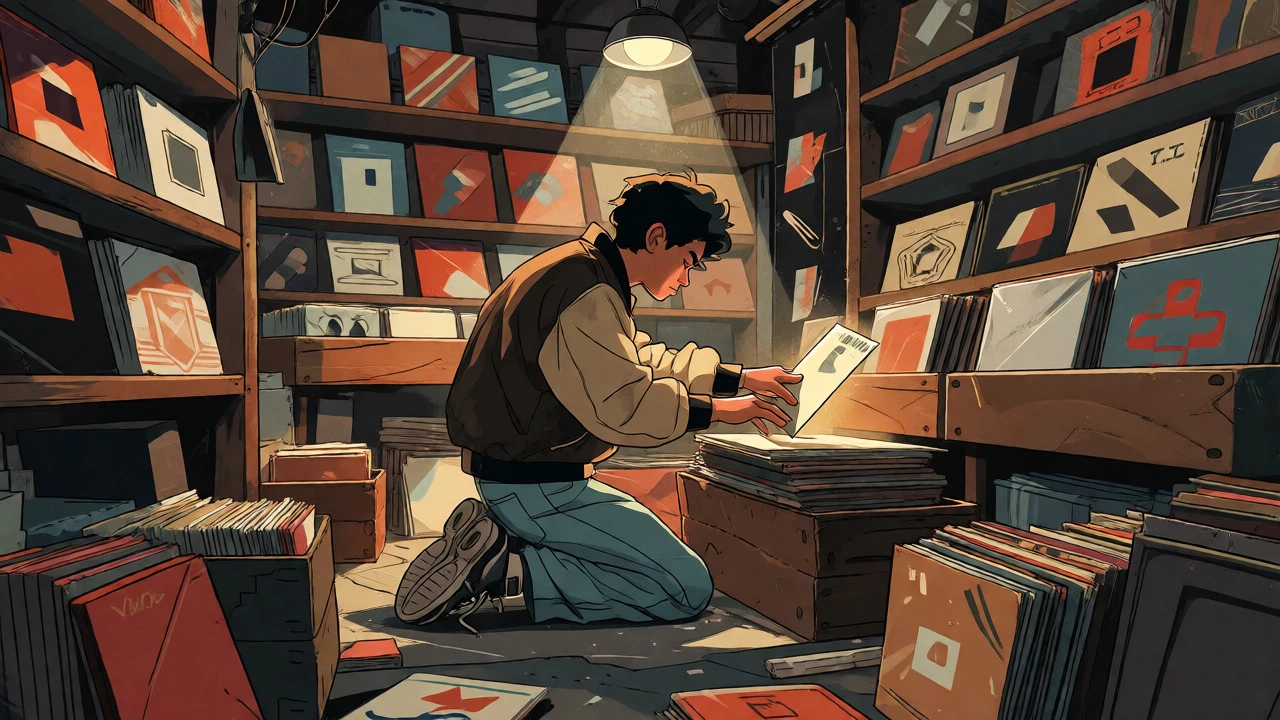
As hip-hop moved from live DJ sets to studio recordings, the search for material became a cultural ritual called crate digging. This wasn't just shopping; it was research. Producers spent hours in dusty basements of record stores, flea markets, and libraries, flipping through stacks of vinyl looking for unique sounds. They wanted breaks that hadn't been overused. If everyone else was sampling James Brown's "Funky Drummer," a producer might look for a obscure B-side from a lesser-known jazz fusion band to stand out.
This process required deep knowledge of labels, musicians, and pressing variations. A first press of a record might sound warmer than a later reissue. Some producers even obscured the labels of their favorite records so competitors couldn't easily steal their sources. This competitive secrecy fueled innovation. You weren't just buying music; you were acquiring raw material for future hits. The best samples were often found in the most unlikely places-a forgotten gospel choir recording or a strange experimental electronic track from Europe.
The Hardware Revolution: SP-1200 and MPC
In the late 1980s, technology changed everything. Affordable digital samplers arrived, allowing producers to capture audio directly from vinyl into memory. Two machines dominated this era: the E-mu SP-1200 and the Akai MPC60.
The SP-1200, released in 1987, had severe limitations. It offered only about 10 seconds of total sampling time at 12-bit resolution. To fit more music into that tiny memory, producers had to be creative. They would pitch up a record before recording it, then pitch it down during playback. This process compressed the audio, giving it a gritty, warm texture that became synonymous with golden-era hip-hop. Because memory was so tight, producers chopped songs into small segments rather than looping long phrases. This forced them to rearrange melodies and rhythms manually, leading to complex, non-linear beats.
| Feature | Turntables (Early 80s) | E-mu SP-1200 (Late 80s) | Akai MPC3000 (Mid 90s) |
|---|---|---|---|
| Primary Input | Vinyl Records | Vinyl/Cassette | Vinyl/Digital Sources |
| Memory Limit | N/A (Live Performance) | ~10 Seconds Total | Significantly Expanded |
| Creative Constraint | Physical Dexterity | Chopping & Pitch Shifting | Sequencing & Swing Timing |
| Sound Character | Analog Warmth | Gritty, Lo-Fi Texture | Cleaner, Dynamic Range |
The Akai MPC60, co-designed by Roger Linn, introduced a grid-based sequencer and 16 velocity-sensitive pads. This allowed producers to play drum patterns live, adding human feel to the beat. Later models like the MPC3000 expanded memory and added higher-quality converters, but the workflow remained similar: chop, assign to pads, sequence, and arrange. These tools turned sampling from a DJ trick into a compositional method.
Flipping the Sample: Creative Transformation
Simply looping a break is basic. True mastery lies in "flipping" the sample. This means taking a piece of audio and changing its context completely. Marley Marl, a pioneer in Queens, New York, shifted the paradigm by sampling individual drum hits instead of whole breaks. He would isolate the kick, snare, and hi-hat from a record like The Honey Drippers' "Impeach the President," then resequence them into a new groove. This allowed him to combine the drum sounds from one record with the bassline from another, creating something entirely new.
Producers use various techniques to flip samples:
- Pitch Shifting: Changing the key of the sample to match the rapper’s voice or to create a darker mood.
- Time Stretching: Slowing down or speeding up the audio without changing the pitch, altering the feel of the rhythm.
- Filtering: Removing high or low frequencies to make room for vocals or other instruments.
- Reversing: Playing the sample backward to create surreal textures.
- Layering: Stacking multiple samples to build density and complexity.
Public Enemy’s Bomb Squad exemplified this approach. They didn't just loop beats; they created dense collages of noise, speeches, and funk snippets. Hank Shocklee explained that they sampled because they couldn't afford to hire full bands. They would dig through thousands of records to find five usable sounds. Their tracks were chaotic yet controlled, reflecting the intensity of urban life. De La Soul’s album "3 Feet High and Rising" took this further, using hundreds of samples to create a psychedelic journey that sounded like nothing else on the radio.
The Legal Wall: Clearance and Copyright
For much of the 1980s, sampling operated in a legal gray area. Producers assumed that if they changed the sound enough, it was fair use. That changed in 1991 with the case Grand Upright Music Ltd. v. Warner Bros. Records Inc. involving Biz Markie. The judge ruled that unauthorized sampling was copyright infringement, famously stating, "Thou shalt not steal." This decision shocked the industry. Suddenly, every sample needed permission.
Then came the 2005 ruling in Bridgeport Music v. Dimension Films. The Sixth Circuit Court held that any unauthorized sampling of a sound recording, no matter how short, could infringe copyright. The message was clear: get a license or don't sample. This created two separate hurdles for producers. First, they need a master-use license from the owner of the original recording (usually the record label). Second, they need a composition license from the songwriters or publishers. Both must agree, and both want paid.
The cost varies wildly. A famous hook might cost tens of thousands of dollars upfront plus a percentage of royalties. Obscure sounds might be cheaper, but finding the rights holder can take months. Albums like The Beastie Boys' "Paul's Boutique," which contained around 150 samples, would be prohibitively expensive to recreate today. Many classic albums faced delays or removal from streaming services due to unresolved clearance issues. De La Soul’s catalog, for example, remained unavailable digitally for years until they navigated these complex rights landscapes.
Modern Alternatives and Tools
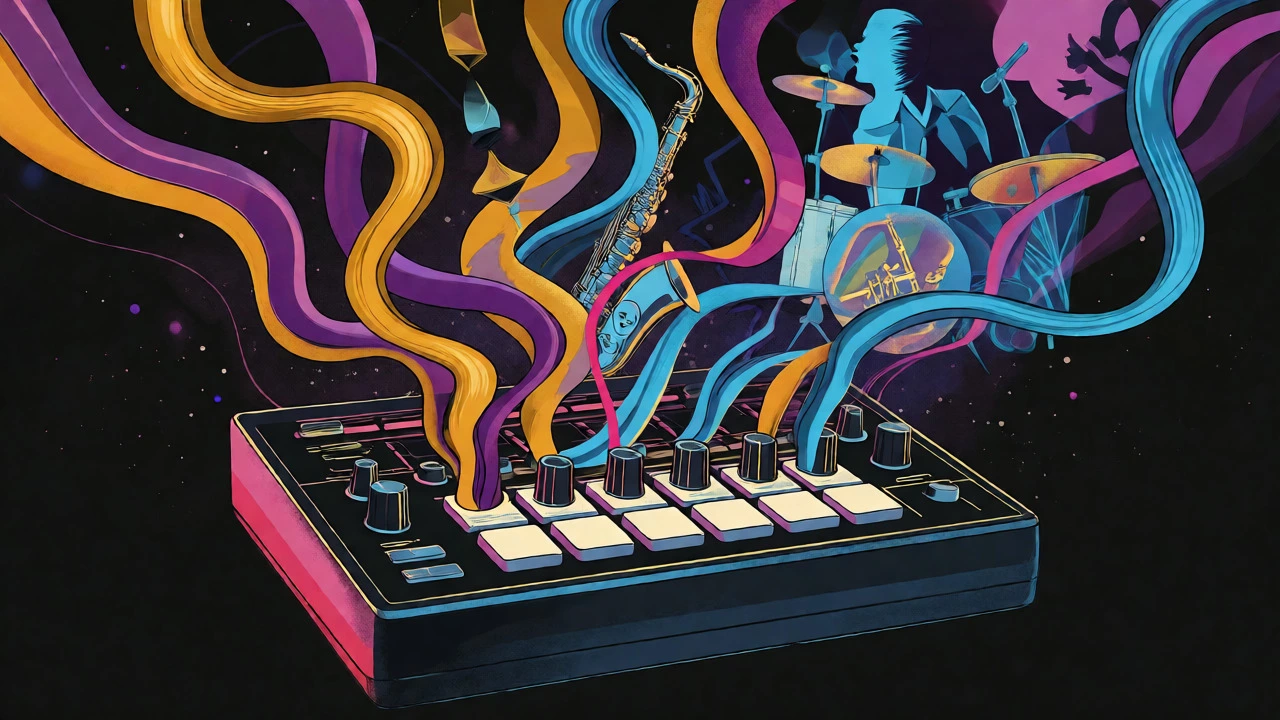
Today, producers have more options than ever. Instead of hunting for vinyl, many use digital platforms like Tracklib or Splice. These services offer pre-cleared samples, meaning the legal work is already done. You pay a subscription or a fee per download, and you get a license to use the sound commercially. This speeds up the workflow significantly.
Another popular method is interpolation. Instead of sampling the actual recording, a musician replays the melody or chord progression with new instruments. This avoids the need for a master-use license, though you still need permission for the underlying composition. Artists like Drake and Kanye West frequently blend direct samples with interpolations to balance authenticity and legal safety.
Technology has also advanced. AI-driven stem separation tools can now isolate vocals, drums, or bass from a mixed track with surprising accuracy. This allows producers to extract elements from songs that previously seemed impossible to sample cleanly. However, the core challenge remains: creativity within constraints. Whether you’re limited by 10 seconds of memory in an SP-1200 or a $5,000 clearance budget, the restriction forces you to think differently. It’s not about having infinite resources; it’s about making the most of what you have.
Why Sampling Endures
Some critics argue that sampling is lazy-that it’s easier to lift a hook than write one. But anyone who has tried to flip a sample knows it’s hard work. You have to listen deeply, understand the emotional weight of the original, and reshape it to tell a new story. Sampling connects generations. When a young producer samples a 1970s soul record, they’re engaging in a dialogue with the past. They’re preserving history while reinventing it.
The magic of hip-hop sampling lies in its transformative power. A sad violin line becomes a triumphant anthem. A chaotic noise clip becomes a rhythmic pulse. It proves that music is not static; it’s a living archive we can remix, reinterpret, and rebuild. As long as there are old records gathering dust, there will be producers ready to bring them back to life.
What is the difference between sampling and interpolation?
Sampling involves taking a direct audio excerpt from an existing recording. Interpolation involves recreating the melody or lyrics of a song with new performers and instruments. Sampling requires permission for both the sound recording and the composition, while interpolation generally only requires permission for the composition.
Do I need to clear every sample I use?
If you release the music commercially, yes. In the US, unauthorized sampling can lead to lawsuits. Even if a sample is heavily altered, courts have ruled that any recognizable portion of a sound recording may require a license. For non-commercial or educational purposes, rules may differ, but commercial releases always carry risk.
How much does it cost to clear a sample?
Costs vary greatly. An obscure sample might cost a few hundred dollars, while a hit song from a major artist could cost tens of thousands upfront plus ongoing royalties. Factors include the fame of the original artist, the length of the sample, and how prominent it is in the new track.
What is crate digging?
Crate digging is the practice of searching through physical record collections, such as those in thrift stores or specialized shops, to find unique vinyl records to sample. It is considered a cultural ritual in hip-hop, requiring knowledge of music history and a keen ear for potential loops.
Can I sample any song?
Technically, you can try to sample any copyrighted recording, but you need permission from the rights holders. Public domain recordings do not require permission, but most popular music from the last century is still under copyright protection.