

Imagine a decade defined by neon spandex, synthesizers screaming at maximum volume, and hairstyles that defied gravity. Now picture one woman walking into that chaos in a simple white shirt, dark trousers, and gold hoops, singing so quietly you had to lean in to hear her. That was Sade, the British band fronted by Helen Folasade Adu, whose disciplined restraint became the ultimate counter-culture statement of the 1980s. While everyone else was shouting for attention, Sade whispered-and the world stopped to listen.
This wasn't just luck. It was a calculated aesthetic strategy that turned minimalism into power. If you think "cool" is about doing more, you've got it backward. Sade proved that less isn't just more; it's louder. Let's look at how a Nigerian-born fashion student from London rewrote the rules of pop stardom without raising her voice.
The Art of Doing Less
Most pop stars in the mid-80s were trying to outdo each other with bigger choruses and flashier outfits. Sade did the opposite. The band, formed in London after members met at Saint Martin’s School of Art, rejected the synth-heavy excess of the era. Instead, they leaned into jazz, soul, and Afro-Cuban rhythms. Think of it as the musical equivalent of wearing a perfectly tailored suit instead of a sequined jumpsuit.
Their debut album, Diamond Life, released in 1984, didn't sound like anything else on the radio. It was spacious. You could hear the air between the notes. Stuart Matthewman’s saxophone didn't scream; it sighed. Paul Denman’s bass lines were warm and steady, not aggressive. And Helen Adu’s vocals? Low, rich, and completely unforced. She didn't belt out high notes to prove she could sing. She used silence as an instrument.
This approach created what critics called "quiet storm"-a late-night R&B vibe that felt intimate rather than performative. It wasn't background music for stockbrokers, despite some snobbish critiques calling it "beige." It was sophisticated adult romance set to a groove. By refusing to compete on volume, Sade carved out a niche where sophistication felt powerful, not pretentious.
Fashion as a Weapon of Restraint
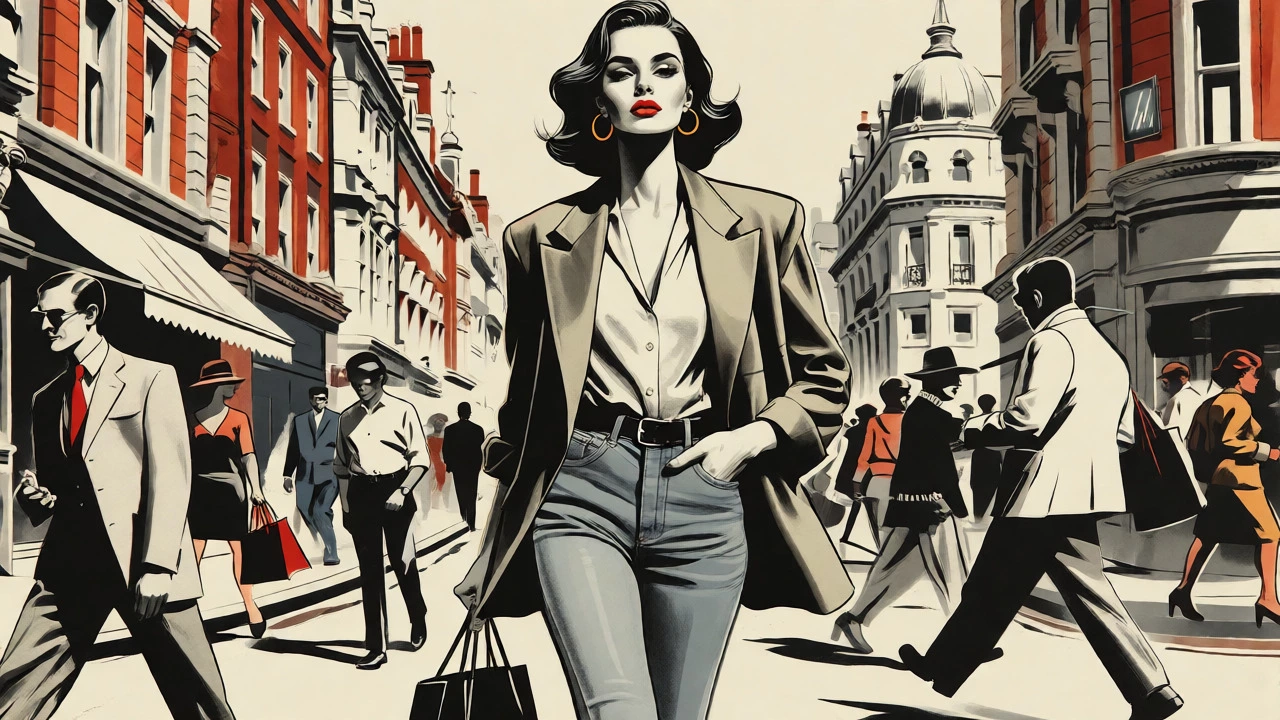
You can't talk about Sade's cool without talking about her look. In an era of shoulder pads the size of dinner plates, Adu’s style was sharp but streamlined. She studied fashion design before becoming a singer, and it showed. Her wardrobe wasn't about chasing trends; it was about creating a uniform.
Key elements included:
- Tailored blazers: Often oversized or structured, providing a masculine silhouette that contrasted with feminine details.
- Gold hoop earrings: Large enough to catch the light, small enough to remain elegant.
- Red lipstick: The only "loud" element in an otherwise neutral palette.
- Sleek braids or pulled-back hair: Keeping the focus on her face and posture.
- High-waisted denim: Practical, timeless, and effortlessly chic.
She famously said, "I don’t like things that are glittery or flashy. Simplicity is the key, looking subtle without looking dull." This philosophy extended to her stage presence. No wild dancing, no costume changes every three songs. Just stillness. In a media landscape obsessed with motion, standing still made her magnetic. Audiences moved toward her because she wasn't running away from them.

The Commercial Power of Quiet
Did this restraint hurt their sales? Hardly. Diamond Life hit number 2 in the UK and stayed on the charts for 99 weeks. It sold over 7 million copies worldwide. Then came Promise in 1985, which went straight to number 1 in both the UK and US. Singles like "Smooth Operator" and "The Sweetest Taboo" weren't just hits; they were cultural touchstones.
| Feature | Sade’s Approach | Typical 1980s Pop |
|---|---|---|
| Vocal Delivery | Low, restrained, conversational | High-pitched belting, heavy reverb |
| Instrumentation | Live bass, sax, acoustic drums | Synthesizers, drum machines |
| Visual Style | Tailored suits, neutral colors | Neon, leather, excessive accessories |
| Pacing | Slow, spacious grooves | Fast, dense arrangements |
By 1988, the band had sold more than 20 million records globally. They won a Grammy for Best New Artist in 1986-the first time a Nigerian-born artist took home that award. They played Live Aid at Wembley Stadium. So much for being too quiet to matter.
Beyond the Music: Class and Identity
Not everyone loved Sade. Some critics dismissed them as "gentrified soul," accusing the band of sanitizing Black music for white, affluent audiences. Julie Burchill famously called their music "beige," suggesting it was safe coffee-table filler for yuppies. Was there truth to that?
A little. The polished production and wine-bar aesthetics did appeal to a specific demographic. But dismissing Sade as mere lifestyle décor ignores the craft involved. The arrangements were complex, relying on negative space and precise timing. Plus, Adu’s identity-Nigerian-born, British-raised, fashion-educated-challenged narrow definitions of who gets to be "elegant." She blended African heritage with London tailoring and Latin grooves, creating a cosmopolitan hybrid that defied easy categorization.
Her success also highlighted the double standards women faced. Male musicians could be mysterious and aloof; women were often expected to be accessible and energetic. Adu’s controlled sensuality gave her agency, though male journalists frequently reduced her artistry to her looks. Still, she maintained control over her image, releasing few photos and granting rare interviews. This scarcity built mystique.
Why It Still Matters Today
More than 40 years later, Sade’s influence is everywhere. Artists like D’Angelo, Jill Scott, and Alicia Keys cite her as a blueprint for using intimacy in pop music. Fashion designers still pull from her 1980s wardrobe because those pieces haven't aged-they’ve become classics.
In our current age of information overload and constant noise, Sade’s lesson feels even more relevant. We’re bombarded by content designed to grab attention through shock or speed. Sade reminds us that confidence doesn't need to shout. You can command a room by listening, by dressing well, and by trusting your own rhythm.
So next time you feel pressured to do more, buy more, or say more, remember the woman in the white shirt who conquered the world by whispering. Sometimes, the coolest thing you can do is nothing at all.
What genre is Sade’s music?
Sade’s music is primarily classified as sophisti-pop, quiet storm R&B, and smooth jazz. It blends soul, funk, jazz harmonies, and Afro-Cuban rhythmic elements with polished, adult-oriented production.
Who is the lead singer of Sade?
The lead singer is Helen Folasade Adu, known professionally as Sade. She was born in Nigeria and raised in England, where she studied fashion design before forming the band.
How many albums did Sade release in the 1980s?
Sade released three studio albums in the 1980s: Diamond Life (1984), Promise (1985), and Stronger Than Pride (1988).
Did Sade win any Grammys?
Yes, Sade won the Grammy Award for Best New Artist in 1986. Helen Adu was the first Nigerian-born artist to win a Grammy.
Why is Sade considered a fashion icon?
Sade is considered a fashion icon for her consistent use of tailored silhouettes, neutral palettes, gold jewelry, and red lipstick. Her style emphasized simplicity and proportion over trend-chasing, creating a timeless look that remains influential today.
