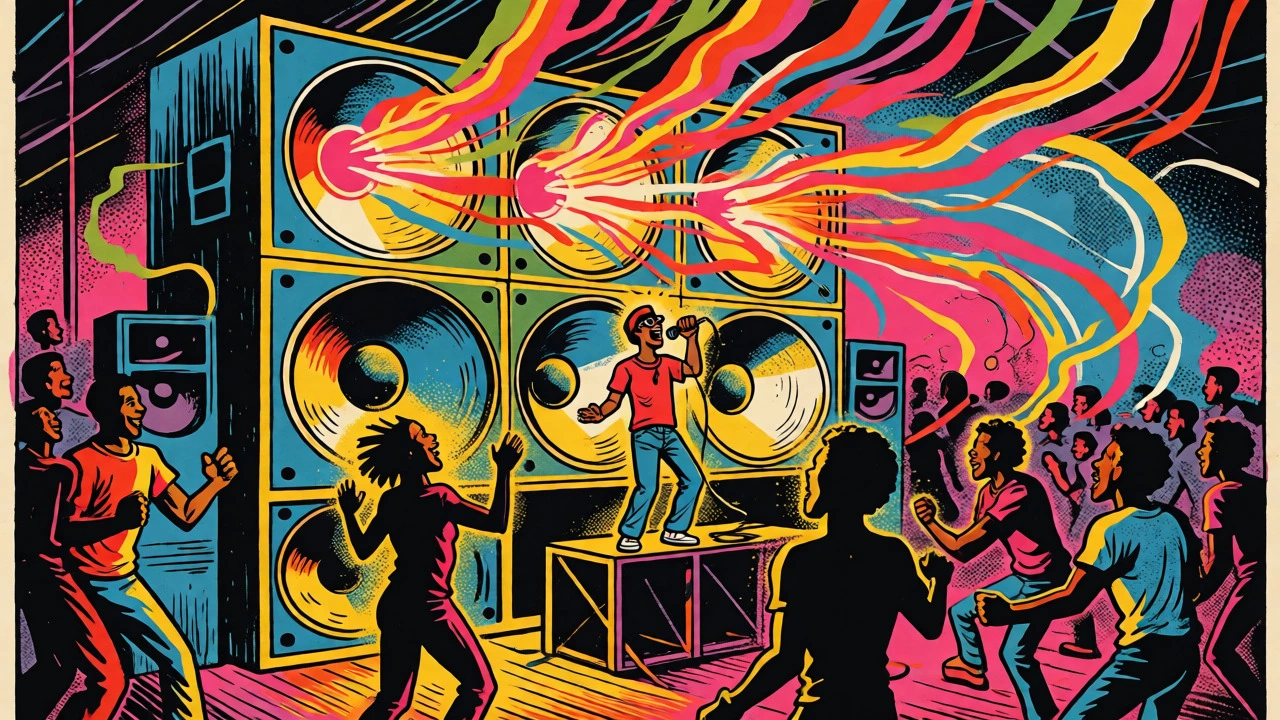

Imagine walking into a Kingston dancehall in the late 1970s. The bass hits your chest, but you don't know who is singing yet. You recognize the rhythm instantly-it's the same backbone that carried three other hits last month, just with different lyrics and a new deejay toasting over it. This isn't lazy recycling; it's riddim culture, a system where the instrumental track is the star, and the song is just one of many voices speaking through it.
In most Western pop contexts, a song is a fixed object. It has a start, a middle, an end, and a specific singer. In Jamaica, the unit of creativity shifted decades ago. Producers realized that a powerful rhythmic foundation could support dozens of vocal performances. This approach, known as version culture, turned the studio engineer into a co-author and transformed the recording process from capturing a performance to building a platform for community expression. If you've ever wondered why reggae sounds so cohesive yet endlessly varied, or how digital sampling in hip-hop found its spiritual ancestor, you need to understand how producers reimagined the very definition of a track.
The Economics Behind the Echo
Why did this happen? It wasn't just artistic whim; it was survival. In the 1950s and 60s, Jamaica had a small domestic market for recorded music. Hiring a full band-drums, bass, guitar, keyboards, horns-for every single song was prohibitively expensive for independent producers like Duke Reid at Treasure Isle or Clement "Coxsone" Dodd at Studio One. They needed efficiency.
The solution was simple: record a great instrumental once, then invite multiple singers to lay vocals over it. This allowed a producer to maximize the return on a single studio session. Sound systems, which were the primary distribution channel for music before radio fully embraced reggae, loved this too. They wanted exclusive cuts and remixes to keep their crowds dancing. By treating the rhythm as a reusable asset, producers created a supply chain of related but distinct records. A hit rhythm became a commodity, traded and tested by various artists. This economic necessity laid the groundwork for a cultural practice that would eventually challenge global notions of copyright and originality.
Dub: When the Engineer Became the Artist
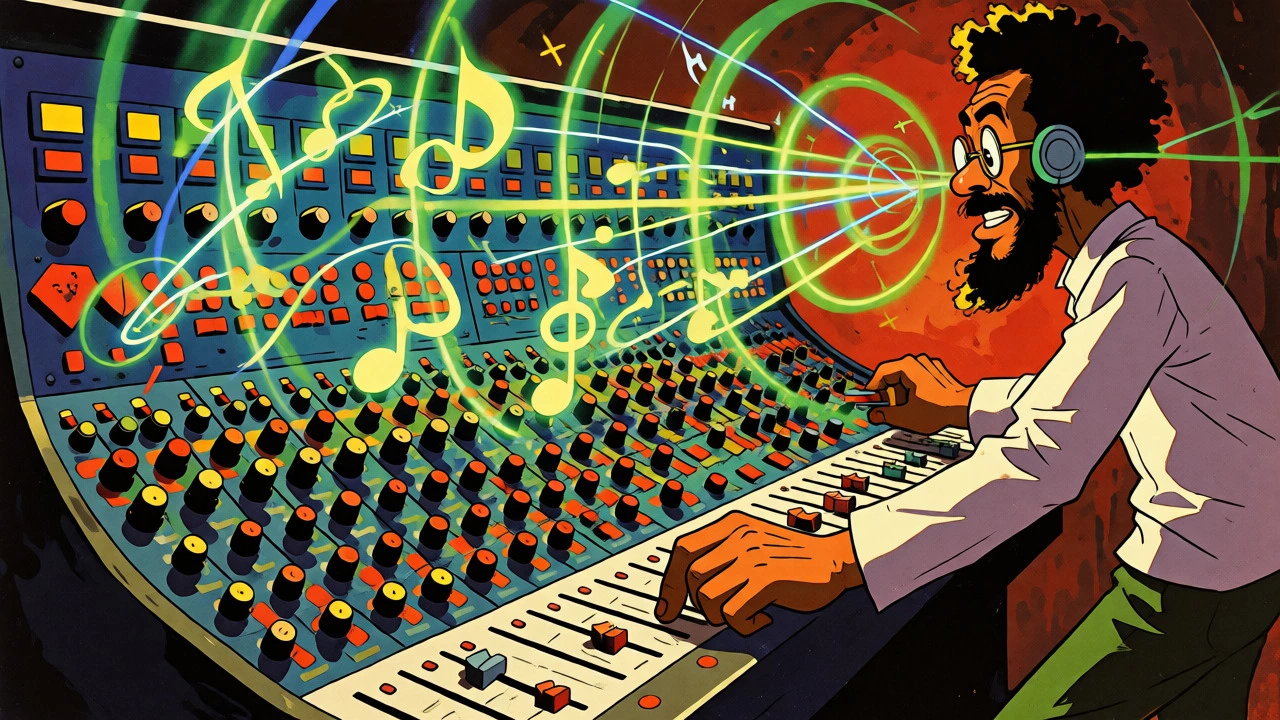
If reusing a riddim was about economics, dub was about artistry. In the early 1970s, engineers like King Tubby (Osbourne Ruddock) started experimenting with the mixing console itself. Instead of just balancing levels, they began stripping tracks down. They muted vocals, pushed the bass and drums to the forefront, and drenched fragments of melody in echo and reverb.
This wasn't just a B-side filler; it was a new genre. Michael Veal, a leading scholar on dub, describes it as deconstruction. The engineer takes the existing material and rebuilds it spatially and timbrally. Producer Bunny Lee famously noted that if King Tubby mixed the same tune twelve times, he’d get twelve different versions. Each mix had its own identity, its own mood. Dub proved that the studio was an instrument. It gave listeners a way to hear the architecture of the song, exposing the skeleton beneath the skin. This practice directly influenced the rise of electronic music, techno, and ambient genres worldwide, proving that removing elements could be as creative as adding them.
Analog Giants: Real Rock and Stalag 17
To understand the scale of versioning, look at two iconic rhythms. First, there's "Real Rock," created by the Sound Dimension under Coxsone Dodd in 1967. With its distinctive organ riff by Jackie Mittoo and deep bassline, it became one of the most reused instrumentals in Jamaican history. Decades later, it still supports new recordings. Then there's "Stalag 17," produced by Winston Riley in 1973. This rhythm is arguably the most sampled and versioned beat in reggae and dancehall history.
Sister Nancy’s 1982 classic "Bam Bam" isn't an independent composition in the traditional sense; it’s a vocal cut over the "Stalag 17" riddim. Listeners often identify the record by the beat first, then the artist. This distinction matters. In Western pop, the melody usually defines the song. In reggae, the rhythm carries the cultural weight. These analog riddims demonstrated that a groove could have a longer life than any individual singer, creating a shared sonic language that united disparate communities across Kingston and beyond.
The Digital Break: Sleng Teng Changes Everything
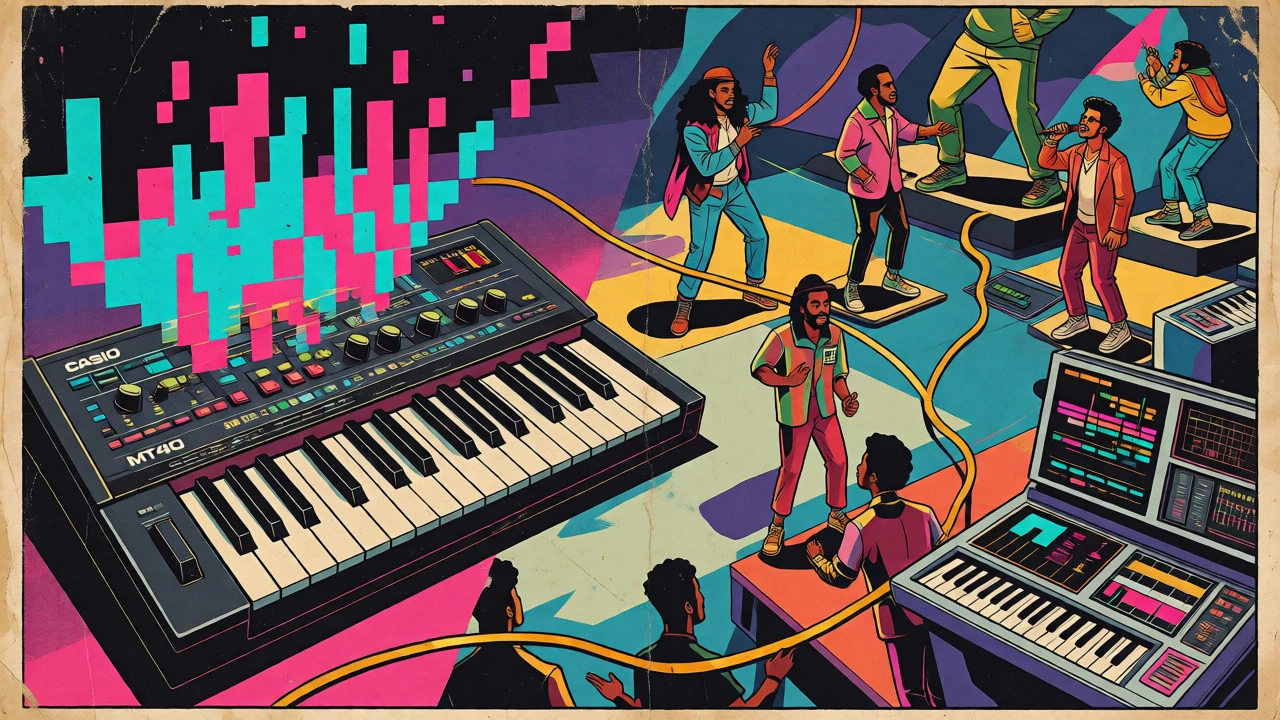
The biggest shift came in 1985 with "Under Mi Sleng Teng." Produced by Lloyd "King Jammy" James and voiced by Wayne Smith, this track didn't use a live band. It used a Casio MT-40 keyboard preset. That might sound cheap today, but back then, it was revolutionary. It was the first fully digital riddim to dominate the airwaves.
Sleng Teng lowered the barrier to entry. You didn't need a studio full of musicians anymore; you needed a synthesizer and a drum machine. The result was a sparse, spacious beat that left plenty of room for deejays to toast. It sparked an explosion of digital dancehall. Producers like Steely & Clevie followed suit with rhythms like "Punanny," further cementing the computerized model. The riddim method shifted from being a cost-saving measure to becoming the central creative focal point. The song was no longer the product; the riddim was. Artists competed to provide the best vocal layer over the same digital bed, leading to a golden age of lyrical agility and rapid-fire competition.
Juggling Riddims and Producer Power
By the 1990s, the industry had formalized this approach into "juggling packages." A producer would build one high-quality riddim and invite a roster of top-tier artists to record over it. Dave Kelly’s "Joy Ride Riddim" in 1995 is a prime example, featuring 13 different artists including Tanya Stephens and Lady Saw. The producer controlled the schedule, the mix, and the marketing package. The artists brought their unique flows and personas, but they were all working within the same sonic container.
| Era | Primary Tool | Producer Role | Key Example |
|---|---|---|---|
| Rocksteady/Ska | Live Band | Capturing Performance | Studio One Sessions |
| Early Reggae/Dub | Mixing Console | Deconstructing Audio | King Tubby’s Black Ark |
| Digital Dancehall | Synthesizers/Drum Machines | Building Platforms | Sleng Teng / Punanny |
| Modern Era | Digital Audio Workstations | Global Distribution | Streaming Juggles |
This model concentrated power in the hands of producers. They decided which artists got slots and how the final compilation sounded. It also meant that a bad riddim could sink a whole batch of songs, while a great one could launch careers. For listeners, it created a game of recognition. Hearing a familiar beat triggers memories of previous versions, layering nostalgia onto the new performance. It’s a communal listening experience where knowledge of the catalog enhances enjoyment.
Ownership in an Open Source World
Version culture clashes with standard copyright law. In the US or UK, if you sample a beat, you pay royalties. In Jamaica, historically, rhythms were treated more like folk traditions-shared commons. Scholars argue that strict intellectual property rules would have stifled reggae’s growth in its early days. The concept of "open source" fits well here: code (or rhythm) is shared, modified, and improved by the community.
However, this romantic view has downsides. Musicians who played on the original riddim might not see compensation when hundreds of versions are sold. International licensing now complicates things, forcing producers to navigate complex rights issues. Yet, the cultural norm persists. The idea that a rhythm belongs to everyone, even if the recording belongs to someone, remains central to the reggae ethos. It prioritizes collective participation over individual ownership, challenging the Western obsession with the singular genius author.
Legacy Beyond the Island
You can hear the echoes of riddim culture everywhere. Hip-hop’s use of breakbeats, drum-and-bass’s rolling basslines, and reggaeton’s dembow pattern all trace lineage to Jamaican practices. The idea that a track is a malleable object, subject to remixing and reinterpretation, is now standard in global pop production. But reggae did it first, driven by necessity and creativity.
Today, with digital audio workstations making editing effortless, versioning continues. Producers still release riddim packs, inviting global artists to contribute. The technology changes, but the principle holds: the rhythm is the canvas, and the voice is the paint. Understanding this helps you appreciate not just the music, but the social fabric it weaves-a network of creators linked by shared grooves rather than isolated hits.
What exactly is a riddim?
A riddim is the instrumental backing track of a reggae or dancehall song, typically consisting of drums, bass, and chordal instruments. Unlike a standard accompaniment, a riddim is designed to be reused by multiple artists for separate vocal recordings, serving as a shared musical foundation.
How does dub differ from a regular remix?
While both involve altering an original recording, dub specifically emphasizes the removal of vocals and the enhancement of bass and drums using heavy effects like delay and reverb. It treats the mixing console as an instrument, creating a new, often abstract, interpretation of the original track rather than just updating it for radio play.
Why is "Sleng Teng" considered a turning point?
Released in 1985, "Under Mi Sleng Teng" was the first major hit built entirely on digital synthesizers rather than live bands. It lowered production costs, sped up creation time, and shifted the focus from the song to the riddim, sparking the digital dancehall era and influencing global electronic music production.
Do artists get paid separately for each version?
Historically, payment structures varied widely. Often, artists received a flat fee per session rather than ongoing royalties for each version sold. Modern contracts are more complex due to international copyright laws, but the tradition of shared rhythmic resources means compensation models differ significantly from standard Western pop royalty splits.
Can I legally sample a famous riddim?
Yes, but you must clear the rights. While culturally viewed as a shared resource, legally, the master recording and composition are owned by specific entities (producers, labels, publishers). Sampling without clearance can lead to lawsuits, especially in international markets, despite the informal norms within the Jamaican music scene.