

Imagine a stage in the early 1970s where the keyboardist isn't just supporting the band but commanding the entire sonic landscape. That was Rick Wakeman, an English keyboardist and composer who fundamentally reshaped how synthesizers were used in popular music. Before him, keyboards often sat in the background; after his tenure with Yes, they became the lead voice, capable of delivering virtuoso solos that rivaled any guitar. Wakeman didn't just play instruments; he solved compositional problems with electronic sound, blending classical training with raw rock energy to create some of the most iconic albums in history.
The Classical Roots and Early Breakthrough
Wakeman’s journey began far from the neon lights of rock clubs. Trained as a classical pianist, he brought a discipline to his playing that few rock musicians possessed at the time. His transition into session work in 1969 marked his first step into the modern studio world. A pivotal moment came in June 1971 when he auditioned at David Bowie's home in Beckenham. There, he heard compositions like 'Life on Mars?' and 'Changes,' which taught him essential studio craft. This experience led directly to his contribution to Bowie's seminal album Hunky Dory (1971), where his piano work became central to the record's distinctive sound. It was this blend of technical precision and modern sensibility that caught the attention of Yes.
Joining Yes and the Search for the Right Tool
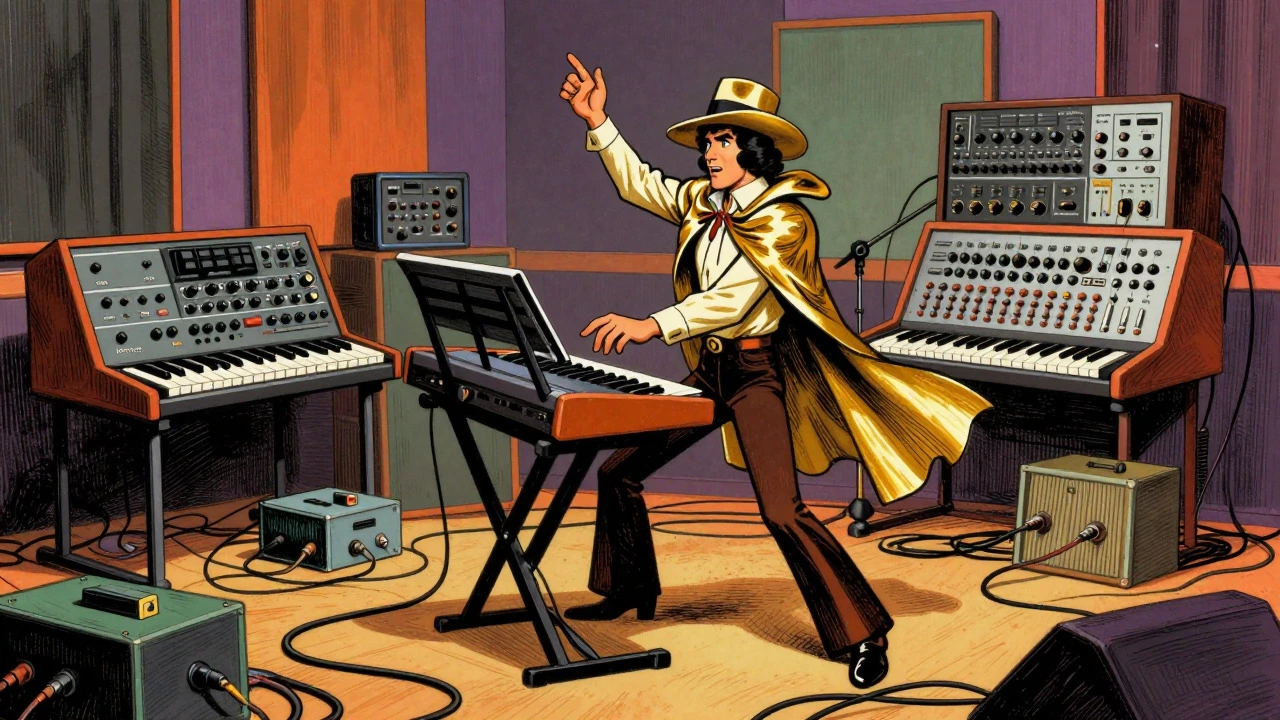
In July 1971, Wakeman joined Yes following the dismissal of founding keyboardist Tony Kaye. The band wanted someone who could expand beyond traditional piano and organ into the realm of electronic keyboards. Initially, Wakeman struggled with the massive Moog Modular Synthesizer. Its bulk and the need for constant re-patching made live performance difficult. He needed something more reliable for touring. Then, in mid-1971, he stumbled upon a Minimoog Model D being sold by actor Jack Wild for half price. Wild thought it was defective because it only played one note at a time, not realizing that monophonic capability was its strength for bass lines and leads. For Wakeman, this compact instrument was a game-changer. It allowed him to have a different physical instrument for every patch in his live set, ensuring his complex compositions could be replicated reliably on stage.
Defining the Sound of Close to the Edge
Wakeman's impact on Yes is best heard on their landmark albums. On Fragile (1971), he contributed synthesizer work, though label politics prevented him from recording an original solo piece. Instead, he recorded 'Cans and Brahms,' a multi-tracked adaptation of Brahms' Symphony No. 4, which he later described as 'dreadful' due to the constraints. However, by the time of Close to the Edge (1972), his technical range had fully blossomed. He incorporated harpsichord and pipe organ alongside his synthesizers, receiving formal arrangement credit for the track 'Siberian Khatru.' This period marked a shift where the synthesizer was no longer a novelty effect but a primary melodic and harmonic instrument. His ability to layer these sounds created huge soundscapes that fed into the band's cinematic storytelling.
Solo Success and Concept Albums
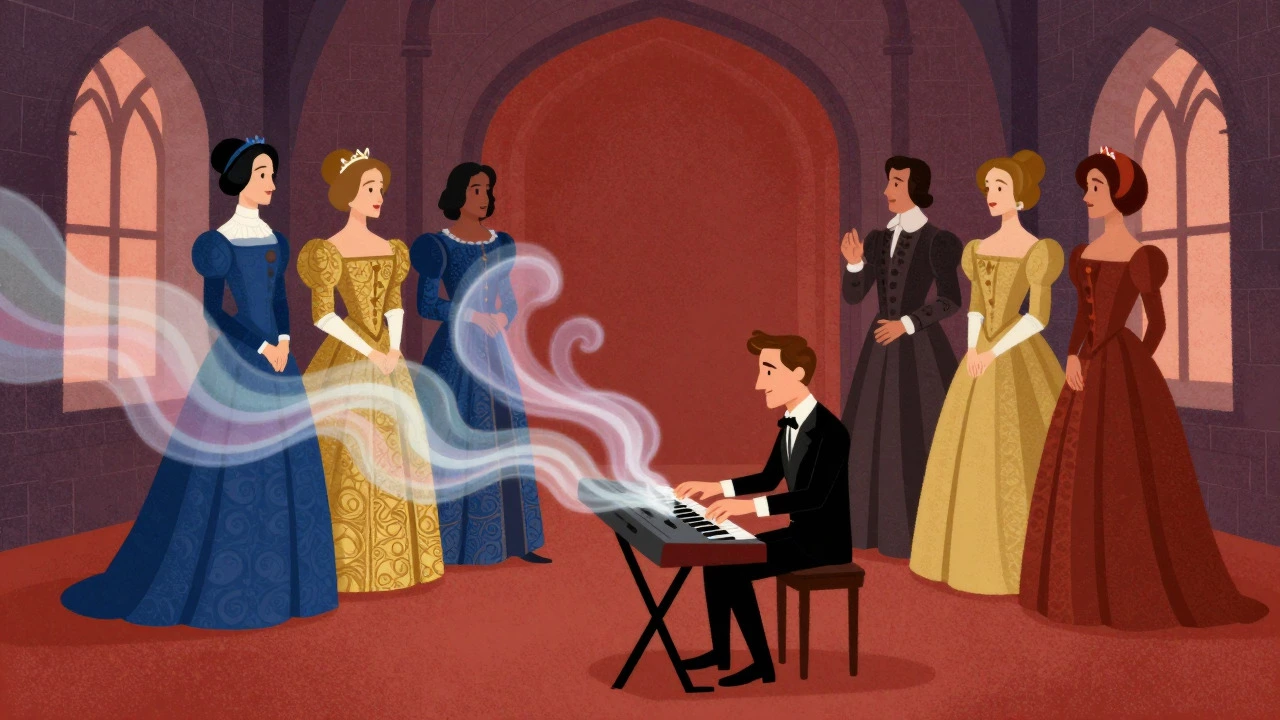
While his work with Yes was legendary, Wakeman's solo career further cemented his status as an innovator. In 1973, he released three highly acclaimed concept albums: The Six Wives of Henry VIII, Journey to the Centre of the Earth, and The Revealing Science of God. These records showcased his ability to use synthesizers for narrative purposes. The Revealing Science of God was particularly challenging to record, with Wakeman often found at the pub rather than his keyboard, yet it concluded with a sublime synthesizer solo that demonstrated his unique touch. These projects proved that synthesizers could drive an entire album's structure, moving beyond mere accompaniment to become the main storyteller.
Wakeman vs. Emerson: Two Approaches to Synth
To understand Wakeman's innovation, it helps to compare his methodology with that of Keith Emerson, another giant of progressive rock keyboards. Emerson favored complex, experimental patches on the Moog Modular, using the instrument as a source of creative tonal improvisation. Wakeman, by contrast, was pragmatic. He chose instruments based on how they solved specific compositional problems. While Emerson explored the weird and wonderful, Wakeman sought reliability and clarity. This difference is evident in their live performances. Wakeman’s trademark gold capes and flamboyant stage presence masked a highly disciplined approach to sound design. He wasn't trying to invent new noises for the sake of it; he was trying to make the music work. This practicality allowed him to take on the role of the guitar soloist, offering wider soundscapes than traditional rock instruments while maintaining structural integrity.
| Instrument | Primary User | Key Characteristic | Role in Music |
|---|---|---|---|
| Minimoog Model D | Rick Wakeman | Monophonic, portable, reliable | Lead melodies, bass lines, solos |
| Moog Modular Synthesizer | Keith Emerson | Polyphonic potential, bulky, complex patching | Experimental textures, ambient drones |
| Mellotron | Various Prog Bands | Tape-based, orchestral emulation | Strings, choirs, flutes |
| Hammond Organ | Rick Wakeman | Drawbar synthesis, sustain pedal | Harmonic foundation, rhythmic drive |
The Legacy of Keyboard Virtuosity
Wakeman’s legacy lies in elevating the keyboard player to center stage. Before him, singers often dominated the front line; after his influence, the synthesizer accompanied the singer, or vice versa. He inspired an entire generation of keyboard players to view their instrument as a vehicle for both technical virtuosity and emotional depth. By combining multiple keyboard instruments within single compositions, he created a template for synthesizer-based progressive rock that still influences composers today. His work demonstrated that electronic instruments could achieve the same level of expressiveness as acoustic ones, provided the player had the right mindset and tools.
Frequently Asked Questions
Why did Rick Wakeman choose the Minimoog over the Moog Modular?
Wakeman chose the Minimoog because it was portable and reliable for live performance. The Moog Modular was too bulky and required constant re-patching, which was impractical for touring. The Minimoog's monophonic nature allowed him to dedicate specific units to specific parts in his setlist, ensuring consistency.
What was the significance of 'Close to the Edge' in Wakeman's career?
It marked the peak of his integration of diverse instrumentation. On this album, he moved beyond simple synth effects to incorporate harpsichord and pipe organ, establishing the synthesizer as a primary melodic instrument and earning formal arrangement credits.
How did Wakeman's style differ from Keith Emerson's?
Emerson used the Moog Modular for experimental, improvisational textures. Wakeman took a pragmatic approach, using synthesizers to solve compositional problems and fit into live performance structures. Wakeman prioritized reliability and clarity, while Emerson prioritized sonic exploration.
Did Rick Wakeman release successful solo albums?
Yes, in 1973 he released three acclaimed concept albums: 'The Six Wives of Henry VIII', 'Journey to the Centre of the Earth', and 'The Revealing Science of God'. These works showcased his ability to use synthesizers for cinematic storytelling.
What impact did Wakeman have on future keyboardists?
He established the template for synthesizer-based progressive rock, proving that electronic instruments could carry the weight of a lead instrument. His emphasis on technical virtuosity and multi-instrumental layering inspired countless subsequent artists to explore similar paths.


