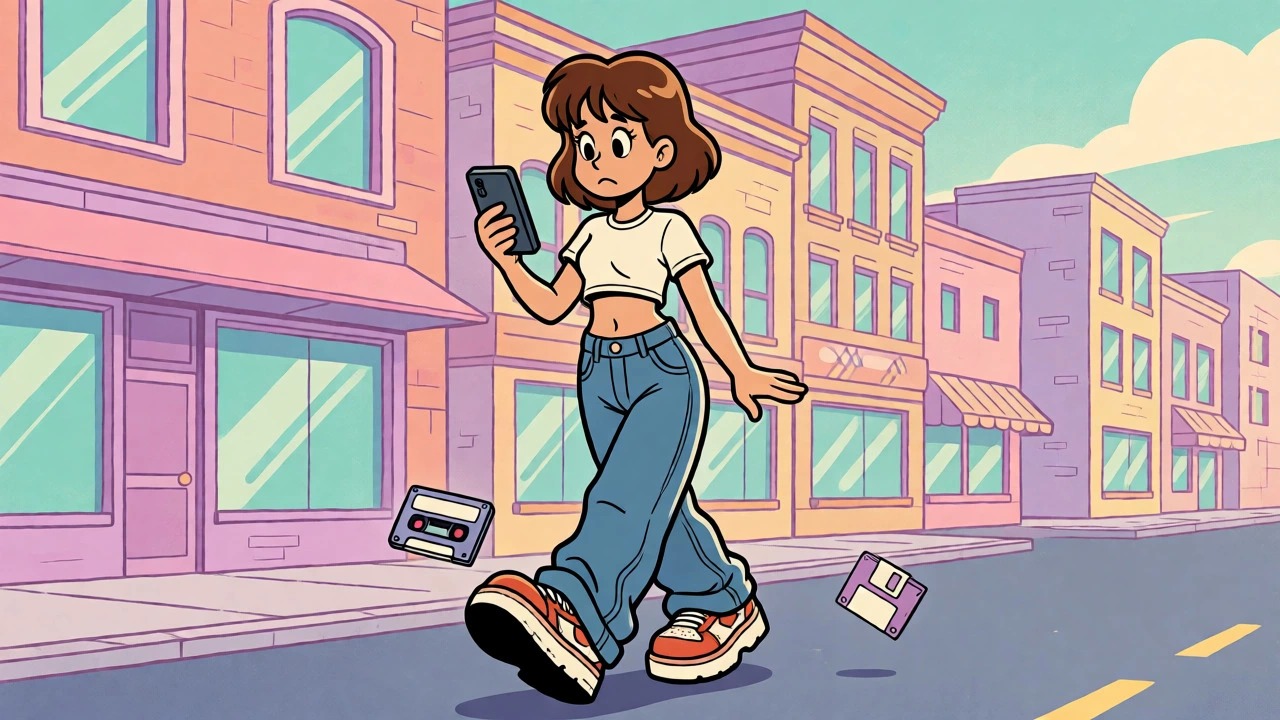

You’re scrolling through TikTok on a Tuesday night in Portland, and suddenly you see a girl wearing baggy jeans, a tiny baby tee, and chunky platform shoes. You blink. Didn’t we leave that look behind twenty years ago? If you feel like you’ve seen this movie before, you aren’t imagining things. The 1990s is back again, and it’s not just a random accident. It’s part of a predictable cultural rhythm that pulls old styles out of the closet every two decades or so.
This isn’t about lazy designers running out of ideas. It’s about how our brains work, how algorithms feed us what we want to see, and how brands make money by selling us memories we might not even have lived through. Whether you were there for the grunge era or you weren’t born yet, understanding why the 90s aesthetic keeps resurfacing helps you navigate today’s culture without feeling like you’re stuck in a time loop.
The Twenty-Year Fashion Rule
There is a reason your parents’ clothes look cool to you right now. Researchers at Northwestern University analyzed over 37,000 images of women’s clothing dating back to 1869. They found that styles tend to rise, fall, and return roughly every 20 years. This isn’t magic; it’s psychology. When a style becomes too common, people get bored and start looking for something different. After enough time passes-usually two generations-the old style feels fresh again because the new generation doesn’t associate it with their childhood boredom.
Think about low-rise jeans. In the early 2000s, everyone wore them. By 2015, high-waisted pants were the only acceptable option because low-rise felt painfully outdated. Now, in 2026, low-rise is back. The cycle works because we need both belonging and distinction. We wear what others wear to fit in, but once everyone wears it, we change to stand out. The fashion cycle is essentially a pendulum swinging between conformity and individuality.
Borrowed Nostalgia: Loving What You Never Had
Here is the weird part: most of the people driving the current 90s trend didn’t live through the 90s as adults. Many are Gen Z, who were either toddlers or not born when Nirvana was topping the charts. So why do they love it? It’s called "borrowed nostalgia." Studies show that nearly two-thirds of Gen Z report feeling nostalgic for eras they never experienced. They aren’t missing their own past; they are romanticizing an idealized version of history.
This phenomenon is powerful because it strips away the bad parts of the past. The real 1990s had economic uncertainty, the AIDS crisis, and clunky technology. The remembered 1990s has great music, simple fashion, and a sense of analog authenticity. For young people overwhelmed by digital saturation, the Y2K and 90s aesthetic offers a comforting escape. It feels simpler, even if it wasn’t actually simple at the time.
How Algorithms Accelerate the Cycle
In the old days, a trend moved slowly. It started with a designer, trickled down to magazines, then hit department stores, and finally reached regular people. That process took years. Today, social media compresses that timeline into weeks. Platforms like TikTok and Instagram use algorithms that prioritize visual recognition. If a 90s clip goes viral, millions of users see it instantly. They buy similar items from resale apps like Depop or Poshmark, which makes vintage 90s gear widely available.
Algorithms create a feedback loop. You see a slip dress video, you click it, and the app shows you ten more. Suddenly, the slip dress isn’t just a garment; it’s a signal that you understand current culture. Brands notice this data. When Fendi reissued its Baguette bag, sales skyrocketed because the algorithm had already made the shape recognizable. Digital platforms don’t just reflect trends; they manufacture them by making the past easily searchable and shareable.
Psychology of Comfort in Uncertain Times
Nostalgia isn’t just a marketing buzzword; it’s a psychological tool. Research by psychologists like Constantine Sedikides shows that nostalgia increases feelings of social connection and self-continuity. When the world feels chaotic-whether due to political shifts, economic stress, or rapid tech changes-people crave anchors. Familiar symbols provide comfort. Wearing a graphic tee from a band you discovered on Spotify last year connects you to a broader community. It says, "I belong here," even if the reference is decades old.
Interestingly, nostalgia often pushes people toward mainstream choices rather than unique ones. A study published in the Journal of Consumer Research found that when people feel nostalgic, they are more likely to choose products preferred by the majority. This explains why revived 90s looks spread so fast. Everyone wants the same oversized denim jacket or the same pair of Doc Martens because those items act as badges of shared identity during uncertain times.
The Business of Retro: Why Brands Love the 90s
For companies, reviving the 90s is safer than inventing something new. Launching a completely new aesthetic requires educating consumers, which costs money and carries risk. Reissuing a classic logo or silhouette leverages existing brand equity. It’s cheaper to market a reboot of Friends or a re-release of a Nintendo game than to build interest in a totally unknown concept.
| Factor | New Innovation | 90s Revival |
|---|---|---|
| Consumer Education | High cost, slow adoption | Low cost, instant recognition |
| Risk Level | High (market may reject) | Low (proven popularity) |
| Marketing Effort | Heavy storytelling required | Leverages existing emotional ties |
| Sales Speed | Slow ramp-up | Immediate spike via nostalgia |
The resale market also fuels this economy. Luxury resale platforms valued at billions of dollars allow consumers to buy authentic 90s pieces. This adds a layer of "authenticity" that fast fashion can’t match. Buying a real 1995 Calvin Klein ad campaign piece signals status and knowledge, creating a secondary market that keeps the aesthetic alive beyond just new production.
It’s Not Just Clothes: Media and Music
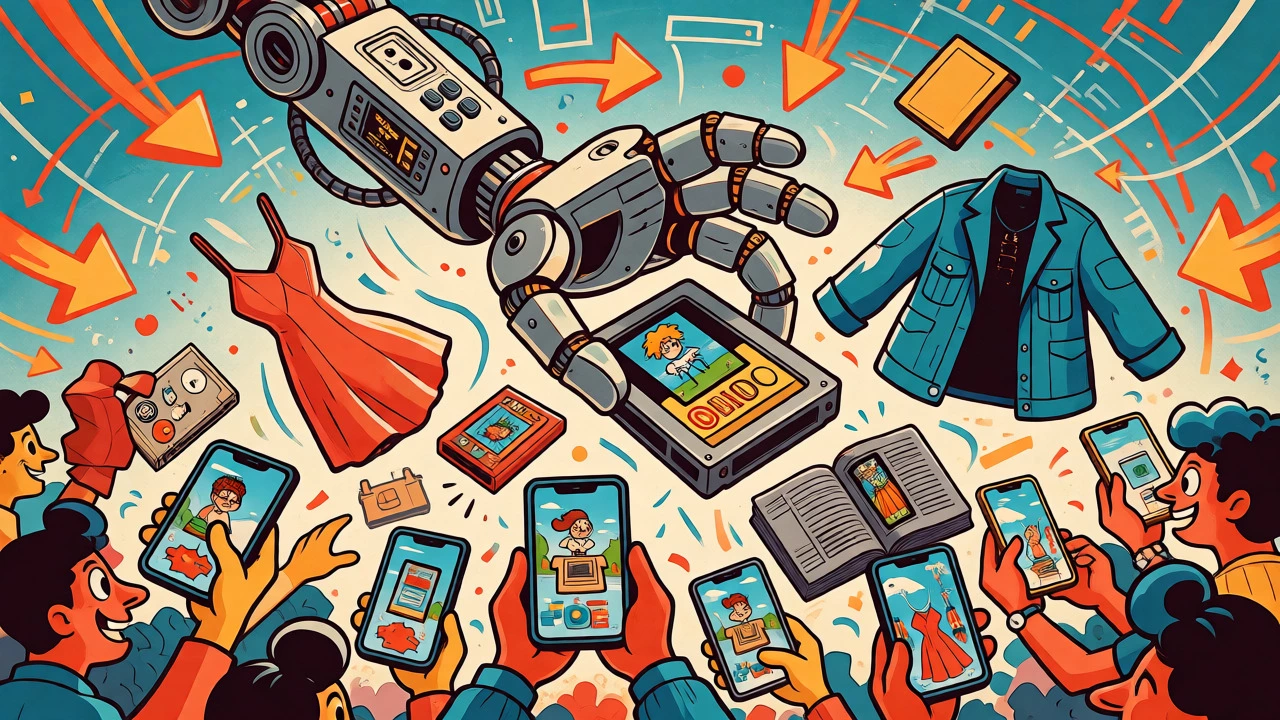
The revival extends far beyond fashion. Streaming services report that 90s movies and TV shows are growing faster than other catalog content. Shows like Seinfeld or Friends remain top-rated despite being decades old. Music catalogs from artists like TLC, Tupac, or Radiohead see steady streams. This cross-media reinforcement creates a cohesive cultural bubble. You hear a 90s song in a modern Netflix series, you see the characters wearing 90s clothes, and you go search for that band on YouTube. The ecosystem feeds itself.
Video games follow the same pattern. Pixel art, originally a limitation of 90s hardware, is now an intentional artistic choice. Indie developers use 16-bit graphics to evoke warmth and simplicity. The aesthetic has transcended its original technological constraints to become a stylistic preference.
The Limits of Nostalgia
While the cycle is strong, it’s not perfect. Critics argue that revivals often sanitize history. Grunge, for example, began as a raw, anti-fashion movement in Seattle. Today, it’s sold as a premium distressed look in high-end boutiques. The political edge and economic struggle of the original subculture are often stripped away, leaving only the surface-level style.
Also, the 20-year rule is an average, not a law. Some trends die forever; others mutate beyond recognition. The next big shift might not be another 90s throwback but a reaction against it. As AI-generated content floods the internet, people might crave hyper-reality or extreme minimalism instead of retro clutter. But for now, the 90s remain the dominant cultural reference point because they offer a perfect mix of familiarity and novelty.
Key Takeaways
- Cyclical Nature: Fashion and culture operate on a rough 20-year cycle driven by the tension between conformity and differentiation.
- Borrowed Nostalgia: Gen Z drives much of the current revival, attaching emotional value to eras they did not personally experience.
- Algorithmic Impact: Social media accelerates trends by making archival imagery instantly accessible and shareable.
- Psychological Comfort: Nostalgia provides a sense of stability and belonging during periods of societal uncertainty.
- Commercial Safety: Brands prefer revivals because they reduce marketing risk and leverage existing consumer recognition.
Is the 20-year fashion cycle scientifically proven?
Yes, largely. A major study by Northwestern University analyzing over 37,000 historical images confirmed that hemlines, necklines, and waistlines tend to oscillate with a period of approximately 20 years. However, it is a statistical tendency, not a rigid law, meaning some styles break the pattern.
Why does Gen Z love 90s aesthetics if they didn't live through them?
This is known as "borrowed nostalgia." Younger generations romanticize eras they missed, often idealizing the perceived simplicity and analog nature of the past. Surveys indicate that a significant majority of Gen Z respondents feel nostalgic for pre-digital or early-digital eras, using these aesthetics to construct identity and find comfort.
How do social media algorithms influence fashion revivals?
Algorithms on platforms like TikTok and Instagram prioritize visually engaging content. When a 90s-style video gains traction, the algorithm serves it to millions of users, creating immediate mass exposure. This compresses the traditional trickle-down fashion timeline from years to weeks, allowing trends to peak and saturate much faster.
Are all 90s revivals accurate representations of the decade?
No. Revivals often sanitize or remix the original aesthetics. For instance, grunge fashion is frequently commercialized into polished, expensive garments, losing the DIY and anti-establishment roots of the original movement. The revived versions usually reflect contemporary values and convenience rather than historical accuracy.
Will the 90s stay popular forever?
Unlikely. Cultural cycles eventually exhaust themselves. As the 90s become overly saturated, consumers will seek differentiation, likely turning to the 2000s (Y2K) or entirely new futuristic aesthetics. The cycle ensures that no single decade remains dominant indefinitely.