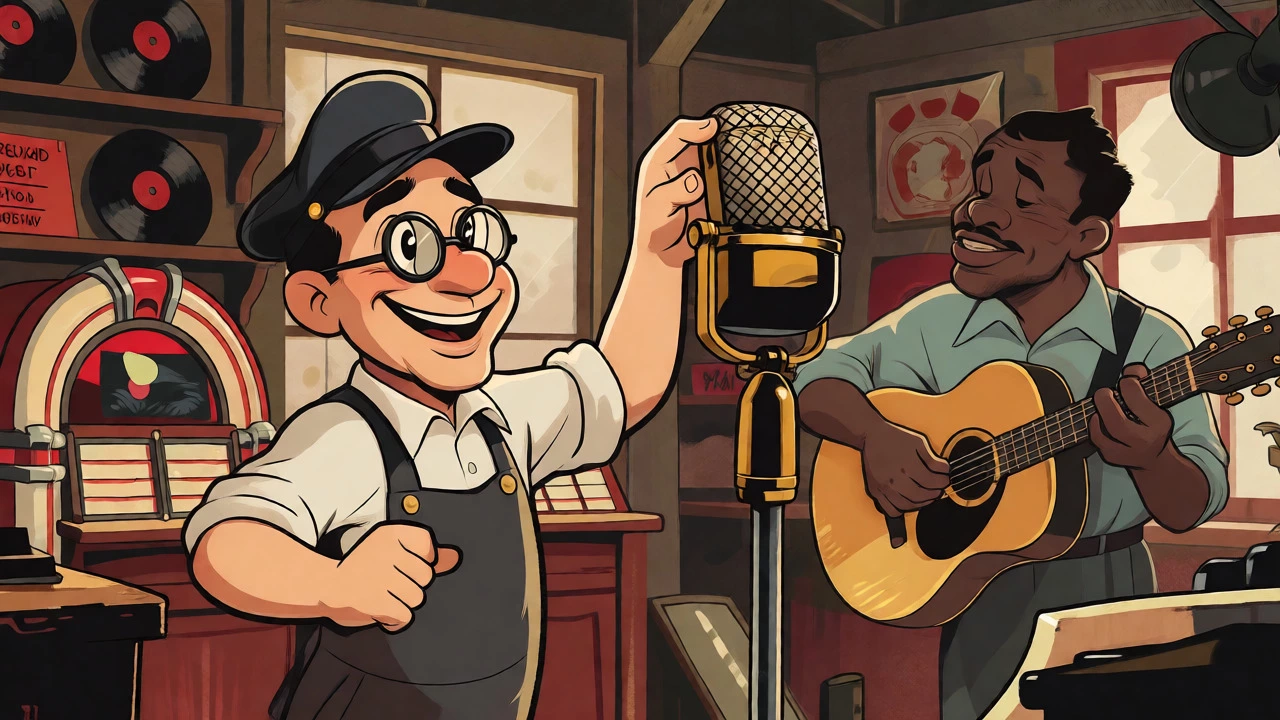

You might think the music industry is just a handful of giant corporations deciding what you hear. But look closer at your favorite niche band or that gritty local artist blowing up on TikTok. Chances are, they weren't discovered by a suit in New York or London. They were found by someone down the street, running a small operation out of a garage or a converted warehouse. This is the world of regional record labels. These aren't just smaller versions of major companies; they are distinct cultural engines rooted in specific cities and communities. Unlike global giants like Universal or Sony, regional labels build their identity around local discovery, using neighborhood networks to turn underground sounds into lasting legacies.
The Roots of Local Sound
It’s easy to assume that independent labels are a modern invention, born from the internet era. But the DNA of regional labels goes back nearly a century. In the 1920s, technology allowed small businesses to enter the recording game. Take Gennett Records, founded in Richmond, Indiana, in 1915. It wasn’t part of a media conglomerate; it was started by piano manufacturers who saw an opportunity to capture local talent. Similarly, in Chicago, labels like Okeh and Paramount recorded blues and jazz musicians right where they lived. They didn’t need national radio play to survive; they used local jukeboxes and retail shops to move product.
This model proved that you don’t need global infrastructure to create culture. You just need proximity. When Sam Phillips started Sun Records in Memphis, he wasn’t trying to compete with RCA Victor on a global scale immediately. He was capturing the raw energy of the Mississippi Delta and the urban South. The same went for King Records in Cincinnati and Peacock Records in Houston. These labels thrived because they understood their specific audience better than any distant executive could. They turned local performance cultures into durable recordings, often challenging the racial segregation of the mainstream industry by giving voice to artists who were otherwise ignored.
Case Studies in Cultural Impact
If you want to understand how a regional label can change a city’s musical identity, look no further than Flying Nun Records in New Zealand. Founded in Christchurch in 1981 by Roger Shepherd, a music store manager, Flying Nun had almost no money. Bands like The Clean and The Chills recorded on cheap four-track tape decks. Yet, this limitation became their aesthetic strength. The "Dunedin sound" emerged not despite the low budget, but because of it. Flying Nun took a geographically isolated scene and gave it an international profile. It showed that authenticity often beats polish.
| Label | Location | Key Strategy | Outcome |
|---|---|---|---|
| Flying Nun | Christchurch, NZ | Low-cost production, DIY aesthetic | Defined the "Dunedin Sound," global indie cult status |
| Saddle Creek | Omaha, USA | Community hub, real estate integration | Anchored local economy, supported venue/cinema ecosystem |
| Sarah Records | Bristol, UK | Fanzine culture connection, 7-inch singles | Enduring indie-pop canon, international fan loyalty |
| Secretly Canadian | Bloomington, USA | Scaling from local base to global offices | Maintained local identity while expanding internationally |
Across the Atlantic, Saddle Creek in Omaha, Nebraska, took a different approach. Instead of just releasing records, they built an ecosystem. The Slowdown Project combined the label’s offices with a live venue, a cinema, and residential spaces. This wasn’t just business; it was urban regeneration. By investing in physical space, Saddle Creek created jobs and kept the local scene vibrant even as streaming took over. Meanwhile, Sarah Records in Bristol connected directly with the fanzine community, proving that passionate, niche audiences will support a label that speaks their language, even if it only releases 7-inch singles.
The Economics of Being Small
Let’s talk money, because passion doesn’t pay the rent. Running a regional label is financially tight. There is no standard price list for deals. Advances vary wildly based on genre and leverage. Research suggests album advances might range from €5,000 to €15,000, which isn’t much when you factor in recording costs, manufacturing, and marketing. Royalties are another minefield. While some contracts offer 14-18% for albums, others might push higher for digital downloads. But here’s the catch: those royalties are usually recoupable. That means the artist sees zero cash until the label has paid back every dollar spent on the video shoot, the PR firm, and the tour van.
Major labels have economies of scale. If one artist fails, the corporate portfolio absorbs the loss. For a regional label, a failed release can be fatal. They rely heavily on distribution partnerships to get their music into stores and onto platforms. Since the 1990s, many have turned to aggregators and licensing networks like Merlin. Merlin helps independent labels license their content to Spotify, Apple Music, and YouTube. As of early 2025, Merlin members represented about 15% of the global recorded-music market. That’s significant power, but it comes with strings attached. Streaming pays fractions of a cent per stream, so volume matters. Regional labels often struggle to generate enough volume to sustain themselves without external capital or diversified revenue streams.
Streaming and the Discoverability Trap
You’d think the internet would make it easier for a small label in Omaha to reach listeners in Oslo. Technically, yes. Distribution barriers have collapsed. Any kid with a laptop can upload to Spotify. But this ease created a new problem: noise. With millions of tracks uploaded annually, discoverability is the new bottleneck. Algorithms tend to favor established hits and major-label pushes. A study noted that majors plus Merlin-licensed content accounted for 71% of plays on Spotify in 2024. That leaves a shrinking slice of attention for everyone else.
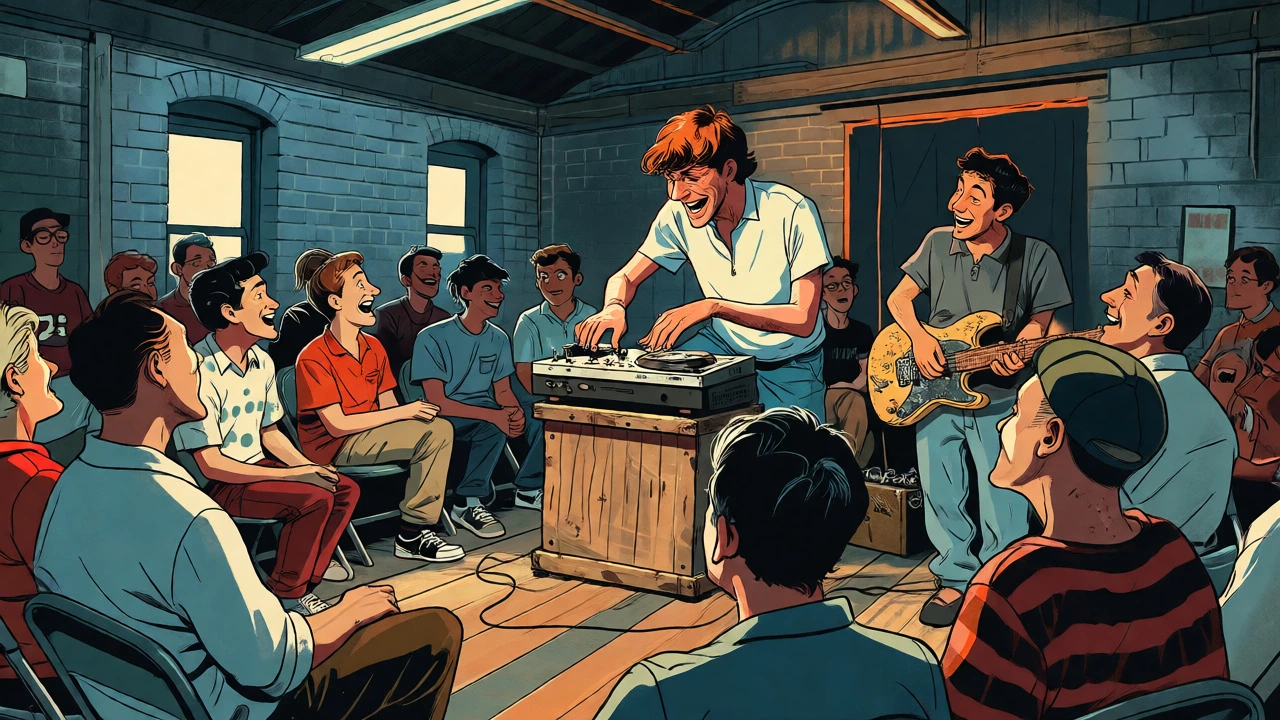
For regional labels, this means metadata errors and algorithmic bias are existential threats. If your track is mislabeled or buried under a similar-sounding major-label act, you’re invisible. Fraudulent streams also plague the system, with some estimates suggesting high percentages of fake plays for certain distributors. Regional labels combat this by leaning into community. They host local shows, sell vinyl at direct-to-fan events, and use social media to tell authentic stories. They know that a dedicated local following is more valuable-and more stable-than a fleeting viral moment driven by an algorithm.

Building a Sustainable Model
So, how does a regional label survive in 2026? It’s not by pretending to be a major. It’s by doubling down on what makes them special: trust and specificity. Successful labels define clear rights agreements upfront. They avoid indefinite options that trap artists forever. They separate recording budgets from marketing funds to keep accounting transparent. Most importantly, they diversify. Secretly Canadian, for example, kept its heart in Bloomington, Indiana, but opened offices in London and Los Angeles to handle international sales. They didn’t abandon their roots; they extended their reach.
- Define Your Niche: Don’t try to sign everything. Focus on a specific genre or local community.
- Transparent Accounting: Artists are more likely to stay if they understand where the money goes. Audit rights are crucial.
- Diversify Revenue: Combine streaming with vinyl sales, merchandise, sync licensing, and live event promotion.
- Leverage Community: Use local venues and press to build credibility before seeking national attention.
The hybrid model seems to be the winner. Regional labels continue to discover and develop artists locally, using digital tools for global availability. They join collective organizations for bargaining power but retain control over their creative direction. When they need extra muscle for manufacturing or international marketing, they form selective partnerships rather than selling out entirely. This balance allows them to maintain cultural credibility while achieving financial viability.
The Future of Local Scenes
As we look ahead, the role of regional labels remains critical. Global streaming data shows growth, with recorded-music revenue hitting $29.6 billion in 2024. But that growth isn’t evenly distributed. Major labels capture the bulk of subscription revenue. Independent and regional labels fight for the margins. Yet, their cultural impact is disproportionate. They preserve diversity, support local jobs, and drive urban regeneration. Without them, the music landscape would be homogenized, dominated by safe, formulaic hits designed for playlists.
The future belongs to labels that can bridge the gap between local intimacy and global access. They will use AI and data not to replace human A&R, but to help identify trends within their specific scenes. They will continue to invest in physical spaces, recognizing that music is still a communal experience. And they will keep fighting for fairer royalty rates and better transparency in the digital supply chain. If you love discovering something new and weird, thank a regional label. They’re the ones keeping the lights on in the clubs where the next big thing is being born.
What is the main difference between a regional label and a major label?
The primary difference is scope and origin. Major labels (Universal, Sony, Warner) operate globally with massive capital and centralized decision-making. Regional labels are rooted in specific local scenes, relying on community relationships, local knowledge, and specialized niche focus. They often prioritize cultural authenticity and artist development over immediate commercial returns.
How do regional labels make money if streaming pays so little?
They rely on a mix of revenue streams. While streaming provides baseline income, regional labels earn significantly from physical sales (vinyl, CDs), merchandise, sync licensing (music in ads/films), and touring support. Many also engage in direct-to-consumer sales through Bandcamp or their own websites, which offers higher profit margins than streaming platforms.
Do regional labels still matter in the age of Spotify?
Yes, arguably more than ever. While anyone can distribute music online, regional labels provide curation, credibility, and community. They cut through the noise by validating artists within a trusted local context. Data shows independent repertoire holds significant market share, and fans often seek out labels known for specific tastes, using them as guides in an oversaturated digital landscape.
What are common risks for artists signing with regional labels?
Common risks include limited marketing budgets, slower release schedules, and complex royalty accounting. Artists may face long recoupment periods where they see no profit until costs are covered. It is crucial for artists to negotiate clear audit rights, defined term lengths, and transparent cost structures to avoid getting trapped in unfavorable long-term contracts.
Can a regional label grow into a major player?
Yes, but rarely by becoming a "major." Labels like Secretly Canadian or Merge Records grew by scaling operations and opening international offices while maintaining their independent status and local identity. They typically partner with larger distributors for logistics rather than being acquired by major corporations, allowing them to retain creative control and brand integrity.